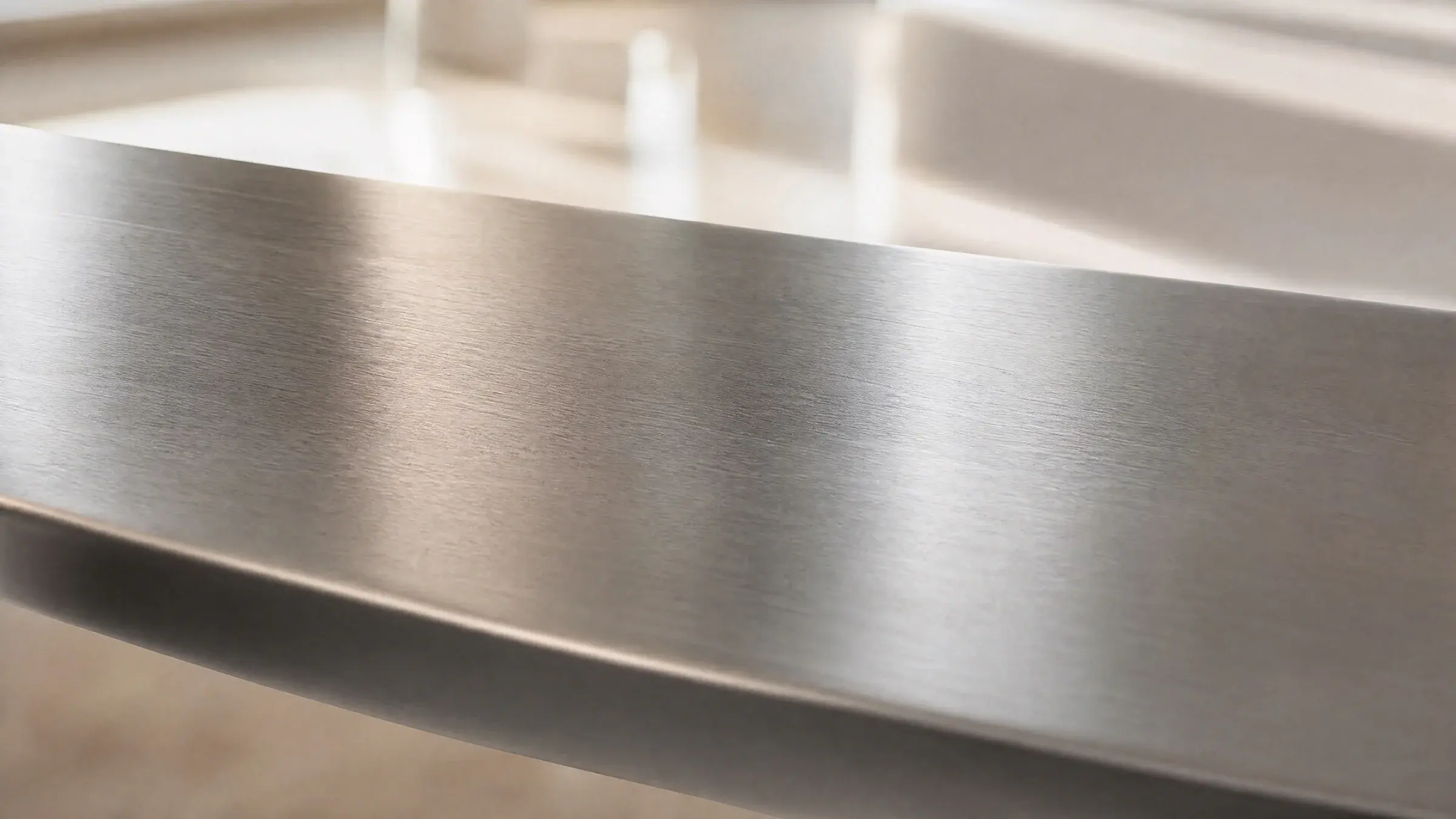
In short: Type 304H is the high-carbon, high-temperature member of the 304 family. Its carbon is controlled to 0.04–0.10% (a minimum and a maximum, unlike standard 304) and grain size is specified at ASTM ≤ 7. Together these requirements deliver superior creep and rupture strength above 427 °C, making 304H the grade of choice for power-generation boilers, superheaters, and ASME pressure vessels at elevated temperature. The important trade-off: that elevated carbon will sensitise the weld heat-affected zone if the fabrication is exposed to aqueous corrosion without post-weld annealing — the exact opposite situation from 304L. For welded aqueous-corrosion service, use 304L. For high-temperature pressure service, use 304H.
What 304H Stainless Steel Is
Type 304H is the elevated-temperature member of the 304 austenitic family. It shares 304's foundational "18/8" chemistry — approximately 18% chromium and 8–10% nickel — but two additional requirements set it apart: carbon is held in a controlled band of 0.04–0.10% (ensuring a minimum as well as a maximum), and grain size must be ASTM number ≤ 7 (coarser than the mill default). Both requirements directly improve performance under sustained stress at elevated temperature.[1]
Its standard designations are: UNS S30409, European 1.4948 (X6CrNi18-10), and Japanese SUS 304H. It is covered by ASTM A240 for plate and sheet, and by ASTM A213, A249, and A312 for tubular products in pressure-temperature service. It is accepted under the ASME Boiler and Pressure Vessel Code (BPVC) for pressure-retaining applications at elevated temperature — the code context that makes it distinct from all other 304 variants.[1]
Chemical Composition
The composition of 304H is almost identical to standard 304. The carbon range is the defining feature: rather than a ceiling (as in 304 and 304L), it is a range with both a minimum and a maximum, ensuring sufficient carbon for high-temperature strengthening mechanisms. Grain size (ASTM ≤ 7) is specified separately from chemistry but is equally mandatory.[1]
| Element | Symbol | Content (wt%) | Role |
|---|---|---|---|
| Chromium | Cr | 18–20 | Forms the self-healing passive oxide film |
| Nickel | Ni | 8–10.5 | Stabilises the ductile, non-magnetic austenite phase |
| Carbon | C | 0.04–0.1 | Controlled range — minimum ensures high-temp precipitation strengthening; maximum caps sensitisation |
| Manganese | Mn | ≤ 2 | Deoxidiser; aids hot working and austenite stability |
| Silicon | Si | ≤ 0.75 | Deoxidiser; assists oxidation resistance |
| Iron | Fe | Balance | Base metal |
Additionally, ASTM A240 requires grain size ≤ ASTM 7 (i.e. grain-size number 7 or coarser) per ASTM E112 — this is a mandatory microstructural requirement, not just a typical value.[1]
Crystal Structure: FCC Austenite
304H is a solid-solution alloy — no molecular formula applies. Its crystal structure at room temperature is face-centred cubic (FCC) austenite: atoms at every corner and face-centre of a cubic unit cell. Nickel (8–10.5%) stabilises this FCC phase down to cryogenic temperatures, imparting the grade's characteristic ductility and non-magnetic behaviour in the annealed state.[1]
The coarser grain size specified for 304H (ASTM ≤ 7) is not an incidental consequence of processing — it is deliberately engineered. Fewer grain boundaries per unit volume means fewer sites for grain-boundary sliding and diffusion-driven creep, the mechanisms that cause pressure vessels to slowly deform under sustained stress at high temperature. Controlling grain size is as important a lever as controlling carbon for high-temperature strength.[1]
Like 304 and 304L, 304H's austenite is metastable and the TRIP effect (transformation-induced plasticity) applies under cold work — deformation can convert some FCC austenite to α′-martensite, raising strength and imparting slight magnetism to heavily formed parts.[7]
Corrosion Resistance — and a Critical Limitation
304H's corrosion behaviour at ambient temperature follows the same passive film mechanism as all 304-family grades: the 18–20% chromium spontaneously forms a dense Cr-rich oxide layer only a few nanometres thick. Surface characterisation confirms this film is composed mainly of Cr and Fe oxides, with chromium enriched at the surface — and it reconstructs within approximately 2 hours after scratching.[3][4]
The critical limitation of 304H is sensitisation on welding. Because the carbon content is deliberately high (0.04–0.10%), the metal will precipitate M₂₃C₆ chromium carbides at grain boundaries whenever the HAZ passes through 425–860 °C — which every weld inevitably does. Numerical modelling confirms that the degree of sensitisation in the weld decay zone is tightly coupled to carbon content and thermal history.[2] Chromium-depleted zones at grain boundaries become active corrosion paths in aqueous environments.
Design rule: 304H is *not* suitable for as-welded service where the weldment will face aqueous or humid corrosion — unless a post-weld solution anneal (1020–1150 °C followed by rapid quench) is performed to dissolve the carbides and restore the passive film. At high service temperatures, sensitisation is not a concern because the operating environment is dry. Chloride pitting — driven by MnS inclusions in all 304-family grades — is the same as for 304 and 304L.[5]
Mechanical & Physical Properties
Room-temperature specified minimums per ASTM A240 for annealed 304H:[1]
| Tensile strength (MPa) | ≥515 |
| Yield strength (MPa) | ≥205 |
| Elongation (%) | ≥40 |
| Hardness | ≤201 HB |
| Density (g/cm³) | 7.93 |
| Elastic modulus (GPa) | 193 |
| Magnetic response | Non-magnetic (annealed) |
At room temperature, 304H is essentially indistinguishable from standard 304. The grade's differentiation shows at elevated temperature, where controlled carbon and grain size translate into superior creep and rupture strength.
High-Temperature Creep Strength — The Defining Advantage
Creep — time-dependent plastic deformation under sustained stress — is the critical failure mode for pressure vessels and boiler tubes operating above ~427 °C. Two mechanisms make 304H superior to 304L at these temperatures:
- M₂₃C₆ carbide dispersion. At service temperature, the controlled carbon precipitates fine carbides within grains. These particles obstruct dislocation movement and grain-boundary sliding — the kinetic pathways of creep. Studies on 304 austenitic stainless steel under elevated-temperature creep conditions confirm that total creep strain and initial creep rate are governed by resistance to dislocation slip, and that microstructural evolution including in-grain carbide precipitation can simultaneously improve sustained strength.[8]
- Coarser grain size. Fewer grain boundaries per unit volume reduces grain-boundary sliding and diffusion-mediated creep (Nabarro–Herring mechanism), directly extending rupture life.[1]
Practical benchmark: The ASME BPVC Section II Part D allowable stress for 304H at 538 °C (1000 °F) is approximately 25.5 ksi — significantly higher than the value for 304L at the same temperature, directly reflecting the superior creep rupture resistance.[1] 304H is approved for pressure-retaining applications up to approximately 815 °C (1500 °F) in continuous service.
Key Characteristics
- Superior creep and rupture strength above 427 °C. The defining property. Controlled carbon + coarse grain size together resist the deformation mechanisms that govern elevated-temperature pressure vessel integrity.[1][8]
- ASME BPVC acceptance. 304H is listed in ASME Section II Part D with higher allowable stresses at elevated temperature than 304L — essential for code-compliant pressure vessel and boiler tube design.
- Sensitisation on welding. High carbon means M₂₃C₆ carbides will precipitate in the HAZ. Solution anneal is required for aqueous post-weld service. This is the inverse of 304L's behaviour.
- Identical ambient-temperature corrosion to 304. Same passive film, same chloride susceptibility, same surface options — at room temperature it is effectively standard 304.
- Formability and weldability. Good cold-forming (TRIP effect applies).[7] Welding requires ER308H or similar high-carbon filler; post-weld anneal needed for aqueous service.
How 304H Is Made
The production route for 304H differs from 304L in one key way: rather than driving carbon *as low as possible* in the AOD vessel, the refining step is managed to keep carbon within the 0.04–0.10% window. Annealing is performed at a temperature and time combination designed to achieve the specified coarse grain size (ASTM ≤ 7), typically at the high end of the standard austenite annealing range.
The high-temperature anneal is calibrated to grow the grain to ASTM ≤ 7, verified by metallographic examination per ASTM E112 and reported on the mill test certificate.
304H vs 304 and 304L — Carbon Is the Axis
The three grades differ only in carbon content and the requirements that follow from it. At room temperature they are near-identical; at elevated temperature, the differences are fundamental.
In chloride environments at ambient temperature, all three grades share the same vulnerability: MnS inclusions serve as pit-initiation sites in NaCl solution, where the MnS dissolves and chloride concentrates in the resulting cavity.[5] For chloride service, any of the 304 variants must give way to molybdenum-bearing grades (316, 316L). For food and beverage process applications where 304/304L are commonly used, the same chloride caution applies.[6]
Variants & Related Grades
304H anchors one end of the 304 family's carbon range:
- [304](/en/materials/stainless-steel/304) — the standard grade (C ≤ 0.08%). General purpose, moderate strength, the baseline for comparison.
- [304L](/en/materials/stainless-steel/304l) — the low-carbon variant (C ≤ 0.030%). As-welded intergranular corrosion resistance; slightly lower strength. The correct choice when 304H's welding limitation is a problem.
- Super 304H (S30432) — an enhanced variant with additions of Cu and Nb for even greater creep strength; used in supercritical and ultra-supercritical boiler tubing.
Applications by Industry
304H's entire value proposition is elevated-temperature pressure service — the applications below are precisely those where 304L cannot be substituted without a significant reduction in allowable stress and operating temperature.
Power Generation
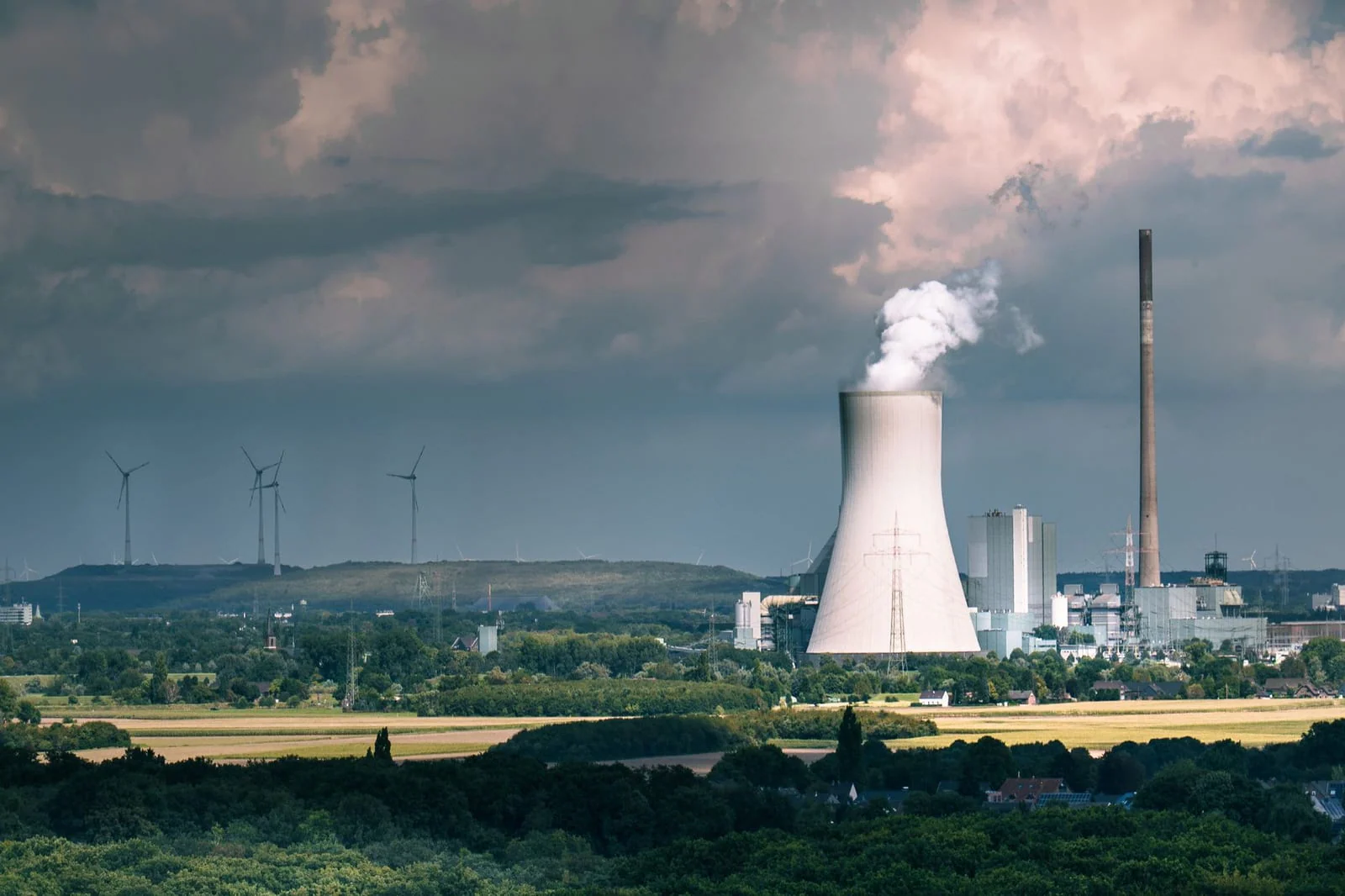
Boiler tubes, superheater and reheater tubing, and steam piping in fossil-fuel and biomass power stations. Continuous temperatures above 500 °C under significant steam pressure are exactly the conditions where 304H's creep and rupture strength advantage is most critical — and where the ASME allowable stress differential versus 304L directly affects wall thickness and component weight.[1]
Chemical & Petrochemical Processing
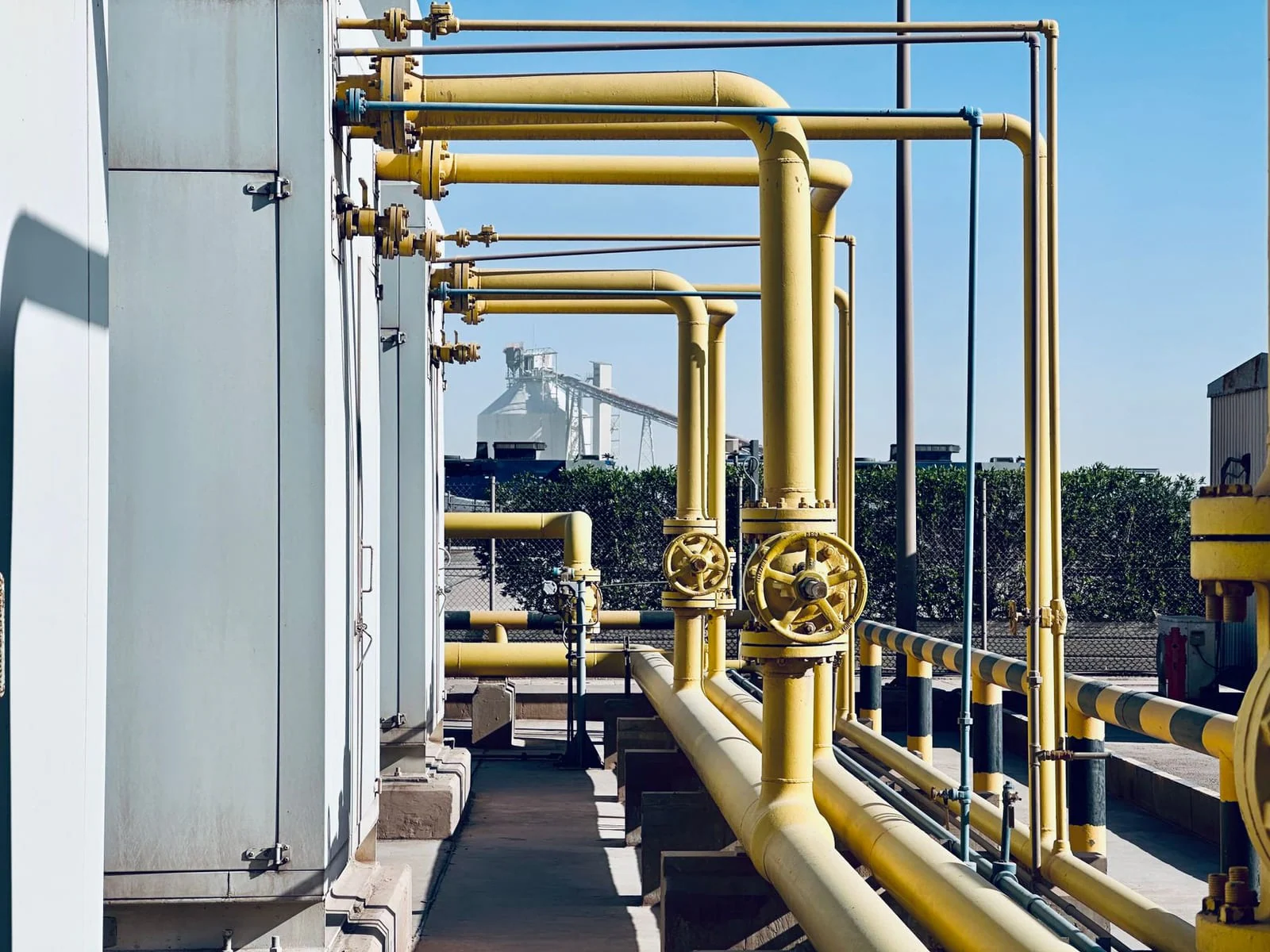
High-temperature process piping, shell-and-tube heat exchanger tubing operating above 427 °C, and refinery piping handling hydrocarbons or process gases at temperature. The ASME pressure-equipment standards are the governing codes in these industries, and 304H's elevated allowable stress is often the specification driver.[1]
ASME Pressure Vessels
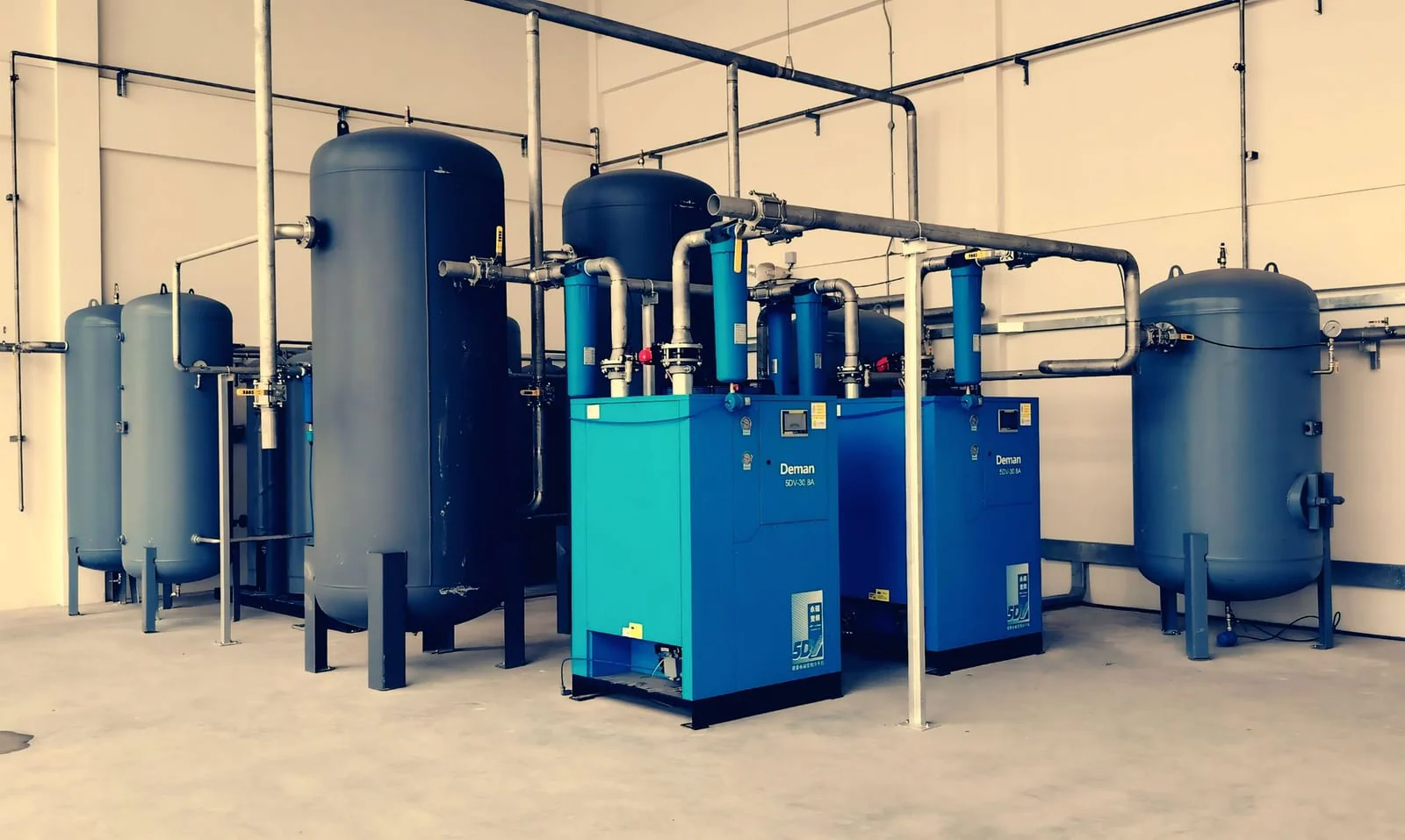
Any pressure-retaining vessel operating above 427 °C that requires ASME code compliance must be specified to a grade with sufficient allowable stress at temperature. 304H qualifies where 304L does not. Applications include autoclave vessels, high-temperature digesters, and reactor vessels in chemical and pharmaceutical production.[1]
Industrial Furnaces
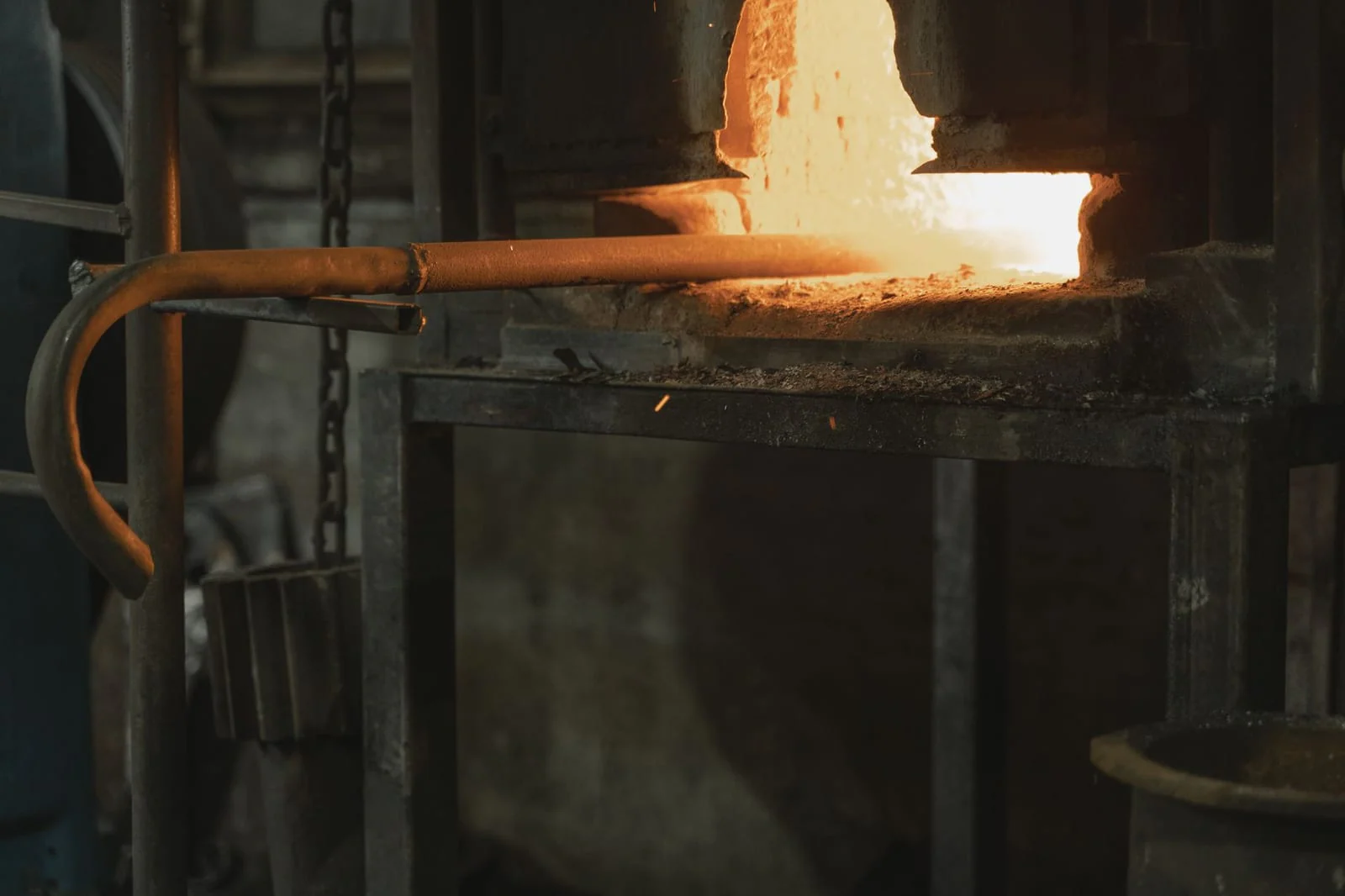
Radiant tube supports, baffles, trays, and structural members in industrial heat-treatment furnaces where dimensional stability and resistance to creep distortion at 600–800 °C are required without the cost of nickel superalloys.
Forms & Finishes
Common product forms (typically pressure-service grades):PlateSheetTube (seamless)PipeBar
Surface finishes:No.1 (HR annealed)2B
Mill certifications: Material test reports for 304H include confirmed carbon content and grain-size test results per ASTM E112 — both are mandatory for ASME code traceability. Specify "304H to ASTM A240 with grain-size test" when ordering for pressure service.
References
- Grade 304H Stainless Steel (UNS S30409). AZoM (materials datasheet, Masteel UK Ltd, based on ASTM A240 / ASME SA 240 GR 304H). azom.com/article.aspx?ArticleID=5050
- A new numerical model to predict welding-induced sensitization in SUS304 austenitic stainless steel joint. Dai P., Li S., Wu L., Wang Y., Feng G., Deng D. Journal of Materials Research and Technology, vol. 17, pp. 234–243 (2022). doi.org/10.1016/j.jmrt.2022.01.015
- Characterization of Passive Films Formed on As-received and Sensitized AISI 304 Stainless Steel. Zhang Y., Luo H., Zhong Q., Yu H., Lv J. Chinese Journal of Mechanical Engineering, vol. 32 (2019). doi.org/10.1186/s10033-019-0336-8
- Reconstruction of the Passive Layer of AISI 304 and 316 Steel After Scratching. Charazińska S., Sikora A., Malczewska B., Lochyński P. Materials, vol. 17, 6238 (2024). doi.org/10.3390/ma17246238
- Evolution of the Corrosion Products around MnS Embedded in AISI 304 Stainless Steel in NaCl Solution. Li D., Hao H., Wang Z., Nyakilla E. E. et al. Materials, vol. 17, 4050 (2024). doi.org/10.3390/ma17164050
- Study of the Corrosion Behavior of Stainless Steel in Food Industry. Rossi S., Leso S. M., Calovi M. Materials, vol. 17, 1617 (2024). doi.org/10.3390/ma17071617
- Strain induced martensite formation and its effect on strain hardening behavior in the cold drawn 304 austenitic stainless steels. Choi J. Y., Jin W. Scripta Materialia, vol. 36 (1997). doi.org/10.1016/S1359-6462(96)00338-7
- Investigation on Creep Deformation and Age Strengthening Behavior of 304 Stainless Steel under High Stress Levels. Zhan L., Xie H., Yang Y., Zhao S., Chang Z., Xia Y., Zheng Z., Zhou Y. Materials, vol. 17, 642 (2024). doi.org/10.3390/ma17030642