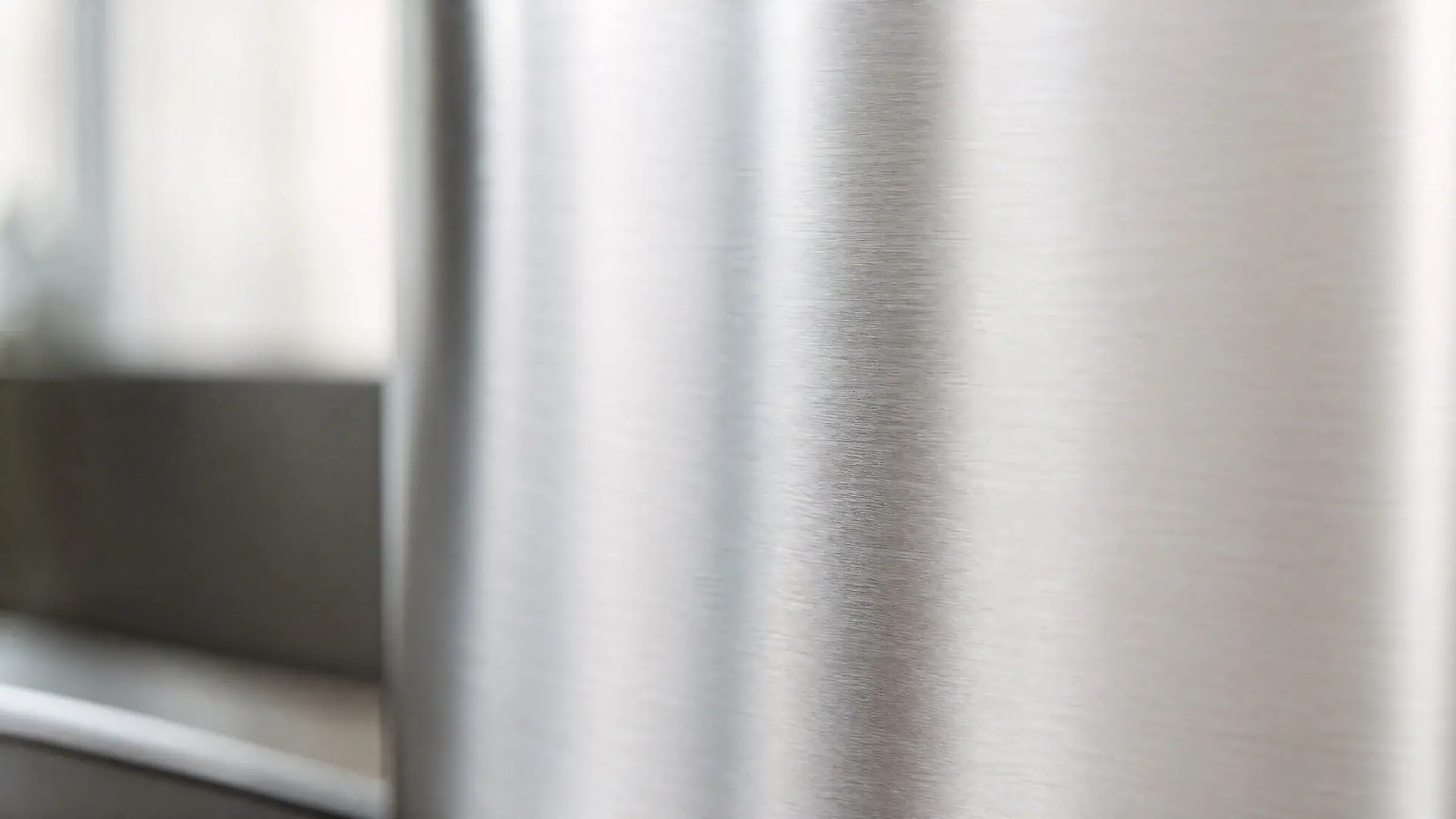
In short: Type 316L is the low-carbon variant of the 316 molybdenum-bearing family (UNS S31603). Its defining feature is carbon held to ≤0.030% — roughly one-third the ceiling of standard 316 — which eliminates chromium-carbide precipitation in weld heat-affected zones and defeats intergranular corrosion. It retains the same 2–3% molybdenum that drives the 316 family's chloride-pitting and crevice-corrosion resistance. The combination makes 316L the go-to for welded marine and seawater hardware and the most studied grade for orthopaedic, dental and neural implants. Strength is marginally lower than standard 316 (yield ≥170 MPa vs ≥205 MPa), but in welded joints its corrosion performance is superior.
What 316L Stainless Steel Is
Type 316L is the *low-carbon* member of the 316 molybdenum-bearing austenitic family. It carries virtually all of standard 316's alloy chemistry and all of its corrosion resistance, but with one critical adjustment: carbon is held to ≤0.030% — compared with ≤0.08% for standard 316. That seemingly minor restriction has profound consequences for welded fabrication and implant service.
Because it is traded worldwide, the same alloy carries several equivalent designations. In the Unified Numbering System it is UNS S31603; in the European EN system it is 1.4404 (X2CrNiMo17-12-2 — note the "2" vs "5" in the Euronorm prefix, reflecting the lower carbon); and in Japanese practice it is SUS 316L.[1] All refer to the same low-carbon molybdenum-bearing austenitic stainless steel.
The AZoM datasheet (based on the ASTM/AISI grade system) states plainly: "Grade 316L is more resistant to carbide precipitation" than standard 316, and for welded heavy sections it "is not required" to undergo post-weld annealing — unlike standard 316.[1]
The Low-Carbon Advantage: Defeating Weld Sensitisation
To understand why 316L exists, you need to understand sensitisation — the silent failure mode that destroys welded stainless steel in corrosive service.
When austenitic stainless steel passes through the 425–850 °C range (which every weld heat-affected zone does), carbon diffuses to grain boundaries and combines with chromium to form chromium carbides (Cr₂₃C₆). This locally depletes the surrounding metal of chromium — stripping the ~11% threshold needed to maintain the passive film — and leaves grain boundaries vulnerable to intergranular corrosion in chloride or acid service. The part looks intact, but corrodes along those channels.
316L's solution: slash carbon to ≤0.030%. With so little carbon available, there is not enough to precipitate significant chromium carbides in a weld cycle — grain boundaries remain chromium-rich, the passive film stays intact across the heat-affected zone. No post-weld annealing required.[1]
Chemical Composition
The chart below shows 316L's alloy balance. The two highlighted rows — carbon and molybdenum — are what 316L is engineered around: carbon held ultra-low to prevent weld sensitisation, molybdenum present at 2–3% to deliver chloride resistance. All other elements are identical to standard 316.[1]
| Element | Symbol | Content (wt%) | Role |
|---|---|---|---|
| Chromium | Cr | 16–18 | Forms the self-healing passive oxide film |
| Nickel | Ni | 10–14 | Stabilises the ductile, non-magnetic austenite phase |
| Molybdenum | Mo | 2–3 | Strengthens the passive film against chloride pitting and crevice attack — identical to standard 316 |
| Carbon | C | ≤ 0.03 | The defining restriction — kept ultra-low to prevent weld sensitisation and intergranular corrosion (vs ≤0.08% in standard 316) |
| Manganese | Mn | ≤ 2 | Deoxidiser; aids hot working and austenite stability |
| Iron | Fe | Balance | Base metal |
Specified composition limits per the ASTM A240 datasheet for 316L. The Euronorm name X2CrNiMo17-12-2 (vs X5CrNiMo for standard 316) directly encodes the low carbon: "2" ≈ C ≤0.030, "5" ≈ C ≤0.08%.[1]
Crystal Structure: FCC Austenite
Stainless steel is an alloy — a solid solution of several elements in iron — so it has no molecular formula. The right way to describe 316L is by its crystal structure: at room temperature it is austenite, a face-centred-cubic (FCC) arrangement of atoms with a unit cell that holds atoms at every corner and at the centre of every face.[1]
Both molybdenum and the trace carbon dissolve into the FCC lattice as substitutional and interstitial solutes *without changing the phase* — 316L is FCC austenite, exactly like 316 and 304. The 10–14% nickel stabilises that FCC structure to room temperature, giving 316L its signature: excellent ductility and deep-drawing formability, and an essentially non-magnetic annealed state.[1] The rich nickel and molybdenum make 316L more stably austenitic than 304, so heavy cold work induces comparatively little magnetic α′-martensite — an advantage for implant applications where unintended magnetic response is undesirable.
Why It Beats Chlorides and Weld Zones: Two Mechanisms Working Together
316L's corrosion profile is the sum of two independent mechanisms — the molybdenum in its passive film, and the low carbon protecting grain boundaries after welding.
Mechanism 1 — Molybdenum in the passive film. Nanometre- and atomic-scale analysis performed specifically on 316L shows that molybdenum becomes enriched together with chromium in the passive film and combines several effects: enriched as Mo(VI) in the outer exchange layer it impedes deep penetration of Cl⁻ ions, while dispersed as Mo(IV) at the inner interface it protects the chromium-oxide barrier against chloride entry at its defect sites.[2] Direct comparisons of 304 and 316 in chloride media confirm the benefit is assigned to Mo⁶⁺ stabilising the passive film against Cl⁻ attack, and to insoluble molybdenum compounds that form inside any pit and promote re-passivation.[3] MnS inclusions remain pit-initiation sites in 316L just as in other grades — studies of sintered 316L confirm MnS acts as a pitting nucleus — which is why the sulphur ceiling (≤0.030%) matters.[4]
Mechanism 2 — Low carbon protecting weld zones. The ≤0.030% carbon ceiling prevents chromium-carbide precipitation in the 425–850 °C weld heat-affected zone — leaving grain boundaries chromium-rich and the passive film intact across the entire welded assembly. No post-weld annealing required.[1]
The passive film itself still heals: scratch-and-recover experiments covering both AISI 304 and 316 measure a reconstruction time of about 2 hours, with the regrown film markedly enriched in chromium.[6] Molybdenum makes that film harder for chlorides to defeat; low carbon keeps it intact across weld zones.
Honest boundary: In long-term natural-seawater field exposure, 316L does suffer crevice and biofouling-driven corrosion. The corrosion rate ranks 316L ≫ 2205 > 2507 — for permanently-immersed seawater service, duplex grades outperform 316L.[5] For the vast majority of marine, coastal, welded fabrication and implant work, 316L remains the cost-effective standard.
Mechanical & Physical Properties
The values below are specified minimums for annealed 316L per the ASTM A240 datasheet. Note the slightly lower yield and tensile figures compared with standard 316 — a direct consequence of the reduced carbon solid-solution strengthening.[1]
| Tensile strength (MPa) | ≥485 |
| Yield strength (MPa) | ≥170 |
| Elongation (%) | ≥40 |
| Hardness | ≤217 HB |
| Density (g/cm³) | 8.0 |
| Elastic modulus (GPa) | 193 |
| Magnetic response | Non-magnetic (annealed) |
In practice, the 20–35 MPa lower yield versus standard 316 is negligible in most applications where 316L is specified — it is chosen for its corrosion performance in welded assemblies and implant service, not for maximum strength.[1] The 40% elongation minimum, shared with standard 316, follows directly from the FCC austenite structure and enables deep drawing, roll forming and tube bending without cracking.
Key Characteristics
- Weld sensitisation immunity. The defining advantage: ≤0.030% carbon prevents chromium-carbide precipitation in heat-affected zones. Welded assemblies can enter chloride service without post-weld annealing.
- Chloride & pitting resistance. 2–3% molybdenum makes the passive film far more resistant to chloride pitting and crevice corrosion than 304 or 304L — identical performance to standard 316.
- Formability. FCC austenite gives outstanding cold-forming behaviour — deep drawing, bending, spinning and roll forming, just as with 316.
- Weldability. Excellent by all standard fusion and resistance methods. Post-weld annealing not required. Not recommended for oxyacetylene welding.
- Biocompatibility. 316L is the implant-grade member of the 316 family — widely used in orthopaedic, dental and neural implants where corrosion resistance in body fluids and tissue compatibility are essential.
- Hygiene & cleanability. Smooth, non-porous passive surface resists bacterial harbourage and stands up to repeated cleaning and sterilisation.
How 316L Is Made
Production starts by melting scrap and ferroalloys — including ferro-molybdenum to hit the 2–3% Mo target — in an electric arc furnace, then refining the melt in an argon–oxygen decarburisation (AOD) vessel. The AOD step is critically extended for 316L to drive carbon below 0.030% while preserving chromium. The steel is cast, hot- and cold-rolled, annealed to restore the soft austenitic structure, then pickled and passivated to re-establish a uniform passive film.
316L vs 316 vs 304L
The most common selection question for 316L is how it compares to its two closest relatives — standard 316 and the weld-safe but Mo-free 304L.
The mechanism behind the chloride advantage is well documented. In chloride media, molybdenum's benefit is assigned to Mo⁶⁺ present within the passive film — rendering it more stable against breakdown by aggressive Cl⁻ ions — and to insoluble molybdenum compounds that form inside an incipient pit and help it re-passivate.[3] Atomic-scale work on 316L confirms molybdenum, co-enriched with chromium, impedes deep Cl⁻ penetration and guards the oxide barrier's defect sites.[2]
Choose 316L whenever you are *welding* and the fabrication will see chloride or aggressive service. Choose standard 316 for non-welded or fully post-weld-annealed parts where a slightly higher yield minimum matters. Choose 304L when low carbon is needed for welding but chloride loads are moderate and molybdenum cost is unjustified.
Variants & Related Grades
316L sits within the 316 family and alongside Mo-free low-carbon grades:
- [316](/en/materials/stainless-steel/316) — the standard version (C ≤0.08%); slightly higher yield strength. Post-weld annealing recommended for heavy welded sections in corrosive service.
- 316Ti — titanium-stabilised alternative to 316L; titanium ties up carbon as TiC, preserving corrosion resistance through welding and sustained moderate-temperature service.
- 316H — controlled higher-carbon version for high-temperature creep resistance in pressure equipment; not appropriate for welded corrosive service.
- [304L](/en/materials/stainless-steel/304l) — the molybdenum-free sibling; weld-safe low carbon but without Mo, so chloride resistance is lower. Lower cost.
Applications by Industry
316L's combination of weld-safe low carbon and molybdenum-driven chloride resistance defines its use: fabricated components in salt-laden and aggressive environments, and implant-grade medical devices.
Marine & Offshore
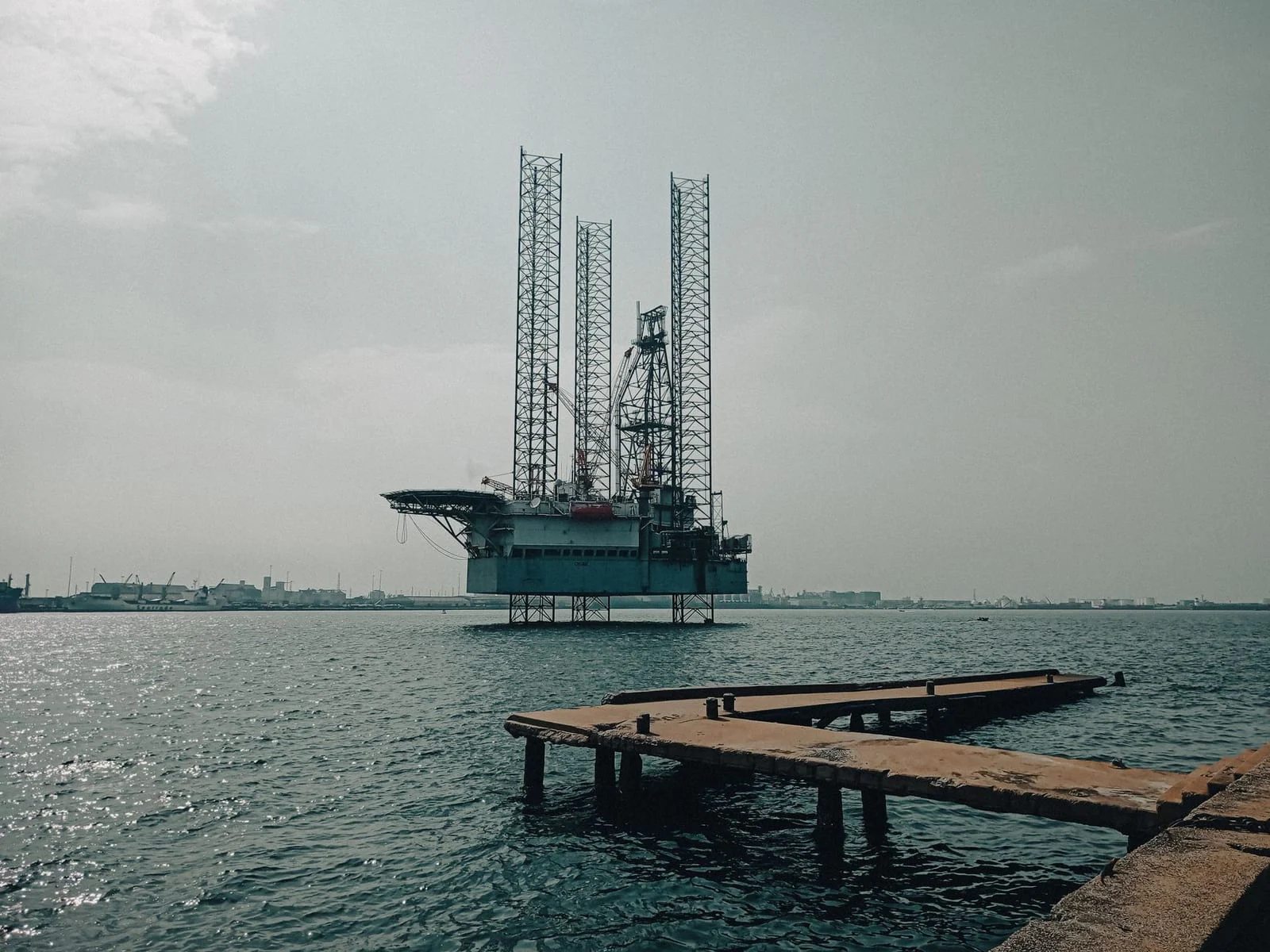
Welded structural frames, pipework, pressure vessels, subsea fittings, marine heat exchangers and offshore platform components. 316L's immunity to post-weld sensitisation is essential — field welds on marine structures cannot always receive heat treatment. Long-term natural-seawater studies confirm 316L suffers crevice corrosion less well than duplex grades (ranked 316L ≫ 2205 > 2507), so permanently-immersed service steps up to duplex steel.[5] For the vast majority of marine structural, topside and coastal fabrications, 316L remains the cost-effective standard.
Medical & Surgical Implants
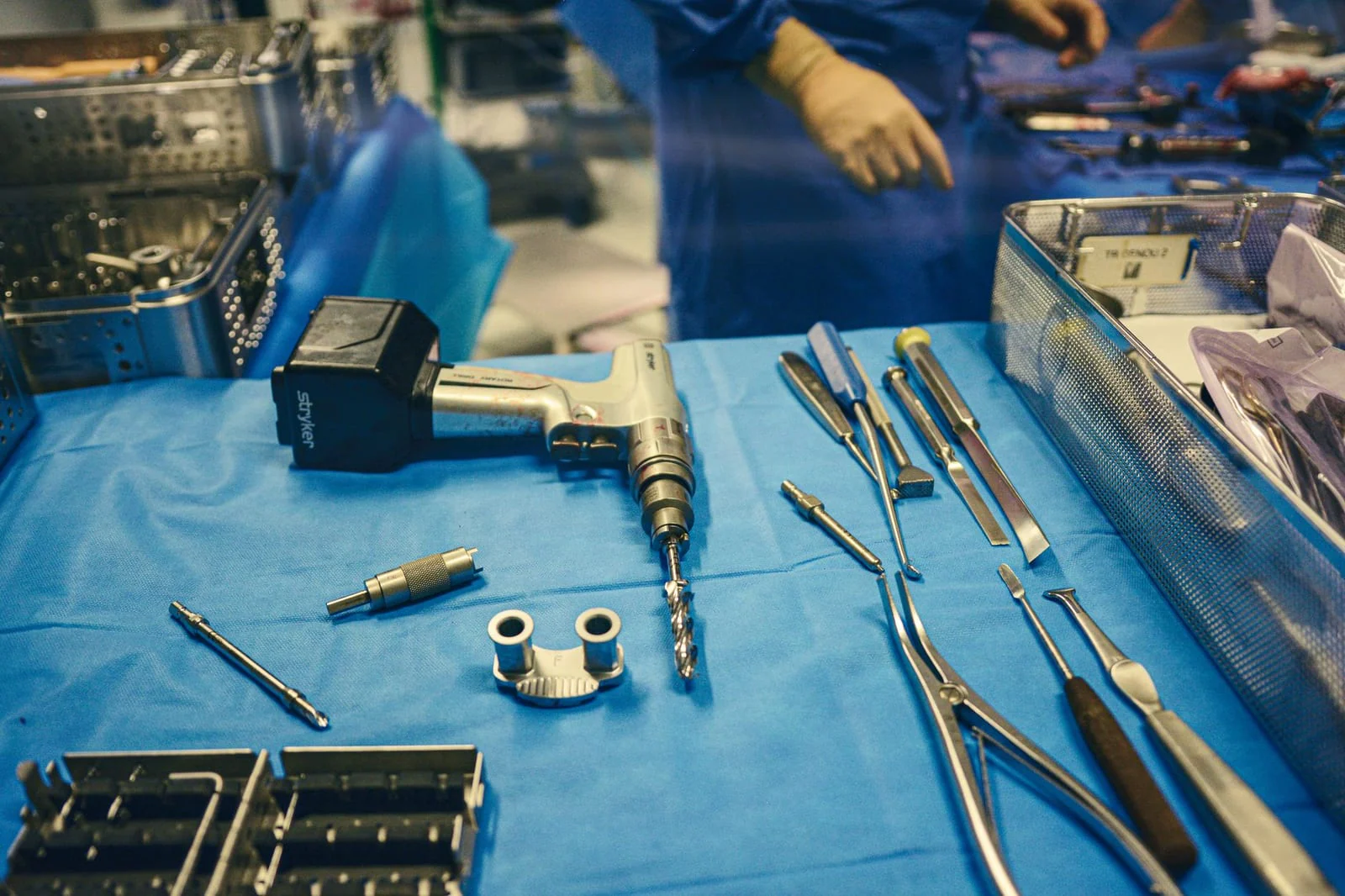
316L "is widely used in orthopedic and dental implants," where corrosion resistance in chloride-rich body fluids and mechanical reliability are essential.[7] The LPBF (laser powder bed fusion) additive manufacturing route produces 316L with full microstructure control for complex implant geometries.[7] Cytocompatibility studies confirm uncoated 316L allows neural cells to adhere, grow and differentiate — supporting use in nerve-contacting devices.[8] The low carbon also limits any risk of in-vivo sensitisation at body temperature.
Chemical & Pharmaceutical
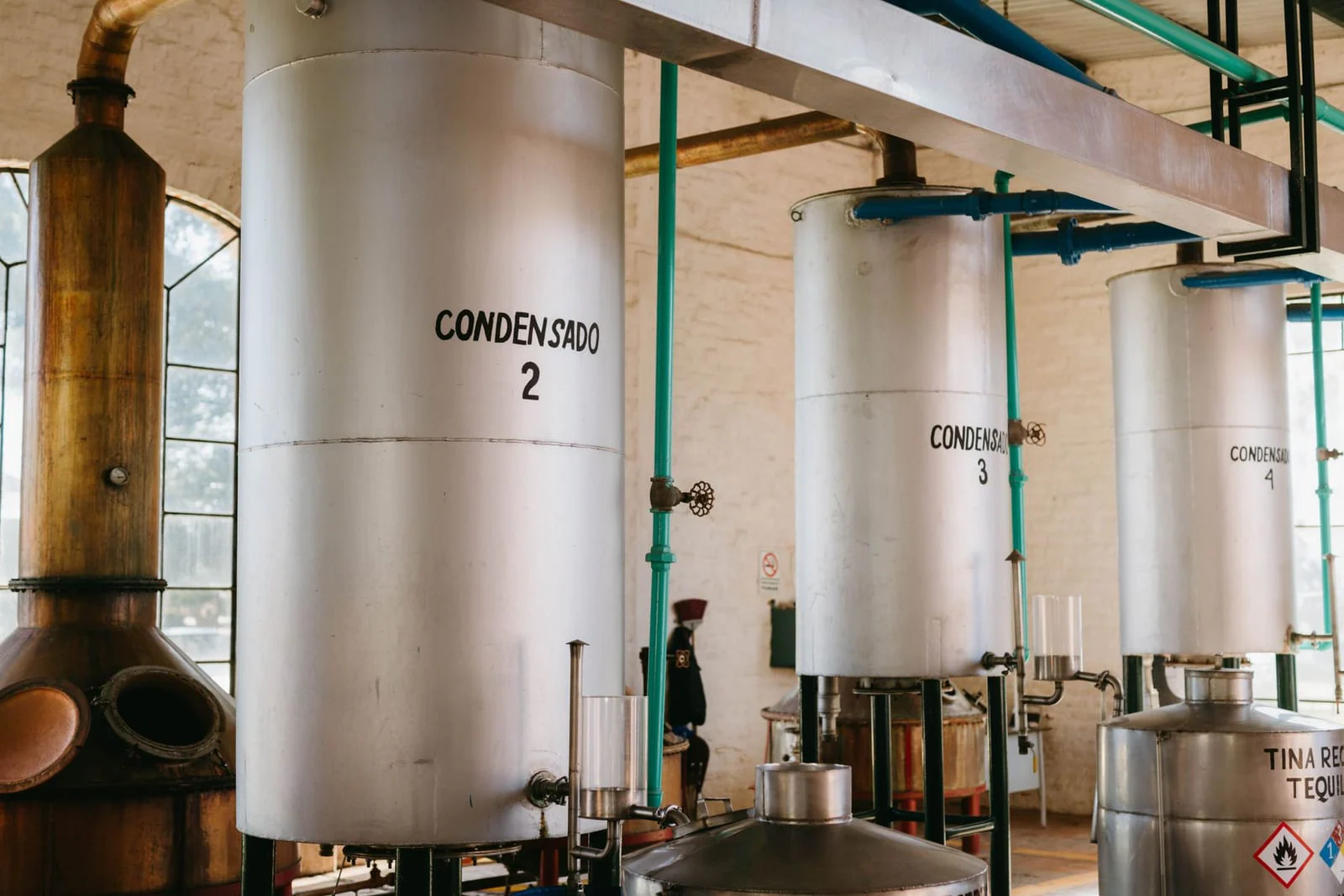
Welded tanks, reactors, heat exchangers and pipework handling chloride-bearing chemistries, aggressive solvents and sterile pharmaceutical manufacturing. The weld-safe low carbon means process equipment can be fabricated without post-weld heat treatment — a major practical advantage at scale. The same molybdenum-driven passive film handles the chloride chemistry that would pit 304 or 304L.
Forms & Finishes
Common product forms:CoilSheetPlateTubeBar
Surface finishes:2BBANo.4HLMirror
A smoother finish leaves fewer crevices for contaminants to lodge in — a benefit that matters even more in the chloride and implant service where 316L is chosen.
References
- Stainless Steel – Grade 316L (UNS S31603). AZoM (materials datasheet based on the ASTM/AISI grade system). azom.com/article.aspx?ArticleID=2382
- Molybdenum effects on the stability of passive films unraveled at the nanometer and atomic scales. Maurice V., Marcus P. npj Materials Degradation, vol. 7 (2023). doi.org/10.1038/s41529-023-00418-6
- Pitting corrosion behaviour of austenitic stainless steels – combining effects of Mn and Mo additions. Pardo A., Merino M.C., Coy A.E., Viejo F., Arrabal R., Matykina E. Corrosion Science, vol. 50, 1796–1806 (2008). doi.org/10.1016/j.corsci.2008.04.005
- Pitting corrosion characteristics of sintered Type 316L SS: pores and MnS inclusions. Saito et al. npj Materials Degradation, vol. 8 (2024). doi.org/10.1038/s41529-024-00482-6
- A comparison study of crevice corrosion on typical stainless steels under biofouling and artificial configurations. Zhang Z., Li Z., Wu F., Xia J., Huang K., Zhang B., Wu J. npj Materials Degradation, vol. 6 (2022). doi.org/10.1038/s41529-022-00301-w
- Reconstruction of the Passive Layer of AISI 304 and 316 Steel After Scratching. Charazińska S., Sikora A., Malczewska B., Lochyński P. Materials, vol. 17, 6238 (2024). doi.org/10.3390/ma17246238
- Manufacturing, Microstructure, and Mechanics of 316L SS Biomaterials by Laser Powder Bed Fusion. Journal of Functional Biomaterials, vol. 16, 280 (2025). doi.org/10.3390/jfb16080280
- Cytocompatibility Study of Stainless Steel 316L Against Differentiated SH-SY5Y Cells. Zingkou E., Kolianou A., Angelis G., Lykouras M., Orkoula M., Pampalakis G., Sotiropoulou G. Biomimetics, vol. 10, 169 (2025). doi.org/10.3390/biomimetics10030169