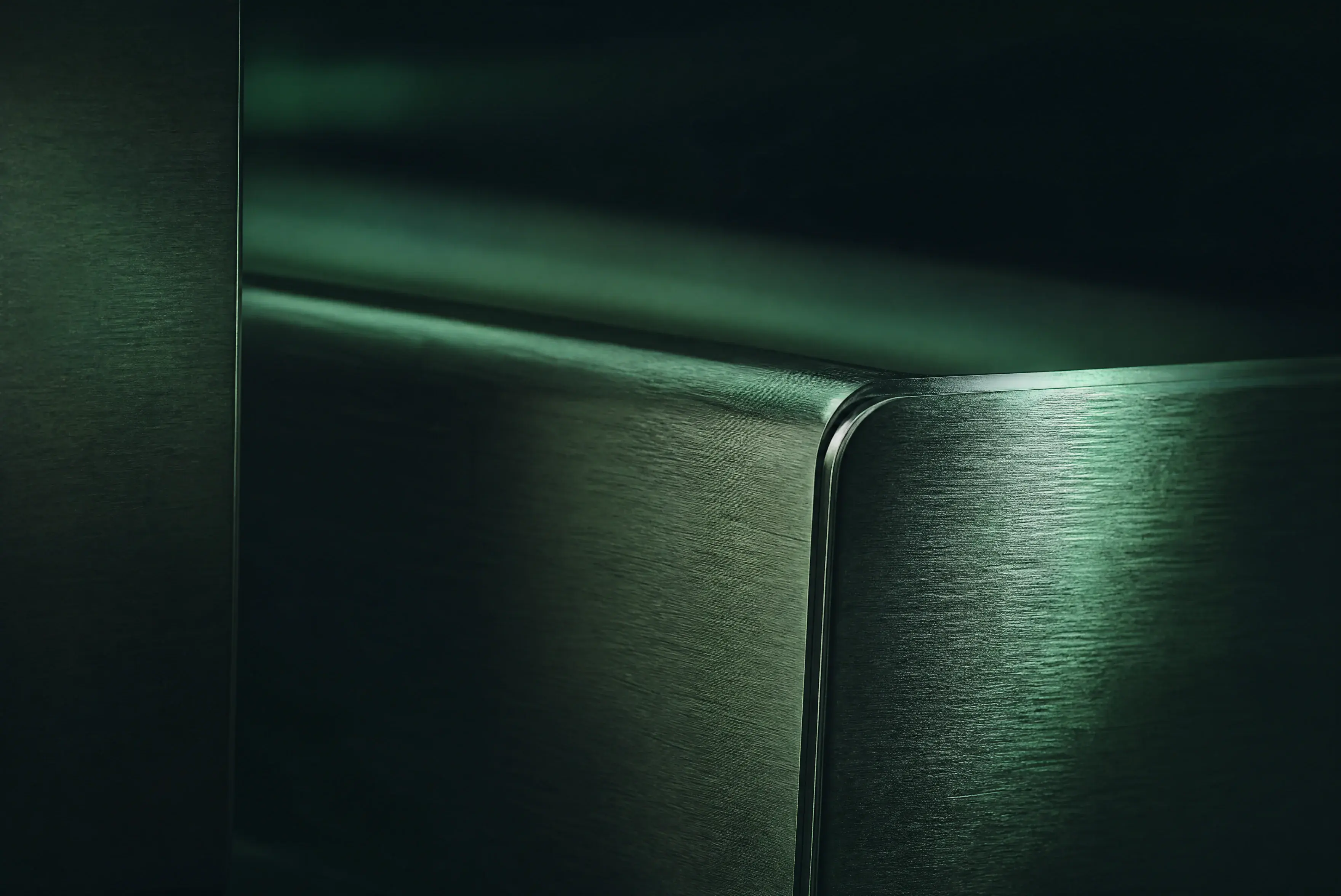
In short: Type 304 is the most widely used austenitic stainless steel — the classic "18/8" grade with roughly 18% chromium and 8% nickel. It delivers an exceptional balance of corrosion resistance, formability and hygienic cleanability, and is non-magnetic in the annealed state. Its main limitation is pitting in chloride-rich environments such as seawater and de-icing salt, which is exactly the gap that the molybdenum-bearing grade 316 was created to fill.
What 304 Stainless Steel Is
Type 304 is the default member of the austenitic stainless steel family and, by tonnage, the most commonly specified stainless steel on earth. It is built on the simple "18/8" recipe — about 18% chromium and 8% nickel in an iron base — and that single composition turns up in everything from kitchen sinks and brewing tanks to building façades and surgical trays.[1]
Because it is traded worldwide, the same alloy carries several names. In the Unified Numbering System it is UNS S30400; in the European EN system it is 1.4301 (X5CrNi18-10); and in Japanese practice it is SUS 304. All of these refer to the same austenitic stainless steel, frequently described in industry simply as "18/8."[1] It is, in the words of the standard datasheet, "the most versatile and most widely used stainless steel" — popular precisely because one affordable grade covers such a wide span of jobs.[1]
Chemical Composition
The performance of 304 flows directly from its chemistry: enough chromium to build a protective oxide layer, enough nickel to lock in a ductile austenitic structure, and tightly controlled levels of carbon and impurities. The chart below shows the balance by weight, and the table lists the specified ranges per the ASTM A240 grade limits.[1]
| Element | Symbol | Content (wt%) | Role |
|---|---|---|---|
| Chromium | Cr | 18–20 | Forms the self-healing passive oxide film — the source of "stainless" |
| Nickel | Ni | 8–10.5 | Stabilises the ductile, non-magnetic austenite phase |
| Carbon | C | ≤ 0.08 | Kept low to limit carbide precipitation and preserve corrosion resistance |
| Manganese | Mn | ≤ 2 | Deoxidiser; aids hot working and austenite stability |
| Silicon | Si | ≤ 0.75 | Deoxidiser; assists oxidation resistance |
| Phosphorus | P | ≤ 0.045 | Residual impurity, held low |
| Sulfur | S | ≤ 0.03 | Residual; forms MnS inclusions (pit-initiation sites) |
| Iron | Fe | Balance | Base metal |
Specified composition limits per the ASTM A240 datasheet.[1]
Crystal Structure: FCC Austenite
Stainless steel is an alloy — a solid solution of several elements in iron — so it has no molecular formula. The right way to describe 304 is by its crystal structure: at room temperature it is austenite, a face-centred-cubic (FCC) arrangement of atoms with a unit cell that holds atoms at every corner and at the centre of every face.[1]
Plain low-alloy steels are body-centred-cubic (BCC) ferrite, which is magnetic and far less ductile. The roughly 8% nickel in 304 stabilises the FCC austenite phase all the way down to room temperature, and that single fact explains the grade's signature behaviour: excellent ductility and deep-drawing formability, plus the fact that fully annealed 304 is essentially non-magnetic.[1]
That non-magnetic character is not permanent. The austenite in 304 is metastable, so heavy cold work can transform some of it into magnetic α′-martensite. As a result a cold-formed 304 component — a deep-drawn cup or a bent edge — can become slightly magnetic even though the annealed sheet it came from was not.[7]
Why It Doesn't Rust: The Passive Film
The "stainless" in stainless steel comes from chromium, not from any coating or plating. Once the chromium content rises above roughly 11%, the alloy spontaneously grows an ultra-thin, chromium-rich oxide layer on its surface — only a few nanometres thick, yet dense and tightly bonded. This passive film is what stands between the metal and the environment.[2]
Surface analysis confirms that the passive film on 304 is composed mainly of chromium and iron oxides, with the surface enriched in chromium relative to the bulk metal — and it is that chromium enrichment that governs the steel's corrosion resistance.[2] The film's most useful property is that it heals itself. When 304 is scratched and the bare metal is exposed to air or water, the oxide re-forms; experiments that deliberately scratch the surface and track its recovery measure a reconstruction time of about 2 hours, with the regrown film showing a markedly higher chromium-to-iron ratio than the original surface.[3] This self-repair is the real reason 304 stays bright in service rather than rusting at every nick.
The passive film has one well-known weakness: chloride ions. In salty environments — seawater, coastal air, de-icing salt, some food brines — chlorides can locally break down the film and start pitting corrosion. That vulnerability is what motivates the move to 316, discussed below.
Mechanical & Physical Properties
The values below are the specified/typical values per the ASTM A240 datasheet for annealed 304; the strength figures are specified minimums for the grade.[1]
| Tensile strength (MPa) | ≥515 |
| Yield strength (MPa) | ≥205 |
| Elongation (%) | ≥40 |
| Hardness | ≤201 HB |
| Density (g/cm³) | 7.93 |
| Elastic modulus (GPa) | 193 |
| Magnetic response | Non-magnetic (annealed) |
What stands out is the combination of moderate strength with very high ductility — a minimum of 40% elongation is generous for a structural metal, and it follows directly from the FCC austenite structure described earlier.[1] That ductility is what lets 304 be deep-drawn into sinks, spun into pots and roll-formed into tube without cracking.
304 also work-hardens strongly. As it deforms, some of the metastable austenite transforms into strain-induced α′-martensite, and the strain-hardening rate of these metastable austenitic stainless steels is closely tied to how much of that martensite forms during deformation.[7] This transformation-induced plasticity (TRIP) effect both raises the strength of cold-worked parts and explains why a heavily formed 304 component can pick up a faint magnetic response that the annealed sheet never had.[7]
Key Characteristics
- Formability. The FCC austenite gives outstanding cold-forming behaviour — deep drawing, bending, spinning and roll forming are all straightforward.
- Weldability. 304 welds readily by all common methods; for sustained service after welding, the low-carbon variant 304L avoids carbide precipitation in the heat-affected zone.
- Work-hardening. Because it hardens rapidly as it deforms, 304 can be tough on tooling — machining calls for sharp tools, rigid setups and positive feeds to avoid glazing the surface.
- High-temperature oxidation resistance. The chromium oxide layer also protects against scaling at elevated temperatures, making 304 a sound choice for moderately hot service.
- Hygiene & cleanability. The smooth, non-porous passive surface resists bacterial harbourage and stands up to repeated cleaning and sanitising — a key reason it dominates food and medical equipment.
How 304 Is Made
Production starts by melting scrap and ferroalloys in an electric arc furnace, then refining the melt in an argon–oxygen decarburisation (AOD) vessel to drive carbon down while preserving chromium. The steel is then cast, hot- and cold-rolled to gauge, annealed to restore the soft austenitic structure, and finally pickled and passivated to clean the surface and re-establish a uniform passive film before finishing.
304 vs 316
The most common cross-shopping question in stainless steel is 304 versus 316. The structural difference is small but decisive: 316 adds 2–3% molybdenum on top of the same austenitic base, and that molybdenum dramatically improves resistance to chloride pitting and crevice corrosion.
The reason this matters comes down to where pits start. In chloride solutions such as 3.5% NaCl, the manganese-sulfide (MnS) inclusions left over from steelmaking act as pit-initiation sites in 304: the inclusions dissolve, chloride concentrates in the resulting cavity, and pitting propagates along the inclusion/matrix boundary.[4] The same MnS-driven mechanism is documented across stainless grades, where MnS inclusions are repeatedly identified as the locations where pitting begins.[5] Molybdenum in 316 strengthens the passive film against this attack, which is why 316 is the marine and chemical-process choice. For everything that doesn't see heavy chloride loads, 304 remains the cost-effective generalist.
Variants & Related Grades
304 anchors a small family of closely related grades, each tuned for a particular service:
- [304L](/en/materials/stainless-steel/304l) — the low-carbon version (C ≤ 0.030%). The reduced carbon suppresses chromium-carbide precipitation during welding, giving better resistance to intergranular corrosion in welded assemblies. It is the default where parts will be welded and left in the as-welded condition.
- [304H](/en/materials/stainless-steel/304h) — the high-carbon version, with carbon held in a controlled higher band to provide better creep and high-temperature strength for elevated-temperature pressure equipment.
- 304N — a nitrogen-strengthened variant; the added nitrogen raises strength through solid-solution hardening while keeping the austenitic structure and good formability.
The detailed 304L and 304H pages are linked above for readers who need the specific weld or high-temperature data; for general-purpose work the standard 304 covered here is the usual starting point.
Applications by Industry
Because one affordable grade covers corrosion resistance, hygiene and good looks, 304 turns up across nearly every sector.
Food & Beverage

304 and 304L dominate food and beverage processing equipment thanks to their corrosion resistance, hygienic properties and cost-effectiveness — tanks, mixers, conveyors, worktops and sinks are routinely made from it. The same studies note that in chloride-bearing media it remains prone to pitting and crevice corrosion, which is why brine- and seawater-contact parts often step up to 316.[6]
Architecture

Cladding, handrails, roofing accents and street furniture exploit 304's bright finish, formability and long, low-maintenance service life in non-coastal environments.
Chemical & Industrial
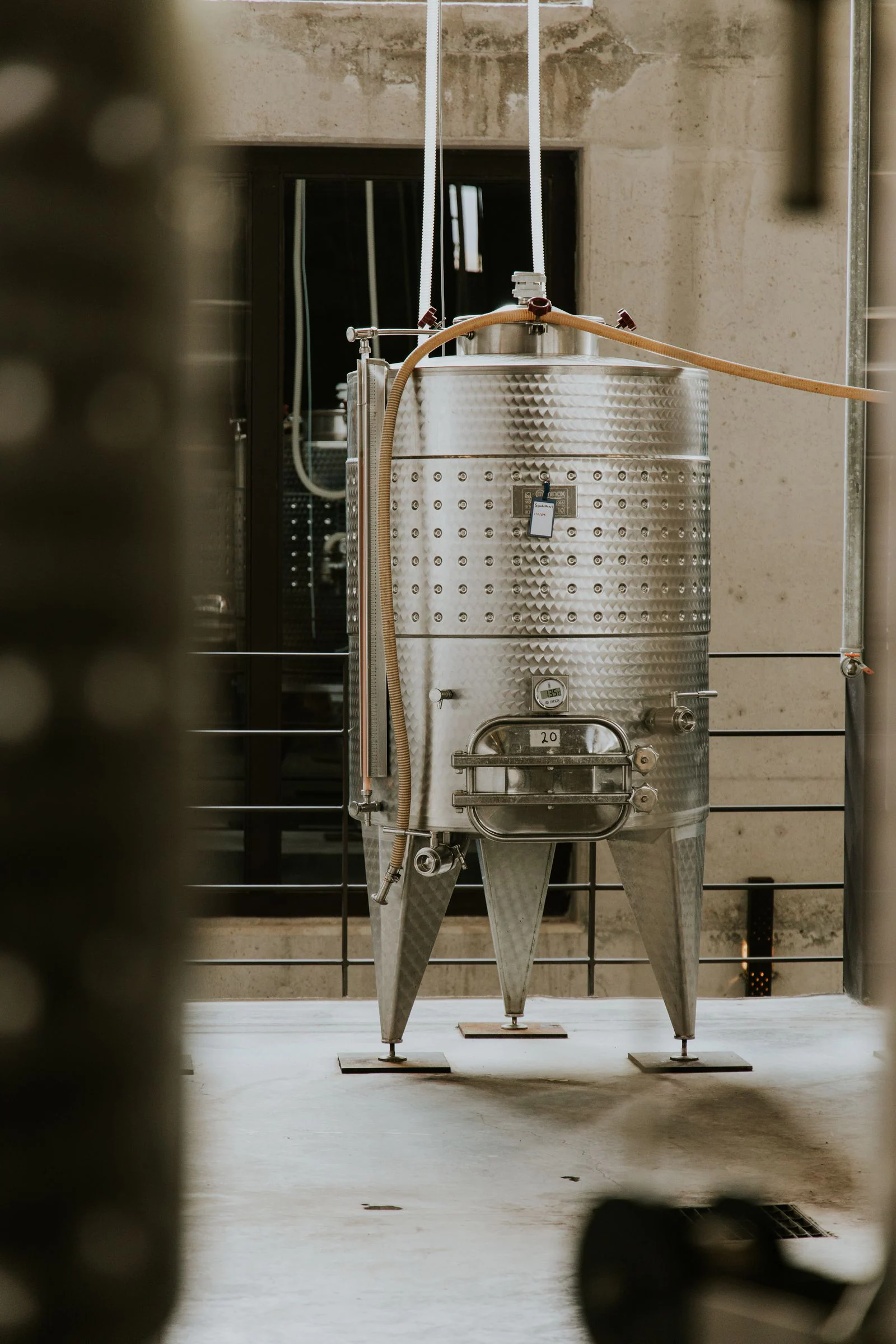
Storage tanks, piping, pressure vessels and heat exchangers handling non-chloride chemistries use 304 as a workhorse, moving to 316 only when chlorides or aggressive acids demand the extra molybdenum.
Medical
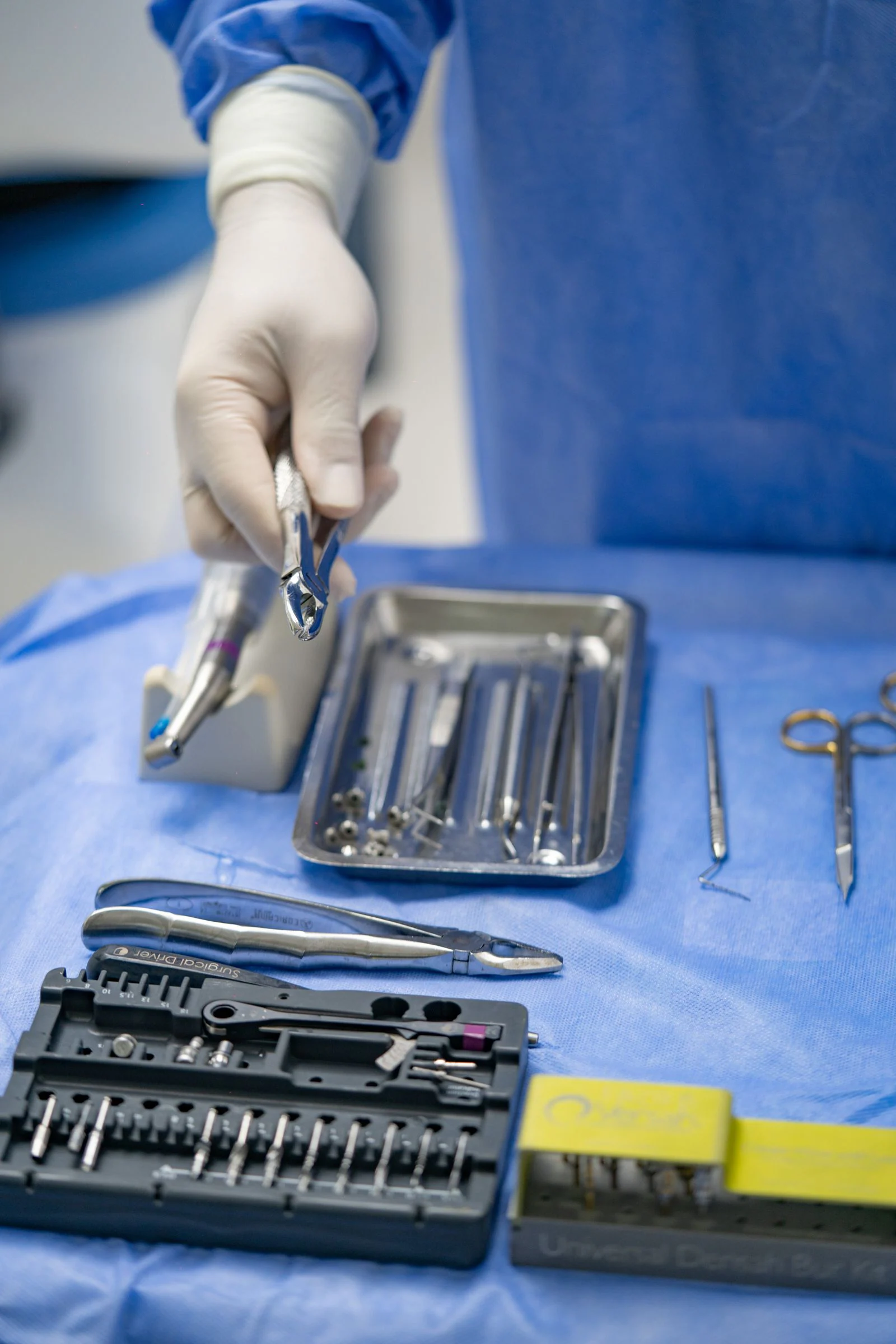
304 is also used for medical devices and equipment, including items that come into contact with — or are surgically implanted within — the human body, where cleanability and reliable, predictable performance are essential.[8]
Forms & Finishes
Common product forms:CoilSheetPlateTubeBar
Surface finishes:2BBANo.4HLMirror
As a rule of thumb, a smoother finish leaves fewer crevices for contaminants to lodge in, which translates to marginally better corrosion resistance as well as easier cleaning.
References
- Stainless Steel – Grade 304 (UNS S30400). AZoM (materials datasheet based on the ASTM/AISI grade system). azom.com/article.aspx?ArticleID=965
- Characterization of Passive Films Formed on As-received and Sensitized AISI 304 Stainless Steel. Zhang Y., Luo H., Zhong Q., Yu H., Lv J. Chinese Journal of Mechanical Engineering, vol. 32 (2019). doi.org/10.1186/s10033-019-0336-8
- Reconstruction of the Passive Layer of AISI 304 and 316 Steel After Scratching. Charazińska S., Sikora A., Malczewska B., Lochyński P. Materials, vol. 17, 6238 (2024). doi.org/10.3390/ma17246238
- Evolution of the Corrosion Products around MnS Embedded in AISI 304 Stainless Steel in NaCl Solution. Li D., Hao H., Wang Z., Nyakilla E. E., et al. Materials, vol. 17, 4050 (2024). doi.org/10.3390/ma17164050
- Pitting corrosion characteristics of sintered Type 316 L stainless steel: relationship between pores and MnS. Saito H., Nishimoto M., Muto I., et al. npj Materials Degradation, vol. 8 (2024). doi.org/10.1038/s41529-024-00482-6
- Study of the Corrosion Behavior of Stainless Steel in Food Industry. Rossi S., Leso S. M., Calovi M. Materials, vol. 17, 1617 (2024). doi.org/10.3390/ma17071617
- Strain induced martensite formation and its effect on strain hardening behavior in the cold drawn 304 austenitic stainless steels. Choi J. Y., Jin W. Scripta Materialia, vol. 36 (1997). doi.org/10.1016/S1359-6462(96)00338-7
- Medical Applications of Stainless Steel 304 (UNS S30400). AZoM (applications overview). azom.com/article.aspx?ArticleID=6641