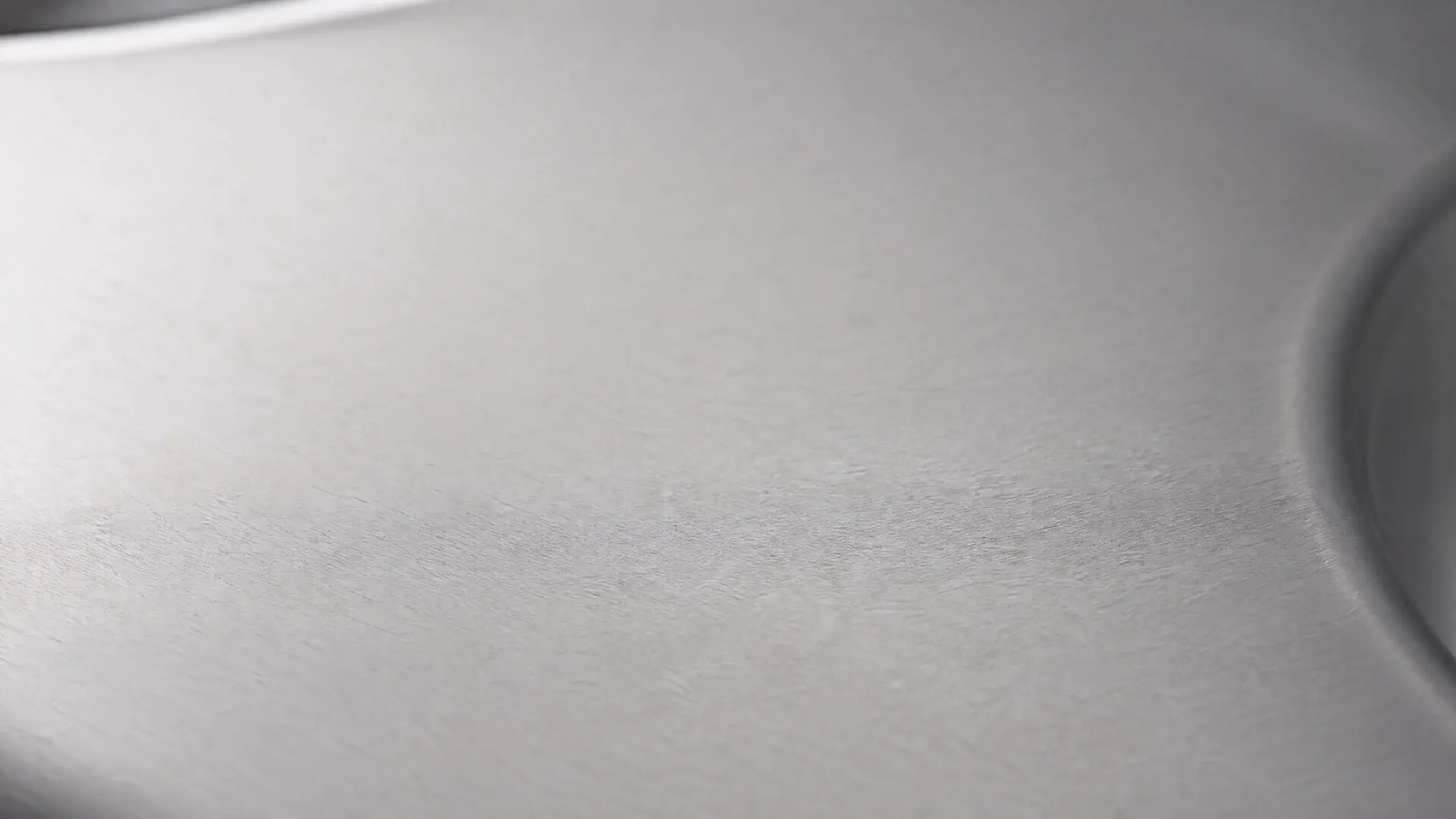
In short: Type 310S is the go-to austenitic stainless steel for extreme heat. Its 25% chromium and 20% nickel — far above the 18/8 of everyday 304 — build a dense, self-renewing chromium-oxide scale that resists oxidation and carburisation in continuous service up to approximately 1100 °C. The low carbon cap (≤ 0.08%) makes it the welding-friendly, sensitisation-resistant sibling of plain 310. Choose it for industrial furnace parts, muffle tubes, retorts, heat-treatment fixtures, and high-temperature flue systems where ordinary grades simply scale away.
What 310S Stainless Steel Is
Type 310S is the heat-resistant workhorse of the austenitic stainless steel family. Where 304 (18% Cr, 8% Ni) serves the broad middle of industrial life and 316 handles chloride-rich corrosion, 310S occupies a different corner entirely: it is engineered for sustained operation at temperatures that would cause most other stainless grades to scale, oxidise, and lose structural integrity.[1]
In the Unified Numbering System it is UNS S31008; in Europe it is EN 1.4845; in Japan, SUS310S. All three designations describe the same 25Cr–20Ni austenitic alloy, and the "S" suffix signals a critical difference from its sibling grade 310: carbon is held to ≤ 0.08 wt%, which suppresses chromium-carbide precipitation during welding and reduces sensitisation risk in service. Standard 310 allows up to 0.25% C for greater creep strength; 310S trades a fraction of that creep strength for superior fabricability and weld integrity.[1]
The hallmark of 310S is its outstanding resistance to high-temperature oxidation and carburisation — the result of a remarkably high chromium content (24–26%) that builds a thick, stable chromium-oxide (Cr₂O₃) scale on the surface, and a high nickel content (19–22%) that locks in the austenitic FCC structure, resists carburisation, and reduces the thermal-fatigue cracking that destroys less alloyed steels under cyclic heating and cooling.
Chemical Composition
310S has one of the highest combined chromium and nickel contents among standard wrought stainless steels. The chart below makes the contrast with everyday 304 immediately visible — more than 7 additional percentage points of chromium and more than 10 additional points of nickel, with iron correspondingly reduced.[1]
| Element | Symbol | Content (wt%) | Role |
|---|---|---|---|
| Chromium | Cr | 24–26 | Primary oxidation shield: forms a stable Cr₂O₃ scale at temperatures to ~1100 °C |
| Nickel | Ni | 19–22 | Stabilises the fully austenitic FCC structure; resists carburisation and thermal fatigue |
| Carbon | C | ≤ 0.08 | Low-carbon "S" designation: suppresses Cr-carbide sensitisation during welding |
| Manganese | Mn | ≤ 2 | Deoxidiser; austenite former; contributes to MnCr₂O₄ spinel in the oxide scale |
| Silicon | Si | ≤ 1.5 | Deoxidiser; assists oxidation resistance; contributes the SiO₂ inner oxide layer |
| Iron | Fe | Balance | Base metal |
Composition limits per ASTM A240 / ASME SA240 for UNS S31008.[1]
Crystal Structure: Stable FCC Austenite
Stainless steel is an alloy — a solid solution of several elements in iron — so it has no molecular formula. The right description is its crystal structure: 310S is austenite, a face-centred-cubic (FCC) arrangement of iron, chromium, nickel, and minor atoms with one atom at every corner and one at the centre of every face of the cubic unit cell.[1]
Plain low-alloy steels are body-centred-cubic (BCC) ferrite. Nickel pushes iron into the FCC austenite phase and holds it there. At 8% Ni, grade 304's austenite is *metastable* — heavy cold work can trigger a partial transformation to hard α′-martensite (the TRIP effect). At 19–22% Ni, 310S's austenite is fully stable: no strain-induced martensite, no TRIP, and essentially non-magnetic even after cold work. This stability is also why 310S can cycle between extreme temperatures repeatedly without the phase-change cracking that undermines lower-alloy grades.[1]
Why It Survives Extreme Heat: Passive Film and High-Temperature Oxide Scale
All stainless steels derive their corrosion resistance from a passive film — an ultra-thin, self-healing chromium-rich oxide that forms spontaneously when chromium content exceeds roughly 11%. The film in 310S works by the same mechanism, with chromium enriched at the film surface relative to the bulk metal, and that chromium-rich layer is the primary barrier against corrosion.[2]
What sets 310S apart from standard austenitic grades is what happens above roughly 600 °C. Rather than a thin passive film, the steel grows a multi-layer high-temperature oxide scale whose architecture, revealed by high-resolution SEM and TEM characterisation, consists of three functional layers:[3]
- Outer layer: FeO·Cr₂O₃ and MnCr₂O₄ spinel compounds, which form a porous external shell.
- Middle layer: Dense, continuous Cr₂O₃ — the key protective barrier. This is the layer that controls oxidation kinetics. By providing a thermodynamically stable, low-diffusivity path for metal and oxygen ions, it dramatically slows the rate of further oxidation.
- Inner layer: SiO₂, supplied by the silicon content of 310S (≤ 1.5%), which acts as a secondary diffusion barrier at the metal–oxide interface.
The dense Cr₂O₃ layer elevates the activation energy required for metal-ion diffusion, thereby retarding oxide-scale growth and sustaining protection at temperatures where most stainless steels fail.[4] The result: 310S retains structural integrity in continuous service to approximately 1100 °C and in intermittent (cyclic) service to roughly 1150 °C.
One practical note on limits: 310S is *not* designed for strongly chloride-rich or aggressively acid environments — for those, the corrosion at room temperature would require a different selection. Its niche is thermal extremity, not chloride resistance.
Mechanical & Physical Properties
The following room-temperature values are the specified minimums and typical figures per ASTM A240 for annealed 310S plate and sheet.[1]
| Tensile strength (MPa) | ≥515 |
| Yield strength (MPa) | ≥205 |
| Elongation (%) | ≥40 |
| Hardness | ≤217 HB |
| Density (g/cm³) | 7.98 |
| Elastic modulus (GPa) | 200 |
| Magnetic response | Non-magnetic (annealed) |
Room-temperature strength is comparable to 304 (which also specifies the same tensile, yield and elongation minimums). The real distinction comes at temperature. Uniaxial tensile testing across the range 20–600 °C confirms that strength decreases steadily with temperature, with a modest uptick in tensile strength near 400 °C attributed to carbide precipitation effects — a dynamic strain-ageing phenomenon.[6]
High-Temperature Strength Advantage
At room temperature, 310S and 304 look similar on paper. The gap widens sharply as temperature rises. 304 begins to soften and oxidise significantly above 870 °C; 310S maintains workable strength and resists surface degradation well past 1000 °C. This high-temperature endurance — both creep resistance and oxidation resistance — is the entire engineering reason to select 310S over a cheaper general-purpose grade.
Under cyclic thermal loading (e.g., repeated heating to 900 °C and cooling to room temperature), 310S accumulates lattice distortion and dislocation density, which increases tensile strength but also initiates subsurface micro-cracks over time. In high-temperature conveyor belt and fixture applications, this fatigue accumulation must be accounted for in design life calculations.[5]
Key Characteristics
- High-temperature oxidation resistance. The defining property. The dense Cr₂O₃ middle layer of the oxide scale sustains protection at continuous temperatures up to ~1100 °C — a regime unreachable by 304, 321, or standard 316.
- Carburisation resistance. The high nickel content (19–22%) dramatically reduces the rate of carbon ingress at elevated temperatures, protecting furnace internals that contact carbon-rich atmospheres.
- Austenitic stability at all temperatures. Unlike 304, which has metastable austenite, 310S remains fully FCC from cryogenic temperatures to its service maximum. No strain-induced martensite, no magnetic response after forming, no TRIP-related variability.
- Weldability (vs. 310). The low carbon content (≤ 0.08%) is the key differentiator over plain 310. It suppresses chromium-carbide precipitation in the 425–860 °C sensitisation range, letting welded assemblies go into service without mandatory post-weld annealing in most cases.
- Thermal fatigue tolerance. The combination of stable austenite and high-Ni ductility allows 310S to endure repeated heating and cooling cycles better than ferritic or martensitic alternatives — though long-term cyclic loading does accumulate fatigue damage.[5]
How 310S Is Made
The production route follows the same sequence as other austenitic grades, with the higher alloy content requiring precise melt control to achieve the target 25Cr–20Ni balance. Electric arc furnace (EAF) melting is followed by argon–oxygen decarburisation (AOD) to drive carbon below 0.08% while retaining the substantial chromium charge. The cast slab or ingot is hot-rolled and cold-rolled to gauge, annealed to restore the soft austenitic condition, then pickled and passivated.
The high chromium and nickel content makes 310S more expensive per tonne than 304 or 316, but that premium is the straightforward price of operating at temperatures where cheaper grades fail in weeks or months. For the applications it targets — furnace parts, retorts, radiant tubes — the alloy cost is small compared with the downtime and replacement cost of a lower-grade failure.
310S vs 304 — High-Temperature Capability vs General Purpose
The most useful comparison for buyers is 310S against 304 — the world's default stainless steel. The structural difference is substantial: 310S carries far more chromium and nickel, and that extra alloying is squarely targeted at high-temperature endurance.
For the vast majority of applications — food processing, architecture, chemical tanks, medical equipment — 304 is the right and more economical choice. 310S makes engineering sense only when the operating temperature exceeds roughly 800–870 °C, where 304 begins to scale unacceptably. In that regime, the extra alloy cost of 310S is justified; below it, paying for 25Cr–20Ni is engineering overkill.
A secondary consideration: 304's metastable austenite means it can be work-hardened aggressively and can pick up slight magnetism after cold forming (TRIP). 310S's fully stable austenite means it remains non-magnetic and maintains more predictable mechanical behaviour after forming — which simplifies quality control in precision high-temperature parts.
Variants & Related Grades
- 310 — the base grade, with carbon up to 0.25%. Higher creep strength than 310S at extreme temperatures, but more prone to sensitisation and carbide precipitation. Preferred only in specific high-temperature pressure applications where creep governs the design.
- 310H — carbon held in a controlled higher range (0.04–0.10%) specifically for elevated-temperature pressure service under ASME codes; optimised for creep rupture strength.
- [321](/en/materials/stainless-steel/321) — a titanium-stabilised 18Cr–10Ni grade for moderate high-temperature service (up to ~850 °C) where sensitisation is a concern. Lower alloy, less oxidation resistance than 310S, but cheaper.
- [304](/en/materials/stainless-steel/304) — the general-purpose 18/8 workhorse; choose it for everything that doesn't require elevated-temperature service above ~870 °C.
- [316](/en/materials/stainless-steel/316) — adds 2–3% Mo for chloride resistance; not a high-temperature substitute for 310S.
Applications by Industry
310S's value proposition is concentrated in high-temperature process industries where ordinary stainless steels cannot survive long enough to justify their installation cost.
Industrial Furnace Components
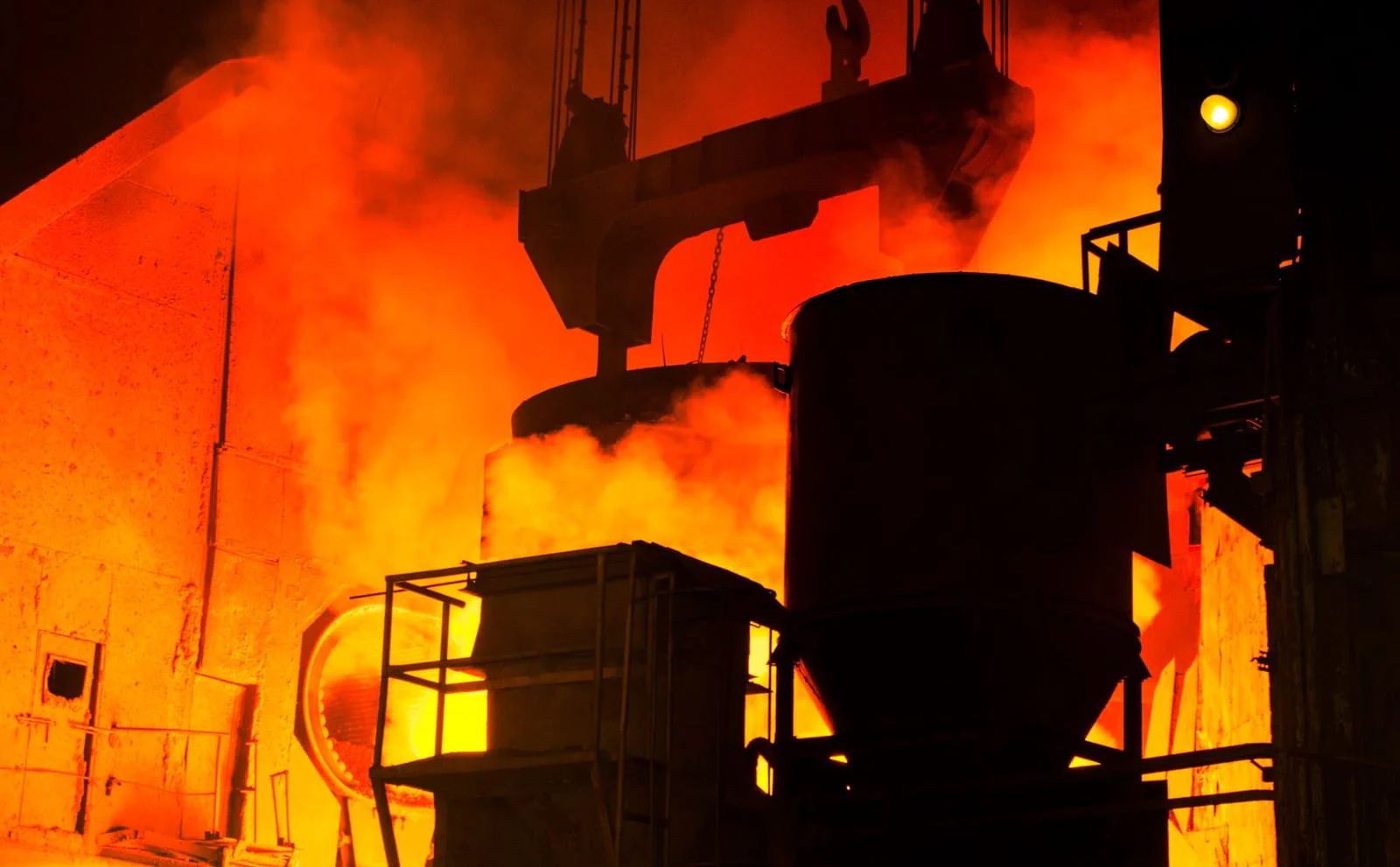
Muffle tubes, radiant tubes, retorts, furnace conveyor belts, and heating element sheathing are among the most demanding applications for any metallic material. Continuous exposure to oxidising or carburising atmospheres at 900–1100 °C demands the stable Cr₂O₃ scale that only grades such as 310S can sustain. The material's carburisation resistance — rooted in its high nickel content — is equally critical in furnaces that process carbonaceous feedstocks.[1]
Heat-Treatment Fixtures and Baskets
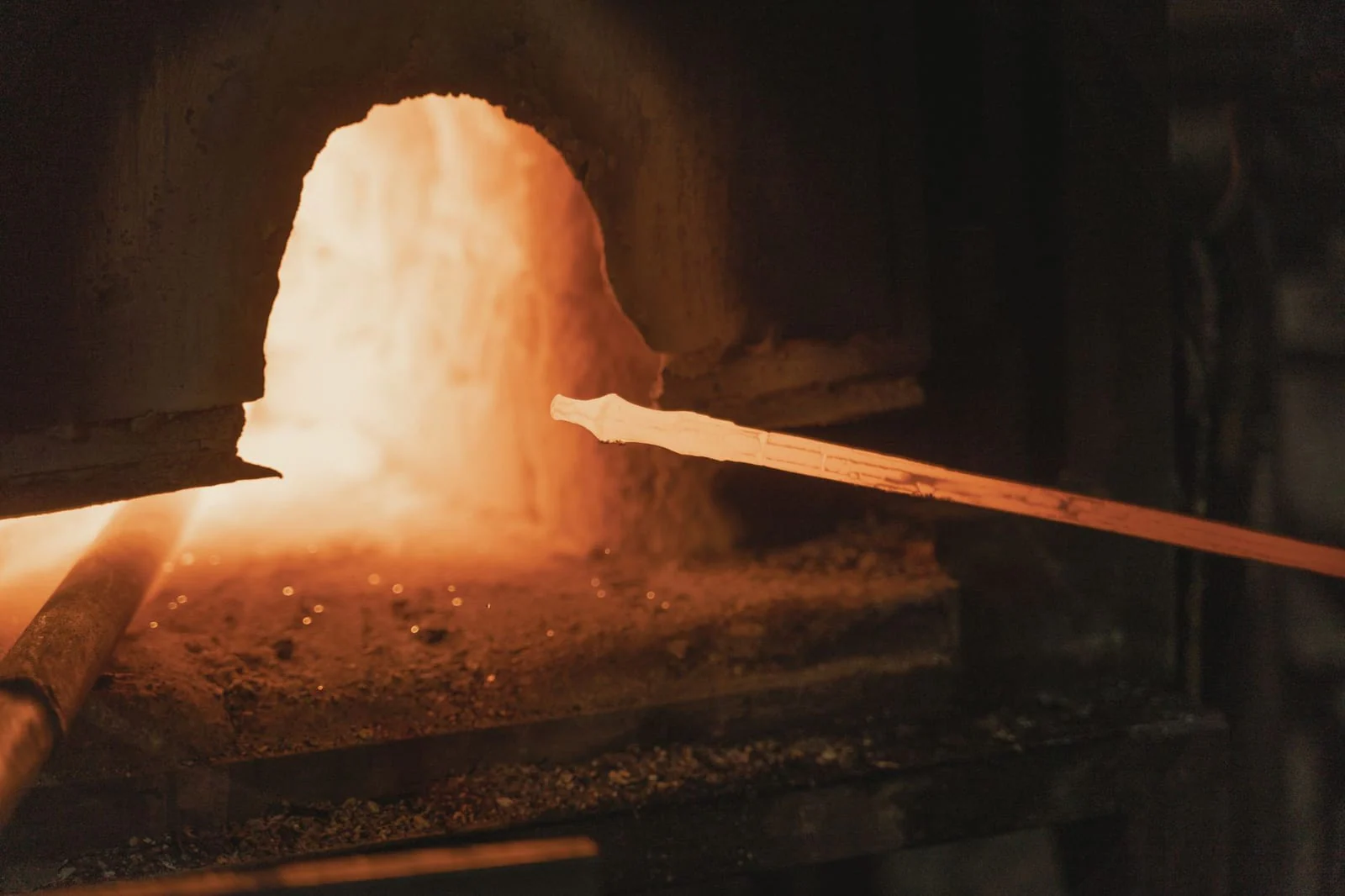
Fixtures, baskets, and trays that carry components through annealing, case-hardening, or solution-treatment cycles experience exactly the combination of loads that 310S handles best: high temperature, cyclic thermal stress, and occasional contact with furnace gases. Its thermal fatigue tolerance, stemming from the stable FCC structure, allows these fixtures to outlast alternatives by a significant margin — reducing replacement frequency and downtime in continuous production environments.[5]
High-Temperature Flue and Exhaust Systems
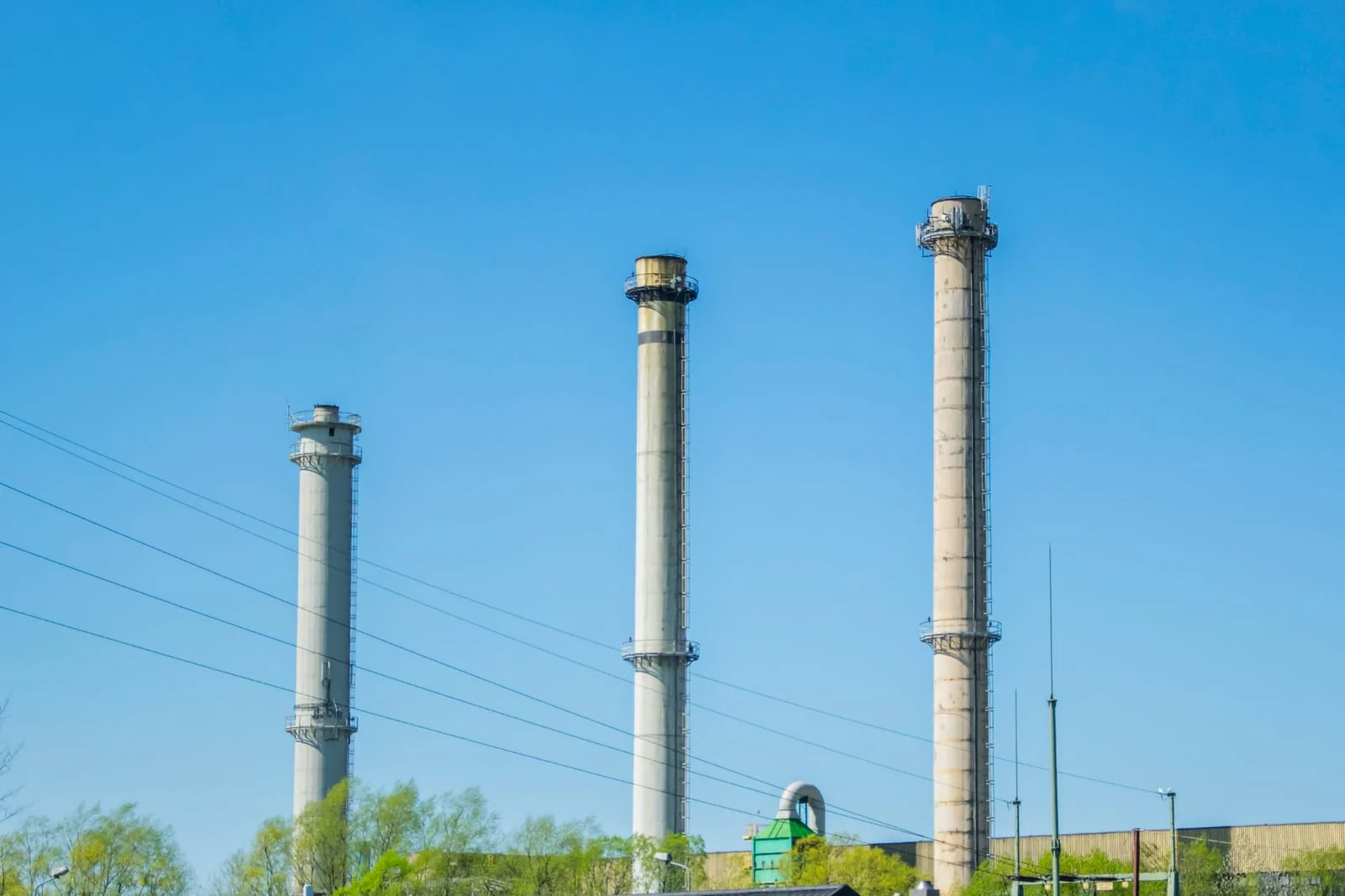
Cement kilns, power plant flue gas systems, and petrochemical process heaters expose ducting and linings to hot, sulphurous or oxidising gases. 310S's 25% chromium provides solid resistance to sulphidation and high-temperature oxidation in these mixed atmospheres, where lower-alloy grades corrode rapidly and require frequent replacement.[1]
Thermal Energy Storage and Advanced Energy Systems
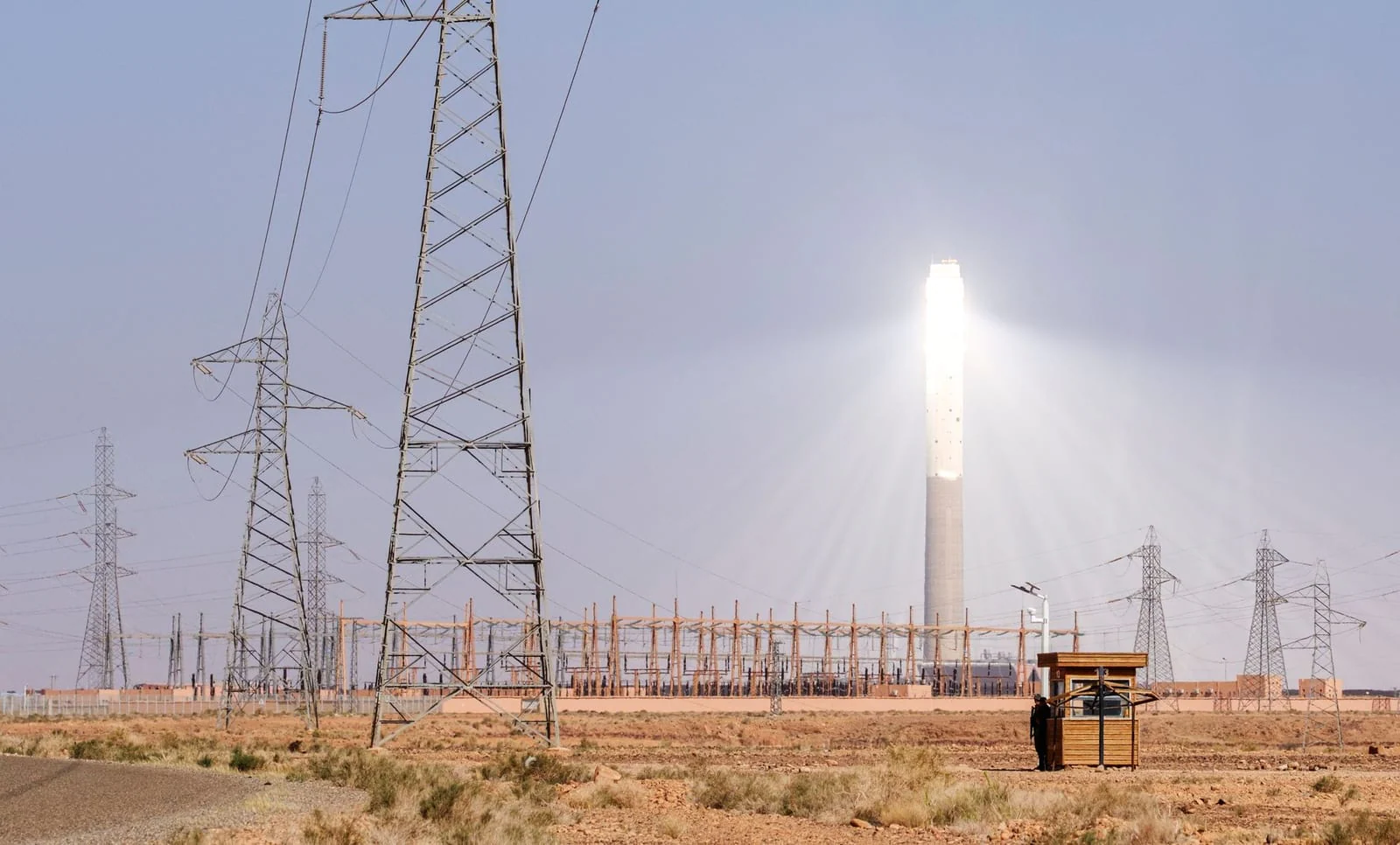
Emerging concentrated solar power (CSP) plants use molten chloride salts as heat transfer and storage media at temperatures up to 800 °C. Research into 310S behaviour in these environments confirms that the Cr₂O₃ and Al₂O₃ protective oxide layers sustain barrier function under these aggressive combined thermal and chemical conditions, making 310S a candidate material for next-generation thermal storage tanks.[4]
Forms & Finishes
Common product forms:SheetPlateCoilTube (seamless & welded)BarStrip
Surface finishes:2BNo.1 (hot-rolled, annealed, pickled)BANo.4
For most high-temperature service (furnace parts, retorts, fixtures), the No.1 hot-rolled-annealed-pickled finish is standard — the application environment quickly develops its own oxide scale over any initial finish, making cosmetic finish largely irrelevant. Sheet and strip in 2B or BA are used where fabrication precision or dimensional consistency matters.
References
- Stainless Steel – Grade 310S (UNS S31008). AZoM (materials datasheet based on the ASTM/AISI grade system). Composition and mechanical property figures cross-verified against ASTM A240 via Sandmeyer Steel and Penn Stainless product data. azom.com/article.aspx?ArticleID=6798
- Characterization of Passive Films Formed on As-received and Sensitized AISI 304 Stainless Steel. Zhang Y., et al. Chinese Journal of Mechanical Engineering, vol. 32 (2019). doi.org/10.1186/s10033-019-0336-8
- Revealing the oxidation mechanism of 310S stainless steel in supercritical water via high-resolution characterization. Chen K., Zhang L., Shen Z., Zeng X. Corrosion Science, vol. 200 (2022), article 110212. doi.org/10.1016/j.corsci.2022.110212
- Corrosion Behavior of Aluminum-Forming Alloy 310S for Application in Molten Chloride Salt CSP Thermal Storage Tank. Wei Y., La P., Jin J., Du M., et al. Frontiers in Materials, vol. 9, article 886285 (2022). doi.org/10.3389/fmats.2022.886285
- A Study on Thermally Fatigued Phase Transformation and Bending Fracture Mechanisms of 310S Stainless Steel. Huang Y.-T., Yen Y.-W., Hung F.-Y. Materials (MDPI), vol. 18, no. 11, article 2654 (2025). doi.org/10.3390/ma18112654
- High-temperature mechanical properties evaluation of 310S stainless steel. Materials at High Temperatures, vol. 40, no. 6 (2023). doi.org/10.1080/09603409.2023.2281111