In short: Type 2205 is the standard (workhorse) duplex stainless steel — a balanced two-phase alloy whose microstructure is roughly 50% ferrite (α, BCC) + 50% austenite (γ, FCC), fixed by composition and a solution-annealing-plus-quench cycle. The dual phase is the whole point: ferrite supplies the high strength and chloride stress-corrosion-cracking (SCC) resistance, austenite supplies the toughness and ductility. The result is roughly twice the yield strength of austenitic 304/316 with a PREN around 35 for pitting resistance — and it achieves this on less nickel than 316. Best where 316 is failing on strength or chloride SCC rather than on general corrosion; step up to super duplex 2507 for the most aggressive seawater service, or down to lean duplex 2304 where Mo can be reduced.
What 2205 Duplex Stainless Steel Is
Type 2205 is the standard, workhorse duplex stainless steel — a balanced two-phase alloy rather than a single-phase austenitic or ferritic grade. Its name encodes its headline chemistry: ~22% chromium, ~5% nickel. To this it adds ~3% molybdenum and a deliberate ~0.15% nitrogen, in an iron base. The combination is engineered so that the solidified, solution-annealed structure holds roughly equal amounts of ferrite (α) and austenite (γ).[1][2]
In the Unified Numbering System it is UNS S32205 (the modern, higher-nitrogen specification) or the older S31803; in European EN it is 1.4462 (X2CrNiMoN22-5-3). The two phases are not an accident of processing — they are the design intent. Duplex grades were developed to associate high mechanical properties with corrosion resistance by combining the strengths of both constituent phases in one alloy.[3]
The microstructure is genuinely two-phase. Measurements on UNS S31803 show the structure composed of ferrite and austenite oriented along the rolling direction, with a ferrite fraction of about 46% in the rolling direction and 56% in the normal direction — confirming the near-balanced, banded duplex structure that defines the grade.[3]
The essential proposition versus the austenitics: 2205 is roughly twice as strong as 304/316, more resistant to chloride stress-corrosion cracking, and uses less nickel — at the cost of a more demanding thermal window during welding and hot work, because the two-phase balance must be preserved.[2]
Chemical Composition
Composition limits for Type 2205 (per ASTM A240 / A790 for UNS S32205 / S31803). The chemistry is tuned to balance the two phases: chromium and molybdenum are ferrite-forming and drive corrosion resistance, while nickel and nitrogen are austenite-forming. Nitrogen does double duty — it stabilises austenite, raises strength, and lifts pitting resistance.[1][2]
| Element | Symbol | Content (wt%) | Role |
|---|---|---|---|
| Chromium | Cr | 22–23 | Ferrite-former; builds the passive film and is the largest term in PREN |
| Nickel | Ni | 4.5–6.5 | Austenite-former; balances the phase ratio — kept lower than in 316 |
| Molybdenum | Mo | 3–3.5 | Ferrite-former; sharply improves pitting/crevice resistance (3.3× term in PREN) |
| Nitrogen | N | 0.14–0.2 | Austenite-former; interstitial strengthener and the 16× term in PREN |
| Carbon | C | ≤ 0.03 | Held very low (≤0.03%) to avoid chromium-carbide sensitisation |
| Iron | Fe | Balance | Base metal |
Per ASTM A240 / A790 for UNS S32205 / S31803 (EN 1.4462).[1]
Crystal Structure: A Balanced Two-Phase α + γ Microstructure
Stainless steel is an alloy — a solid solution of elements in iron — so it has no molecular formula. The correct description is by crystal structure. For 2205 that description is two crystal structures coexisting at once, in roughly equal amounts.
About half the volume is ferrite (α), a body-centred cubic (BCC) phase, and about half is austenite (γ), a face-centred cubic (FCC) phase. They form interleaved bands. This is not a single-phase grade dressed up — it is a genuine dual-phase Fe–Cr–Ni–N alloy consisting of equal amounts of ferrite (α) and austenite (γ), and the combined BCC-plus-FCC lattice arrangement is precisely what gives the alloy its character.[2]
Each phase carries a distinct job. The BCC ferrite contributes the high strength and the resistance to chloride stress-corrosion cracking; the FCC austenite contributes the toughness and ductility. The combined BCC-and-FCC structure gives greater strength and offers excellent resistance against stress-corrosion cracking — neither single-phase grade matches the pairing.[2] Because roughly half the structure is ferromagnetic ferrite, 2205 is magnetic, unlike the austenitic 304/316.
The ~50/50 balance is set by composition (the ferrite-former vs. austenite-former tally) and locked in by solution annealing followed by rapid cooling. Get the balance wrong — or hold the steel too long in the wrong temperature window — and the properties degrade; preserving the two-phase microstructure is the central discipline of fabricating this grade.[1]
Corrosion Resistance: Chloride SCC and Pitting
2205 is built for chloride service. Its corrosion advantage over the austenitics has two faces: a higher pitting resistance (quantified by PREN) and a markedly higher resistance to chloride stress-corrosion cracking that comes directly from the two-phase structure.[2][3]
PREN — pitting resistance equivalent number. PREN = %Cr + 3.3×%Mo + 16×%N ranks alloys by chloride pitting resistance from their composition. 2205's ~22Cr / ~3Mo / ~0.15N place it around PREN 35 — comfortably above 316, well short of super duplex 2507, whose higher Cr/Mo/N push PREN above 40.[4] PREN, however, only describes the alloy when it carries a healthy two-phase α–γ structure; the two phases do not share PREN equally, and pitting tends to initiate in whichever phase is locally leaner.[4]
Chloride stress-corrosion cracking — the headline advantage over 316. Austenitic 304/316 are notoriously susceptible to chloride SCC, which can crack them at modest temperatures under tensile stress. 2205 resists it far better, and the reason is structural: the ferrite phase is itself SCC-resistant, and the α–γ phase boundaries interrupt the continuous crack paths that propagate freely through a single-phase austenitic matrix. The combined BCC-plus-FCC structure offers excellent resistance against stress-corrosion cracking; in boiling magnesium-chloride testing 2205-type material withstood applied stress without SCC failure where single-phase austenitics fail quickly.[2] The two-phase grade is described as combining the strengths of both constituents, including immunity to stress corrosion.[3]
One boundary condition matters: this SCC resistance is a property of the healthy two-phase microstructure. If secondary phases precipitate during bad thermal exposure (see below), duplex steels become susceptible to intergranular, pitting and stress-corrosion attack due to the formation of those secondary phases — so the corrosion case for 2205 is also a case for correct fabrication.[1]
Mechanical & Physical Properties
The defining mechanical fact about 2205 is its strength. In the solution-annealed condition its yield strength is roughly twice that of austenitic 304/316 — the single biggest reason engineers specify it, because it allows thinner sections and lighter structures at equal load.[2]
| Tensile strength (MPa) | ≥620 |
| Yield strength (MPa) | ≥450 |
| Elongation (%) | ≥25 |
| Hardness | ≤293 HB |
| Density (g/cm³) | 7.80 |
| Elastic modulus (GPa) | 200 |
| Magnetic response | Magnetic |
Put quantitatively from the literature, the yield strength and ultimate tensile strength of DSS 2205 are 2–3 times greater than commercial austenitic grades such as 304L and 316L, while ductility remains good thanks to the austenite phase.[2] The high strength is not a heat-treatment trick — unlike the martensitic grades, 2205 is not hardened by quenching to martensite. The strength is intrinsic to the structure: roughly half the volume is the inherently stronger BCC ferrite, augmented by interstitial nitrogen and the fine two-phase grain structure.[5]
The two-phase division of labour shows directly in the property mix: the excellent mechanical properties of ferrite are combined with the superior corrosion resistance of austenite, so 2205 reads as a high-strength, corrosion-resistant grade at once rather than trading one for the other.[5] It is magnetic (the ferrite is ferromagnetic) and has a thermal expansion lower than the austenitics, a useful trait in thermal-cycling service.
Key Characteristics
- Genuine two-phase structure (~50/50 α + γ). Ferrite for strength and SCC resistance, austenite for toughness — the source of every other property below.
- About twice the yield strength of 304/316. Yield strength and UTS run 2–3× the common austenitics, enabling thinner, lighter sections.[2]
- Excellent chloride SCC resistance. The phase boundaries interrupt crack paths that propagate freely through single-phase austenitic 316.[2]
- PREN ~35, with less nickel than 316. Strong pitting/crevice resistance at a lower, more stable nickel content — useful when nickel pricing bites.[4]
- Magnetic. Roughly half the structure is ferromagnetic ferrite — unlike austenitic 304/316.
- Tight thermal window. Prolonged exposure near sigma-phase (~600–1000 °C) and 475 °C embrittlement ranges must be avoided — the discipline of welding and hot-working this grade.[1]
How 2205 Is Made
Production follows the standard stainless route — melting and AOD refining, hot and cold rolling — but the decisive step is the solution anneal and rapid quench that fixes the two-phase balance. The chemistry is set so the high-temperature structure is roughly 50/50 ferrite-austenite; the anneal (typically ~1020–1120 °C) dissolves any harmful intermetallics and restores the balance, and the fast cool freezes that structure in before damaging secondary phases can form.[1]
The thermal forbidden zones. Two precipitation reactions are the enemy of duplex steel and must be passed through quickly during hot work and welding, then erased by the solution anneal and quench:[1]
- Sigma (σ) and chi (χ) phases — ~700–900 °C. Cr–Mo-rich intermetallics precipitate at the α/γ interfaces; even a small fraction sharply lowers toughness and corrosion resistance, so this band must not be dwelt in.[1]
- 475 °C embrittlement — ~350–550 °C. The ferrite undergoes spinodal decomposition into Cr-rich and Cr-poor regions; the effect is most pronounced at 475 °C, hence the name, and it embrittles the steel and degrades corrosion resistance.[1]
This is why 2205 is harder to weld than the austenitics: the heat-affected zone must spend minimal time in those windows, and weld procedures aim to recover the ~50/50 phase balance and avoid secondary-phase precipitation. The welding behaviour of commercial 2205 is a subject of dedicated review for exactly this reason.[2]
2205 vs 316 vs 2507 — Choosing the Right Tier
The duplex question is rarely "duplex or not" — it is "which tier." 316 is the austenitic incumbent; 2205 is the standard duplex upgrade; 2507 is the super-duplex top tier. The decision turns on chloride aggressiveness and required strength.
Choose 2205 over 316 when the failure mode is strength or chloride SCC rather than general corrosion — its 2–3× yield and SCC immunity solve problems 316 cannot, on less nickel.[2] Choose 2507 over 2205 when the chloride load is severe enough to demand PREN ≥40 (warm seawater, high-chloride process streams).[4] All three share the same caveat scaled differently: the duplex grades reward correct fabrication and punish thermal abuse.
Applications by Industry
2205's pairing of high strength with chloride and SCC resistance makes it the default choice wherever austenitics run out of margin in salt-bearing, high-stress service.[2][3]
Marine and Offshore
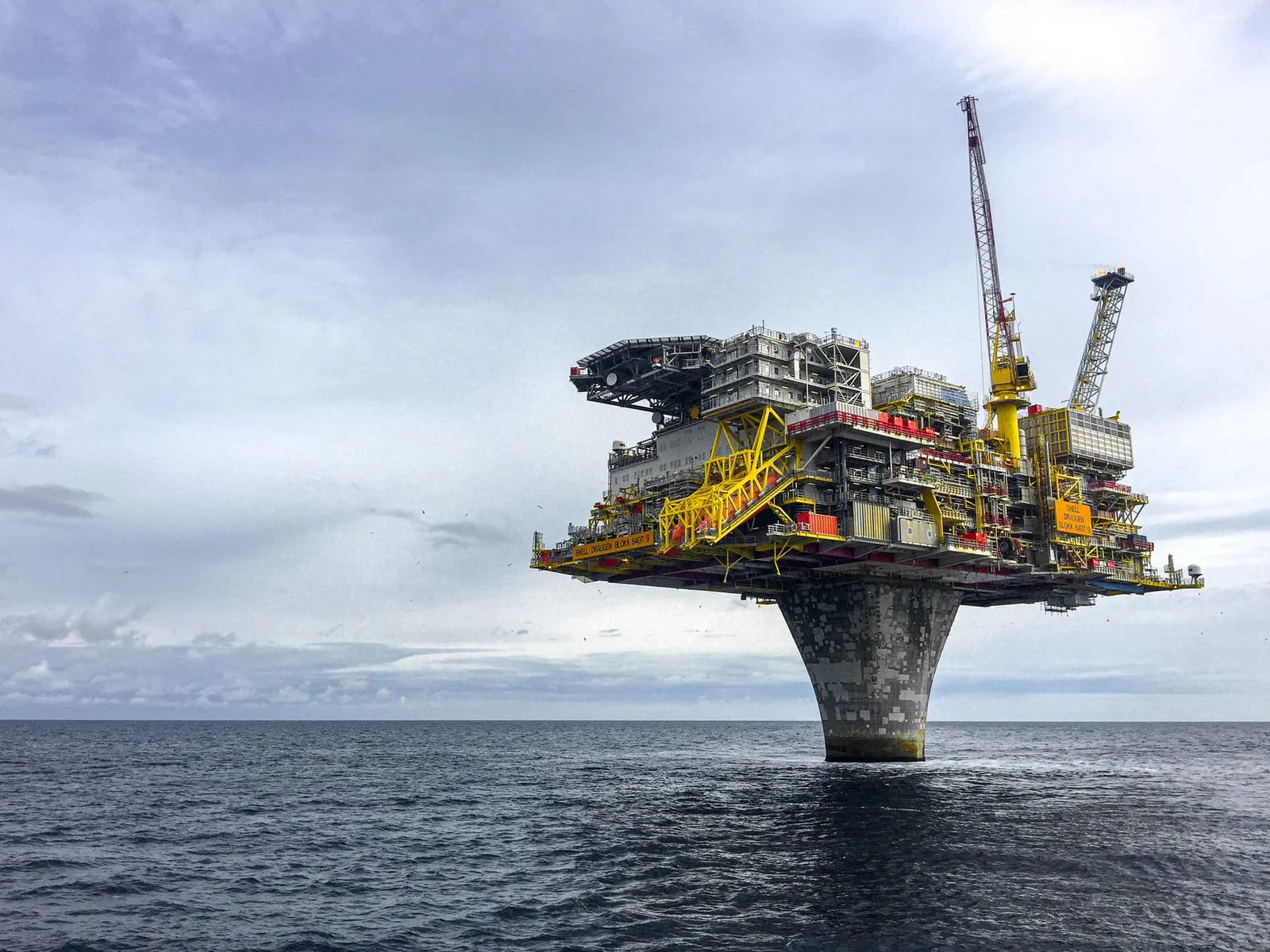
Offshore platform components, risers, seawater piping and handling systems. The grade was reviewed specifically for marine applications, where its strength-to-weight and chloride SCC resistance let designers cut section thickness without inviting cracking.[2]
Chemical Process and Pressure Vessels
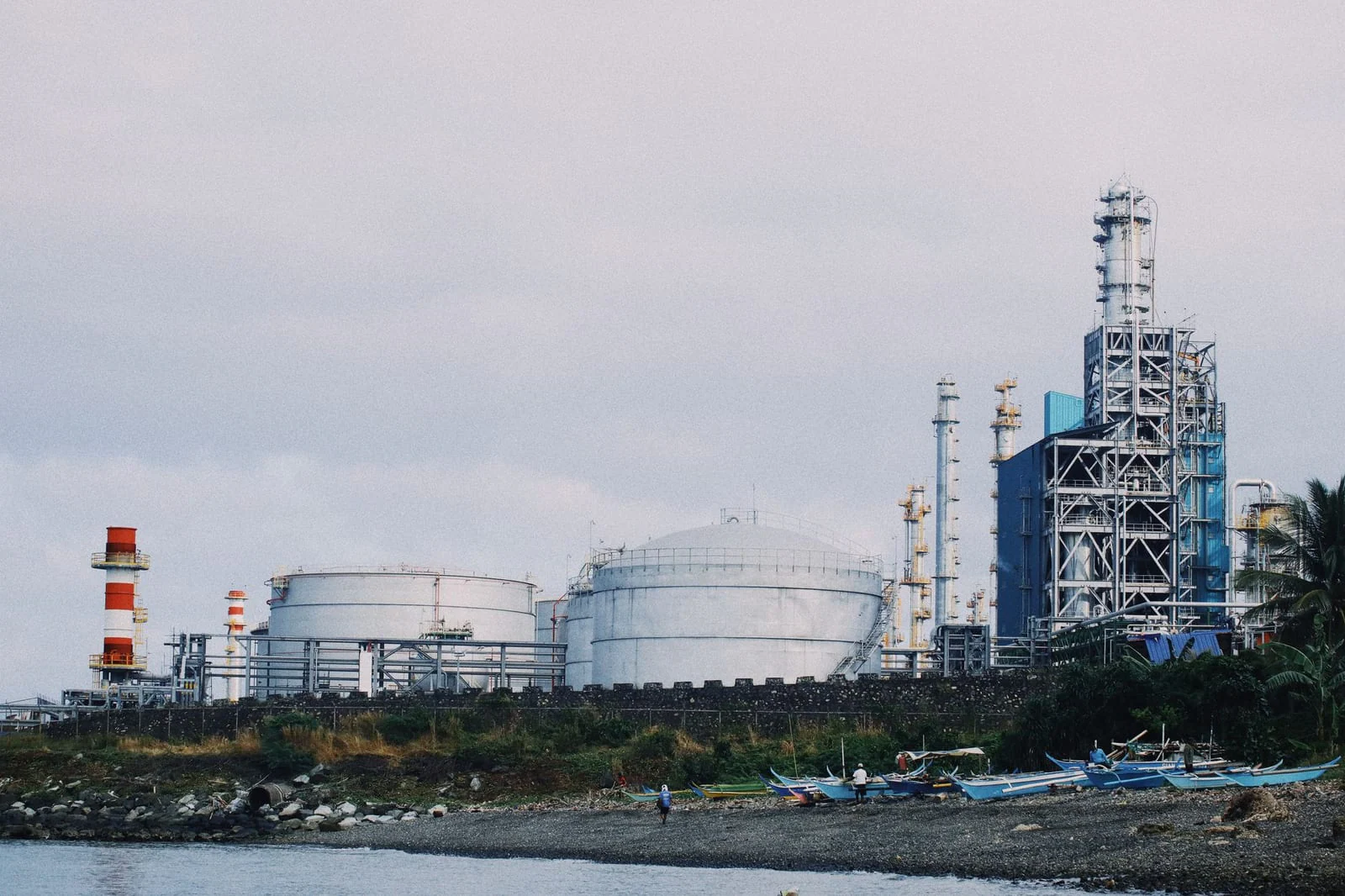
Reactors, heat exchangers and pressure vessels handling chloride- or acid-bearing media. Duplex steels are valued here for good mechanical properties and corrosion resistance in acidic, caustic and marine environments, and the doubled yield strength reduces wall thickness and weight.[1]
Desalination and Seawater Systems

Desalination plant piping, pumps and vessels exposed to warm chlorides. Where 316 would risk pitting and chloride SCC, 2205's higher PREN and SCC resistance extend service life; for the hottest, most concentrated streams operators step up to super duplex 2507.[3]
Pulp, Paper and Storage
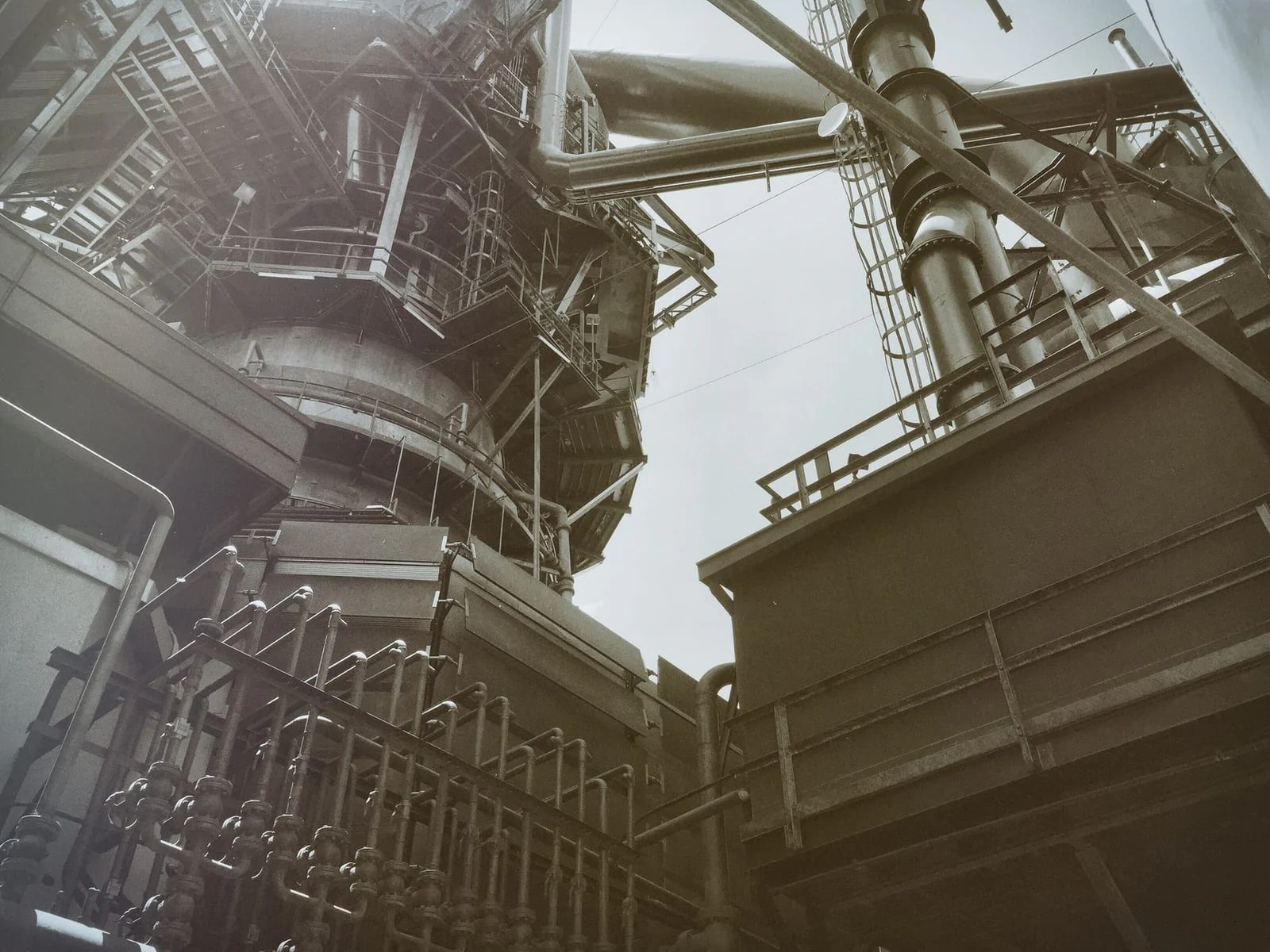
Digesters, bleaching equipment and storage tanks exposed to aggressive chloride-bearing liquors, where the combination of strength and localised-corrosion resistance is decisive.
Forms & Finishes
Common product forms:CoilSheetPlateTube / PipeBar
Surface finishes:1D (hot-rolled, annealed, pickled)2B (cold-rolled)No.1
Plate and pipe dominate the structural, pressure-vessel and piping applications where 2205 earns its keep. Whatever the form, the functional condition is solution-annealed and quenched — the state that holds the ~50/50 phase balance and its full strength and corrosion performance.
References
- Effect of Secondary Phase Precipitation on the Corrosion Behavior of Duplex Stainless Steels. Chan & Tjong. Materials (MDPI) 7, 2014. — austenite+ferrite phases; sigma/chi at 700–900 °C; spinodal 475 °C embrittlement at 350–550 °C. pmc.ncbi.nlm.nih.gov/articles/PMC5455814/
- Weldability, machinability and surfacing of commercial duplex stainless steel AISI2205 for marine applications — A recent review. Journal of Advanced Research (Elsevier) 8, 2017. — equal ferrite(α)+austenite(γ); BCC+FCC → greater strength & SCC resistance; YS/UTS 2–3× of 304L/316L. pmc.ncbi.nlm.nih.gov/articles/PMC5292657/
- Corrosion Study on Duplex Stainless Steel UNS S31803 Subjected to Solutions Containing Chloride Ions. Materials (MDPI) 17, 2024. — two-phase ferrite(46.2%)+austenite; immunity to stress corrosion; chloride pitting behavior. pmc.ncbi.nlm.nih.gov/articles/PMC11084689/
- Effect of Sigma Phase Morphology on the Degradation of Properties in a Super Duplex Stainless Steel. Materials (MDPI) 11, 2018. — 2507 (UNS S32750); PREN = %Cr + 3.3%Mo + 16%N > 40; sigma 630–1010 °C, 5% σ → 80% impact-energy drop. pmc.ncbi.nlm.nih.gov/articles/PMC6025556/
- Study on the Effect of Microstructure and Inclusions on Corrosion Resistance of Low-N 25Cr-Type Duplex Stainless Steel via Additive Manufacturing. Materials (MDPI) 17, 2024. — ferrite gives mechanical strength, austenite gives corrosion resistance; per-phase contribution of the duplex structure. pmc.ncbi.nlm.nih.gov/articles/PMC11084702/