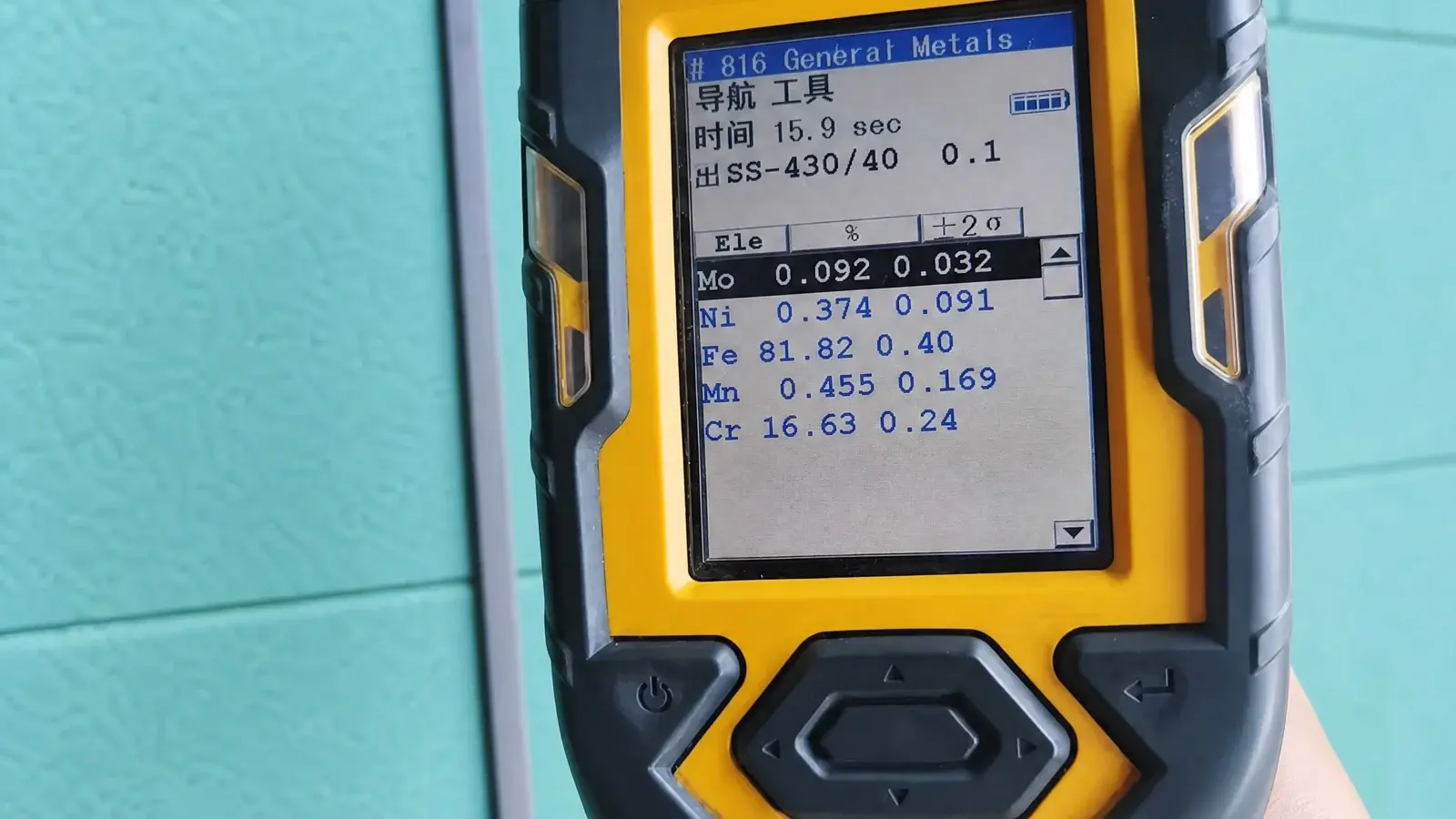
In short: Grade 430 is the most widely used ferritic stainless steel — a straight 17% chromium alloy with a body-centred cubic (BCC) crystal structure that is permanently magnetic and cannot be hardened by heat treatment. It is less expensive than 304 (no nickel), offers good corrosion resistance in dry indoor environments, and is immune to chloride stress corrosion cracking. Its main limitations are reduced ductility and weldability compared to austenitic grades, and susceptibility to pitting in chloride environments.
What 430 Stainless Steel Is
Grade 430 is the baseline member of the ferritic stainless steel family — iron–chromium alloys that achieve corrosion resistance through chromium alone, without the nickel that defines austenitic grades like 304 and 316. With roughly 17% chromium and no intentional nickel, 430 is cheaper to produce while still delivering a bright, corrosion-resistant finish suitable for indoor decorative and moderate-temperature applications.[1]
The same alloy is traded under several international designations: UNS S43000, the European EN 1.4016 (X6Cr17), Japanese SUS 430, and the older British designation 430S15. In workshop practice it is often called simply "17% Cr ferritic."
Chemical Composition
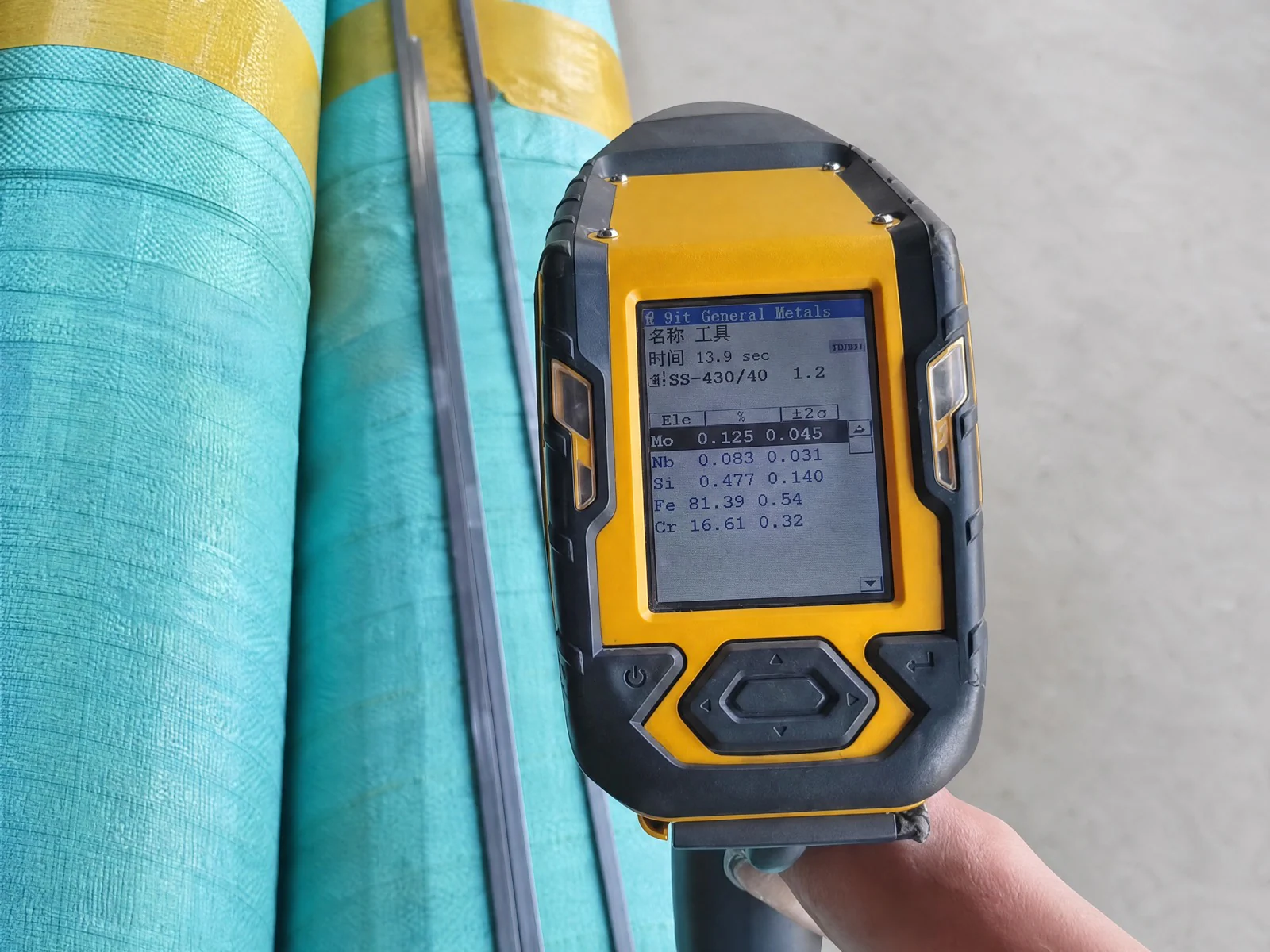
Grade 430's strength — and its limitations — flow directly from its simplicity: high chromium, no nickel, no molybdenum, and low carbon. The chart and table below show the balance by weight per ASTM A240.[1]
| Element | Symbol | Content (wt%) | Role |
|---|---|---|---|
| Chromium | Cr | 16–18 | Passive film; stabilises BCC ferrite phase; primary alloy element |
| Carbon | C | ≤ 0.12 | Kept low; excess forms Cr carbides at grain boundaries (sensitisation) |
| Manganese | Mn | ≤ 1 | Deoxidiser during steelmaking |
| Silicon | Si | ≤ 1 | Deoxidiser; assists high-temperature oxidation resistance |
| Nickel | Ni | ≈0 | Trace residual only — no austenite stabilisation intended |
| Iron | Fe | Balance | Base metal |
Specified composition limits per ASTM A240 Grade 430.[1]
Crystal Structure: BCC Ferrite (α)
Stainless steel is an alloy — a solid solution of elements in iron — so it has no molecular formula. The correct description is its crystal structure: Grade 430 is a body-centred cubic (BCC) ferrite (α) at all normal operating temperatures. The unit cell has atoms at each of the eight corners and a single atom at the geometric centre of the cube — the "body centre."[1]
The BCC ferrite structure is the key difference from austenitic grades like 304. Where nickel pushes 304's crystal structure into FCC austenite (less magnetic, more ductile), the iron–17% chromium system in 430 is naturally stable as BCC ferrite — permanently magnetic at all temperatures below ~600 °C, with no available martensitic transformation, and no TRIP effect. Cold working does not change 430's magnetism: it is intrinsically magnetic from the crystal structure, not from a phase change.[1]
The BCC lattice has fewer independent slip systems than FCC, which is why 430's room-temperature ductility (~22% elongation) is significantly lower than 304's (~40%). This is a fundamental crystallographic constraint, not a composition-optimisation opportunity: all ferritic grades share this characteristic to varying degrees.
Corrosion Resistance: The Passive Film and Its Limits
The corrosion resistance of 430 rests on the same passive-film mechanism as all stainless steels: the 16–18% chromium causes chromium to spontaneously enrich in a thin surface oxide layer — the passive film — that protects the metal against further oxidation and corrosion. Surface analysis confirms that chromium enrichment in this film directly governs corrosion resistance.[2]
For dry indoor environments, fresh water, and mild food contact, 430's passive film provides reliable protection. The absence of nickel and molybdenum, however, means the film is less robust than 304's against chloride ions. In chloride-bearing environments — seawater, coastal air, de-icing salts, food brines — chlorides locally penetrate the film at weak spots, particularly at MnS inclusions left by steelmaking, initiating pitting corrosion.[5] For chloride service, specify 304 or the molybdenum-bearing ferritic grade 444, where molybdenum measurably raises the pitting-corrosion resistance of the alloy.[4]
The advantage ferritic grades hold over austenitic ones is chloride stress corrosion cracking (Cl-SCC) resistance. Austenitic grades 304 and 316 are highly susceptible to Cl-SCC above 60 °C — a well-documented and expensive failure mode in water heaters, food processing, and chemical plant. Grade 430 and all ferritic grades are essentially immune to Cl-SCC, because the BCC structure, near-zero nickel, and lower thermal expansion coefficient collectively suppress the crack propagation mechanism.[3]
Mechanical & Physical Properties
Values below are ASTM A240 specified minimums and typical physical data for annealed Grade 430.[1]
| Tensile strength (MPa) | ≥450 |
| Yield strength (MPa) | ≥205 |
| Elongation (%) | ≥22 |
| Hardness | ≤183 HB |
| Density (g/cm³) | 7.70 |
| Elastic modulus (GPa) | 200 |
| Magnetic response | Magnetic |
Cannot be hardened by heat treatment. There is no martensitic transformation in 430 — the BCC ferrite is stable throughout the working temperature range. Annealing at 705–790 °C restores the soft, ductile condition after cold work. The only available strengthening is cold working, which provides limited hardness gain (up to ~HRC 25 in thin sections). There is no TRIP effect and no strain-induced martensite in ferritic grades — this mechanism is exclusive to metastable austenitic grades like 304.
A practical caution: sustained heating in the 400–550 °C range causes 475 °C embrittlement, where BCC ferrite spinodally decomposes into iron-rich α and chromium-rich α′ phases, sharply reducing toughness. For 430 with 17% Cr, this effect is less severe than in higher-Cr superferritic grades, but it restricts continuous service above 300 °C for structural parts.
Key Characteristics
- Magnetic — permanently. Unlike austenitic 304 (non-magnetic annealed), 430 is magnetic in all conditions. Required for induction cooktop compatibility; useful for magnetic mounting and grade identification.
- Lower cost. No nickel; price follows chromium costs, far more stable than Ni-bearing austenitic grades.
- Formability — adequate, not outstanding. BCC structure supports simple bending, roll forming, and shallow drawing. More springback than 304; deep drawing capability is limited. No excessive work hardening.
- Weldability — moderate. 430 welds by TIG/MIG but the heat-affected zone undergoes grain growth and becomes brittle. Post-weld annealing recommended for structural assemblies. Stabilised grades (439, 441) solve this without annealing.
- Cl-SCC immune. A key advantage over 304/316 in warm, chloride-contaminated environments where stress corrosion cracking risk exists.
- Higher thermal conductivity, lower expansion. Compared to austenitic grades — less thermal-gradient distortion and better heat spreading in cyclic-heating applications.
How 430 Is Made
Production starts by melting scrap and ferrochromium in an electric arc furnace (EAF), then refining in an argon–oxygen decarburisation (AOD) vessel to reduce carbon while retaining chromium. The melt is cast, hot-rolled to strip or plate, then annealed at ~760–830 °C to recrystallise the BCC ferrite grains and restore ductility. Pickling removes oxide scale and re-establishes the passive film. Cold rolling and bright annealing (in a reducing atmosphere furnace) produce the reflective finishes used in decorative applications.
430 vs 304
The most common decision in the ferritic/austenitic space is 430 versus 304. The differences are structural: 304 adds nickel to achieve a ductile FCC austenite, while 430 stays with BCC ferrite and saves the nickel cost.
Choose 430 when the application requires a magnetic, cost-effective stainless in a dry or mildly humid environment with no significant chloride exposure — appliance liners, automotive trim, decorative panels. Choose 304 when exposure to wet environments, food brines, or outdoor chloride is possible, or when the part must be deep-drawn or welded without post-weld heat treatment.
Variants & Related Grades
Grade 430 anchors a family of ferritic stainless steels:
- [409](/en/materials/stainless-steel/409) — Lower Cr (10.5–11.75%), Ti-stabilised, cheapest ferritic grade; the automotive exhaust specialist.
- 430F — Free-machining version with higher S; for automatic screw machines. Lower corrosion resistance.
- 439 (1.4510) — Ti-stabilised 430 for better weldability; retains 17% Cr.
- 441 (1.4509) — Dual Ti+Nb stabilised; used for automotive exhaust at higher temperatures.
- [444](/en/materials/stainless-steel/444) — Adds Mo 1.75–2.5%, dual Ti+Nb stabilised; pitting resistance comparable to 316, still ferritic.
Applications by Industry
Grade 430 serves wherever a magnetic, bright, low-cost stainless is needed in a dry or mildly wet indoor environment.
Appliances & White Goods
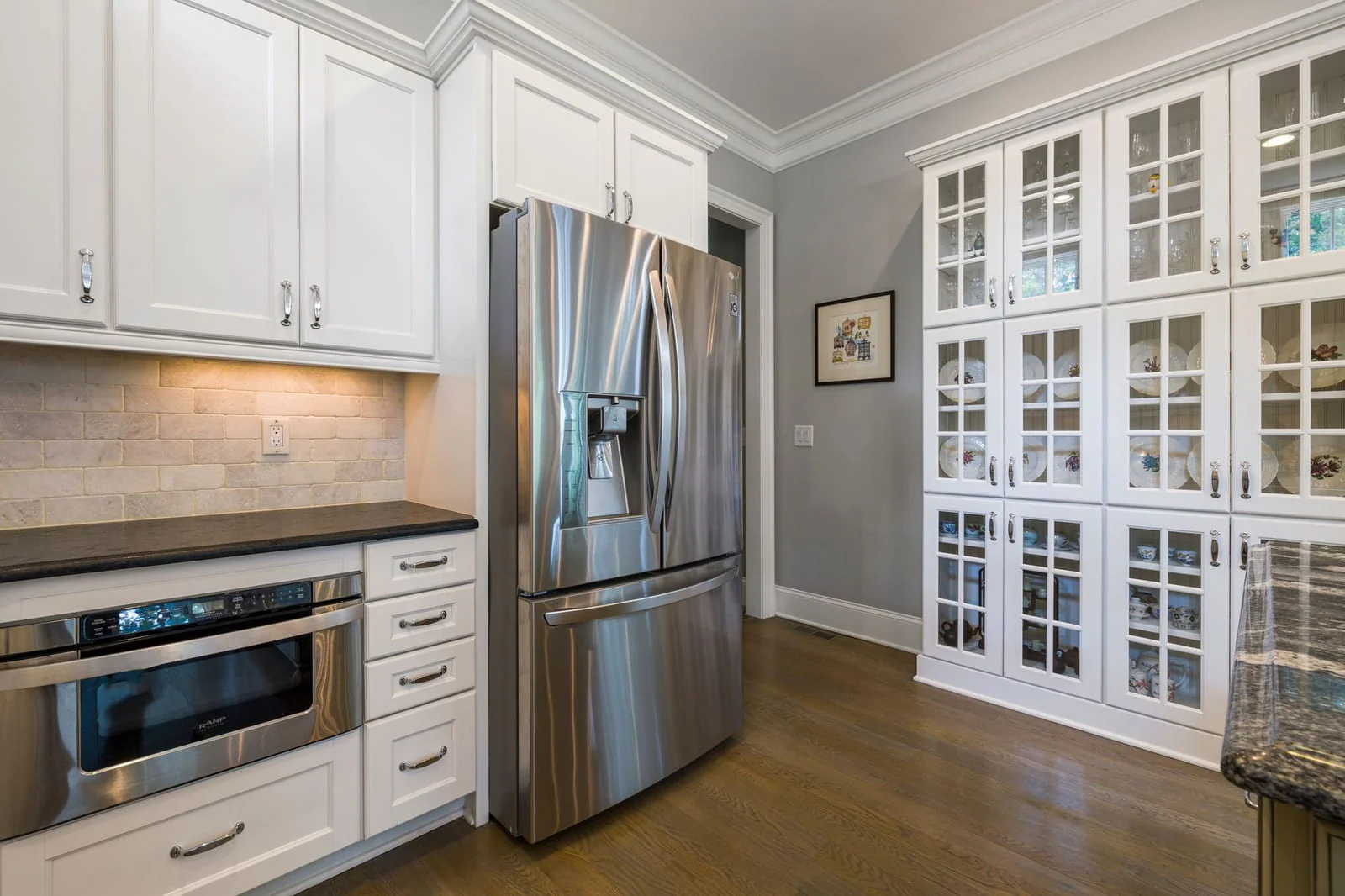
Washing machine inner drums, dishwasher liners, refrigerator panels, range hoods, microwave cavities, and kitchen backsplash tiles. The magnetic response is mandatory for induction cooktops, where an austenitic 304 base would not heat without an iron insert. 430 fulfils the functional and aesthetic requirements at lower cost.
Automotive Decorative Trim

Body side mouldings, door handle inserts, wheel cover rings, and instrument panel trim. When polished, 430's appearance closely matches chrome plating, at far lower cost and with no environmental impact from chromium electroplating. This was historically one of 430's largest volume applications.
Architectural & Interior Cladding

Elevator panels, column cladding, furniture hardware, retail display fixtures, and commercial signage in dry indoor environments. The bright annealed (BA) or hairline (HL) finishes achieve a premium metallic aesthetic.
Kitchen Utensils & Cutlery Bodies
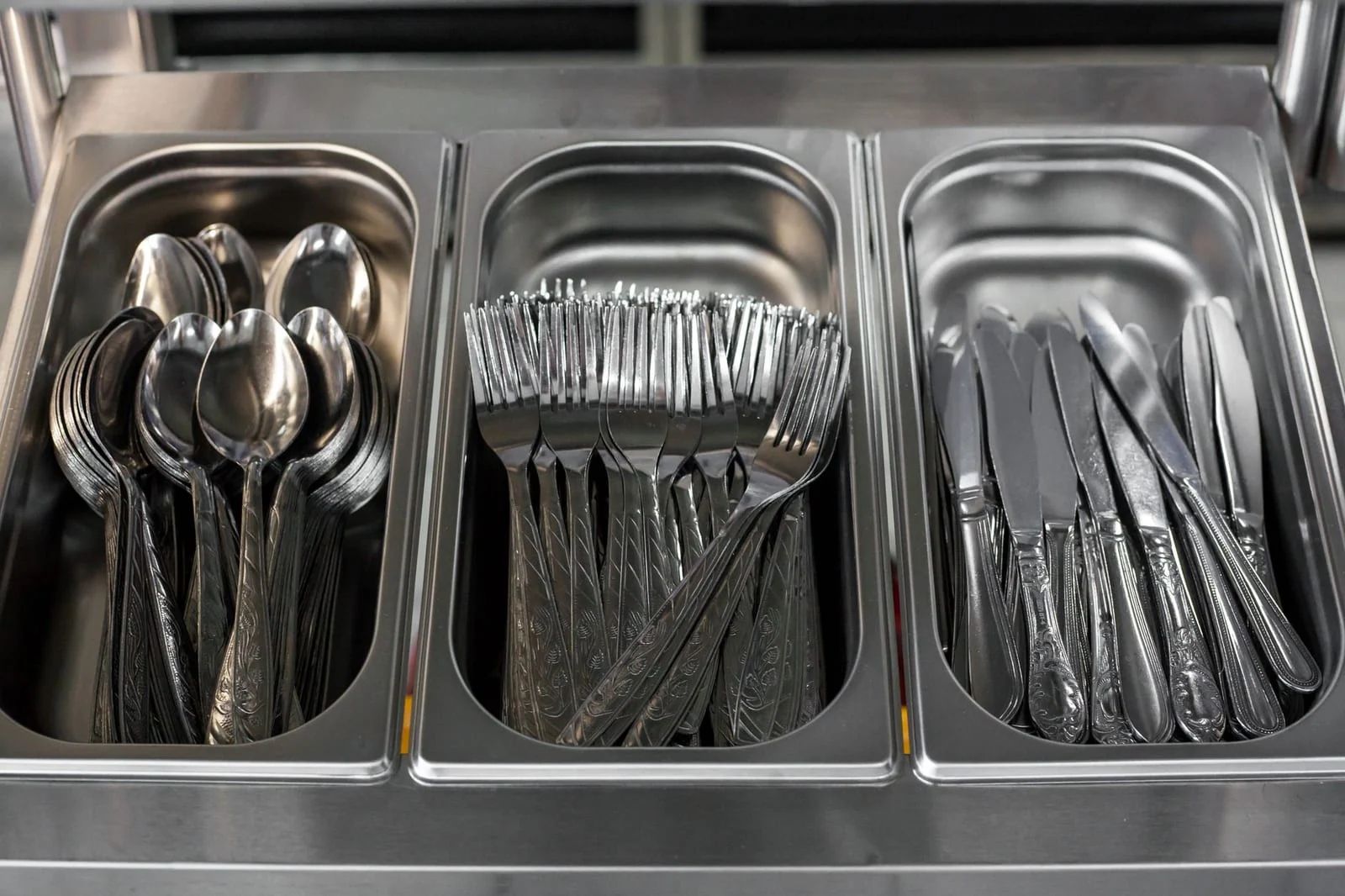
Low-cost flatware (spoons, forks — blades use martensitic grades), kitchen tools, pot bases, and utensil handles. The magnetic base is compatible with magnetic knife racks and induction heating.
Forms & Surface Finishes
STEELHUI supplies Grade 430 in standard mill forms:
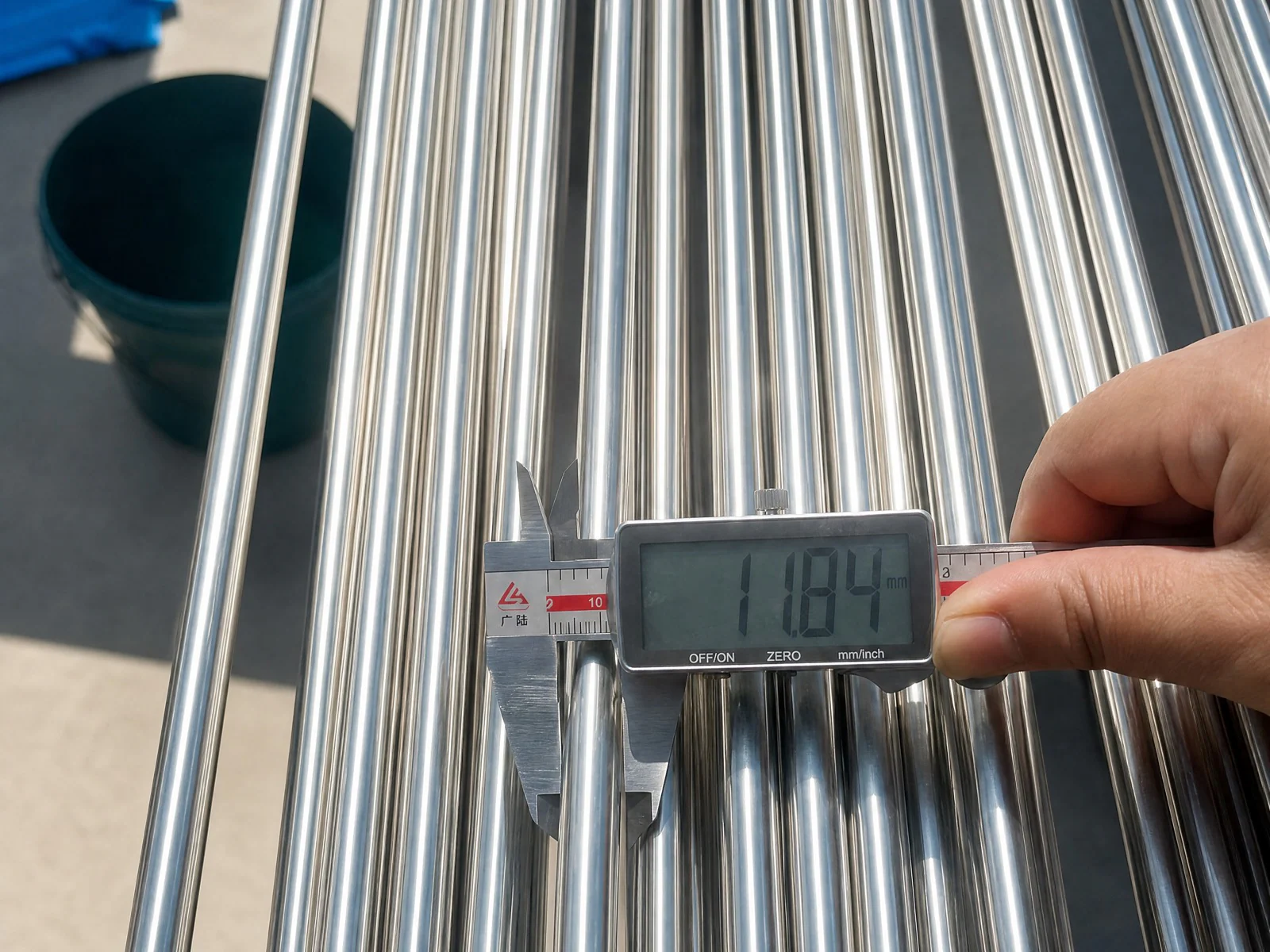
Common product forms:CoilSheetStripBar
Surface finishes:2BBANo.4HLMirror
The bright annealed (BA) finish is the preferred option for decorative applications — its reflective surface closely approximates chrome plate.
References
- Stainless Steel — Grade 430 (UNS S43000). AZoM ArticleID=996; Carpenter Technology CarTech 430 Datasheet (carpentertechnology.com). Cross-confirmed against ASTM A240 grade limits by multiple manufacturer datasheets (AK Steel, Penn Stainless, askzn.co.za Grade 430 Technical Data). azom.com/properties.aspx?ArticleID=996
- Characterization of Passive Films Formed on As-received and Sensitized AISI 304 Stainless Steel. Zhang Yubo et al. Chinese Journal of Mechanical Engineering, vol. 32 (2019). 10.1186/s10033-019-0336-8
- Analysis, Assessment, and Mitigation of Stress Corrosion Cracking in Austenitic Stainless Steels in the Oil and Gas Sector: A Review. Vakili, M.; Koutník, P.; Kohout, J.; Gholami, Z. Surfaces (MDPI) 7(3), 589–642, 2024. 10.3390/surfaces7030040
- Pitting corrosion behaviour of austenitic SS — combining Mn and Mo additions. Pardo, A. et al. Corrosion Science 50, 1796–1806, 2008. 10.1016/j.corsci.2008.04.005
- Pitting corrosion characteristics of sintered Type 316L SS: pores and MnS. Saito, M. et al. npj Materials Degradation 8, 2024. 10.1038/s41529-024-00482-6