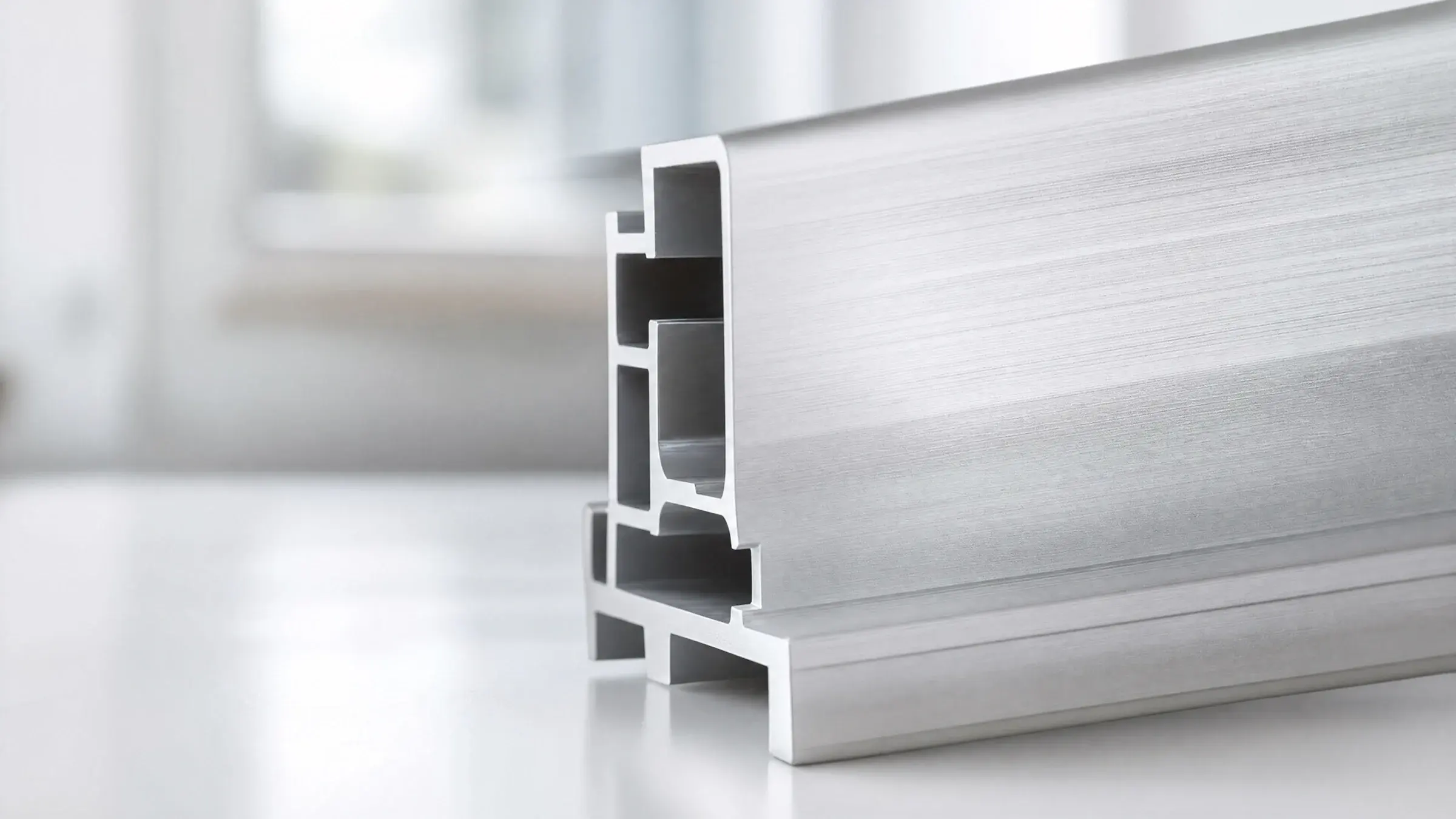
In short: 6063 is the architectural extrusion alloy — a heat-treatable Al-Mg-Si (6xxx) alloy lighter on magnesium and silicon than 6061. That leaner chemistry buys two things 6061 cannot match: outstanding extrudability — it flows into thin-walled, intricate hollow profiles at high speed — and the brightest, most uniform anodised surface of any common aluminum, the reason it dominates window, door and curtain-wall framing. Its crystal structure is face-centred cubic (FCC), so it is non-magnetic; strength comes from Mg₂Si precipitation (age) hardening in the T5 and T6 tempers, not from cold work. The trade-off is strength: 6063 is weaker than 6061, chosen for finish and form rather than load. Step up to 6061 when the part must carry more load, or sideways to 5052 for formed sheet and marine service.
What 6063 Aluminum Is
Type 6063 is the architectural extrusion alloy — a member of the heat-treatable 6xxx series, alloyed with magnesium and silicon that combine into the strengthening phase Mg₂Si. Compared with its better-known sibling 6061, 6063 runs leaner on both Mg and Si, and that is deliberate: less alloy means the hot metal flows more easily through the extrusion die and the finished surface anodises more brightly and evenly.
In the Aluminum Association system it is AA 6063, supplied as extrusions to ASTM B221; in European EN it is EN AW-6063; in the Chinese GB system it is 6063. Buyers searching *architectural aluminium profile*, *anodised extrusion* or *window-frame aluminium* are almost always looking for this grade.
The essential proposition of 6063 is form and finish over strength. Its leaner chemistry lets the press extrude fine, complex hollow profiles — thin walls, internal chambers, screw ports and snap-fit channels — that stronger alloys cannot fill cleanly, and the same chemistry yields the smooth, defect-free surface that bright and coloured anodising demands. The trade-off is mechanical: 6063 is weaker than 6061, so it is specified where the cross-section, the surface, or both, matter more than raw load capacity.
Critically, 6063 is heat-treatable. Unlike the non-heat-treatable 1060 and 3003, it gains strength by age hardening — solution-treating then ageing to precipitate Mg₂Si. In practice extruders most often press-quench at the die exit and artificially age to the T5 temper, or solution-treat, quench and age to the higher-strength T6 temper.
Chemical Composition
Composition limits for 6063 (per the Aluminum Association / ASTM B221). The defining feature is the balanced, lean Mg-Si pair held close to the Mg₂Si stoichiometry, with iron and other residuals kept low — that purity is what protects both extrudability and the brightness of the anodised finish.
| Element | Symbol | Content (wt%) | Role |
|---|---|---|---|
| Mg | Mg | 0.45–0.9 | Pairs with Si to form Mg₂Si — the age-hardening phase; kept lean for extrudability and anodising |
| Silicon | Si | 0.2–0.6 | Pairs with Mg to form Mg₂Si; the leaner balance vs 6061 eases extrusion and surface finish |
| Iron | Fe | ≤ 0.35 | Residual impurity; coarse Fe-bearing intermetallics streak the anodised surface, so held low |
| Aluminium | Al | Balance | Base metal — balance |
Per the Aluminum Association alloy register and ASTM B221. Coarse, non-equilibrium Mg₂Si particles and Fe-bearing constituents are detrimental to both mechanical properties and anodised appearance.[1]
Crystal Structure & Age Hardening: FCC + Mg₂Si Precipitation
Aluminum is a metal, and 6063 is an aluminum alloy, so it has no molecular formula — it is correctly described by its crystal structure and the precipitates dispersed through it.
The aluminum matrix crystallises as face-centred cubic (FCC) and stays FCC up to melting, with no allotropic transformation — so unlike steel, there is no phase change for a quench to harden, which is the structural reason 6063 is hardened by ageing rather than by quenching alone. With no ferromagnetic phase, it is non-magnetic in every temper. Its strength instead comes from precipitation (age) hardening: dissolving Mg and Si into a supersaturated solid solution, then letting nanoscale Mg₂Si particles precipitate to obstruct dislocation motion.
The classic Al-Mg-Si sequence runs supersaturated solid solution (SSSS) → atomic clusters / GP zones → β″ (fine coherent needles) → β′ (semi-coherent rods) → equilibrium β-Mg₂Si.[2] The β″ needles are the principal strengthening phase at peak ageing (T6), and the achievable strength is set largely by their volume fraction; over-ageing coarsens them through β′ to the equilibrium β-Mg₂Si, lowering strength.[3] Because 6063 is leaner in Mg and Si than 6061, it precipitates a smaller volume fraction of β″ — which is exactly why it is weaker but extrudes and anodises better.
Corrosion Resistance & Anodising: The Bright-Finish Grade
6063 has good corrosion resistance, protected — like all aluminum — by a thin, dense, naturally forming aluminium oxide (Al₂O₃) film: a passive layer only a few nanometres thick that builds spontaneously the instant fresh metal meets air or water, and re-forms wherever it is scratched. Its lean, clean chemistry, with few coarse intermetallics, gives a more uniform passive surface than the higher-alloy 6xxx and 7xxx grades.[4][5]
The native Al₂O₃ film behaves as a barrier layer: its integrity sets how well the metal resists pitting, and reviews of aluminium corrosion describe how a more complete, defect-free oxide gives a wider passive region and higher pitting resistance, while disrupted or thin films are less protective.[5] In alloyed grades, coarse second-phase intermetallic particles create local galvanic couples where the film cannot cover cleanly, initiating localised attack — which is why keeping iron and coarse Mg₂Si low matters as much for durability as it does for appearance.[4]
Anodising — the core advantage
What sets 6063 apart is how superbly it anodises. Anodising thickens the natural oxide electrochemically into an engineered Al₂O₃ coating built as two layers — a thin dense barrier layer next to the metal, beneath a much thicker porous layer whose pore size and density are tuned by the anodising current and bath temperature.[4] That porous layer can be dyed and then sealed, locking colour into a hard, abrasion- and weather-resistant skin — the silver, bronze, black and champagne finishes seen on architectural framing.
The finish is only as good as the surface beneath it. Research on 6063 extrusions shows that anodised appearance defects such as streaking trace back to differences in surface topography after etching, and that coarse, non-equilibrium Mg₂Si particles from slow or uneven cooling harm both mechanical properties and the anodised look.[1] This is why 6063 is held to lean, clean chemistry and given a careful homogenise-and-quench cycle: a uniform, fine-precipitate microstructure is what lets the alloy take a flawless bright or coloured anodised surface.
Mechanical & Physical Properties
Because 6063 is heat-treatable, its property profile is governed by temper — by how it has been solution-treated, quenched and aged. The two reference states are the soft, fully annealed (O) condition and the artificially aged T6 condition; the press-quenched T5 sits between them and is the everyday architectural temper.
| Tensile strength (MPa) | ≈186 |
| Yield strength (MPa) | ≈145 |
| Elongation (%) | ≈12 |
| Hardness | ≈60 HB |
| Density (g/cm³) | 2.70 |
| Elastic modulus (GPa) | 69 |
| Magnetic response | Non-magnetic |
In the O (annealed) temper, 6063 is soft and easily formed. Ageing precipitates the Mg₂Si phase that does the strengthening: the T5 temper — press-quenched at the die exit, then artificially aged — gives a useful strength rise with minimal handling and is the standard for window and door profiles, while T6 — solution-treated, quenched and aged — reaches the alloy's peak strength where a structural margin is needed. Even at T6, 6063 stays below 6061 in strength: it carries a smaller β″ volume fraction by design.[3]
On the physical side, 6063 is about one-third the density of steel with the low elastic modulus typical of aluminum, so it flexes more than steel for the same load — a property the deep, ribbed cross-sections of extruded framing are designed around. (Exact figures are in the property table above, drawn from the grade data.)
Key Characteristics
- Outstanding extrudability. The lean Mg-Si chemistry flows readily through the die, filling thin-walled, complex hollow profiles at high press speed — the headline reason to specify 6063.
- Best anodised surface of any common aluminum. A smooth, clean surface that takes a bright, uniform, dyeable anodised finish — the architectural standard.
- Heat-treatable. Strength comes from Mg₂Si age hardening (T5 / T6), not cold work — useful structural strength with an excellent finish.
- Good corrosion resistance. A self-healing Al₂O₃ film with few coarse intermetallics, further thickened and coloured by anodising for long outdoor service.
- Light and non-magnetic. About one-third the density of steel; the FCC lattice has no ferromagnetic phase in any temper.
- Lower strength than 6061. The lean chemistry that buys extrudability and finish leaves it weaker — chosen for form and surface, not maximum load.
How 6063 Is Made
The 6063 route is built around the extrusion press. Cast log is homogenised to dissolve coarse Mg₂Si and even out the chemistry, then heated and pushed through a shaped die to form the profile. Most architectural 6063 is press-quenched at the die exit and artificially aged (T5); where higher strength is required, the profile is separately solution-treated, quenched and aged (T6). Surface treatment — most often anodising — comes last.
Why homogenisation and quench rate matter: a thorough homogenise dissolves the coarse, non-equilibrium Mg₂Si that would otherwise streak the anodised surface and blunt mechanical properties, and a fast, uniform quench keeps Mg and Si in solution so ageing can precipitate them as fine, strengthening β″ rather than coarse equilibrium β-Mg₂Si.[1][2] Getting this microstructure right is what lets the finished profile both hit its strength target and take a flawless anodised finish.
6063 vs 6061 vs 5052 — Finish, Strength, or Formed Sheet
The three answer different needs. 6063 is the extrusion-and-anodising grade, chosen for intricate profiles and a flawless surface. [6061](/en/materials/aluminum/6061) is the stronger heat-treatable 6xxx grade, the structural choice when the part must carry more load. [5052](/en/materials/aluminum/5052) is a non-heat-treatable Al-Mg sheet grade for forming and marine/chloride service. The decision is essentially: do you need the best extruded form and finish, real structural strength, or formed corrosion-resistant sheet?
Applications by Industry
6063's combination of effortless extrusion, an excellent anodised surface and good corrosion resistance makes it the grade of choice wherever a shaped profile with a fine finish matters more than maximum strength.[1]
Window, Door & Curtain-Wall Framing
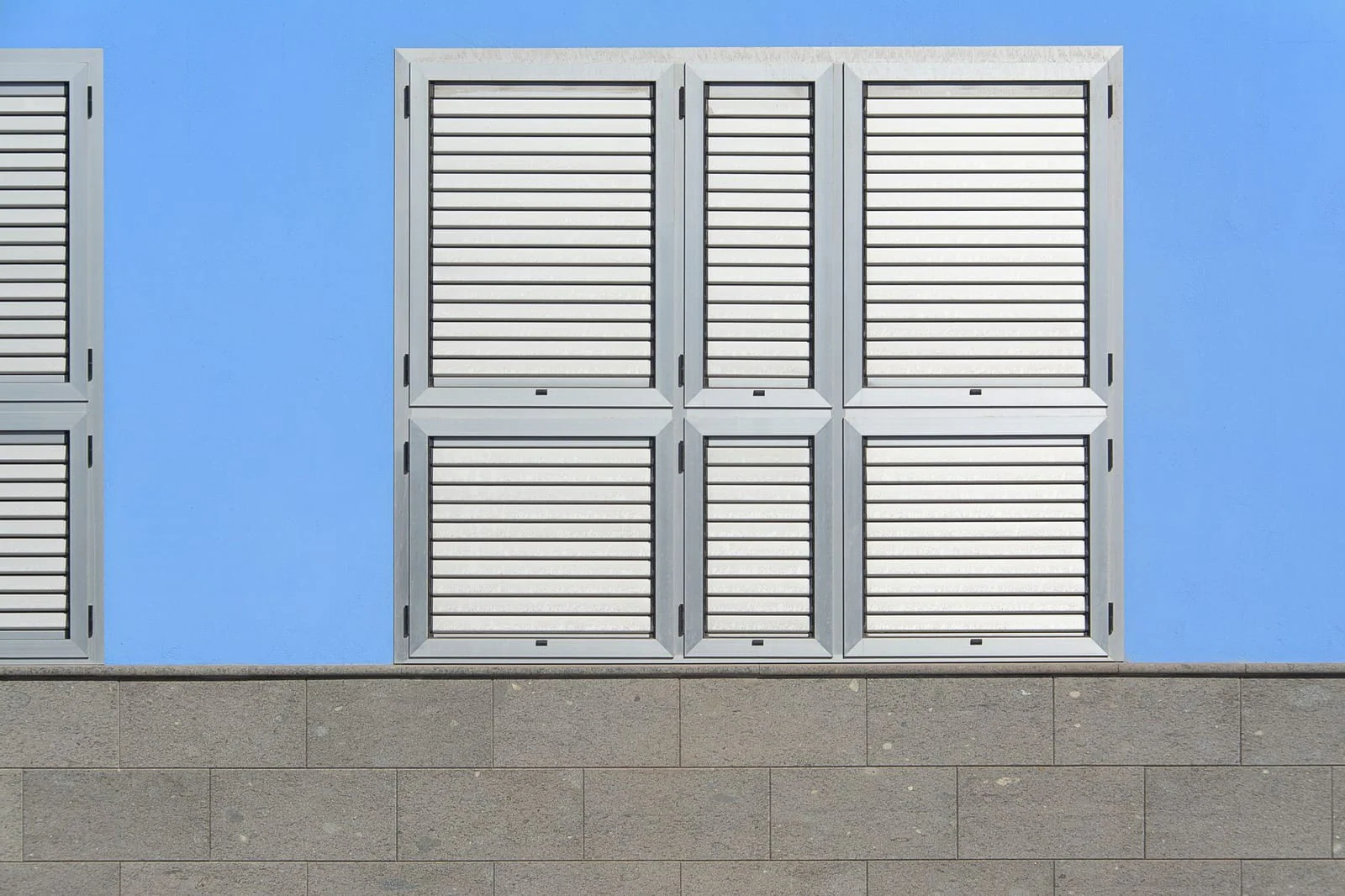
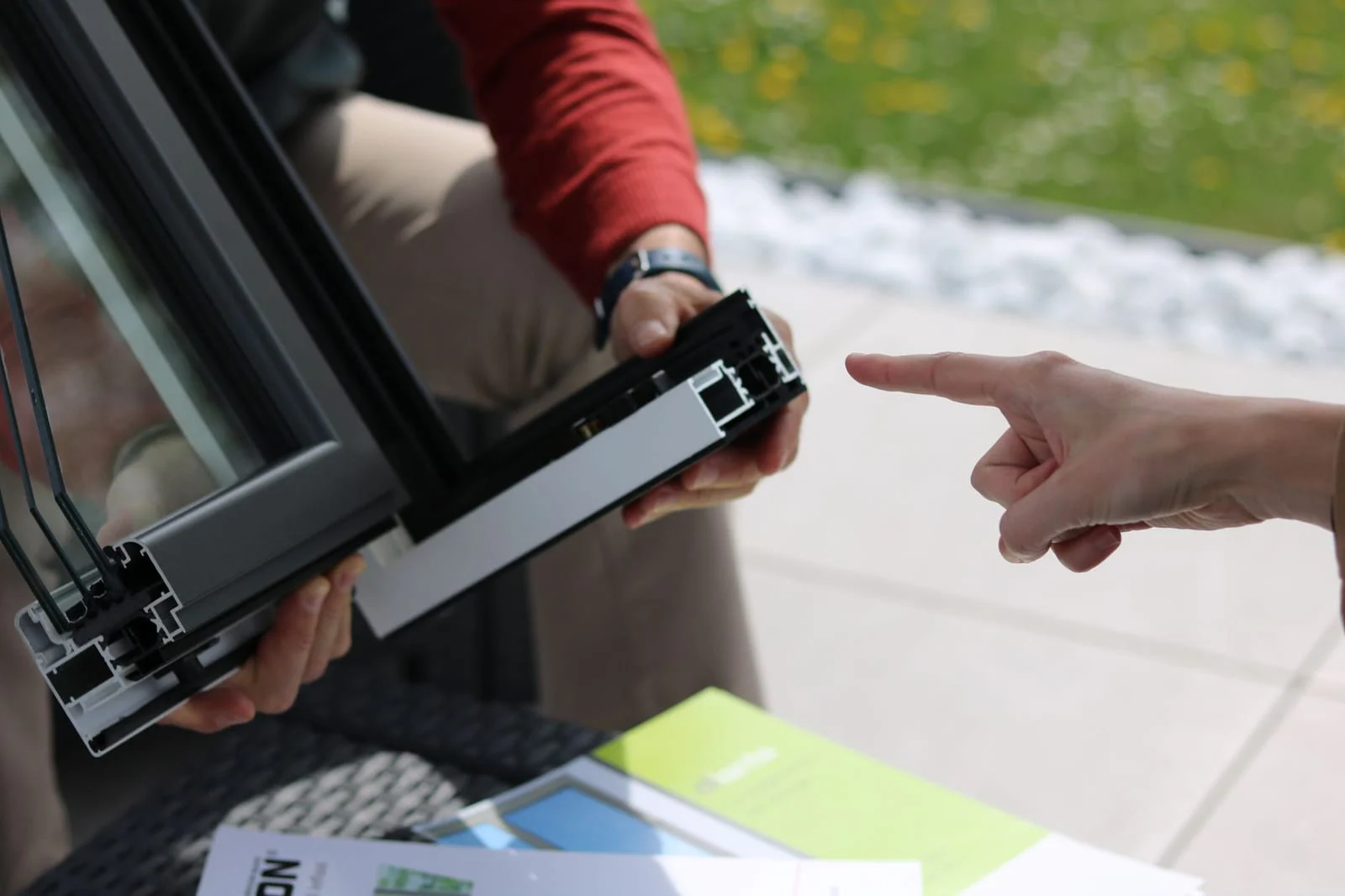
The signature use: window and door frames, curtain-wall mullions and architectural framing. 6063 extrudes into the thin-walled, multi-chamber profiles these systems need, and anodises into the durable silver, bronze and black finishes that define modern facades — the reason it is often simply called *architectural aluminium*.[1]
Railings, Trim & Decorative Profiles
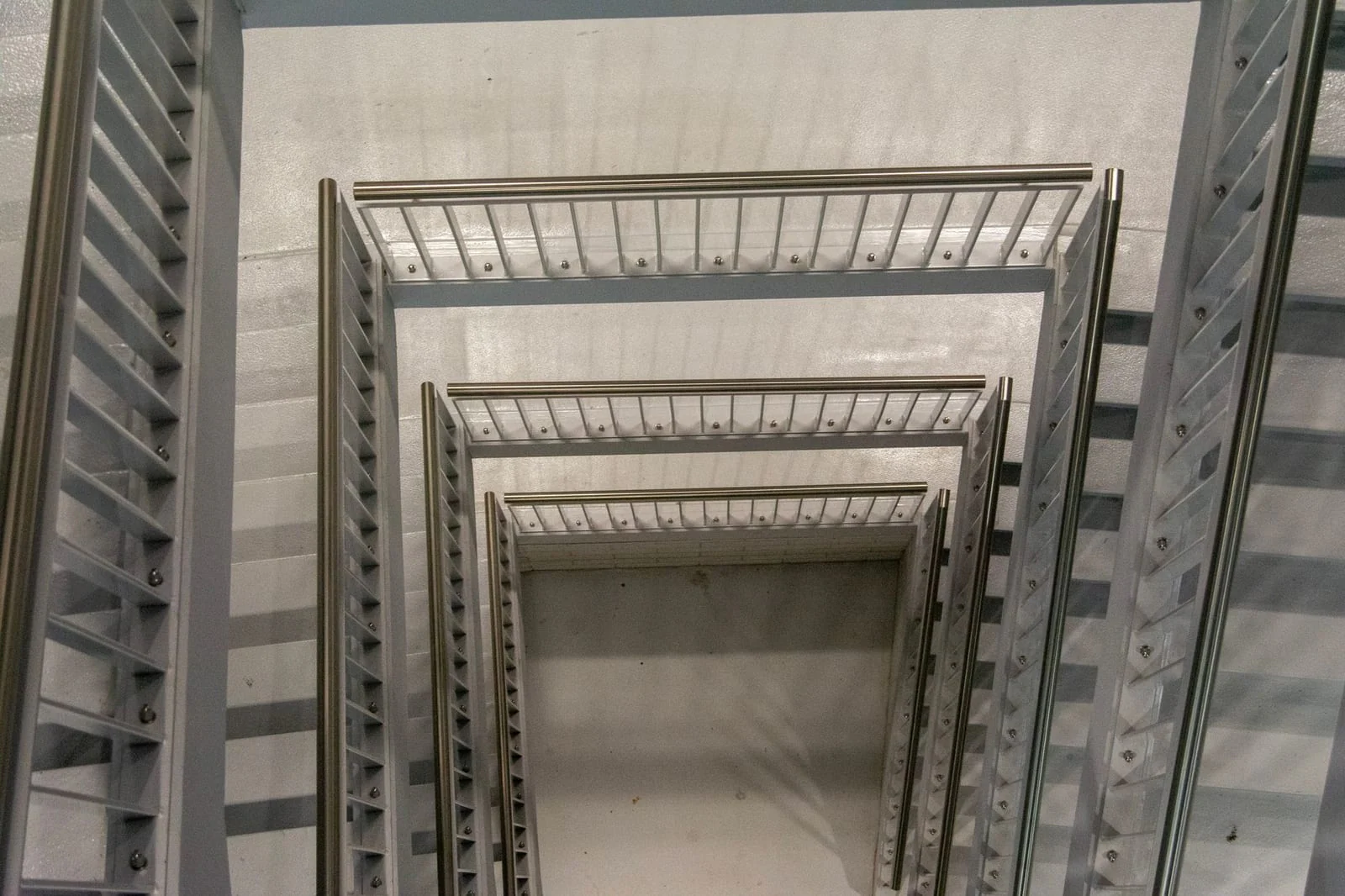
Handrails, balustrades, edge trim and decorative mouldings rely on 6063's ability to hold a crisp extruded shape and take a bright or coloured anodised surface. The combination of formability in the die and surface quality after finishing is what makes it the default for visible trim.
Heat Sinks & LED Housings
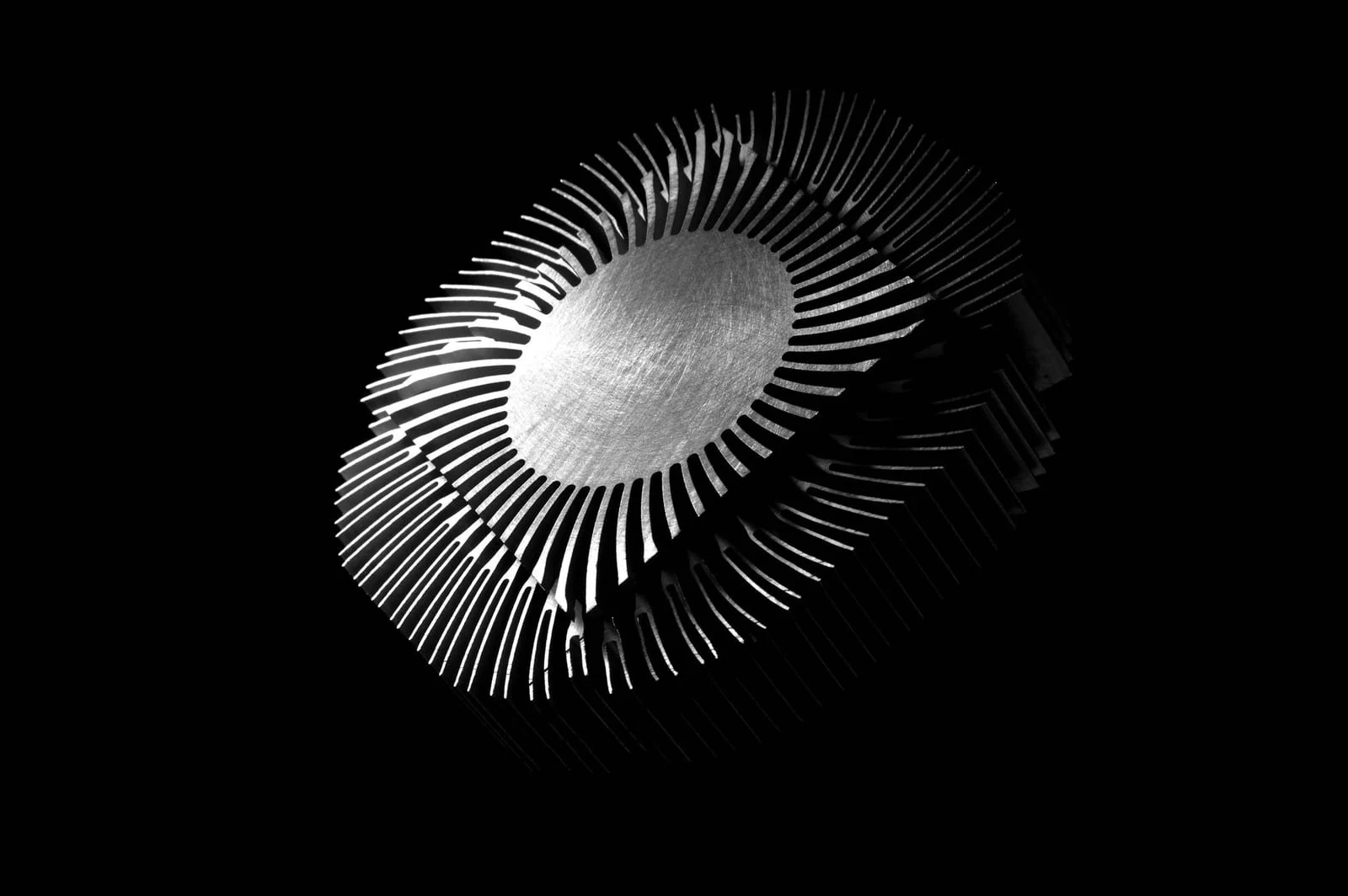
Extruded heat-sink fin arrays and LED housings exploit 6063's extrudability — fine, closely spaced fins maximise surface area for heat transfer — together with good thermal conductivity and an anodised finish that adds emissivity and corrosion protection.
Furniture, Display & Framing Systems
Modular furniture frames, display stands, sign frames and partition systems use 6063's snap-fit and channel profiles, light weight and clean anodised look. The grade lets designers extrude purpose-shaped connectors and channels rather than machine them.
Forms & Finishes
Common product forms:ExtrusionProfileTubeBar
Surface finishes:MillAnodizedPowder-coated
The extruded profile is 6063's signature form — its whole design rationale is shaping cross-sections that other grades cannot fill. Anodising is the matching finish: it thickens the natural Al₂O₃ film into a durable, dyeable engineered oxide, and powder-coating offers a painted alternative where colour rather than the metallic anodised look is wanted.[4]
References
- Effect of Processing Steps on the Mechanical Properties and Surface Appearance of 6063 Aluminium Extruded Products. Materials (MDPI) 7, 2014. — extrusion + anodizing streaking, coarse Mg₂Si effect on properties and appearance. pmc.ncbi.nlm.nih.gov/articles/PMC5455931/
- The precipitation sequence in Al–Mg–Si alloys. Edwards, Stiller, Dunlop & Couper. Acta Materialia 46, 1998. — clusters → GP zones → β″ → β′ → β-Mg₂Si. doi.org/10.1016/S1359-6454(98)00059-7
- Effect of Si, Mn, Be and Sr Addition on the Tensile Properties of 6061 Type Alloys: Role of Aging Treatment. Materials (MDPI) 16, 2023. — GP zones → β″ needles → β′ Mg₂Si; T6 strength set by β″ volume fraction. pmc.ncbi.nlm.nih.gov/articles/PMC9921951/
- A review of the electrochemical and galvanic corrosion behavior of important intermetallic compounds in the context of aluminum alloys. RSC Advances 14, 2024. — Al₂O₃ passive film, chloride breakdown, intermetallic-driven pitting. pmc.ncbi.nlm.nih.gov/articles/PMC11462131/
- Corrosion and Corrosion Protection of Additively Manufactured Aluminium Alloys — A Critical Review. Materials (MDPI) 13, 2020. — native oxide film, passivity, pitting potential. pmc.ncbi.nlm.nih.gov/articles/PMC7663725/