In short: 7075 is the highest-strength common aluminum alloy — an Al-Zn-Mg-Cu (7xxx) alloy whose T6/T651 tensile strength approaches that of mild steel at about one-third the density, giving it one of the best strength-to-weight ratios of any metal. Its crystal structure is face-centred cubic (FCC) — it is non-magnetic and gets its strength not from chromium or martensite but from age hardening: nanoscale MgZn₂ (η′) precipitates that form during the solution-treat → quench → age cycle. The catch is stress-corrosion cracking (SCC): in the peak-aged T6 temper, continuous grain-boundary η-MgZn₂ and a precipitate-free zone make 7075 susceptible to intergranular SCC in chloride environments, which is why the T73 over-aged temper trades ~10–15% strength for far better SCC resistance. Corrosion resistance is also lower than 6061 or the marine 5xxx grades because of the zinc and copper, so 7075 is often Alclad or anodized. Choose it for aircraft structure, high-stress fittings, tooling and high-end sporting goods; step down to heat-treatable 6061 when weldability and corrosion resistance matter more than peak strength.
What 7075 Aluminum Is
Type 7075 is the strongest of the common aluminum alloys — a member of the 7xxx series, whose principal alloying element is zinc, combined with magnesium and copper to form a heat-treatable Al-Zn-Mg-Cu system. In the T6 temper its tensile strength rivals that of mild steel, yet at roughly one-third the weight, which is why it became the backbone alloy of aircraft structure.
In the Aluminum Association system it is AA 7075, supplied to ASTM B209 for sheet and plate; in European EN it is EN AW-7075; in the Chinese GB system it is 7075, historically designated LC4. Buyers searching *LC4 aluminium* or *aircraft-grade aluminium plate* are looking for this alloy.
The essential proposition of 7075 is strength over corrosion resistance and weldability. The zinc, magnesium and copper that make it so strong also make it harder to weld and less corrosion-resistant than the 6xxx or marine 5xxx grades. It is therefore a structural alloy joined chiefly by mechanical fasteners or adhesives, and frequently protected by Alclad cladding or anodizing.
Critically, 7075 is heat-treatable. Unlike non-heat-treatable 1060 or 3003, it derives its strength from age hardening — fine MgZn₂ precipitates that grow during solution treatment, quenching and ageing. The temper designation (T6 for peak strength, T73 for over-aged SCC resistance) is therefore as important as the composition.
Chemical Composition
Composition limits for 7075 (per the Aluminum Association / ASTM B209). Zinc is the dominant alloying element, with magnesium and copper completing the strengthening system: zinc and magnesium combine to form the MgZn₂ precipitates that drive age hardening, while copper raises strength and modifies the grain-boundary chemistry that governs corrosion behaviour.
| Element | Symbol | Content (wt%) | Role |
|---|---|---|---|
| Zn | Zn | 5.1–6.1 | Primary alloying element; with Mg forms the MgZn₂ (η′/η) precipitates responsible for age hardening |
| Mg | Mg | 2.1–2.9 | Partners with Zn to form MgZn₂; sets the volume fraction of strengthening precipitates |
| Copper | Cu | 1.2–2 | Raises strength; enriches grain-boundary precipitates, which improves SCC resistance when over-aged |
| Chromium | Cr | 0.18–0.28 | Trace addition; forms dispersoids that control grain structure (not a passivating element here) |
| Iron | Fe | ≤ 0.5 | Residual impurity; forms coarse intermetallics that can act as local-corrosion sites |
| Silicon | Si | ≤ 0.4 | Residual impurity, held low |
| Aluminium | Al | Balance | Base metal — balance |
Per the Aluminum Association alloy register and ASTM B209.
Crystal Structure: FCC, Strengthened by Precipitation
Aluminum is a metal and 7075 is a solid solution of zinc, magnesium and copper in aluminum, so it has no molecular formula — it is correctly described by its crystal structure.
Aluminum crystallises as face-centred cubic (FCC) and stays FCC from room temperature to melting, with no allotropic transformation. There is therefore no martensitic phase change to harden it — unlike steel, 7075 cannot be hardened by quenching alone. Strength instead comes from precipitation (age) hardening: nanoscale particles formed during a controlled heat-treatment cycle obstruct dislocation motion. With no ferromagnetic phase, 7075 is non-magnetic in every temper.
The hardening sequence is well established for Al-Zn-Mg alloys: the supersaturated solid solution (SSSS) produced by quenching decomposes first into Guinier-Preston (GP) zones — coherent clusters of zinc and magnesium — then into the semi-coherent η′ phase, and finally into the equilibrium η-MgZn₂.[3] The peak-aged T6 temper corresponds to a fine, dense dispersion of η′, which provides maximum strength; further ageing coarsens the precipitates into η and over-ages the alloy, lowering strength but, as below, improving stress-corrosion resistance.[3]
Corrosion Resistance: Lower Than 6xxx and 5xxx
7075 protects itself with the same mechanism as every aluminum: a thin, dense, naturally forming aluminium oxide (Al₂O₃) film that builds spontaneously when fresh metal meets air or water and re-forms wherever it is scratched. This passive film is the basis of aluminum durability in the atmosphere and many environments.[1][2]
But 7075 is less corrosion-resistant than [6061](/en/materials/aluminum/6061) or the marine [5083](/en/materials/aluminum/5083) grades. The reason is the heavy zinc and copper loading: these elements, together with iron-bearing residuals, form second-phase intermetallic particles that set up local galvanic couples where the oxide film cannot cover cleanly, initiating pitting and intergranular attack. Reviews of aluminium corrosion tie this localised corrosion directly to such intermetallics, and note that copper-bearing alloys are among the most affected.[1] The native oxide still behaves as a barrier layer whose integrity sets pitting resistance, but with more intermetallics that barrier is more readily breached.[2]
For service exposure, 7075 is therefore commonly supplied Alclad — clad with a thin layer of more corrosion-resistant aluminum that sacrificially protects the core — or anodized, which thickens the natural film into a durable engineered Al₂O₃ layer. As with all aluminum, the practical limit is chloride: chloride ions locally break down the passive film and drive pitting, and in 7075 that same chloride attack feeds the stress-corrosion mechanism described next.[1][2]
Stress-Corrosion Cracking: The Defining Weakness of T6
The single most important engineering caution with 7075 is stress-corrosion cracking (SCC) — cracking that occurs when a susceptible microstructure, a sustained tensile stress, and a corrosive (typically chloride) environment act together. In the peak-aged T6 temper, 7075 is among the most SCC-susceptible aluminum alloys, and SCC has historically been a leading cause of in-service failures in high-strength 7xxx parts.[4][5]
The mechanism is grain-boundary, not bulk. The same ageing that strengthens the grain interiors also forms a continuous chain of η-MgZn₂ grain-boundary precipitates (GBP) flanked by a solute-depleted precipitate-free zone (PFZ). Under stress in a chloride environment, these closely spaced, anodically active grain-boundary precipitates dissolve preferentially, opening an intergranular path for the crack to propagate (with hydrogen embrittlement contributing).[4] The narrow grain-boundary precipitate spacing and the PFZ of the peak-aged condition are precisely what makes T6 vulnerable.[5]
T73 over-ageing is the engineered fix. Deliberately over-ageing the alloy past peak strength coarsens and discretises the grain-boundary precipitates — breaking up the continuous chain — and, critically, raises their copper content. The higher-copper grain-boundary precipitates are less anodically active and harder to dissolve, so the intergranular path is interrupted and SCC resistance rises sharply.[4] The cost is roughly 10–15% lower strength than T6 — a deliberate strength-for-durability trade. Independent work confirms the same picture: over-ageing improves SCC resistance through increased grain-boundary precipitate spacing and a wider precipitate-free zone.[5]
Specifying engineers therefore choose temper by environment: T6/T651 where peak strength governs and the part is protected or stress is low, and T73/T7351 where sustained tensile stress meets a corrosive service environment. (Retrogression-and-re-ageing, RRA, is a further treatment that aims to recover near-T6 strength while keeping T73-level SCC resistance.)[4]
Mechanical & Physical Properties
Because 7075 is heat-treatable, its property profile is governed by temper — by how the solution-treat / quench / age cycle has been run. The reference states are the soft O (annealed) condition and the high-strength T6/T651 condition; the T73 temper sits below T6 in strength but well above it in stress-corrosion resistance.
| Tensile strength (MPa) | ≈228 |
| Yield strength (MPa) | ≈103 |
| Elongation (%) | ≈17 |
| Tensile strength (MPa) | ≈572 |
| Yield strength (MPa) | ≈503 |
| Elongation (%) | ≈11 |
| Hardness | ≈150 HB |
| Density (g/cm³) | 2.81 |
| Elastic modulus (GPa) | 72 |
| Magnetic response | Non-magnetic |
In the O (annealed) temper, 7075 is soft and formable, which is how it is shipped for forming and machining before the strengthening heat treatment. After solution treatment, quenching and peak ageing to T6/T651, tensile and yield strength climb dramatically — into the range that approaches mild steel — which is the entire reason the alloy exists. The T73 temper deliberately over-ages past that peak, giving up some of the strength gain in exchange for the SCC resistance discussed above. (Exact figures for each condition are in the property table above, drawn from the grade data.)
On the physical side, 7075 is about one-third the density of steel, so its T6 strength translates into an exceptionally high strength-to-weight ratio — the property that makes it a structural aerospace metal. Its elastic modulus is the usual aluminum value, well below steel, so 7075 parts flex more than a steel part of equal section; designers exploit the strength while accounting for the lower stiffness.
Key Characteristics
- Highest strength of common aluminum alloys. T6/T651 tensile strength approaches mild steel at about one-third the density — among the best strength-to-weight ratios of any metal.
- Heat-treatable by age hardening. Strength comes from nanoscale MgZn₂ (η′) precipitates formed by solution-treat → quench → age, not from chromium or martensite.
- SCC-susceptible in T6. Continuous grain-boundary η-MgZn₂ plus a precipitate-free zone make peak-aged 7075 vulnerable to stress-corrosion cracking in chloride environments; T73 over-ageing mitigates it.
- Lower corrosion resistance than 6xxx/5xxx. Zinc and copper raise strength but seed localised corrosion; often supplied Alclad or anodized for service.
- Poor weldability. Susceptible to hot cracking and heat-affected-zone strength loss; typically joined by mechanical fasteners or adhesives, not fusion welding.
- Light and non-magnetic. About one-third the density of steel; the FCC lattice has no ferromagnetic phase in any temper.
How 7075 Is Made
Producing 7075 centres on the heat-treatment cycle that develops its strength. After casting, the ingot is homogenised, hot- and cold-worked (rolled or forged) to shape, then put through the solution-treat / quench / age sequence — the step that turns a moderate-strength alloy into the strongest common aluminum. The chosen ageing schedule (T6 versus T73) sets the final balance of strength and stress-corrosion resistance.
Setting the temper: solution treatment dissolves the zinc and magnesium into a single-phase solid solution; rapid quenching traps them as a supersaturated solid solution; ageing then precipitates the MgZn₂ that does the strengthening. Stopping at peak strength gives T6/T651 (the T651 suffix adds a stress-relief stretch); ageing further to the over-aged condition gives T73/T7351, sacrificing some strength for stress-corrosion resistance.
7075 vs 6061 vs 2024 — Strength, Service, or Fatigue
The three aerospace-relevant alloys split along clear lines. 7075 is the strongest, the choice when peak strength-to-weight governs. [6061](/en/materials/aluminum/6061) trades much of that strength for far better weldability and corrosion resistance — the structural all-rounder. 2024 is the other classic aircraft alloy: lower peak strength than 7075-T6 but better fatigue resistance, favoured for tension-dominant structures such as lower wing skins.
Applications by Industry
7075's combination of the highest strength-to-weight ratio among common aluminum alloys makes it the grade of choice where structural strength at minimum weight outranks corrosion resistance and weldability.
Aircraft Structure

Wing spars, fuselage frames, bulkheads and skins — the original and defining use. 7075-T6 provides the strength-to-weight ratio that airframes demand; on fatigue- or corrosion-critical parts it is run in T73/T7351 or paired with 2024, and Alclad protection is common.[4]
High-Stress Fittings and Brackets
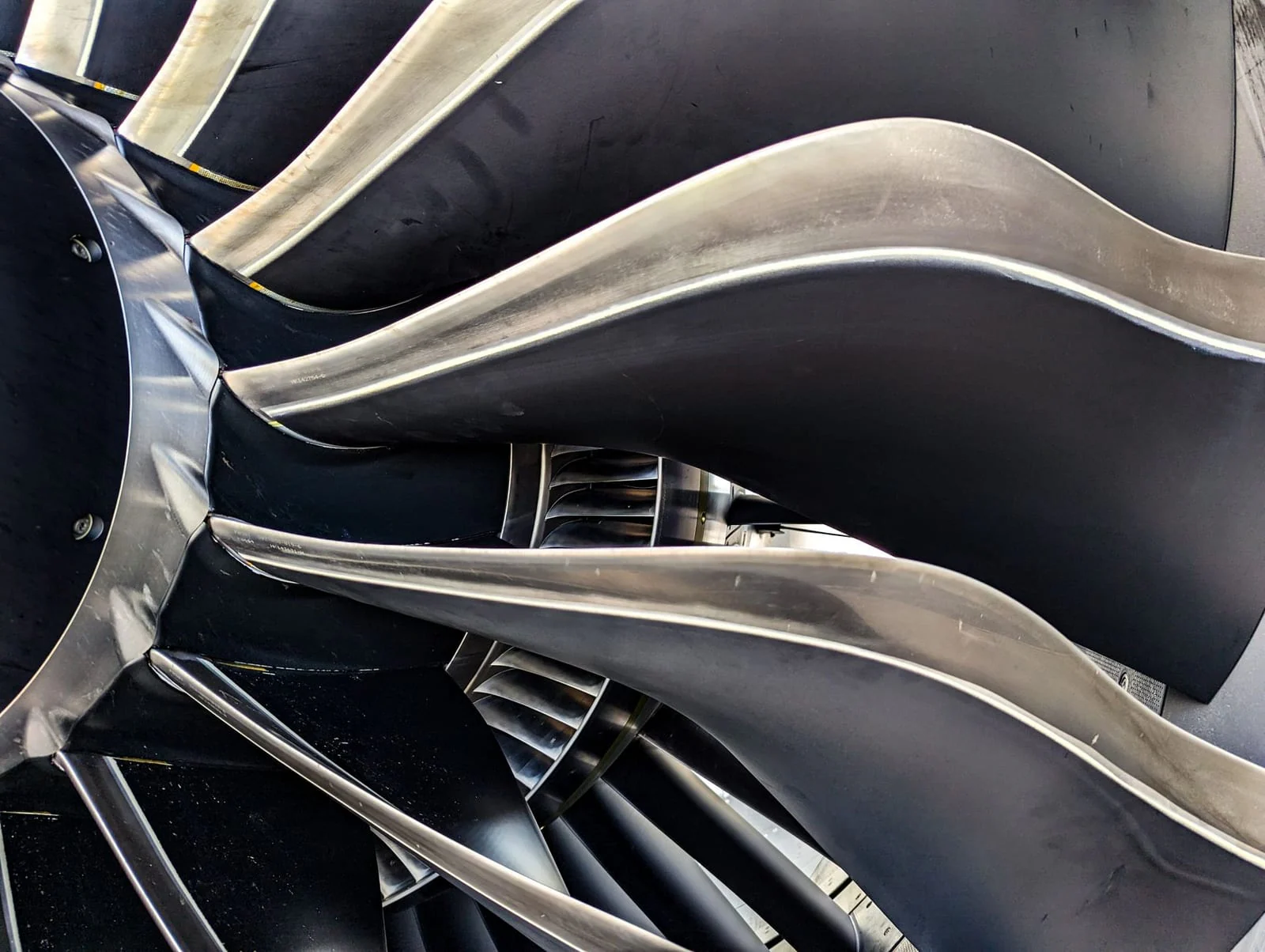
Highly loaded fittings, brackets and aerospace hardware where a small, light part must carry large loads. The high yield strength of T6 lets designers minimise section, and T73 is specified where the fitting sees sustained tensile stress in a corrosive environment.[4][5]
Mould Tooling and Precision Plates
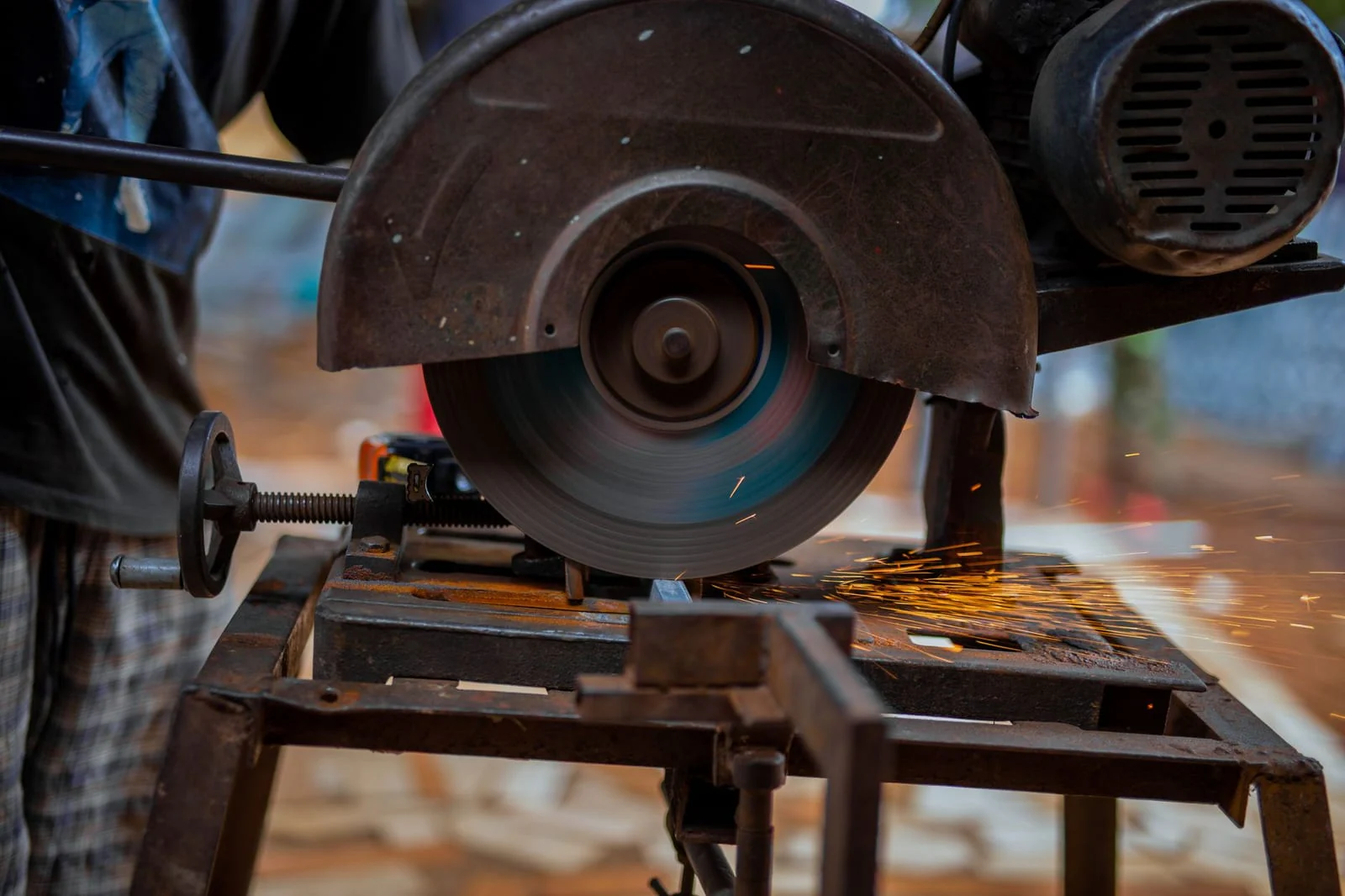
Plastic-injection mould plates and tooling jigs exploit 7075's hardness and dimensional stability. The high strength resists deflection and wear, and the alloy machines cleanly to tight tolerance in plate form (cast tooling plate is typically stress-relieved to T651).
High-Performance Sporting Goods

Bicycle frames and components, climbing hardware, and rifle receivers use 7075 where every gram matters and the loads are high. Its strength-to-weight ratio lets these parts be both light and strong, with anodizing supplying surface protection and finish.
Forms & Finishes
Common product forms:SheetPlateBarTubeForging
Surface finishes:MillAlcladAnodizedBrushed
For service in corrosive environments, the Alclad finish (a sacrificial corrosion-resistant aluminum cladding) and anodizing (a thickened, durable Al₂O₃ layer) are the standard protections that compensate for 7075's lower inherent corrosion resistance. Thick plate and forgings are 7075's signature structural forms.
References
- A review of the electrochemical and galvanic corrosion behavior of important intermetallic compounds in the context of aluminum alloys. RSC Advances 14, 2024. — Al₂O₃ passive film, chloride breakdown, intermetallic-driven pitting. pmc.ncbi.nlm.nih.gov/articles/PMC11462131/
- Corrosion and Corrosion Protection of Additively Manufactured Aluminium Alloys — A Critical Review. Materials (MDPI) 13, 2020. — native oxide film, passivity, pitting potential. pmc.ncbi.nlm.nih.gov/articles/PMC7663725/
- Precipitation phenomena in Al-Zn-Mg alloy matrix composites reinforced with B₄C particles. Scientific Reports 7, 2017. — SSS → GP zones → η′ (semi-coherent) → η-MgZn₂. pmc.ncbi.nlm.nih.gov/articles/PMC5575324/
- Mitigation effects of over-aging (T73) induced intergranular corrosion on stress corrosion cracking of AA7075 aluminum alloy and behaviors of η phase grain boundary precipitates. Xiong, Robson, Cao & Deng. Corrosion Science 224, 2023. — η-MgZn₂ GBP, Cu enrichment, T73 vs T6 SCC. doi.org/10.1016/j.corsci.2023.111570
- Enhancing Stress Corrosion Cracking Resistance of Low Cu-Containing Al-Zn-Mg-Cu Alloys by Aging Treatment Control. Materials (MDPI) 17, 2024. — grain boundary precipitate spacing, PFZ width, over-aging vs SCC. pmc.ncbi.nlm.nih.gov/articles/PMC11642537/