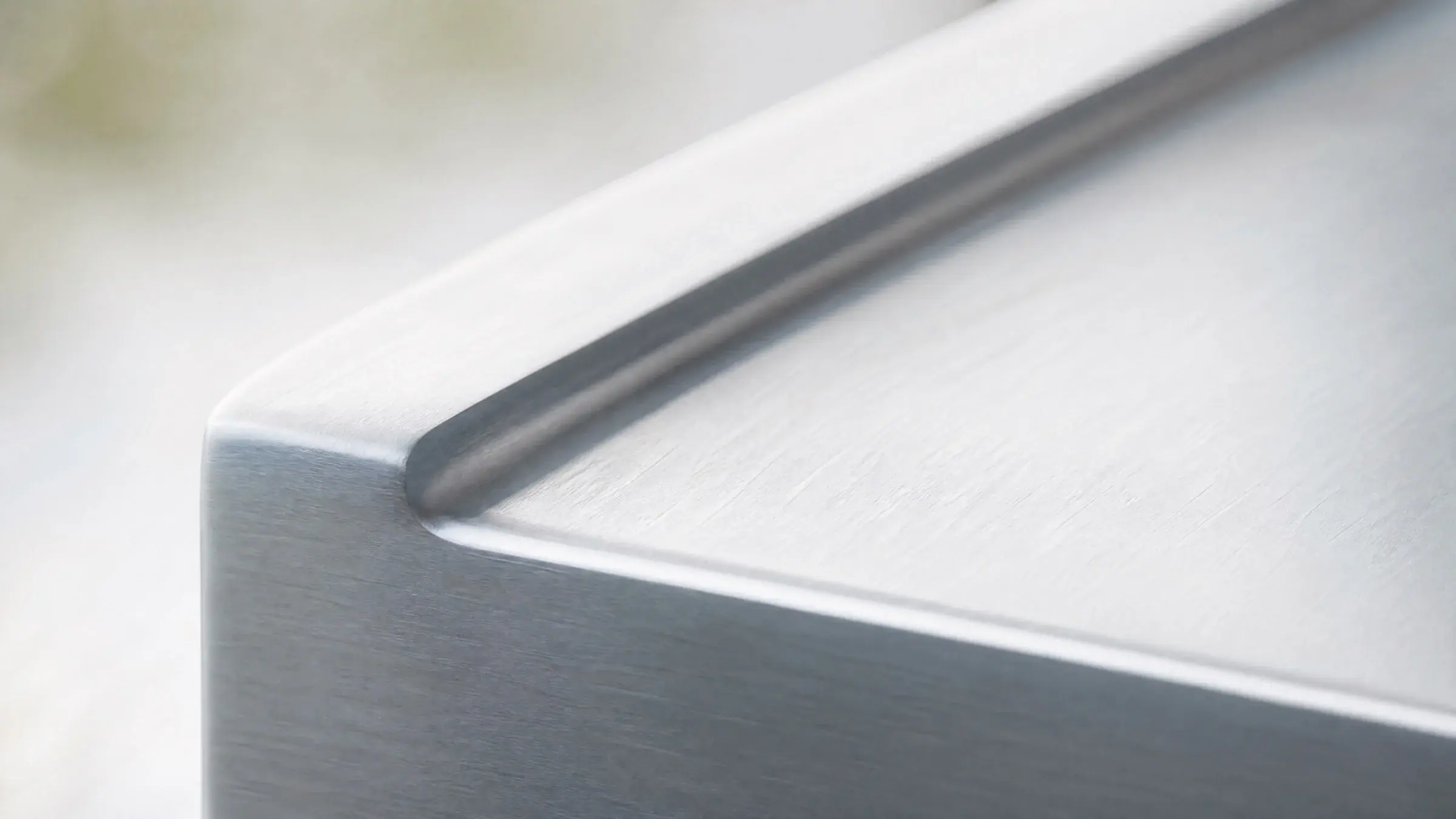
In short: 5052 is the premier marine sheet alloy — a 5xxx aluminum-magnesium alloy carrying roughly 2.5% magnesium in solid solution. Its crystal structure is FCC aluminium and it is non-magnetic. Strength comes from magnesium solid-solution strengthening plus strain hardening (H tempers) — 5052 is not heat-treatable, so it gains no benefit from age hardening. The magnesium also makes it exceptionally resistant to saltwater and marine atmospheres via a self-healing Al₂O₃ oxide film, and it offers the best fatigue strength of the common aluminum sheet grades. Step up to 5083 for higher magnesium and greater strength in heavy marine structures; step down to 3003 where only moderate corrosion resistance and maximum formability matter; or move to 6061 when heat-treatable strength is required.
What 5052 Aluminum Is
Type 5052 is the premier marine sheet alloy of the aluminium 5xxx family — an aluminium-magnesium alloy with roughly 2.5% magnesium in solid solution. Magnesium is the dominant alloying element and the source of its strength: it is the most widely used 5xxx sheet grade where saltwater corrosion resistance, formability, and fatigue strength matter together.[1]
In the international Aluminum Association system it is AA 5052 (sheet and plate per ASTM B209); in European EN it is EN AW-5052; in Japanese and Chinese practice it carries the GB 5052 designation and the older Chinese trade name LF2. Chinese buyers searching *LF2* are looking for this alloy.[1]
The defining trait of the 5xxx family is that it is non-heat-treatable: unlike the 6xxx and 7xxx alloys, 5052 cannot be strengthened by precipitation (age) hardening. Instead it builds strength from magnesium dissolved in the aluminium lattice (solid-solution strengthening) combined with cold working (strain hardening, the H tempers). The same magnesium that strengthens it also markedly improves its resistance to seawater.[1]
Chemical Composition
Composition limits for 5052 (per the Aluminum Association / ASTM B209). Magnesium is the principal alloying element — held high enough to give strong solid-solution strengthening and marine corrosion resistance, but kept below the levels of higher-magnesium 5xxx grades where long-term sensitisation becomes a concern.[1]
| Element | Symbol | Content (wt%) | Role |
|---|---|---|---|
| Mg | Mg | 2.2–2.8 | Principal alloying element — dissolves in the FCC lattice for solid-solution strengthening and improves seawater corrosion resistance |
| Chromium | Cr | 0.15–0.35 | Minor addition — refines grain structure and controls recrystallisation (not a passivating element in this alloy) |
| Iron | Fe | ≤ 0.4 | Residual impurity — forms Fe-bearing intermetallic particles |
| Silicon | Si | ≤ 0.25 | Residual impurity — combines with Fe/Mg in second-phase particles |
| Copper | Cu | ≤ 0.1 | Held low — copper would reduce corrosion resistance |
| Manganese | Mn | ≤ 0.1 | Minor — assists grain control and adds slight strength |
| Zn | Zn | ≤ 0.1 | Residual, held low |
| Aluminium | Al | Balance | Base metal |
Per the Aluminum Association / ASTM B209 limits for AA 5052.[1]
Crystal Structure: FCC Aluminium with Magnesium in Solution
Aluminium is an alloy here — a solid solution of magnesium and minor elements in an aluminium base — so it has no molecular formula. The correct description is by crystal structure.
Like pure aluminium, 5052 has a face-centred cubic (FCC) lattice. Magnesium atoms sit substitutionally on aluminium lattice sites; because the magnesium atom differs in size from aluminium, each dissolved atom strains the surrounding lattice and impedes dislocation motion — this is solid-solution strengthening, and it is the reason 5052 is stronger than the nearly pure 1xxx alloys without any heat treatment. The FCC structure also gives aluminium its excellent ductility and formability, and it is non-magnetic in every condition.[1]
Because the strength of 5052 comes from dissolved magnesium and cold work — not from precipitates — there is no age-hardening sequence to control. Annealing (O temper) recrystallises the worked structure back to its softest, most formable state; the H tempers (e.g. H32, H34) reintroduce strength by controlled cold rolling followed by a stabilising treatment. The FCC lattice remains non-magnetic throughout.[1]
Corrosion Resistance: Outstanding in Saltwater
Marine corrosion resistance is the headline property of 5052. In seawater and salt-laden atmospheres it outperforms the 1xxx, 3xxx, and most heat-treatable aluminium grades — which is why it is the default sheet for boats, fuel tanks, and coastal structures, often used bare without any protective coating.[1]
Mechanism — a self-healing Al₂O₃ film. Aluminium owes its corrosion resistance to a thin, dense, amorphous aluminium-oxide (Al₂O₃) film that forms spontaneously on any exposed surface. The film is stable across roughly neutral pH and, when scratched, re-forms almost instantly in the presence of oxygen. Reviews of aluminium corrosion describe this native oxide as a passive barrier whose integrity governs resistance to pitting; chloride ions are the principal threat, attacking the film at local weak points such as coarse intermetallic particles.[1][2]
Why magnesium helps. Magnesium dissolved in the aluminium matrix improves resistance in chloride and marine environments, giving 5052 its characteristic saltwater durability beyond what the bare oxide film alone provides.[1]
A caveat for high-magnesium 5xxx — sensitisation. In 5xxx alloys carrying noticeably more magnesium (above roughly 3%), prolonged exposure to moderately elevated temperature can cause a magnesium-rich β-phase (Mg₂Al₃) to precipitate along grain boundaries, which can make the alloy susceptible to intergranular and stress-corrosion attack. At 5052's lower magnesium level (~2.5%) this tendency is limited, and the alloy is generally regarded as stable in normal service — one practical reason 5052 is chosen over the higher-magnesium grades where long-term warm exposure is expected.[2]
Coarse iron-bearing intermetallic particles act as local sites where the oxide film is harder to maintain, and are the usual initiation points for pitting in aluminium alloys.[1]
Mechanical & Physical Properties
5052 is supplied in a range of tempers that trade formability for strength — from the soft, fully formable O (annealed) condition up through the strain-hardened H tempers. Because it is non-heat-treatable, strength is set by the amount of cold work, not by any quench-and-age cycle.[1]
| Tensile strength (MPa) | ≈193 |
| Yield strength (MPa) | ≈89 |
| Elongation (%) | ≈25 |
| Hardness | ≈47 HB |
| Density (g/cm³) | 2.68 |
| Elastic modulus (GPa) | 70 |
| Magnetic response | Non-magnetic |
| Tensile strength (MPa) | ≈228 |
| Yield strength (MPa) | ≈193 |
| Elongation (%) | ≈12 |
| Hardness | ≈60 HB |
| Tensile strength (MPa) | ≈262 |
| Yield strength (MPa) | ≈214 |
| Elongation (%) | ≈10 |
| Hardness | ≈68 HB |
In the O (annealed) temper the alloy is at its softest and most ductile — the condition for deep drawing and complex forming. The H tempers (H32 quarter-hard, H34 half-hard, and so on) progressively raise yield and tensile strength by cold rolling, at the cost of elongation. This lets a fabricator pick the exact strength-versus-formability balance a part needs.[1]
Two physical properties define its appeal: a density of about one-third that of steel, and the best fatigue strength among common aluminium sheet alloys — making 5052 well-suited to cyclically loaded and vibrating structures such as fuel tanks, hulls, and panels.[1]
Key Characteristics
- Outstanding saltwater corrosion resistance. A self-healing Al₂O₃ film plus magnesium in solution makes 5052 the default bare-metal sheet for marine and coastal service.
- Non-heat-treatable. Strength comes from magnesium solid solution and cold work (H tempers), never from age hardening — there is no T-temper for 5052.
- Best fatigue strength of the common sheet alloys. Well-suited to cyclic loading and vibration.
- Highly formable. In the O temper it deep-draws and bends readily; H tempers let you dial in higher strength.
- Good weldability. Welds cleanly with 5xxx filler wire, though the weld heat-affected zone softens back toward annealed (O) strength.
- Non-magnetic. The FCC aluminium lattice carries no magnetism in any condition.
How 5052 Is Made
Production follows the wrought-aluminium sheet route: the Al-Mg melt is cast (DC or continuous), homogenised, then hot and cold rolled to gauge. Because 5052 is non-heat-treatable, the final mechanical state is set not by quench-and-age but by the amount of cold rolling and the choice of anneal or stabilise — this is what defines the O and H tempers.
Temper route: full annealing recrystallises the sheet to the soft, formable O temper; controlled cold reduction followed by a low-temperature stabilising treatment yields the strain-hardened H tempers (H32, H34, …). For surface, 5052 readily takes anodizing — an electrochemical thickening of the natural Al₂O₃ into a durable, dyeable barrier-plus-porous layer.[3]
5052 vs 5083 vs 3003 — The Magnesium Ladder
All three are non-heat-treatable wrought aluminium alloys, and the choice tracks the magnesium content. More magnesium means more solid-solution strength and stronger marine resistance — but at higher magnesium, long-term warm exposure raises sensitisation concerns. 3003 sits below 5052 (manganese, not magnesium, as the main addition); 5083 sits above it with far more magnesium.
Applications by Industry
5052's blend of saltwater durability, formability, and fatigue strength makes it the workhorse sheet for marine, fuel-containment, and panel applications.[1]
Marine and Boatbuilding
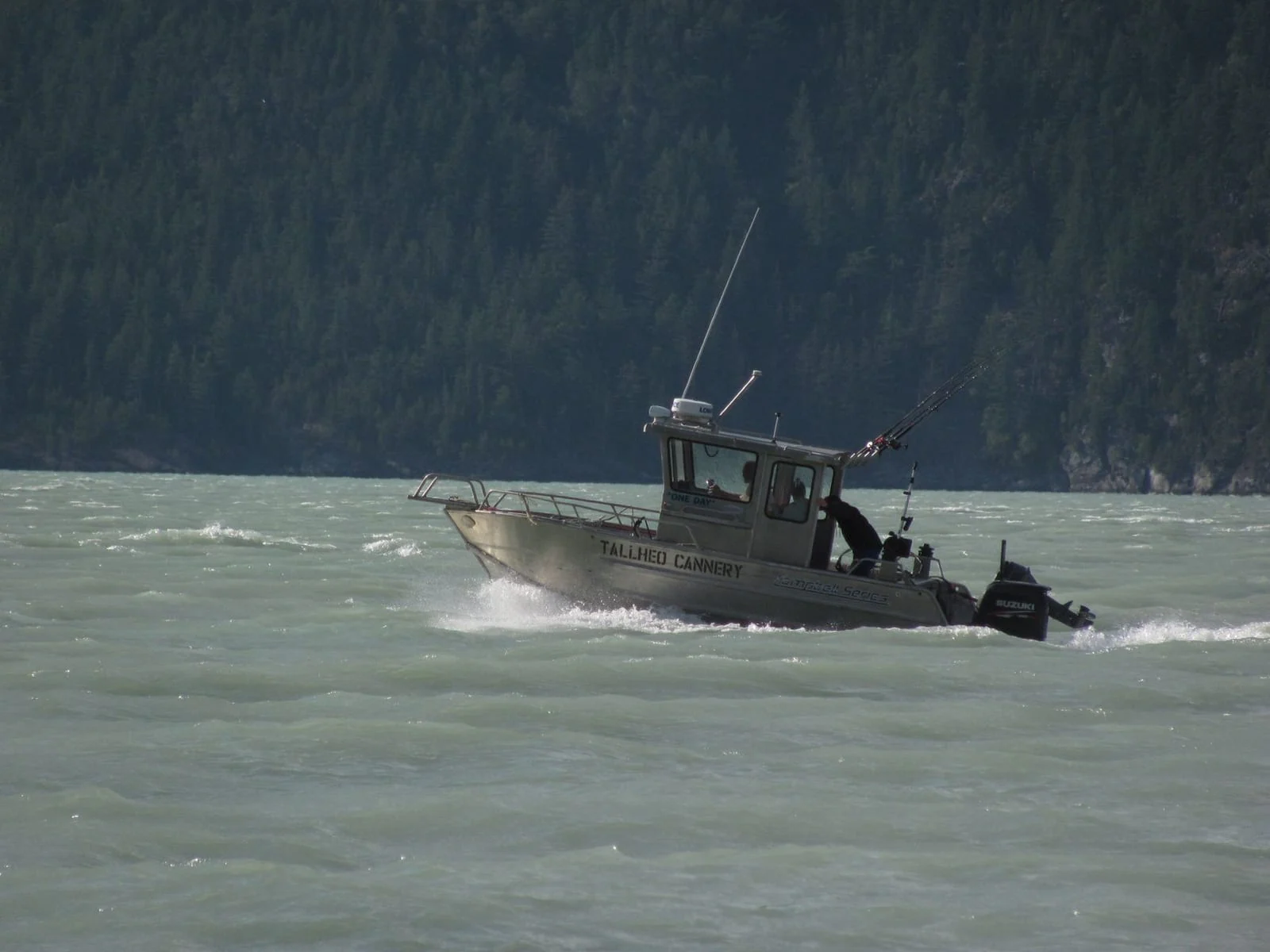
Hull plating, deck plate, fittings, and superstructure sheet. 5052 resists seawater bare, takes the cyclic pounding of waves thanks to its fatigue strength, and welds with 5xxx filler — the reason it is the standard sheet across the boatbuilding industry, alongside the higher-magnesium 5083 for heavier structures.[1][4]
Fuel Tanks and Pressure Vessels
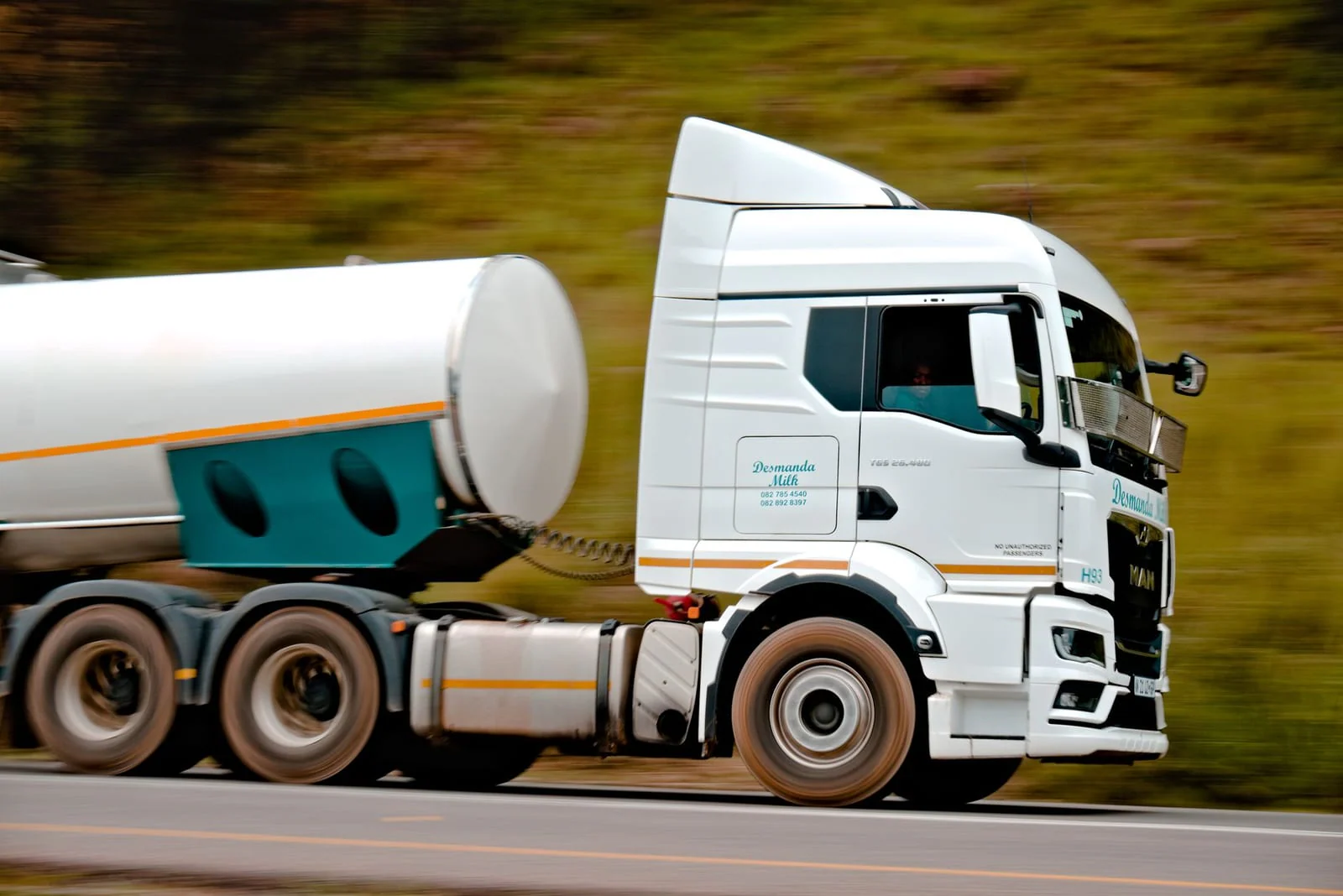
Aircraft and automotive fuel tanks, transport tanks, and light pressure vessels. The combination of corrosion resistance, weldability, and fatigue strength suits containers that flex and vibrate in service.[1]
Architectural Cladding and Signage

Façade panels, cladding, and signage in coastal and industrial environments, where the marine-grade corrosion resistance keeps surfaces clean. 5052 also anodizes well for coloured, durable architectural finishes.[3]
Electronics Enclosures and Chassis
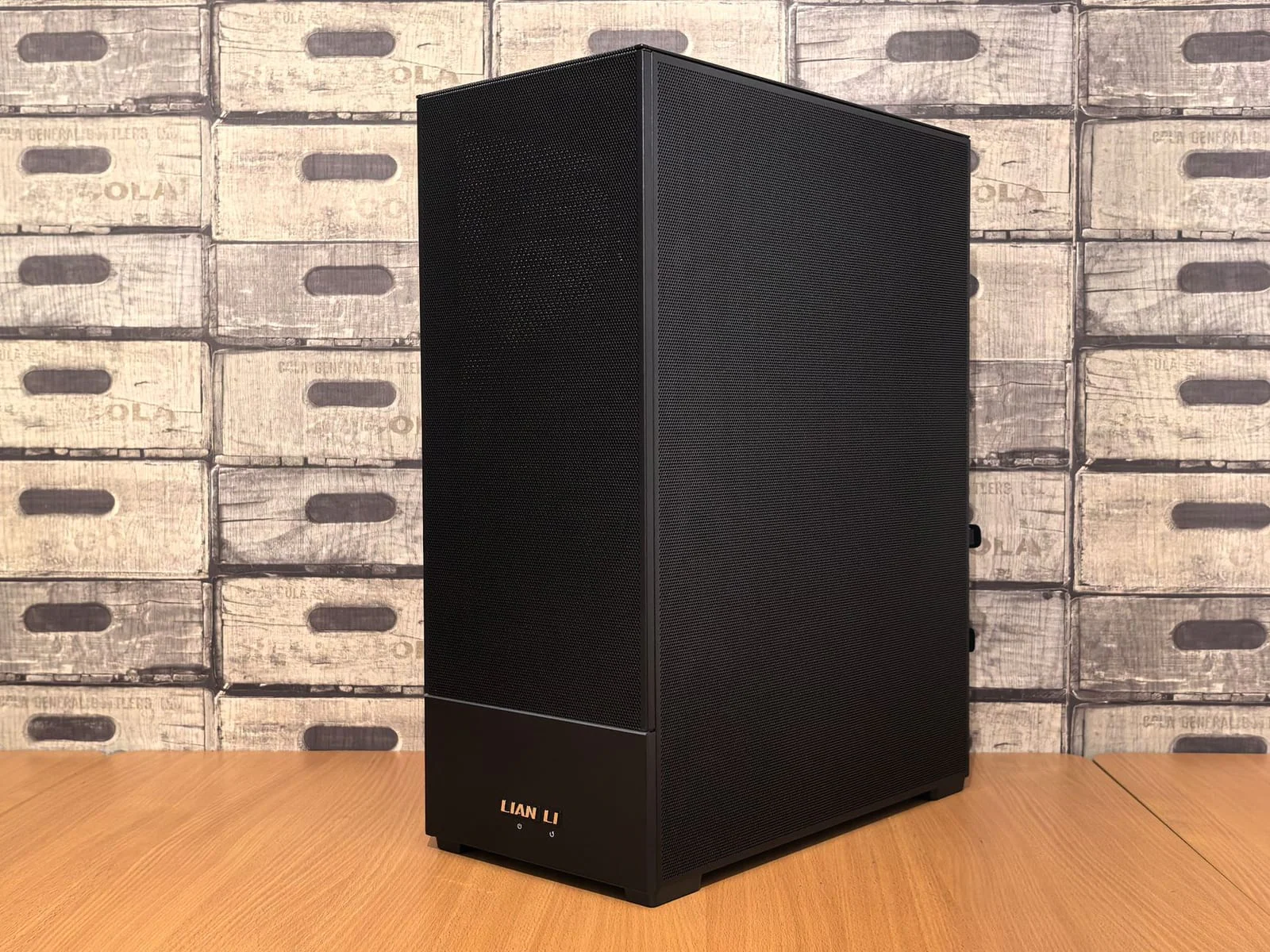
Equipment enclosures, chassis, and brackets formed from sheet. The formability of the O temper and the strength of the H tempers let a single alloy cover both deep-drawn housings and stiffer structural panels.
Forms & Finishes
Common product forms:SheetCoilPlateStrip
Surface finishes:MillAnodizedBrushed
For architectural and consumer applications, anodizing is the functional finish — it thickens the natural Al₂O₃ film into a hard, abrasion-resistant, dyeable layer, improving both appearance and surface durability while building on the alloy's inherent corrosion resistance.[3]
References
- A review of the electrochemical and galvanic corrosion behavior of important intermetallic compounds in the context of aluminum alloys. RSC Advances 14, 2024. — Al₂O₃ passive film, chloride breakdown, intermetallic-driven pitting. pmc.ncbi.nlm.nih.gov/articles/PMC11462131/
- Corrosion and Corrosion Protection of Additively Manufactured Aluminium Alloys — A Critical Review. Materials (MDPI) 13, 2020. — native oxide film, passivity, pitting potential. pmc.ncbi.nlm.nih.gov/articles/PMC7663725/
- Influence of Anodizing Parameters on Surface Morphology and Surface-Free Energy of Al₂O₃ Layers Produced on EN AW-5251 Alloy. Materials (MDPI) 12, 2019. — anodizing barrier/porous Al₂O₃ layer, pore size vs current/temperature. pmc.ncbi.nlm.nih.gov/articles/PMC6427806/
- Analyzing the Influence of Titanium Content in 5087 Aluminum Filler Wires on Metal Inert Gas Welding Joints of AA5083 Alloy. Materials (MDPI) 17, 2024. — AA5083 MIG welding with 5xxx filler, grain refinement. pmc.ncbi.nlm.nih.gov/articles/PMC11509792/