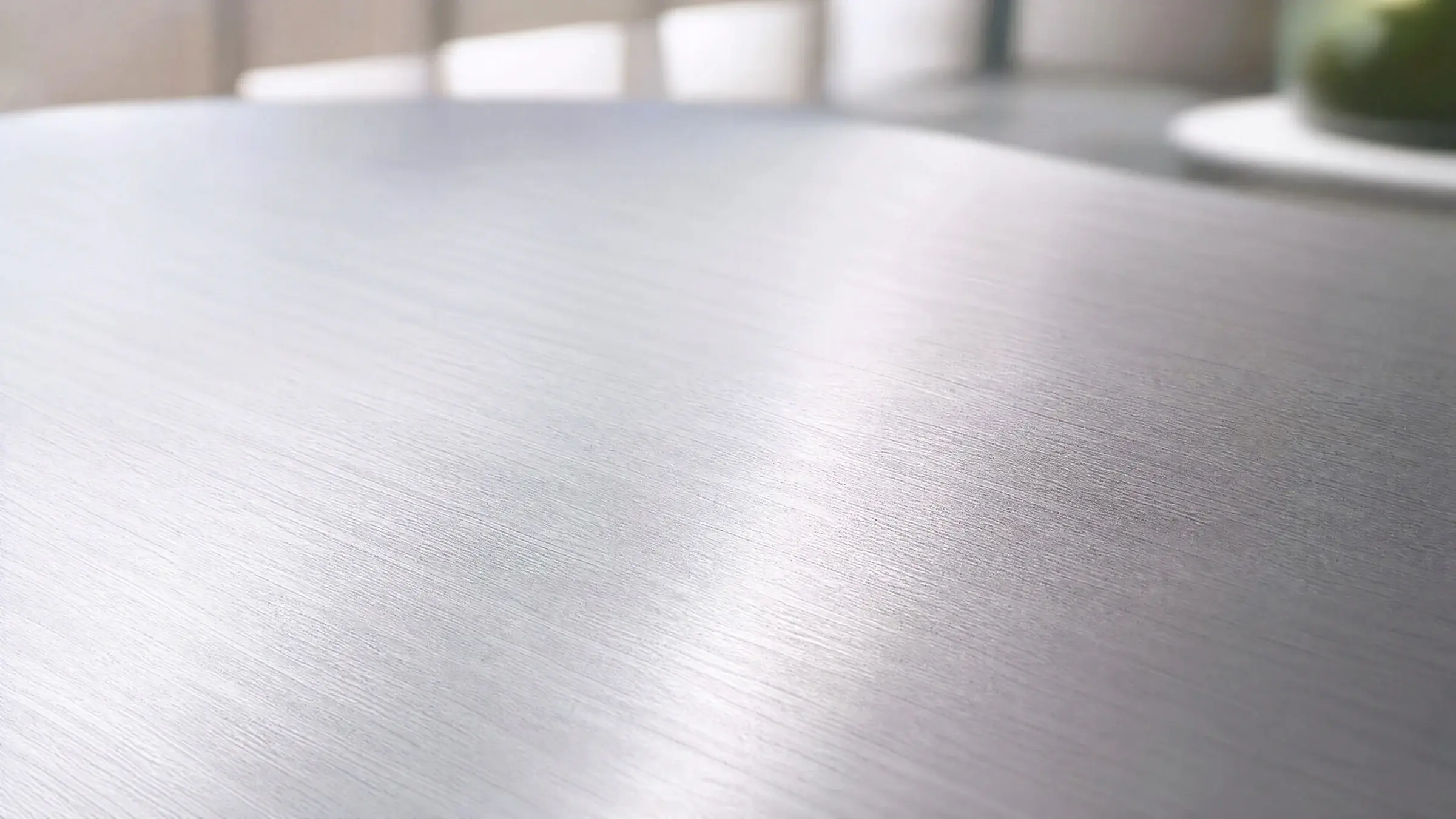
In short: 3003 is the workhorse 3xxx aluminum-manganese alloy — roughly 1.2% Mn in an aluminum base. The manganese sits partly in solid solution and partly as finely dispersed Al₆Mn particles, giving about 20% more strength than pure aluminum while preserving the formability and corrosion resistance of the 1xxx series. Its crystal structure is face-centred cubic (FCC) aluminium — non-magnetic, with no allotropic transformation. Corrosion resistance comes from a self-healing Al₂O₃ oxide film, not from any added passivating element. 3003 is not heat-treatable: it gains strength only through cold work (strain hardening, the H tempers). Step up from 1060 when you want more strength at similar corrosion resistance; step across to 5052 when you need still higher strength or marine service.
What 3003 Aluminum Is
Type 3003 is the workhorse aluminum-manganese alloy — the most widely used of the 3xxx series and one of the most-used aluminum alloys overall. It takes a near-pure aluminum base and adds about 1.0–1.5% manganese (commercial nominal ≈ 1.2%) plus a small, deliberate 0.05–0.20% copper, with iron and silicon held as controlled residuals.[1]
In the Aluminum Association system it is AA 3003, supplied to ASTM B209 for sheet and plate; in European EN it is EN AW-3003. In the Chinese GB system it corresponds to 3003, historically designated LF21. Buyers searching *3003* or *LF21* are looking for this alloy.[1]
The essential idea: pure 1xxx aluminum is soft, so manganese is added to raise strength without sacrificing the qualities that make aluminum useful — corrosion resistance, formability and weldability. The manganese delivers this in two ways at once: part dissolves into the aluminum lattice (solid-solution strengthening), and part forms a fine dispersion of Al₆Mn intermetallic particles that impede dislocation motion. Research on Al-2Mn alloys confirms this combination, framing it explicitly as a way of "overcoming the trade-off between properties such as strength and corrosion in 3000-series Al alloys."[3]
Unlike the 6061 and 7xxx alloys, 3003 is not heat-treatable — it cannot be strengthened by solution treatment and ageing. All of its strength above the annealed baseline comes from cold work (strain hardening), which is why it is sold in H tempers (H14, H16, H18) rather than T tempers.[1]
Chemical Composition
Composition limits for 3003 (per the Aluminum Association / ASTM B209). Manganese is the defining element — it is what separates 3003 from pure 1xxx aluminum and the source of its added strength, partly in solid solution and partly as the Al₆Mn dispersoid.[1][3]
| Element | Symbol | Content (wt%) | Role |
|---|---|---|---|
| Manganese | Mn | 1–1.5 | The defining element — solid-solution strengthening plus Al₆Mn dispersoids; ~20% more strength than pure aluminum |
| Copper | Cu | 0.05–0.2 | Small deliberate addition for a modest extra strength increment |
| Iron | Fe | ≤ 0.7 | Controlled residual; forms Al-Fe-Mn constituent particles |
| Silicon | Si | ≤ 0.6 | Controlled residual; can combine with Mn/Fe into constituent phases |
| Zn | Zn | ≤ 0.1 | Trace residual, held low |
| Aluminium | Al | Balance | Base metal — provides the self-protecting Al₂O₃ oxide film |
Per the Aluminum Association registration / ASTM B209.[1]
Crystal Structure: FCC Aluminium with a Manganese Dispersion
Aluminum is an alloy here — a solid solution of manganese (and minor elements) in aluminum — so it has no molecular formula. The correct description is by crystal structure.
The aluminum base has a face-centred cubic (FCC) lattice. FCC aluminum has no allotropic transformation — it keeps the same structure from room temperature up to melting — so there is nothing analogous to a quench-hardening transformation. The metal is non-magnetic in every temper. Strengthening instead comes from what is dispersed within and dissolved into that FCC lattice: manganese in solid solution, plus a fine distribution of Al₆Mn intermetallic particles that pin dislocations.[3]
Because 3003 is not heat-treatable, its strength is not set by a quench-and-age cycle. Above the soft annealed (O) state, every increment of strength is bought by cold work — rolling or drawing that multiplies and tangles dislocations in the FCC lattice. The manganese-rich Al₆Mn dispersoids add a baseline strengthening contribution on top of pure aluminum, and they also help stabilise the worked structure. Studies of Al-Mn alloys link the Al₆Mn dispersion directly to the hardness gain over pure aluminum while keeping corrosion resistance high.[3]
Corrosion Resistance: Self-Protecting via an Al₂O₃ Film
3003 is highly corrosion resistant in atmospheric, fresh-water and many mildly acidic or alkaline environments — equal to or better than pure 1xxx aluminum and well suited to roofing, cookware and heat exchangers. Its protection comes from a thin, dense, self-healing aluminium-oxide (Al₂O₃) film that forms spontaneously on the metal surface in air.[1][2]
The native oxide film is the protection. A naturally formed Al₂O₃ layer acts as a barrier between the metal and its environment; reviews of aluminum corrosion describe this native oxide as the source of aluminum's passive behaviour, with the barrier integrity of that film governing resistance to localised attack. When the film is scratched, fresh aluminum re-oxidises almost immediately, so the protection is self-healing across a broad near-neutral pH range.[2]
Where attack initiates. As with all aluminum alloys, the practical limit is localised (pitting) corrosion rather than uniform loss. Chloride ions can locally break down the oxide film, and second-phase / intermetallic particles can act as micro-sites where the protective film is less continuous. Adding manganese to the 3xxx system is favourable here: research on Al-Mn alloys frames the chemistry as a way to raise strength while keeping corrosion resistance high, rather than trading one for the other.[2][3]
Anodizing can electrochemically thicken the natural film into a much heavier engineered Al₂O₃ layer for extra wear and corrosion protection, and 3003 takes anodizing and painted/coated finishes well for architectural use.[2]
Mechanical & Physical Properties
3003 offers a spectrum of property profiles set entirely by how much cold work the sheet has seen — the defining behaviour of a non-heat-treatable alloy. In the soft annealed O temper it is at its most formable; the H tempers (H14, H16, H18) trade ductility for progressively higher strength through strain hardening.[1]
| Tensile strength (MPa) | ≈110 |
| Yield strength (MPa) | ≈41 |
| Elongation (%) | ≈30 |
| Hardness | ≈28 HB |
| Density (g/cm³) | 2.73 |
| Elastic modulus (GPa) | 69 |
| Magnetic response | Non-magnetic |
| Tensile strength (MPa) | ≈150 |
| Yield strength (MPa) | ≈145 |
| Elongation (%) | ≈8 |
| Hardness | ≈40 HB |
| Density (g/cm³) | 2.73 |
| Elastic modulus (GPa) | 69 |
| Magnetic response | Non-magnetic |
The O (annealed) condition gives the lowest strength but the highest elongation, ideal for deep drawing, spinning and tight bends without cracking. Cold rolling to H14 (half-hard) roughly raises both tensile and yield strength while cutting elongation — the most common general-purpose temper. Further work to H16 and H18 (full-hard) continues the climb in strength at the cost of ductility. Because the strengthening is purely mechanical, the only way to soften the metal back down is to anneal it, which removes the cold work.[1]
The manganese addition gives 3003 about 20% higher strength than pure aluminum at every temper, with the Al₆Mn dispersion providing the baseline lift that cold work then builds on. Like all aluminum it is light (density ≈ 2.73 g/cm³, about one-third that of steel), a good thermal conductor, and non-magnetic.[3]
Key Characteristics
- Self-protecting via Al₂O₃. Corrosion resistance comes from a dense, self-healing aluminium-oxide film — no added passivating agent required.
- ~20% stronger than pure aluminum. Manganese in solid solution plus Al₆Mn dispersoids lift strength over the 1xxx series while keeping corrosion resistance.
- Excellent formability. In the annealed O temper it deep-draws, spins and bends without cracking — the reason it dominates cookware and ducting.
- Non-heat-treatable. Strength is added only by cold work (H tempers); it cannot be quench-and-age hardened.
- Highly weldable and brazeable. Joins by all standard methods and is a mainstay of brazed heat-exchanger assemblies.
- Light and non-magnetic. About one-third the density of steel, with no magnetic response in any temper.
How 3003 Is Made
Production starts from molten aluminum with the manganese (and small copper) addition controlled to land in the ~1.0–1.5% Mn window. The metal is cast, then hot and cold rolled to sheet, coil or foil. Because 3003 is non-heat-treatable, the mill does not quench-and-age it; instead the final temper is set by the balance of cold rolling and annealing — more cold work for harder H tempers, a full anneal for the soft O temper.
Setting the temper: an O temper is produced by fully annealing after rolling; H14/H16/H18 tempers are produced by cold rolling to a target reduction (with controlled partial anneals for the H1x stabilised tempers). The Al₆Mn dispersion forms during casting and downstream thermal processing, providing the strength baseline that cold work then builds on.[3]
3003 vs 1060 vs 5052 — Manganese vs Pure vs Magnesium
All three are non-heat-treatable, strain-hardening sheet alloys, so the choice is about how much strength you need and at what cost. 1060 is essentially pure aluminum — softest, most conductive, cheapest. 3003 adds manganese for more strength at similar corrosion resistance. 5052 adds magnesium for a further strength step and better marine performance.
Applications by Industry
3003's balance of moderate strength, excellent formability, weldability, brazeability and corrosion resistance makes it the default general-purpose sheet alloy across construction, appliances and HVAC.[1]
Cookware and Food-Service Equipment
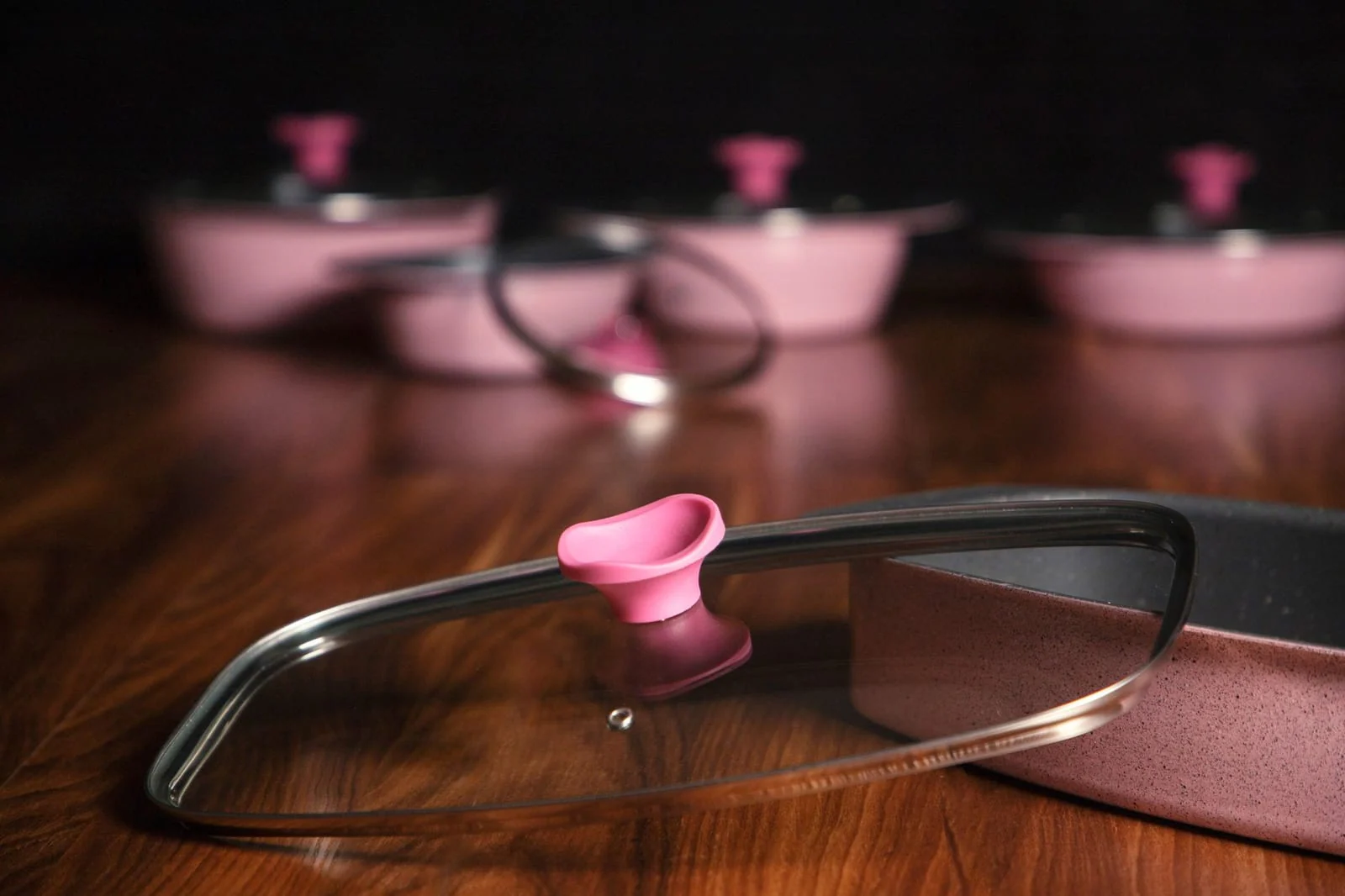
Pots, pans, baking trays, food-service ware and kitchen equipment. The combination of deep-draw formability in the O temper, good thermal conductivity and a corrosion-resistant Al₂O₃ surface makes 3003 a staple of consumer and commercial kitchenware.[1]
Roofing, Siding and Architectural Cladding
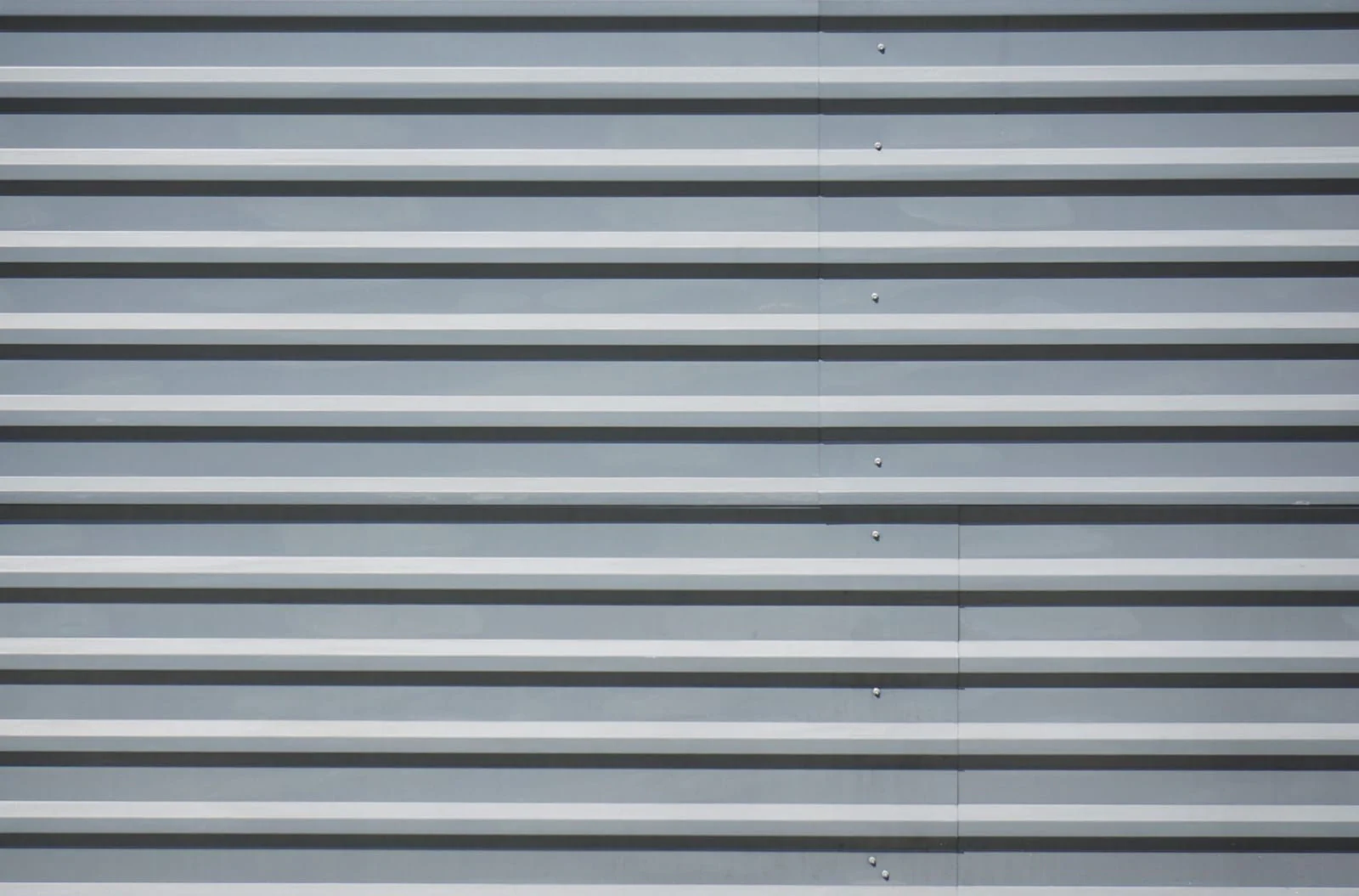
Roofing sheet, wall siding and architectural panels. The self-healing oxide film delivers long atmospheric life, while the formability allows roll-forming into profiles; the alloy takes anodized and painted/coated finishes for façade work.[1][2]
Heat Exchangers and Radiator Fins
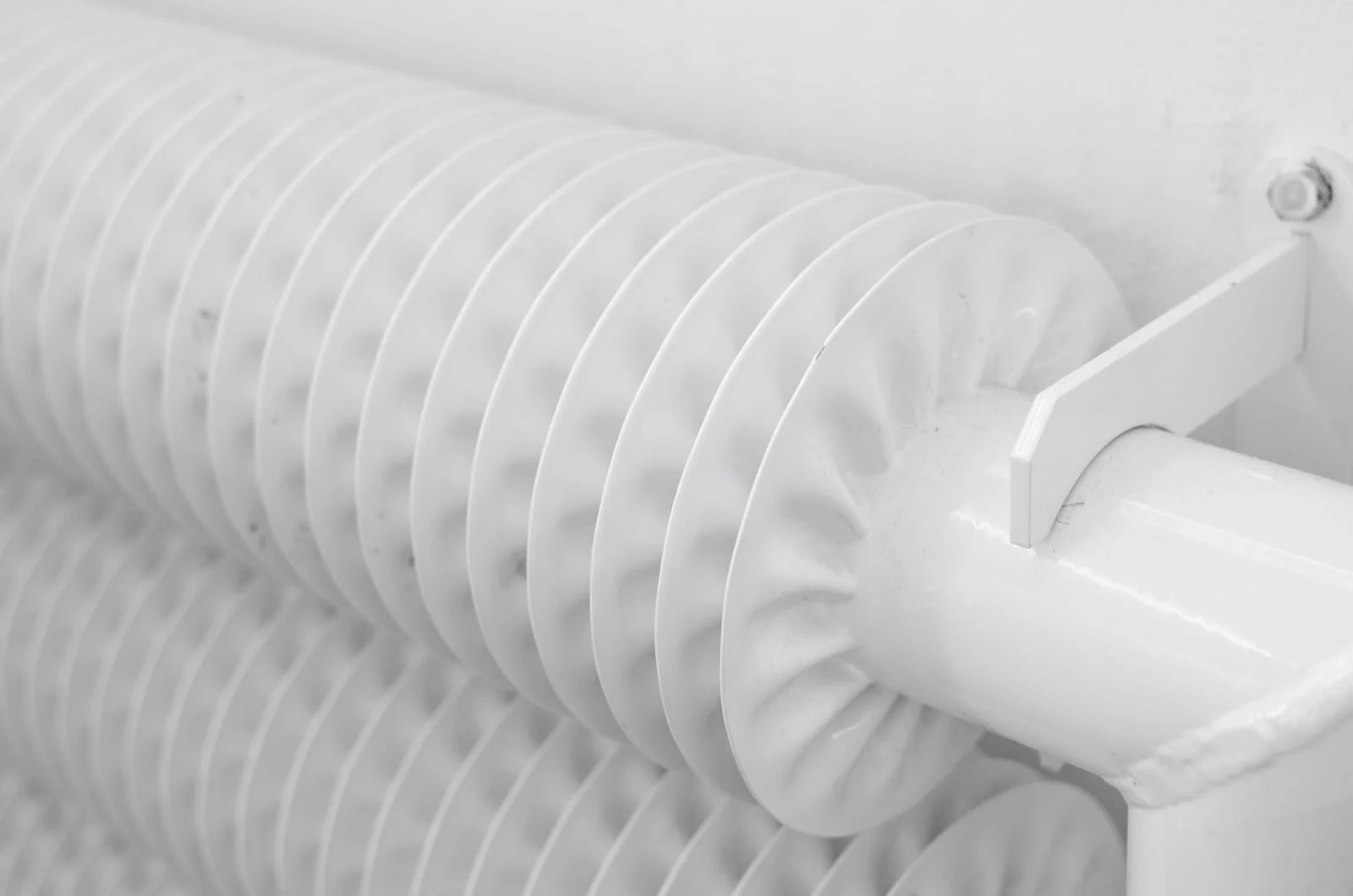
Radiator and HVAC fin stock, heat-exchanger plates and ducting. 3003 thin-gauge sheet and foil combine formability with the brazeability needed for assembled heat-exchanger cores, plus the corrosion resistance to survive condensate and outdoor exposure.[1]
Tanks, Pressure Vessels and Can Stock
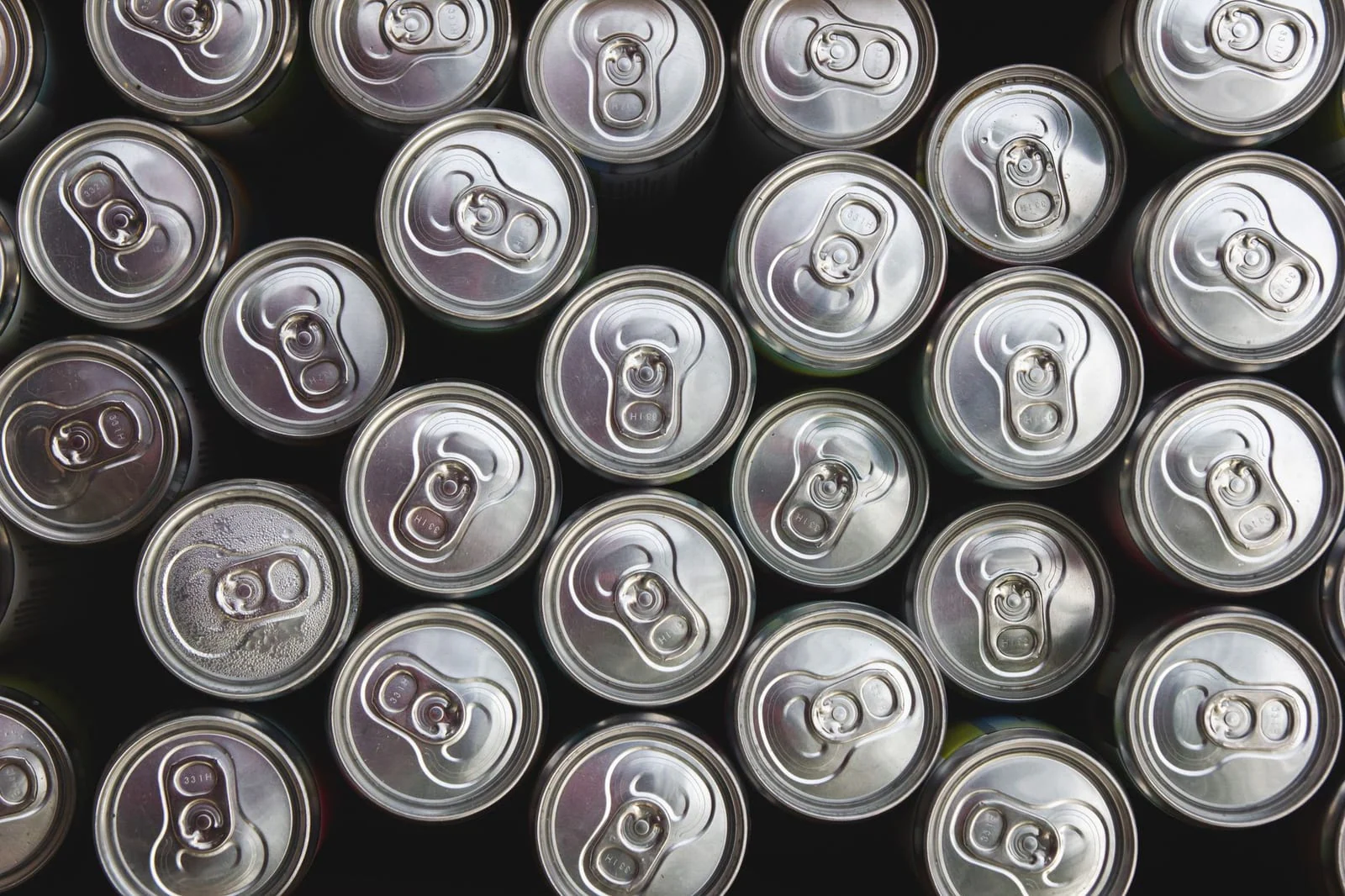
Chemical storage tanks, light pressure vessels and food packaging / can stock. The good general corrosion resistance and weldability suit it to liquid-holding bodies in mildly aggressive service.[1]
Forms & Finishes
Common product forms:SheetCoilPlateFoilTube
Surface finishes:MillAnodizedPainted / coated
For architectural cladding the anodized finish thickens the natural Al₂O₃ film into a durable, optionally coloured surface; for roofing and appliance work, painted/coated coil is common. Thin gauges and foil serve fin stock and packaging.[2]
References
- Aluminum 3003 (AA 3003 / EN AW-3003 / ASTM B209). Aluminum Association alloy registration and ASTM B209 sheet & plate specification — composition limits, tempers and forms. store.astm.org/b0209-14.html
- Corrosion and Corrosion Protection of Additively Manufactured Aluminium Alloys — A Critical Review. Materials (MDPI) 13, 2020. — native oxide film, passivity, pitting potential. — pool C2 pmc.ncbi.nlm.nih.gov/articles/PMC7663725/
- Hardness and corrosion behavior of an Al-2Mn alloy with both microstructural and chemical gradients. npj Materials Degradation 6, 2022. — Al₆Mn strengthening & corrosion trade-off in 3000-series Al-Mn. — pool C8 nature.com/articles/s41529-022-00274-w