In short: 1060 is commercially pure aluminum — at least 99.6% Al with only trace iron and silicon. That purity buys three things: near-maximum electrical conductivity (~61% IACS class), excellent thermal conductivity, and the best corrosion resistance of any aluminum grade, all underpinned by a self-healing Al₂O₃ oxide film. Its crystal structure is face-centred cubic (FCC) with no allotropic transformation, so it is non-magnetic and cannot be hardened by heat treatment. Strength comes only from cold work (H tempers) — the annealed (O) temper is soft and extremely formable, the full-hard (H18) temper roughly doubles strength. Choose 1060 where conductivity or chemical purity outranks load-bearing capacity; step up to 3003 for ~20% more strength while staying formable, or to heat-treatable 6061 when structural strength is the priority.
What 1060 Aluminum Is
Type 1060 is commercially pure aluminum — a member of the 1xxx series, defined by an aluminum content of at least 99.6% with no deliberate alloying additions. The last two digits, *60*, encode that minimum purity (99.6%). The only other elements present are residual iron and silicon carried over from the smelting process, held to tight limits, plus traces of copper, manganese, magnesium and zinc.
In the Aluminum Association system it is AA 1060, supplied to ASTM B209 for sheet and plate; in European EN it is EN AW-1060; in the Chinese GB system it is 1060, historically designated L2. Buyers searching *L2 aluminium* or *pure aluminium sheet* are looking for this grade.
The essential proposition of 1060 is purity over strength. Removing alloying elements removes the obstacles to electron and heat flow, giving 1060 conductivity that few alloyed grades can match, and it leaves an exceptionally clean, corrosion-resistant metal that takes a bright finish. The trade-off is mechanical: pure aluminum is soft, so 1060 is never the choice when the part must carry significant load.
Critically, 1060 is non-heat-treatable. Unlike the 6xxx and 7xxx alloys, it has no alloying elements to form strengthening precipitates, so it cannot be age-hardened. Its only route to higher strength is cold working — rolling or drawing that work-hardens the metal into the H tempers.
Chemical Composition
Composition limits for 1060 (per the Aluminum Association / ASTM B209). There is no intentional alloy addition — the specification is essentially a purity ceiling on residual elements, with aluminum making up the ≥ 99.6% balance. Iron and silicon are the principal residuals; keeping them low is what preserves both conductivity and corrosion resistance.
| Element | Symbol | Content (wt%) | Role |
|---|---|---|---|
| Aluminium | Al | ≥ 99.6 | Base metal — ≥ 99.6%; the high purity is the entire point of the grade |
| Silicon | Si | ≤ 0.25 | Residual impurity; kept low to protect conductivity |
| Iron | Fe | ≤ 0.35 | Residual impurity; forms Al-Fe intermetallics that can act as local-corrosion sites |
| Copper | Cu | ≤ 0.05 | Trace only — held very low; would otherwise reduce corrosion resistance |
| Manganese | Mn | ≤ 0.03 | Trace residual |
| Mg | Mg | ≤ 0.03 | Trace residual |
| Zn | Zn | ≤ 0.05 | Trace residual |
| Titanium | Ti | ≤ 0.03 | Trace residual (grain refinement) |
| Other (each) | Other (each) | ≤ 0.03 |
Per the Aluminum Association alloy register and ASTM B209.
Crystal Structure: FCC, No Allotropic Transformation
Aluminum is a metal, and 1060 is essentially the pure element, so it has no molecular formula — it is correctly described by its crystal structure.
Aluminum crystallises as face-centred cubic (FCC) and stays FCC from room temperature right up to melting. Unlike iron, it has no allotropic transformation — there is no phase change to exploit, which is the structural reason 1060 cannot be hardened by quenching. The FCC lattice is also why aluminum is so ductile: its many close-packed slip systems let it deform extensively without cracking, the basis of 1060's exceptional formability. With no ferromagnetic phase, 1060 is non-magnetic in every temper.
Because the lattice never transforms, strength in 1060 comes only from obstructing dislocation motion by cold work. Rolling or drawing multiplies and entangles dislocations (work hardening), raising strength while lowering ductility — the difference between the soft O (annealed) temper and the H (strain-hardened) tempers. Annealing then restores the soft state by letting the grains recrystallise. There is no precipitation and no age hardening; the whole strength story is mechanical, not metallurgical.
Corrosion Resistance: The Best Among Aluminum Grades
Because it is almost free of alloying elements, 1060 has the best corrosion resistance of any aluminum grade. Its protection comes from a thin, dense, naturally forming aluminium oxide (Al₂O₃) film — a passive layer only a few nanometres thick that builds spontaneously the instant fresh metal meets air or water, and that re-forms immediately wherever it is scratched. This is the foundation of aluminum's durability in the atmosphere, fresh water, and many chemicals.[1][2]
The native Al₂O₃ film behaves as a barrier layer: its integrity sets how well the metal resists pitting, and reviews of aluminium corrosion describe how a more complete, defect-free oxide gives a wider passive region and higher pitting resistance, while disrupted or thin films are less protective.[2]
1060's purity is a direct advantage here. In alloyed grades, second-phase intermetallic particles (for example iron- and copper-bearing constituents) create local galvanic couples where the oxide film cannot cover cleanly, initiating pitting or intergranular attack; the literature ties this localised corrosion directly to such intermetallics.[1] With almost none of those particles, 1060 presents a cleaner, more uniform passive surface than any alloyed aluminum.
Where extra durability or a decorative finish is wanted, the oxide can be thickened electrochemically by anodizing, growing a much thicker engineered Al₂O₃ layer on top of the natural film. The practical limit, as for all aluminum, is chloride: chloride ions can locally break down the passive film and drive pitting, so in seawater service the higher-magnesium 5052 is usually preferred over pure 1060.[1][2]
Mechanical & Physical Properties
Because 1060 cannot be heat-treated, its property profile is governed entirely by temper — that is, by how much cold work the metal has received. The two reference states are the soft O (annealed) condition and the H18 (full-hard) condition; intermediate H tempers fall between them.
| Tensile strength (MPa) | ≈70 |
| Yield strength (MPa) | ≈20 |
| Elongation (%) | ≈25 |
| Hardness | ≈19 HB |
| Density (g/cm³) | 2.70 |
| Elastic modulus (GPa) | 69 |
| Magnetic response | Non-magnetic |
| Tensile strength (MPa) | ≈130 |
| Yield strength (MPa) | ≈125 |
| Elongation (%) | ≈4 |
| Hardness | ≈35 HB |
| Density (g/cm³) | 2.70 |
| Elastic modulus (GPa) | 69 |
| Magnetic response | Non-magnetic |
In the O (annealed) temper, 1060 is very soft and ductile — ideal for deep drawing, spinning, and tight bends, which is why it dominates foil and formed-vessel work. Cold rolling or drawing then work-hardens it: strength climbs steadily toward the H18 (full-hard) state, where tensile and yield strength are roughly double the annealed values, at the cost of much-reduced elongation. This strength-versus-formability slider is the defining design lever for any non-heat-treatable grade, and 1060's only one.
On the physical side, 1060 is about one-third the density of steel and a member of the highest-conductivity class of wrought aluminum. The low elastic modulus typical of aluminum means it flexes more than steel for the same load — another reason 1060 is specified for conductors, fins and trim rather than stiff structural members. (Exact figures are in the property table above, drawn from the grade data.)
Key Characteristics
- Near-maximum conductivity. Among the highest electrical conductivity of any wrought aluminum (~61% IACS class) and an excellent thermal conductor — the headline reason to specify 1060.
- Best corrosion resistance of any aluminum. A clean, self-healing Al₂O₃ oxide film with almost no intermetallics to seed localised attack.
- Exceptional formability. The soft annealed temper takes deep draws, spins and tight bends without cracking; ideal for foil and formed vessels.
- Non-heat-treatable. No strengthening precipitates exist — strength is gained only by cold work (H tempers), never by age hardening.
- Light and non-magnetic. About one-third the density of steel; the FCC lattice has no ferromagnetic phase in any temper.
- Low strength. The purity that buys conductivity and corrosion resistance leaves the metal soft — not a load-bearing structural grade.
How 1060 Is Made
Producing 1060 is as much about what you leave out as what you add: the feedstock is high-purity primary aluminum, cast with tight control on residual iron and silicon. After casting, the route is conventional flat-rolling — there is no solution-treat-and-age step, because the grade is not heat-treatable. The final temper is set purely by the balance of cold rolling and annealing.
Setting the temper: a final anneal recrystallises the grains and returns the metal to the soft O state for maximum formability; stopping after a controlled amount of cold rolling leaves the metal in an H temper (H12 / H14 / H18 …) with proportionally higher strength. The same coil can be supplied across that whole range — temper, not composition, is the variable.
1060 vs 3003 vs 6061 — Purity, Formability, or Strength
The three sit on a clear ladder. 1060 is pure aluminum, chosen for conductivity, corrosion resistance and formability. [3003](/en/materials/aluminum/3003) adds manganese for roughly 20% more strength while staying highly formable and non-heat-treatable. [6061](/en/materials/aluminum/6061) is heat-treatable and far stronger, the structural choice. The decision is essentially: do you need the most conductive and corrosion-resistant metal, a slightly stronger but still formable one, or real load-bearing strength?
Applications by Industry
1060's combination of high conductivity, top-tier corrosion resistance and easy forming makes it the grade of choice where electrical, thermal, or chemical-purity performance outranks mechanical strength.
Electrical Conductors and Bus Bars
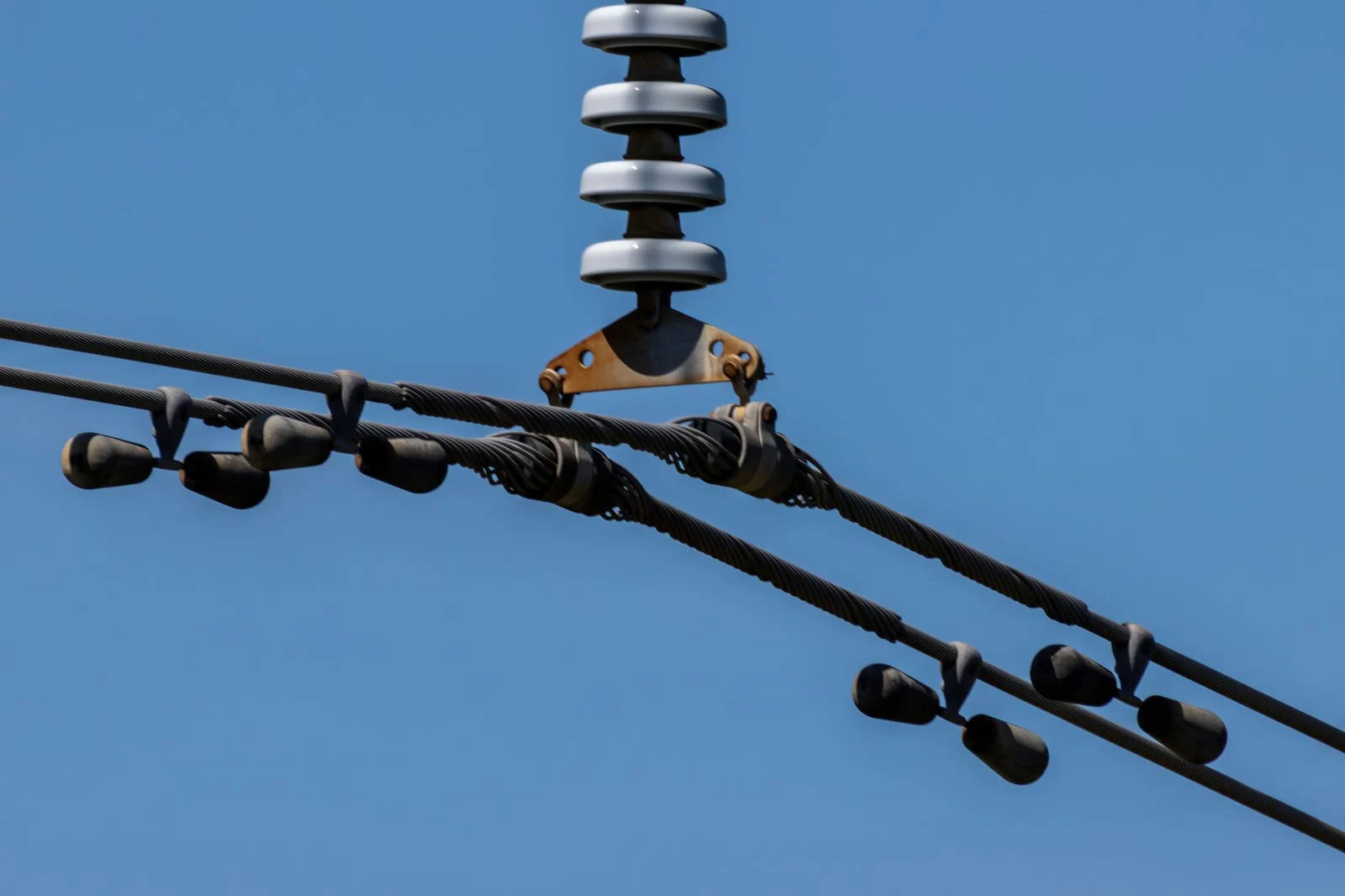
Conductor strip, bus bars and electrical connections rely on 1060's near-maximum conductivity. Its purity keeps resistive losses low, while the self-healing oxide film protects the conductor surface — a frequent, lower-cost alternative to copper where weight matters.
Chemical and Food-Handling Vessels
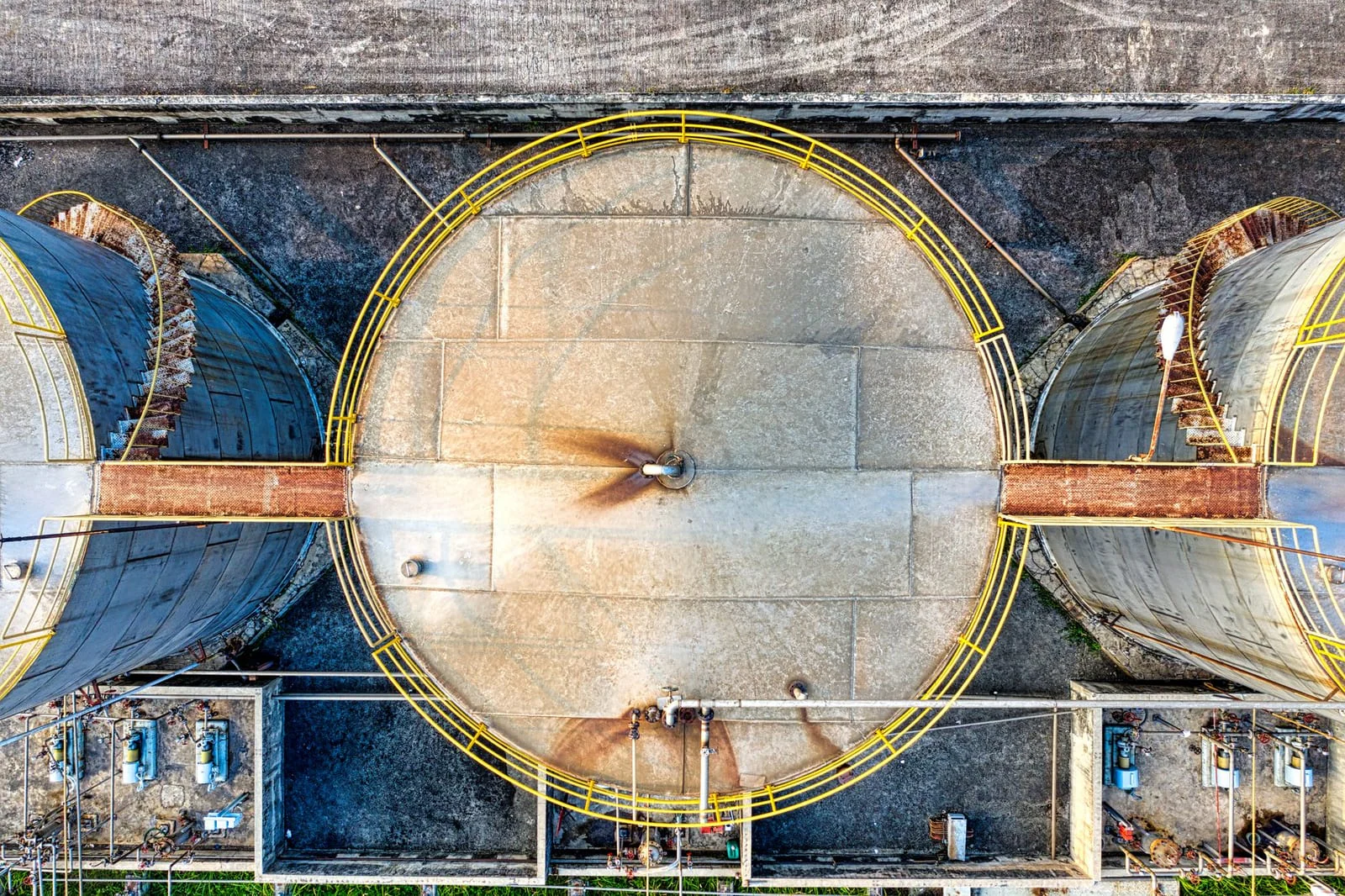
Tanks, vessels and process equipment that benefit from a clean, corrosion-resistant surface. The high purity and intact Al₂O₃ film mean minimal contamination and good resistance to many chemicals, and the soft temper makes vessels easy to form and weld.[2]
Heat-Exchanger Fins and Cooling Components
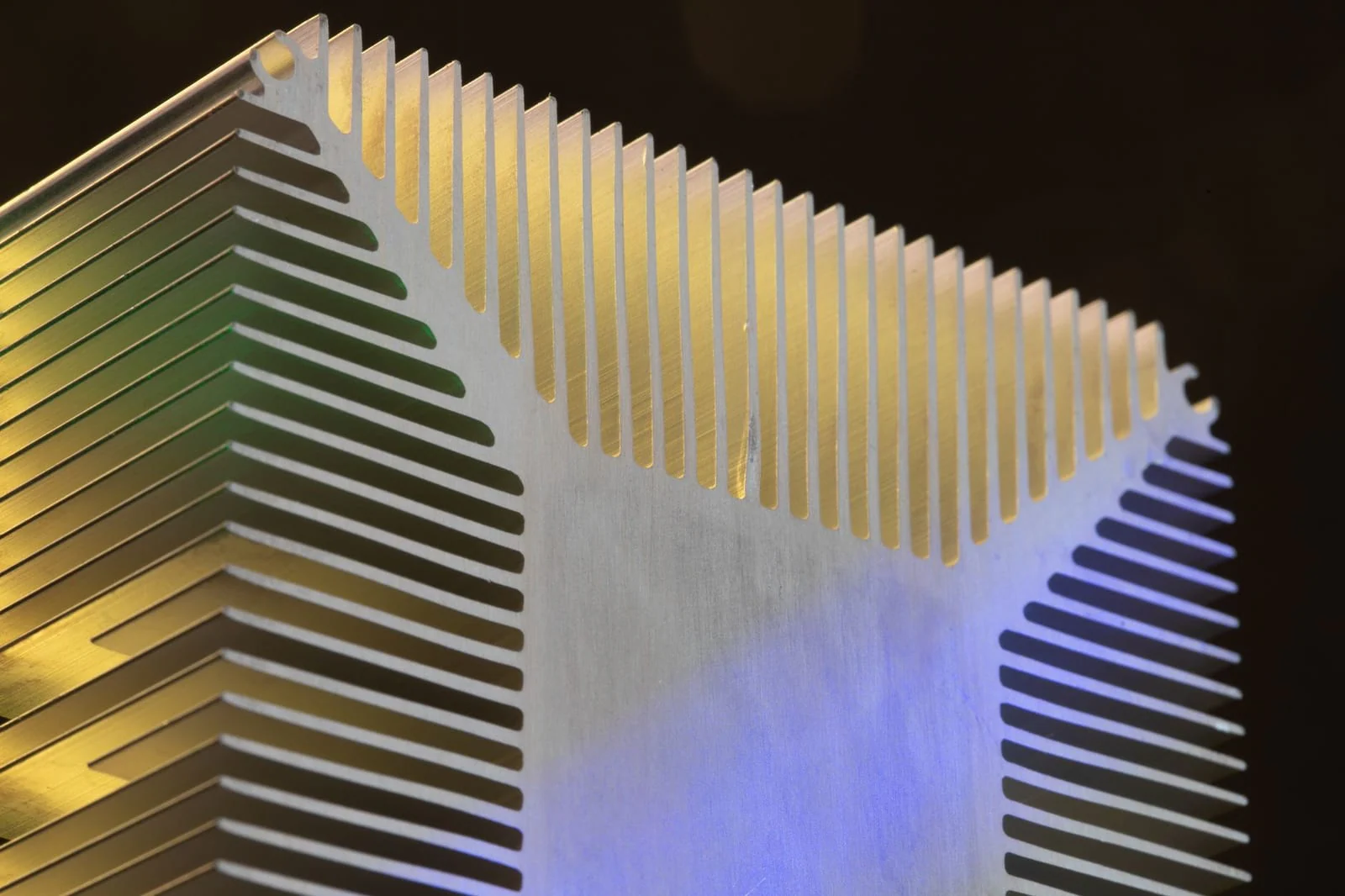
Fin stock and cooling components exploit 1060's excellent thermal conductivity together with thin-gauge formability. The metal can be rolled to very thin fins and folded tightly without cracking, maximising heat-transfer area.
Decorative Trim, Nameplates and Foil
Trim, nameplates, reflectors and household foil use 1060's bright finish, formability and corrosion resistance. The clean surface anodizes evenly and takes a high reflectance, while the soft temper rolls down to foil gauges.
Forms & Finishes
Common product forms:SheetCoilFoilStripPlate
Surface finishes:MillAnodizedBright-dipped
For decorative and reflective uses, the bright-dipped or anodized finish builds on the natural Al₂O₃ film — anodizing thickens it into a durable, optionally coloured engineered oxide layer. Thin-gauge coil and foil are 1060's signature forms, made possible by the soft, highly formable temper.
References
- A review of the electrochemical and galvanic corrosion behavior of important intermetallic compounds in the context of aluminum alloys. RSC Advances 14, 2024. — Al₂O₃ passive film, chloride breakdown, intermetallic-driven pitting. pmc.ncbi.nlm.nih.gov/articles/PMC11462131/
- Corrosion and Corrosion Protection of Additively Manufactured Aluminium Alloys — A Critical Review. Materials (MDPI) 13, 2020. — native oxide film, passivity, pitting potential. pmc.ncbi.nlm.nih.gov/articles/PMC7663725/