In short: 6061 is the structural aluminum all-rounder — a heat-treatable 6xxx alloy (Al-Mg-Si) prized for a rare balance of strength, weldability, corrosion resistance and machinability. Its crystal structure is FCC and non-magnetic, and it gets its strength not from any phase transformation but from age hardening: solution treatment and quenching trap magnesium and silicon in supersaturated solid solution, then ageing precipitates nanoscale Mg₂Si particles (the SSSS → GP zones → β″ → β′ → β sequence) that pin dislocations — the peak-aged T6 temper being the workhorse condition.[4] Corrosion resistance comes from a dense, self-healing Al₂O₃ oxide film that the metal grows naturally and repairs when damaged.[1] Choose 6061 for general structural service; step to 6063 for finer architectural extrusions, to 7075 for aerospace-grade strength, or to 5083 for marine plate that needs no heat treatment.
What 6061 Aluminum Is
6061 is the structural aluminum all-rounder — the most widely used heat-treatable aluminum alloy in general engineering. It belongs to the 6xxx (Al-Mg-Si) family, where magnesium and silicon are added specifically so the alloy can be strengthened by heat treatment, with minor additions that fine-tune strength and toughness.[4]
In the international Aluminum Association designation it is AA 6061; in European EN it is EN AW-6061. In Chinese GB practice it corresponds to 6061, historically called LD30. Buyers searching any of these labels are looking for the same alloy.
The defining trait of 6061 is balance: it is strong enough for load-bearing structure, weldable, corrosion resistant, readily extruded into complex profiles, and easy to machine — without being best-in-class at any single property. That all-round profile is why it is the default choice when a designer needs "a good aluminum" rather than a specialist one.
Unlike the non-heat-treatable 5083 (which relies on magnesium in solid solution and cold work), 6061 is age-hardenable: its strength is unlocked by precipitating Mg₂Si during a controlled ageing cycle. This is a precipitation process, not a phase transformation — the lattice stays FCC throughout.[4]
Chemical Composition
Composition limits for 6061 (per ASTM B209 / AA 6061). The deliberate pairing of magnesium and silicon is what makes the alloy heat-treatable: together they form the Mg₂Si phase that precipitates during ageing to provide strength.[4]
| Element | Symbol | Content (wt%) | Role |
|---|---|---|---|
| Mg | Mg | 0.8–1.2 | Pairs with Si to form Mg₂Si — the strengthening precipitate developed during ageing |
| Silicon | Si | 0.4–0.8 | Pairs with Mg to form Mg₂Si; the silicon partner in the precipitation sequence |
| Copper | Cu | 0.15–0.4 | Minor addition that raises strength and refines the precipitate structure |
| Chromium | Cr | 0.04–0.35 | Minor addition controlling grain structure and toughness — not a passivation element here |
| Aluminium | Al | Balance | Base metal — self-protects via a dense Al₂O₃ oxide film |
Per ASTM B209 / AA 6061 limits; see grades/6061 for exact ranges.
Crystal Structure & Age Hardening: How Mg₂Si Builds Strength
Aluminum alloy is a solid solution of elements in aluminum — it has no molecular formula. The correct description is by crystal structure.
Aluminum is face-centred cubic (FCC) and non-magnetic, and it stays FCC through every temper of 6061. The alloy gets its strength not from changing its crystal structure but from age hardening — precipitating nanoscale particles inside that unchanging FCC lattice.[4]
The strengthening works in stages. Solution treatment (~530 °C) dissolves the magnesium and silicon into the aluminum; quenching then traps them in a supersaturated solid solution (SSSS). On ageing, this solute decomposes through a precipitation sequence: clusters and GP zones form first, then the needle-shaped β″ phase that gives the T6 peak-aged condition its maximum strength, followed on over-ageing by rod-shaped β′ and finally the equilibrium β-Mg₂Si phase.[3][4]
The classic Al-Mg-Si study by Edwards and colleagues established this sequence — independent Mg and Si clusters give way to a Mg-Si co-cluster, then the β″ needles, then B′/β′ rods, with the intermediate phases holding a Mg:Si ratio near 1:1.[3] Work on 6061-type alloys confirms that T6 strength is set chiefly by the volume fraction of β″ developed during ageing: the finer and more numerous these coherent needles, the more they impede dislocation motion and the higher the strength.[4]
Corrosion Resistance: A Self-Healing Al₂O₃ Oxide Film
6061 protects itself through its own surface oxide. Exposed aluminum reacts instantly with air to grow a thin, dense, amorphous Al₂O₃ oxide film a few nanometres thick. This native film is a passive barrier that re-forms — self-heals — if scratched, and it keeps the metal protected across roughly neutral pH conditions.[1][2]
The Al₂O₃ system is the source of 6061's good general corrosion resistance. Reviews of aluminum corrosion describe the native oxide as the passive barrier whose integrity governs pitting resistance: where the film stays continuous the metal is protected, and where it is locally disrupted, attack initiates.[1][2]
Limitation — chloride and second-phase pitting. In chloride-rich service (seawater spray, de-icing salts) chloride ions can penetrate the oxide locally and trigger pitting corrosion, and coarse intermetallic particles can act as sites where the protective film cannot cover effectively.[1] For continuous marine immersion, the non-heat-treatable 5xxx grades such as 5083 are usually preferred.
Anodizing for thicker protection. Because the native film is thin, 6061 parts are often anodized — an electrochemical process that grows a much thicker Al₂O₃ layer with a dense barrier sub-layer and a tunable porous outer layer that can be coloured and sealed, raising both wear and corrosion resistance.[1]
Mechanical & Physical Properties
6061 offers two very different property profiles depending on temper — the defining advantage of a heat-treatable alloy. In the O (annealed) condition it is soft and highly formable; in the T6 (peak-aged) condition the precipitated β″ raises strength several-fold.[4]
| Tensile strength (MPa) | ≈125 |
| Yield strength (MPa) | ≈55 |
| Elongation (%) | ≈25 |
| Tensile strength (MPa) | ≈310 |
| Yield strength (MPa) | ≈276 |
| Elongation (%) | ≈12 |
| Hardness | ≈95 HB |
| Density (g/cm³) | 2.70 |
| Elastic modulus (GPa) | 69 |
| Magnetic response | Non-magnetic |
The jump from O to T6 comes entirely from Mg₂Si precipitation, not from cold work or any structural transformation. T6 is the workhorse temper for structural 6061 because it combines high strength with retained ductility and good corrosion behaviour. The annealed O temper exists mainly to allow severe forming before the part is re-aged.[4]
At about one-third the density of steel, 6061 delivers its strength at a low weight — the reason it dominates where stiffness-to-weight or strength-to-weight matters, from frames to transport structures.
Key Characteristics
- Heat-treatable to T6. Strengthened by Mg₂Si precipitation (age hardening), not by cold work — the alloy reaches peak strength at the coherent β″ stage.
- Balanced all-rounder. Strong, weldable, corrosion resistant and machinable at once — no single weak link, which is why it is the default structural aluminum.
- Self-protecting via Al₂O₃. A dense, self-healing native oxide film gives good general corrosion resistance; anodizing thickens it for harsher service.
- Excellent extrudability and machinability. Readily pushed into complex profiles and cleanly machined into tooling and fixtures.
- Non-magnetic and light. FCC aluminum is non-magnetic and about one-third the density of steel.
How 6061 Is Made
Production starts with cast-house melting and casting of an Al-Mg-Si billet or slab, followed by homogenisation to even out the as-cast distribution of magnesium and silicon. The material is then extruded into profiles or rolled into sheet and plate. The strength-defining steps come last: solution treatment, quenching, and ageing to the target temper.
Why homogenisation matters: non-equilibrium solidification leaves coarse Mg₂Si particles that harm both properties and surface appearance, so homogenisation redistributes the solute before forming.[2] The final solution → quench → age (T6) cycle is what converts a soft as-formed profile into a load-bearing structural part by precipitating the β″ strengthening phase.[4]
6061 vs 6063 vs 7075 — Picking the Right Aluminum
All three are aluminum, but they sit at different points on the strength-versus-finish-versus-weldability map. 6063 is a sister 6xxx alloy tuned for fine extrusions and anodised finish; 7075 is a 7xxx aerospace alloy tuned for maximum strength.
In short: choose 6061 when you want one alloy that does everything reasonably well; 6063 when extrusion detail and surface finish lead; 7075 when strength is paramount and you can accept harder welding and lower corrosion resistance.
Applications by Industry
6061's balance of strength, weldability, corrosion resistance and machinability makes it the default structural aluminum across a wide span of industries.
Structural Framing and Extrusions
Load-bearing frames, modular framing systems, profiles and structural sections. The combination of T6 strength, weldability and easy extrusion makes 6061 the standard general-purpose structural aluminum.
Marine Fittings

Deck fittings, brackets and hardware where the self-healing Al₂O₃ film handles spray and splash service. For continuous immersion or hull plate, the non-heat-treatable 5083 is usually preferred.
Transport and Automotive Parts
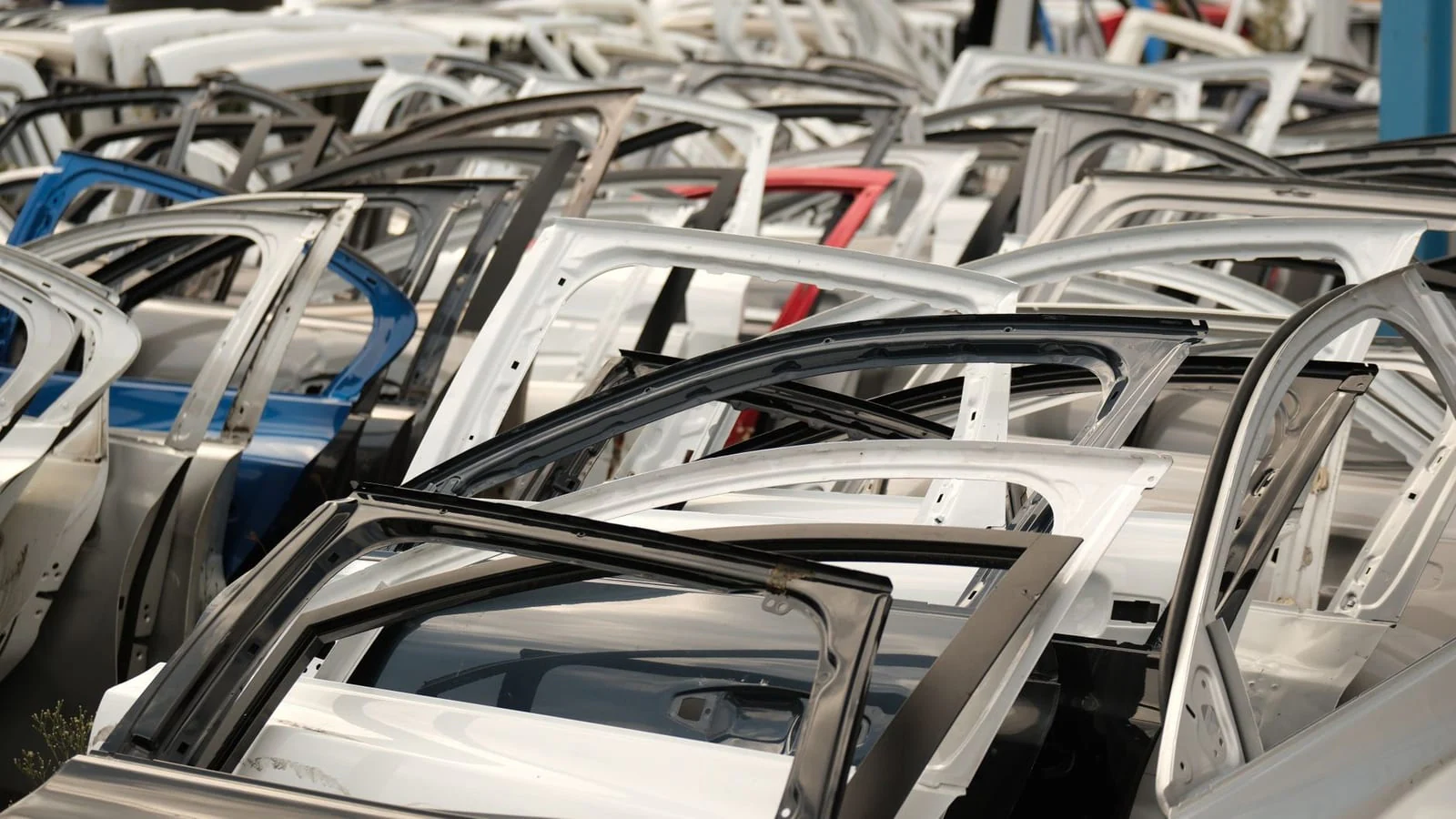
Chassis components, mounts and structural brackets where strength-to-weight matters. At about one-third the density of steel, 6061 cuts mass while carrying real structural load in T6 temper.
Machined Tooling and Fixtures
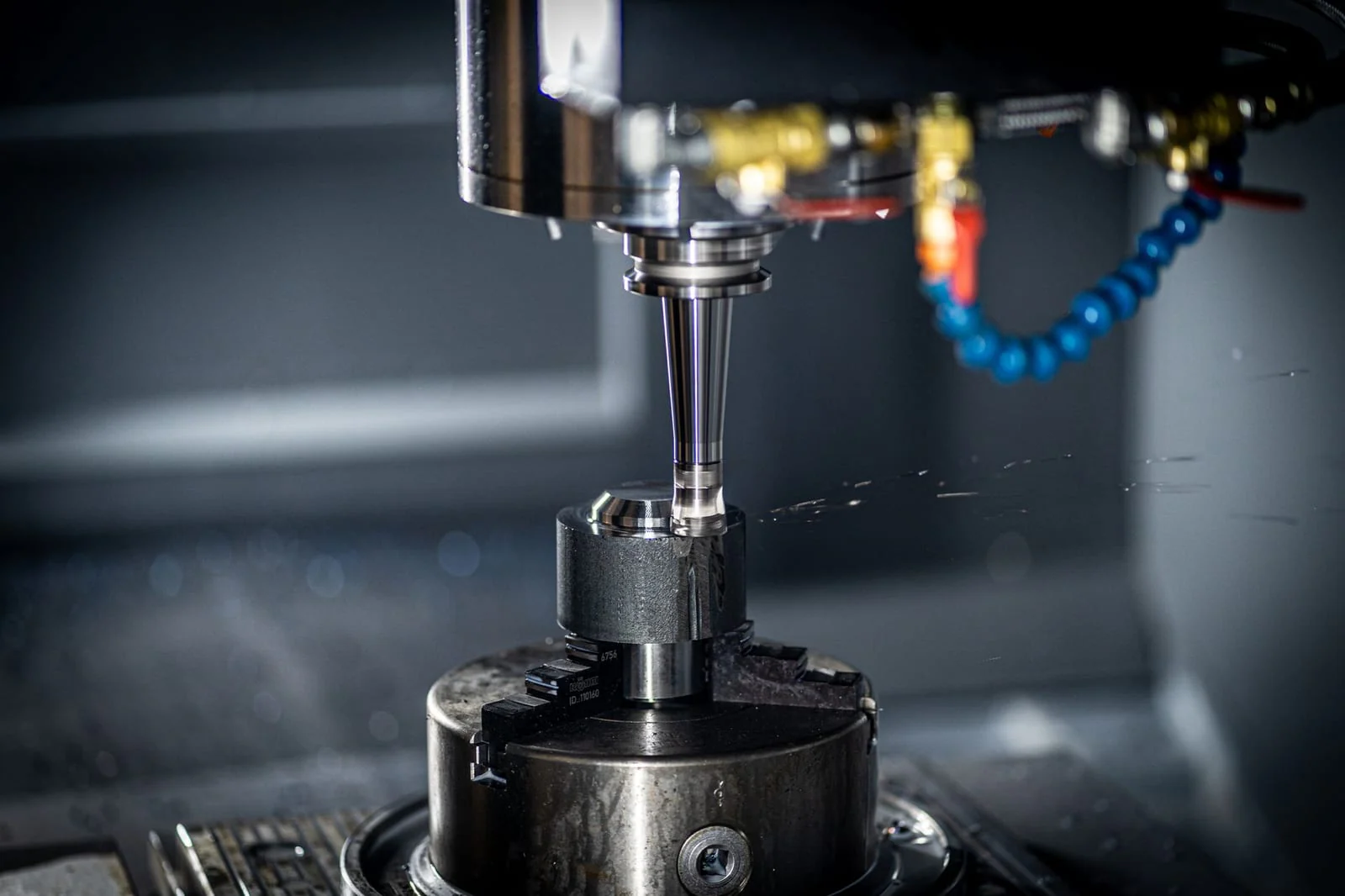
Jigs, fixtures, plates and precision-machined components. 6061 machines cleanly and holds tolerance, making it a favourite for tooling and equipment parts where a stable, workable structural alloy is needed.
Forms & Finishes
Common product forms:SheetPlateCoilExtrusionBar
Surface finishes:MillAnodizedBrushed
For service in harsher or more abrasive environments, anodizing is the key finish for 6061 — electrochemically thickening the native Al₂O₃ film into a hard, corrosion-resistant and colourable surface layer.[1]
References
- A review of the electrochemical and galvanic corrosion behavior of important intermetallic compounds in the context of aluminum alloys. RSC Advances 14, 2024. — Al₂O₃ passive film, chloride breakdown, intermetallic-driven pitting. pmc.ncbi.nlm.nih.gov/articles/PMC11462131/
- Corrosion and Corrosion Protection of Additively Manufactured Aluminium Alloys — A Critical Review. Materials (MDPI) 13, 2020. — native oxide film, passivity, pitting potential. pmc.ncbi.nlm.nih.gov/articles/PMC7663725/
- The precipitation sequence in Al–Mg–Si alloys. Edwards, Stiller, Dunlop & Couper. Acta Materialia 46, 1998. — clusters → GP zones → β″ → β′ → β-Mg₂Si. doi.org/10.1016/S1359-6454(98)00059-7
- Effect of Si, Mn, Be and Sr Addition on the Tensile Properties of 6061 Type Alloys: Role of Aging Treatment. Materials (MDPI) 16, 2023. — GP zones → β″ needles → β′ Mg₂Si; T6 strength set by β″ volume fraction. pmc.ncbi.nlm.nih.gov/articles/PMC9921951/