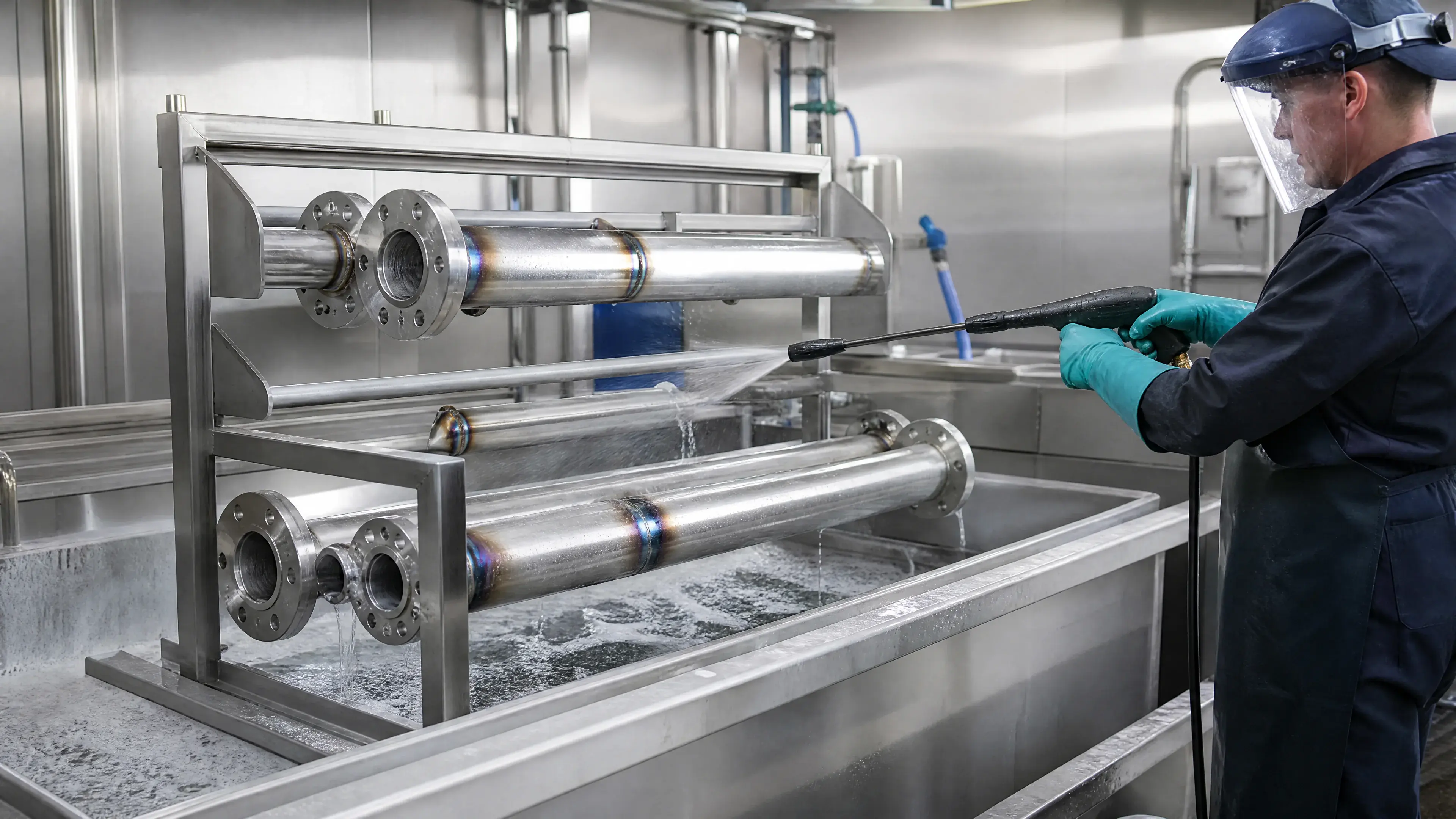
Stainless steel surface engineering
Stainless Steel Pickling and Passivation: What Buyers Need to Specify
In this guide
TL;DR
Pickling and passivation are related but different chemical treatments. Pickling removes heat tint, embedded contamination, and some oxide or metal from the surface. Passivation follows thorough cleaning and promotes a clean, chromium-enriched passive...
1. What pickling and passivation mean
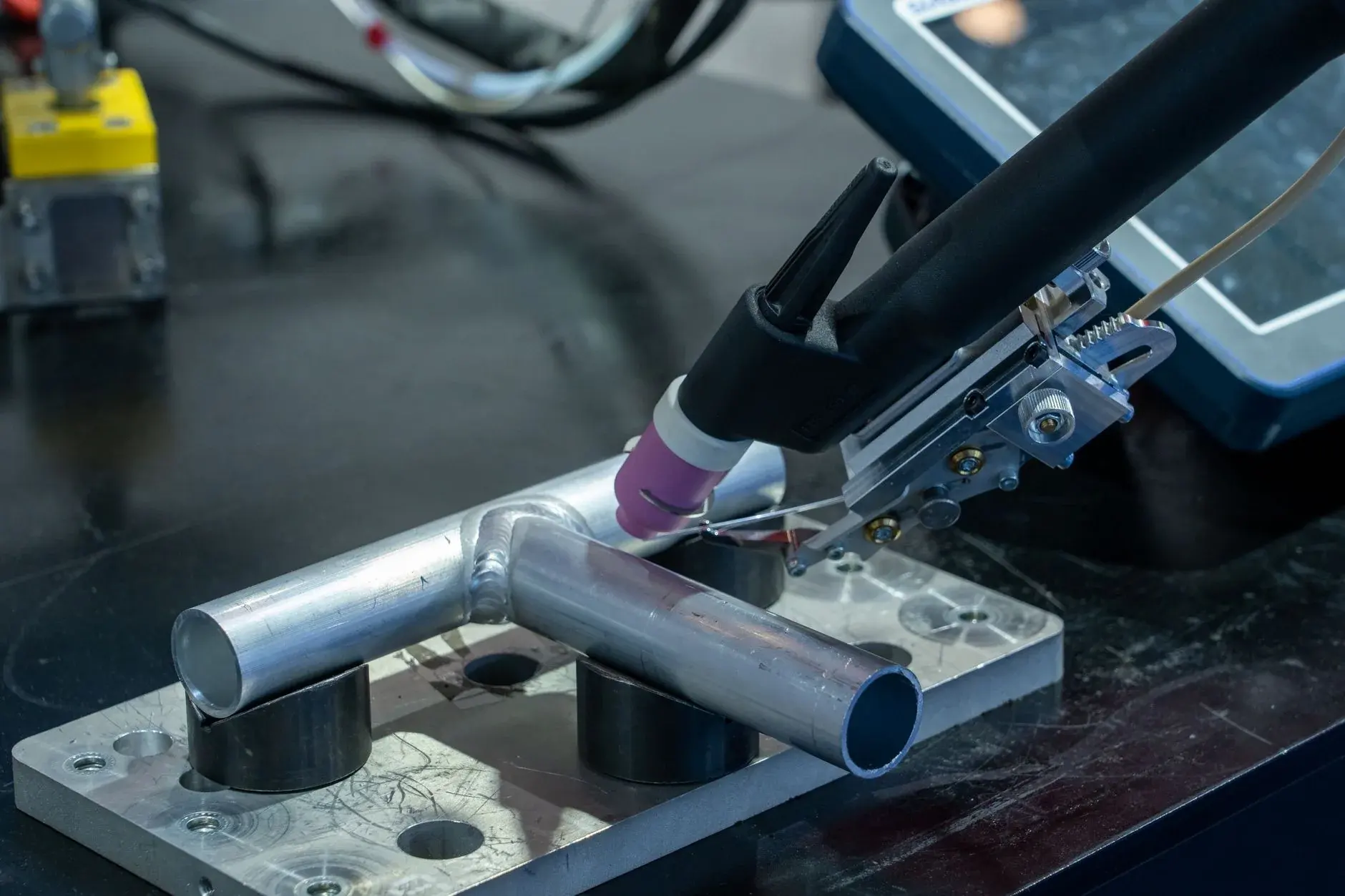
Stainless steel resists many environments because chromium in the alloy participates in formation of a thin passive oxide film. That film is not an applied layer with a readily measurable coating thickness. It is an electrochemically protective surface state that can reform when the alloy is clean and the environment supplies suitable oxidizing conditions. Fabrication can disturb that state: welding creates heat tint and a chemically altered near-surface region, thermal processing creates scale, and contact with carbon-steel tools can leave foreign iron on the surface [3][4][8].
Pickling is a controlled chemical removal process. It dissolves oxide, contamination, and a small amount of underlying metal so that a cleaner metallic surface is exposed. The word covers more than one chemistry and more than one delivery method. Immersion, spray, circulation, and localized treatment can produce different coverage and drainage conditions, so the method belongs in the process definition. Research has separately examined conventional acid systems, hydrogen-peroxide-containing alternatives, and electrolytic removal of hot-rolled oxide; those studies should not be treated as interchangeable recipes [5][6].
Passivation is treatment of an already clean stainless surface to remove remaining exogenous iron and establish favorable conditions for the passive film. Nitric-acid and citric-acid routes are both used in industrial practice, but their bath management, environmental burdens, and suitability for a particular part are not identical. ASTM A967/A967M is the relevant specification framework for chemical passivation treatments, while ASTM A380/A380M addresses the broader cleaning, descaling, and passivation context [2][8][9].
The distinction matters commercially. A passivation bath is not expected to remove heavy weld scale. Conversely, a pickled part is not automatically acceptable merely because visible tint has disappeared. The preceding fabrication history, final rinse, surface cleanliness, and specified verification still matter. An RFQ that says only “pickled and passivated” leaves unanswered questions about where material removal is allowed, what appearance is acceptable, and how completion will be demonstrated [3][8][9].
2. How the treatment changes the surface
Pickling mechanism
Heat tint and high-temperature scale are not simply dirt sitting on top of an unchanged substrate. Heating in air produces oxides and can change the composition of the metal immediately beneath them. An acid pickling system attacks the oxide and dissolves enough of the affected surface to expose a cleaner alloy. The rate is controlled by the chemistry at the interface, temperature, acid activity, dissolved-metal loading, agitation, and the character of the oxide. Work on 316L and hot-rolled 304 shows why one fixed exposure cannot be assumed to suit both a welded component and a heavily scaled coil product [3][5][6].
Electrolytic pickling adds an imposed electrical condition to help disrupt and remove scale. Li, Caenen, and Jiang studied this specifically for oxide on hot-rolled 304 stainless steel in a sodium-sulphate electrolyte [5]. That evidence supports the existence of a distinct industrial route, but it does not justify substituting an electrolytic cycle for a chemical cycle without qualification, especially on fabricated assemblies with different current distribution and geometry.
Passivation mechanism
After the surface is clean, passivation treatment changes the near-surface chemical state rather than adding a thick barrier. One published study specifically examines the effect of nitric-acid passivation on the pitting resistance of 316 stainless steel, while later work on 304 describes time-dependent evolution of a duplex passive film [1][7]. These study scopes support careful control of exposure, but they do not support a universal “longer is better” rule. A reported optimum from one alloy, finish, bath, or laboratory test should not be copied into a general purchasing specification.
Leng and co-workers examined pickling followed by passivation on 316L bipolar-plate material. Their electrochemical and surface analyses showed that the combined treatment changed both corrosion response and electrical behavior [3]. This is an important reminder that the desired surface is application-specific: a passive condition favorable for corrosion resistance may also alter an interface property such as contact resistance. Buyers should therefore specify the functional surface requirements that matter to the assembly, not infer them from the process name.
3. Variables that control the result
Alloy and metallurgical condition
Grade is the first process variable. Published studies in this source set address 304, 316, and 316L under particular conditions; they do not prove identical responses for every austenitic, ferritic, martensitic, precipitation-hardening, or duplex grade [1][3][5][7]. Heat treatment, cold work, inclusions, weld filler, and segregation can also affect local corrosion behavior. A procedure qualified on flat 316L sheet should not automatically be extended to a mixed-grade welded assembly.
The starting surface matters just as much. Mill scale, laser or plasma oxide, welding tint, blasting residue, shop soil, polishing compound, and embedded carbon steel present different removal problems. Geng, Sun, and Guo specifically investigated sandblasting followed by acid pickling and passivation on 316L, demonstrating that the preceding mechanical operation is part of the treatment history [4]. The processor needs either representative samples or an accurate description of that history before choosing a cycle.
Chemistry and bath condition
Acid identity alone does not define a process. Concentration, oxidizing species, inhibitors, dissolved metals, contamination, temperature, and solution age can change the reaction. Narváez, Cano, and Bastidas examined hydrogen-peroxide decomposition in a sulfuric/hydrofluoric-acid pickling environment for 316L and reported sensitivity to temperature and ferric ions [6]. The narrow lesson for procurement is that reactive constituents and bath loading need control; the paper is not a general recipe for shop use.
Citric acid is often discussed as a “green” alternative to nitric acid, but environmental superiority cannot be assumed from hazard labels alone. Parsons and co-workers compared nitric- and citric-acid passivation through life-cycle assessment and evaluated inputs and outputs beyond the treatment tank [2]. Bath manufacture, energy, water, treatment effectiveness, bath life, and waste handling all influence the system result. An environmental requirement should ask for documented chemical and waste management, not rely on an unqualified marketing adjective.
Time, temperature, access, and agitation
Reaction time and temperature jointly affect removal and film evolution. Insufficient treatment can leave oxide or foreign material; excessive attack can change dimensions, texture, or appearance. Complex geometry introduces additional variation because blind holes, lap joints, crevices, dead legs, and upward-facing pockets may trap solution or resist rinsing. The approved procedure must define how all required surfaces are contacted and drained, not merely the nominal tank time [6][7][8].
Agitation and replenishment influence transport of fresh chemistry to the surface and reaction products away from it. In circulation-cleaned piping, flow distribution matters; in immersion, racking and air entrapment matter; in local paste or gel treatment, application thickness and edge control matter. These practical variables are reasons to qualify the delivery method for the component rather than converting a laboratory immersion result into a production promise [3][8].
Rinsing, neutralization, and drying
The chemical reaction is only part of the job. Residual acid or dissolved salts can remain in crevices, threaded features, porous markings, or poorly drained tubing. Final rinsing must remove process residues without recontaminating the surface, and drying must avoid deposits from dirty air, handling, or unsuitable water. ASTM A380/A380M treats cleaning and descaling as a system-level practice, reinforcing the need to control the stages around the acid contact rather than treating the bath as the complete process [8].
Water quality and rinse verification should be agreed when residue is critical, particularly for hygienic, high-purity, vacuum, or enclosed-fluid service. The exact acceptance measure must come from the governing project specification or a purchaser-approved procedure. This article intentionally does not reproduce proprietary standard tables or invent a universal conductivity, pH, or rinse-water threshold [8][9].
4. Performance benefits and hard limits
Proper pickling can remove thermally formed oxides and iron-bearing surface contamination that would otherwise create visually and electrochemically nonuniform areas. Proper passivation can leave a cleaner surface in a condition favorable to passive-film formation. Experimental work on 316L reports improved corrosion behavior after controlled pickling/passivation; separate studies examine the pitting resistance of nitric-acid-passivated 316 and the evolution of passive film during nitric-acid passivation of 304 [1][3][7].
Those benefits are conditional. Passivation does not increase the bulk chromium, nickel, or molybdenum content of the alloy. It does not convert 304 into 316L, remove harmful crevice geometry, repair sensitization, or prevent every form of localized corrosion. If chlorides, temperature, acidity, deposits, stress, or oxygen conditions exceed what the selected alloy and design can tolerate, a chemically clean surface can still fail [3][8][9][10].
Pickling is also a material-removal operation. It can dull a reflective finish, reveal manufacturing variation, round very fine edges, alter marked areas, or produce nonuniform color where heat input and oxide thickness vary. It is not a substitute for a specified brushed or polished finish. When appearance is critical, the purchaser should approve a representative coupon that includes the same weld, heat tint, forming history, and viewing conditions as the production part [3][4].
The process cannot be evaluated by appearance alone. A uniformly pale surface can still carry residue, and a stain-free part can still have an unsuitable passive state for a severe service. Conversely, slight color variation may be cosmetically objectionable while having no demonstrated relationship to the specified corrosion test. Cosmetic acceptance and technical acceptance should therefore be written as separate requirements [8][9][10].
5. Substrate and fabrication compatibility
For common 304/304L and 316/316L products, established pickling and passivation routes are available, but the procedure still needs to match the condition. Low-carbon grades help manage welding-related sensitization risk, yet the suffix does not remove the need to clean heat tint or qualify the weld treatment. The literature in this article supports treatment effects on specific 304, 316, and 316L samples only [1][3][4][5][7].
Mixed assemblies require extra review. Stainless joined to carbon steel, aluminum, copper alloys, elastomers, plated hardware, brazing filler, or adhesive may not tolerate the same acid or oxidizing environment. Masking can reduce exposure but introduces edge and leakage risks. The RFQ should identify every material that will remain assembled during treatment and any surfaces that must not be attacked [8][9].
Tight-tolerance, sharp-feature, threaded, etched, laser-marked, and precision-ground parts also need explicit protection or allowance. Because pickling removes material, dimensional impact cannot be assumed negligible merely because the nominal treatment is called “surface cleaning.” The processor should evaluate the most sensitive feature and, where necessary, demonstrate the cycle on a sacrificial or representative part before production [3][8].
Duplex and other specialized stainless grades should be routed through a grade-specific qualified procedure. The broad standards provide frameworks, but a buyer should not infer detailed compatibility from the word “stainless.” If the component has undergone welding, thermal cutting, additive manufacture, or an unusual heat treatment, that history should appear on the traveler and RFQ so that the processor can assess it [8][9].
6. Inspection and acceptance
Acceptance begins with traceability. Record the material grade, heat or batch identity where required, drawing revision, fabrication state, treatment method, bath or solution identity, processing date, and lot. These records connect a test result to the actual parts and help isolate causes if appearance or corrosion performance changes between lots. A certificate that states only “passivated” does not establish what was cleaned, which procedure was used, or what acceptance check was passed [8][9].
Visual inspection should use agreed lighting, viewing distance, and reference condition. It can identify remaining scale, heat tint, smut, streaking, etching, trapped residue, and handling damage. It cannot by itself quantify passive-film chemistry or predict field life. If the final surface must match adjacent architectural panels, approve a physical limit sample rather than relying on adjectives such as “clean,” “uniform,” or “silver” [4][8].
Chemical or corrosion verification must be selected for the purpose. ASTM A967/A967M provides a specification framework for chemical passivation treatments and associated verification, while ASTM G48 contains laboratory methods for comparing pitting and crevice-corrosion resistance in ferric-chloride solution [9][10]. A G48 result is not automatically an appropriate release test for every passivated component, and it should not be substituted for the project’s specified method without engineering agreement.
Sampling also needs definition. State whether every part receives visual inspection, how test pieces represent production parts, how many items form a lot, and what happens after failure. Reprocessing may change dimensions or appearance, so the disposition cannot be an automatic repeat of the original cycle. A failed lot should trigger review of contamination, starting condition, bath control, rinsing, handling, and the validity of the sample before a documented corrective action is chosen [8][9].
7. A practical manufacturing workflow
- Review the requirement. Confirm grade, product form, fabrication route, service, governing standard edition, appearance target, restricted substances, masked zones, test method, and documentation.
- Segregate and inspect incoming work. Identify mixed materials, carbon-steel contact, oil, paint, marker, heavy scale, deep defects, and inaccessible cavities before wet processing.
- Remove soils. Degrease and clean substances that would shield the surface or contaminate the acid system. Passivation is not a replacement for this step [8][9].
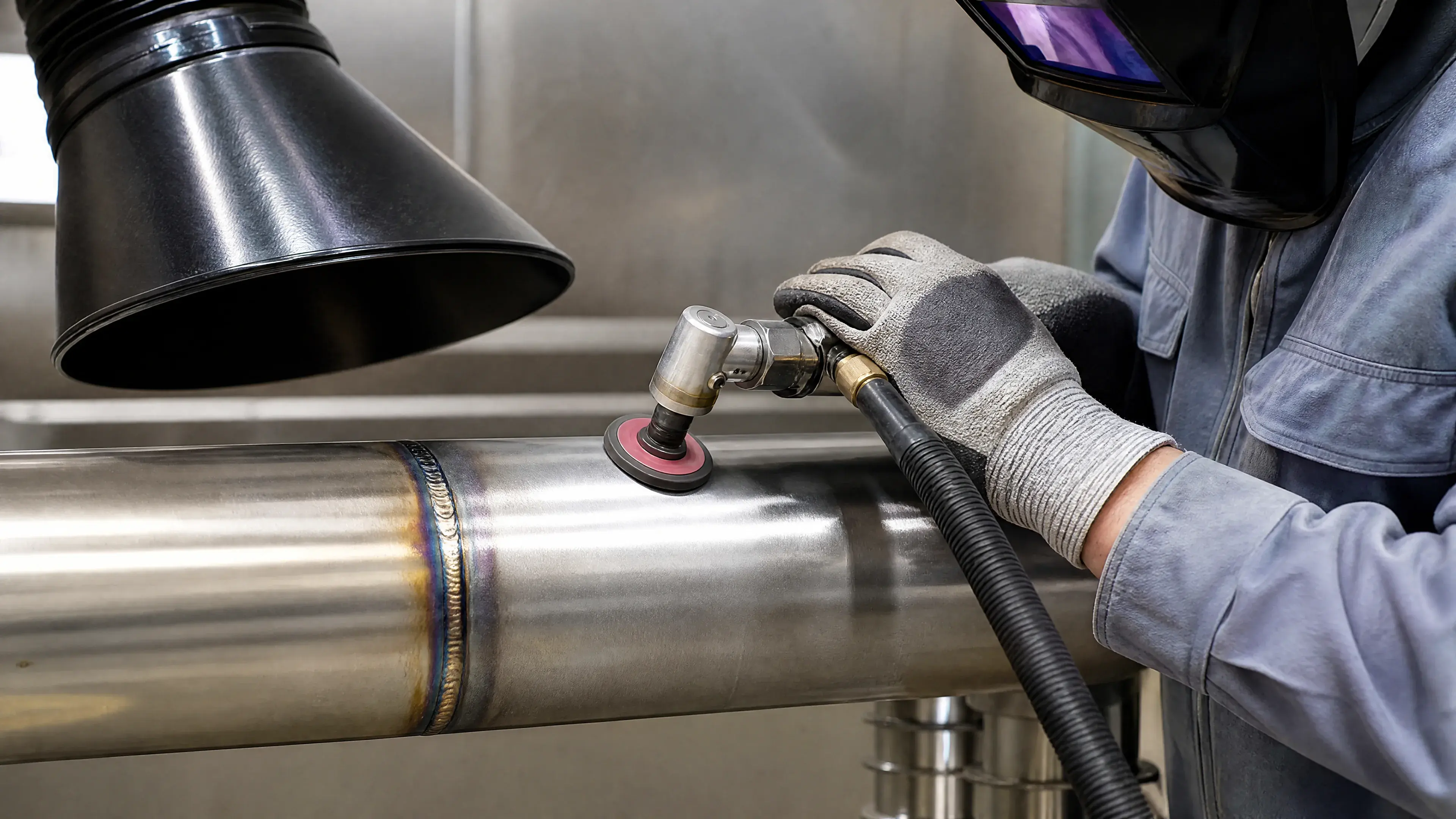
- Perform any approved mechanical preparation. Remove heavy slag or dress weld geometry where the specification calls for it. Use stainless-dedicated media and tools when cross-contamination is a concern, and document blasting when it forms part of the qualified sequence [4].
- Pickle where oxide or altered surface must be removed. Apply the qualified chemistry and delivery method with control of coverage, time, temperature, and bath condition. Protect excluded surfaces and prevent solution entrapment [3][5][6].
- Rinse and inspect. Remove reaction products, check that specified oxide and tint are gone, and verify drainage from difficult features before proceeding.
- Passivate if required. Treat the clean surface using the purchaser-approved or standards-based procedure. Control the actual variables rather than documenting only the chemical family [2][7][9].
- Final-rinse, dry, and protect. Avoid residue, carbon-steel contact, dirty gloves, contaminated racks, and unsuitable packaging after treatment [8].
- Verify and release. Perform the specified visual, cleanliness, chemical, or corrosion checks; link results to the lot; and issue the agreed records.
This sequence is deliberately functional rather than prescriptive. Some qualified lines combine or reorder stages, and some clean, oxide-free parts need passivation without pickling. The processor should explain why each stage is necessary for the actual starting condition. Requiring unnecessary pickling adds material removal, chemical use, wastewater, and handling without automatically improving the part [2][8][9].
8. Alternatives and neighboring processes
Mechanical finishing removes oxide or creates a texture with abrasives. It may be better when a directional or quantified roughness is the primary goal, but it can leave embedded debris or produce geometry-dependent scratches. A chemically clean condition may still be specified afterward. Sandblasting plus pickling should be treated as a combined route whose sequence affects the surface, not as two independent labels [4].
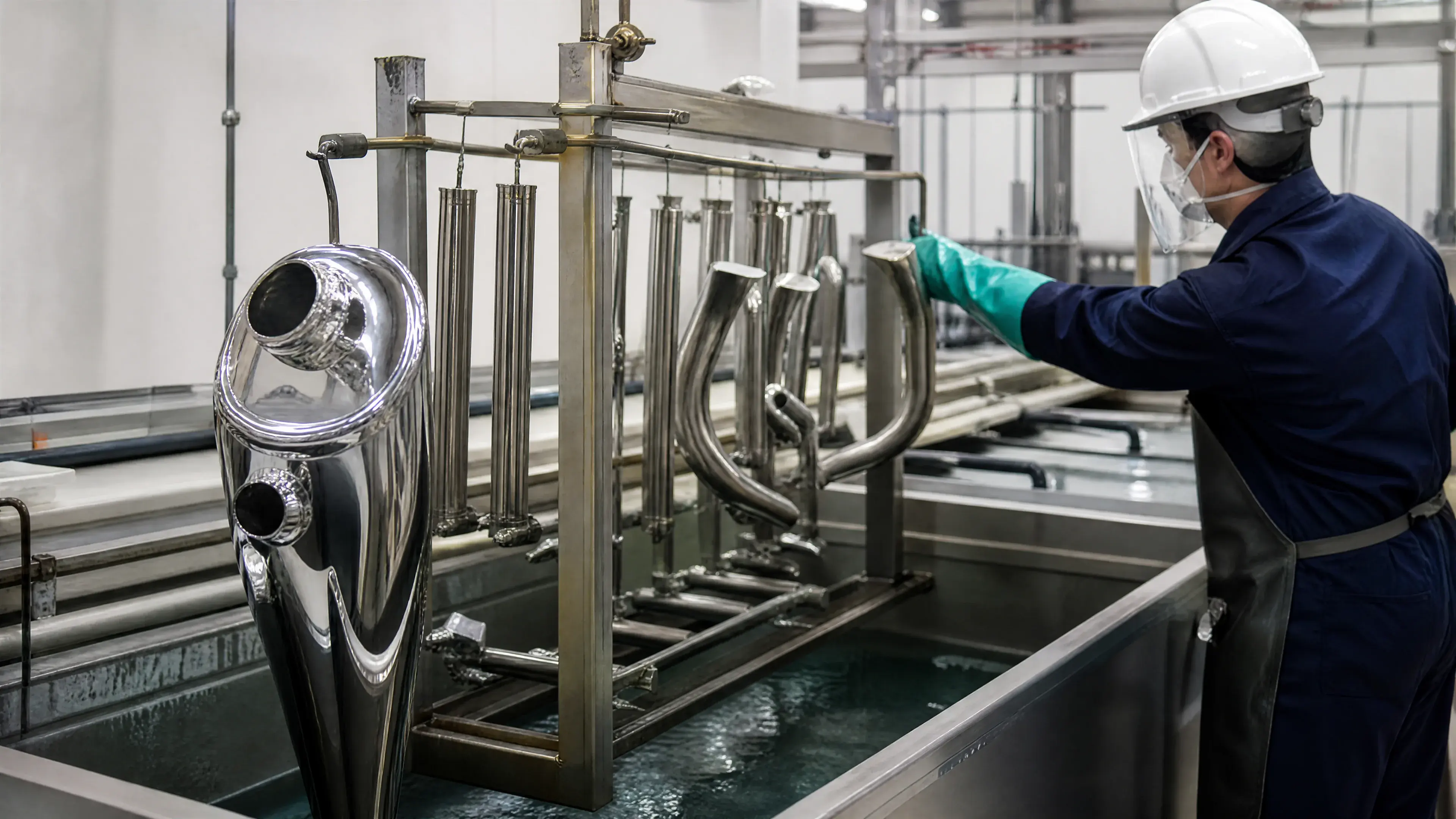
Electropolishing is a separate metal-removal process that may be considered when controlled smoothing, rather than cleaning and chemical passivation alone, is the requirement. It should be specified directly with its own geometry, dimensional, and verification controls rather than requested through the phrase “bright passivation” [8][9].
Localized weld cleaning can limit treatment to heat-affected zones when full immersion is impractical. The buyer still needs requirements for overlap, neutralization or rinsing, adjacent-finish protection, and final verification. Local treatment may create a visible halo on an architectural surface, so a corrosion-cleaning requirement and an appearance requirement need separate approval [8].
Coatings or linings are outside the bare-surface treatment functions addressed here. If a barrier or color layer is required, its qualified pretreatment and adhesion system should govern the interface; chemical passivation should not be inserted as an assumed final stage merely because the substrate is stainless [8][9].
9. Typical applications
Welded process equipment
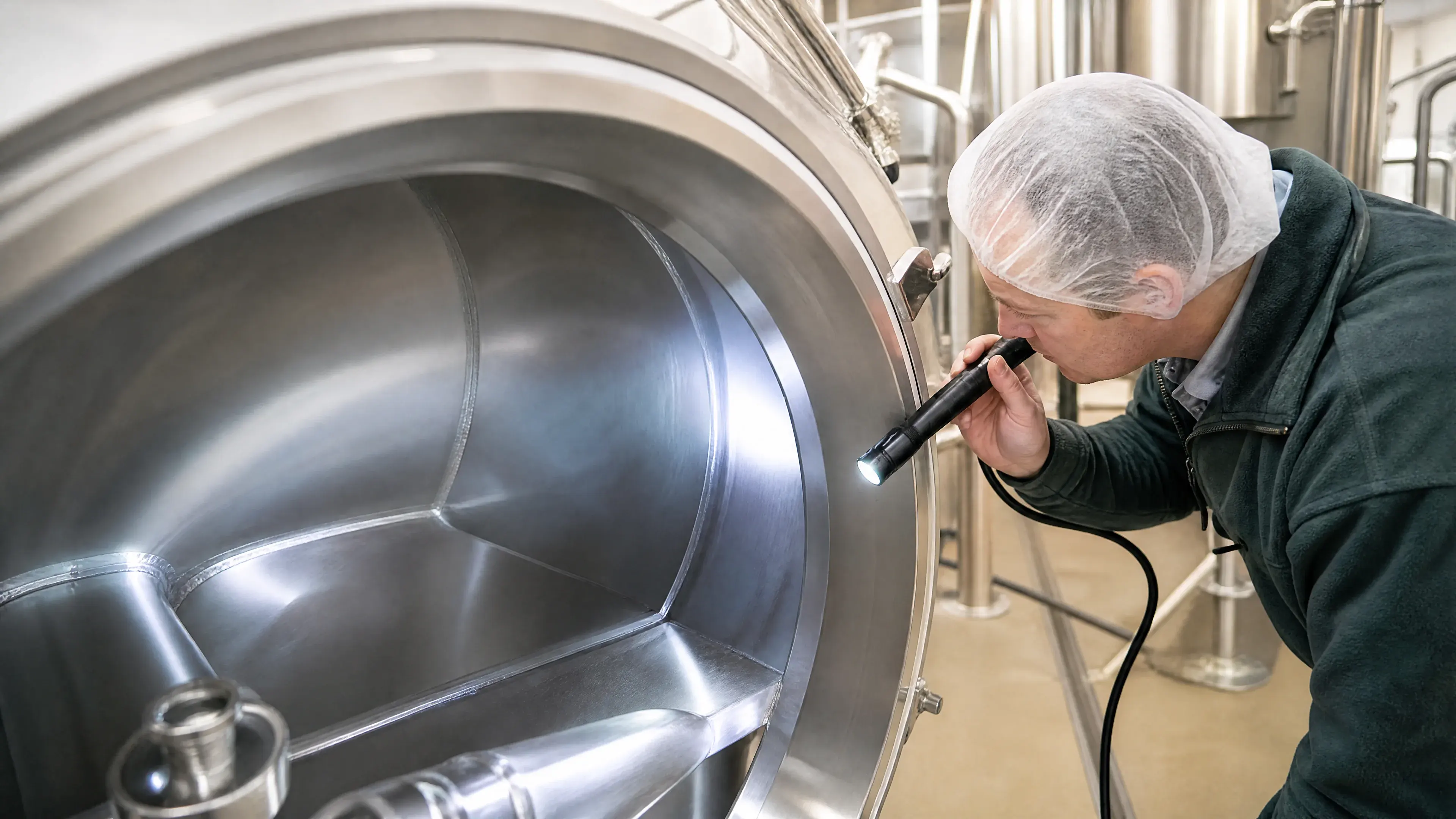
Tanks, tubing, manifolds, and fabricated vessels can carry heat tint, shop soil, and iron contamination after welding and handling. The important requirements are complete access, drainage, treatment of internal surfaces, residue control, and a verification method tied to the intended fluid service. A polished exterior does not prove that an internal weld root has been treated [3][8].
Hygienic and cleanable components
Food, beverage, pharmaceutical, and laboratory components often need a clean, residue-controlled surface and documentation of the final condition. Pickling may remove fabrication oxide; passivation may follow cleaning; mechanical or electropolishing requirements may separately control topography. The RFQ should state the hygienic design and roughness requirements independently because passivation alone does not establish surface roughness [3][8][9].
Heat-exposed sheet and fabricated assemblies
Hot processing, thermal cutting, and welding can produce oxide of varying thickness. A processor needs representative worst-case areas, not only an untouched flat coupon. Heavy scale, tight crevices, and mixed methods of heat input may require different preparation or local repair steps before the final passivation stage [4][5][8].
Electrical or electrochemical hardware
For bipolar plates, contacts, or current-carrying interfaces, corrosion resistance is only one requirement. Leng and co-workers showed that pickling/passivation can affect both corrosion response and electrical conductivity-related performance on 316L bipolar-plate material [3]. The drawing should therefore include the relevant interface test rather than assuming that a more passive surface will meet every electrical objective.
10. RFQ checklist
- Stainless grade, product form, applicable material standard, and material traceability level.
- Drawing revision, quantities, lot definition, critical dimensions, and surfaces excluded from material removal.
- Starting condition: mill finish, heat treatment, weld process, heat tint, scale, blasting, grinding, polishing, markings, oil, or known contamination.
- Scope by zone: full part, internal wetted surfaces, external surfaces, welds only, or designated drawing areas.
- Required operation: cleaning, descaling/pickling, passivation, or a defined sequence; do not use the terms as synonyms.
- Governing standard and edition, such as ASTM A380/A380M or ASTM A967/A967M, plus any project-specific deviations [8][9].
- Permitted or prohibited chemical families and any environmental, safety, or downstream-process restrictions.
- Appearance requirement, viewing method, and approved physical sample when color or texture is critical.
- Functional requirements affected by the surface, including roughness, electrical contact, cleanliness, coating adhesion, or dimensional allowance.
- Required verification method, acceptance criteria, sampling plan, witness or hold points, and failed-lot disposition.
- Rinse-water, residue, drying, packaging, and post-treatment handling requirements where service demands them.
- Required records: procedure identity, bath or solution traceability, processing lot, inspection results, test report, and certificate wording.
11. Frequently asked questions
Is pickling the same as passivation?
No. Pickling is an oxide- and metal-removal process; passivation treats an already clean stainless surface to remove remaining exogenous iron and favor a passive condition. A fabricated part with heavy weld scale may require cleaning and pickling before passivation, while a clean machined part may require no pickling at all [8][9].
Does stainless steel need passivation after every weld?
Not as a universal rule stated that way. Welding can create heat tint and a locally altered surface that needs appropriate cleaning, but the required sequence depends on grade, weld condition, service, appearance, and governing specification. The purchaser should specify the acceptable final condition and verification rather than assume one treatment label covers every weld [3][4][8].
Is citric acid always the environmentally preferable option?
No. Citric acid can avoid some hazards associated with nitric systems, but a life-cycle comparison must include chemical production, bath performance and life, energy, water, emissions, and waste treatment. Parsons and co-workers found that the comparison belongs at process-system level, not at acid-name level [2].
Can a passivation certificate guarantee that the part will not rust?
No. A certificate can document compliance with a defined procedure and acceptance method. Field corrosion still depends on alloy selection, design, fabrication, deposits, chloride and chemical exposure, temperature, stress, maintenance, and damage after processing. A passivation test should be treated as manufacturing evidence, not as an unlimited service-life warranty [8][9][10].
References
- Noh, J. S., Laycock, N. J., Gao, W., & Wells, D. B. “Effects of nitric acid passivation on the pitting resistance of 316 stainless steel.” Corrosion Science, 42 (2000). https://doi.org/10.1016/S0010-938X(00)00052-4. Access note: DOI and bibliographic metadata verified; full text was not available during drafting, so use is limited to the study scope stated by its title and indexed record.
- Parsons, S., Poyntz-Wright, O., Kent, A. J., & McManus, M. C. “Green chemistry for stainless steel corrosion resistance: life cycle assessment of citric acid versus nitric acid passivation.” Materials Today Sustainability (2019). https://doi.org/10.1016/j.mtsust.2019.01.001. Access note: peer-reviewed author manuscript available in the University of Bath repository and reviewed in full.
- Leng, Y., Yang, Y., Ming, P., Li, Z., & Zhang, C. “Improvement of Corrosion Resistance and Electrical Conductivity of Stainless Steel 316L Bipolar Plate by Pickling and Passivation.” World Electric Vehicle Journal, 12 (2021), 101. https://doi.org/10.3390/wevj12030101. Access note: open-access full text reviewed.
- Geng, S., Sun, J., & Guo, L. “Effect of sandblasting and subsequent acid pickling and passivation on the microstructure and corrosion behavior of 316L stainless steel.” Materials & Design (2015). https://doi.org/10.1016/j.matdes.2015.08.113. Access note: DOI and bibliographic metadata verified; full text was not available during drafting, so no result-specific numerical claim is used.
- Li, L.-F., Caenen, P., & Jiang, M.-F. “Electrolytic pickling of the oxide layer on hot-rolled 304 stainless steel in sodium sulphate.” Corrosion Science (2008). https://doi.org/10.1016/j.corsci.2008.07.004. Access note: DOI and bibliographic metadata verified; full text was not available during drafting, so use is limited to the published study scope.
- Narváez, L., Cano, E., & Bastidas, J. M. “Hydrogen Peroxide Decomposition in an Environmentally Friendly Pickling Solution for AISI 316L Stainless Steel.” CORROSION (2005). https://doi.org/10.5006/1.3278156. Access note: DOI metadata and abstract reviewed; claims are limited to variables identified in the abstract.
- Yue, X., Liu, Z., & Jiang, W. “Evolution of Passive Film on 304 Stainless Steel During Nitric Acid Passivation.” steel research international (2022). https://doi.org/10.1002/srin.202200026. Access note: DOI metadata and abstract reviewed; no reported optimum time is generalized here.
- ASTM International. ASTM A380/A380M-25, Standard Practice for Cleaning, Descaling, and Passivation of Stainless Steel Parts, Equipment, and Systems. https://doi.org/10.1520/A0380_A0380M-25. Access note: official DOI and current-edition metadata verified; protected clause text and process tables were not accessed or reproduced.
- ASTM International. ASTM A967/A967M-25, Standard Specification for Chemical Passivation Treatments for Stainless Steel Parts. https://doi.org/10.1520/A0967_A0967M-25. Access note: official DOI and current-edition metadata verified; protected clause text, recipes, and acceptance values were not accessed or reproduced.
- ASTM International. ASTM G48-25, Standard Test Methods for Pitting and Crevice Corrosion Resistance of Stainless Steels and Related Alloys by Use of Ferric Chloride Solution. https://doi.org/10.1520/G0048-25. Access note: official DOI and current-edition metadata verified; protected method details and acceptance values were not accessed or reproduced.
Continue the specification
Related surface-finish guides
Specify before production
Need a finish quoted against a drawing or control sample?
Send the material grade, product form, finish requirement, inspection method and quantity. We will identify the unresolved specification points before quoting.
Discuss the requirement