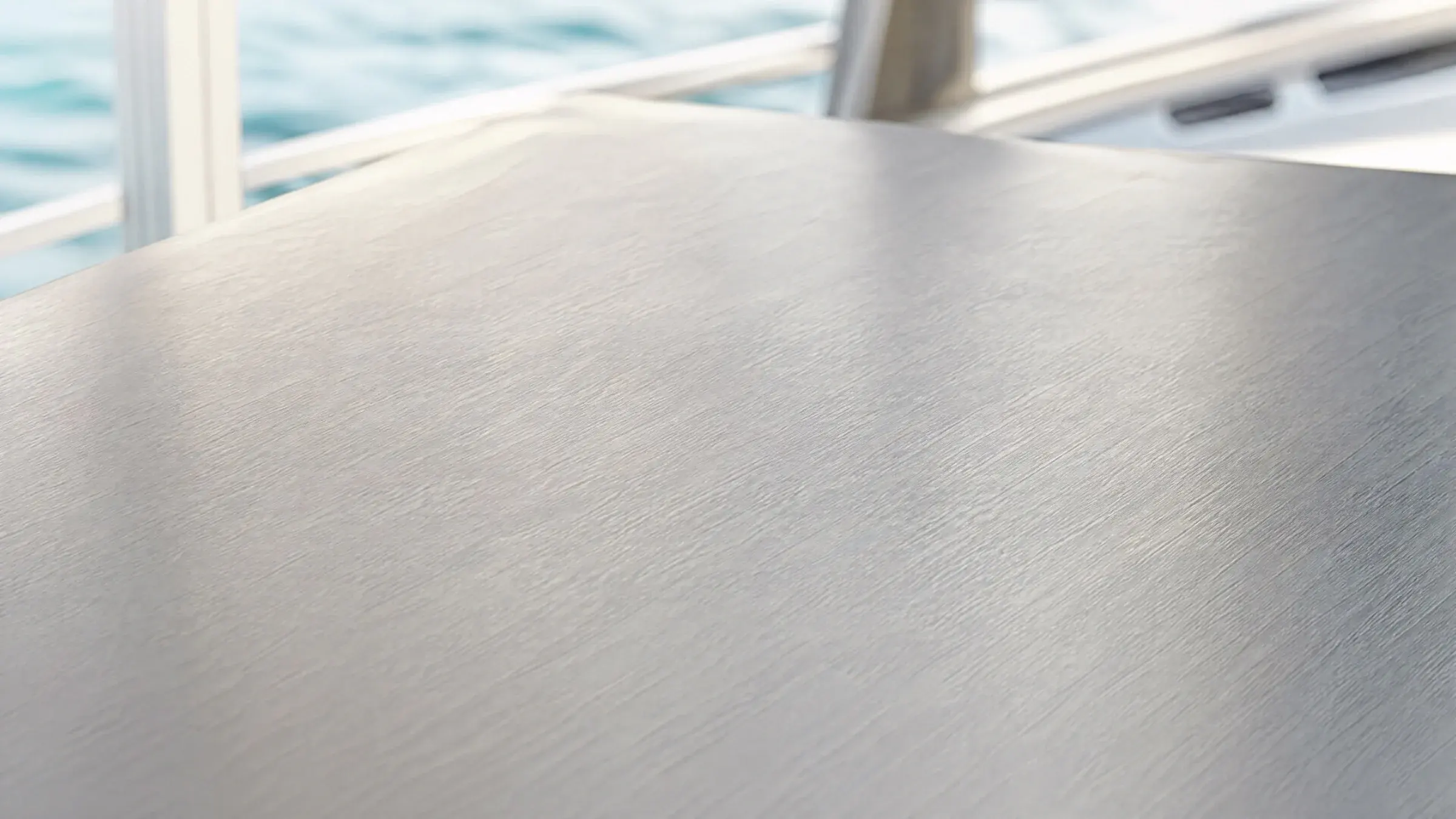
In short: 5083 is the marine workhorse of the aluminium family — an Al-Mg alloy with ~4.0–4.9% magnesium that delivers the highest strength of any non-heat-treatable 5xxx grade. Its crystal structure is FCC (face-centred cubic) aluminium; it is non-magnetic and gets its strength from magnesium solid-solution hardening plus strain hardening (H tempers), never from aging. Corrosion resistance comes from a self-healing Al₂O₃ oxide film, giving it standout performance in seawater. Unlike heat-treatable grades, 5083 keeps nearly all its strength in the as-welded joint — which is why it dominates hulls, superstructures, and cryogenic LNG tanks. Step down to 5052 for lighter sheet-metal work, or sideways to 6061 when extrudability and heat-treated strength matter more than weld strength.
What 5083 Aluminum Is
Type 5083 is the marine-grade structural aluminium — the strongest of the non-heat-treatable 5xxx (aluminium-magnesium) alloys. It carries roughly 4.0–4.9% magnesium with a small manganese addition, in an aluminium base. That high magnesium content is the source of both its strength and its exceptional resistance to attack by seawater and industrial atmospheres.[1]
In the Aluminum Association system it is AA 5083 (covered by ASTM B209 for sheet and plate); in European EN it is EN AW-5083, with the descriptive designation AlMg4.5Mn0.7. In Chinese practice it appears as GB 5083. Buyers searching any of these are looking for the same alloy.
The essential character of 5083: it is not hardenable by heat treatment. Where grades like 6061 gain strength from a solution-treat-and-age cycle, 5083 derives its strength from magnesium dissolved in solid solution combined with cold working (strain hardening). The practical consequence is decisive — when 5083 is welded, the joint retains nearly all of the base-metal strength, because there is no heat-treated condition to lose. This makes it the default choice wherever large welded aluminium structures meet salt water.[4]
It sits at the top of the marine 5xxx range. Step down to 5052 for lighter-duty sheet work and fuel tanks; step sideways to the heat-treatable 6061 where extrusion and peak heat-treated strength matter; and to general-purpose 3003 for non-structural sheet.
Chemical Composition
Composition limits for 5083 (per AA / ASTM B209 and EN AW-5083). Magnesium is the dominant alloying element — the source of both solid-solution strengthening and the alloy's seawater resistance — with manganese added to refine the grain structure and improve strength.[1]
| Element | Symbol | Content (wt%) | Role |
|---|---|---|---|
| Mg | Mg | 4–4.9 | The primary alloying element — solid-solution strengthening and the basis of seawater resistance |
| Manganese | Mn | 0.4–1 | Refines grain structure, adds strength, forms dispersoids that control recrystallisation |
| Chromium | Cr | 0.05–0.25 | Minor addition — controls grain structure; not a passivating element in aluminium (the oxide film is Al₂O₃) |
| Silicon | Si | ≤ 0.4 | Residual impurity, held low |
| Iron | Fe | ≤ 0.4 | Residual impurity; forms Fe-bearing intermetallic particles |
| Copper | Cu | ≤ 0.1 | Held very low — copper would degrade corrosion resistance |
| Zn | Zn | ≤ 0.25 | Residual, held low |
| Titanium | Ti | ≤ 0.15 | Trace grain refiner |
| Aluminium | Al | Balance | Base metal |
Per AA / ASTM B209 and EN AW-5083 limits.[1]
Crystal Structure: FCC Aluminium with Magnesium in Solid Solution
Aluminium is a metal, and 5083 is an alloy — a solid solution of magnesium and manganese in aluminium — so it has no molecular formula. The correct description is by crystal structure.
Pure aluminium and its 5xxx alloys are face-centred cubic (FCC): aluminium atoms sit at the corners and the centre of each face of a cubic unit cell. The dissolved magnesium atoms substitute onto aluminium lattice sites, distorting the lattice locally and impeding dislocation motion — this is solid-solution strengthening, and it is the first of the two strengthening mechanisms in 5083. The FCC lattice is non-magnetic in all conditions.
Because 5083 is non-heat-treatable, it cannot be strengthened by precipitation aging. Instead, its second strengthening mechanism is strain hardening — cold working multiplies and entangles dislocations, raising strength at the cost of ductility. This produces the H tempers (e.g. H116, H321), which are the preferred conditions for marine plate. The interplay of magnesium solid solution and strain hardening — not any aging reaction — sets the strength of 5083.
Corrosion Resistance: Built for Seawater
5083 is the benchmark aluminium alloy for marine corrosion resistance. Like all aluminium, it protects itself with a thin, dense, self-healing film of aluminium oxide (Al₂O₃) that forms spontaneously on any exposed surface and re-forms instantly if scratched. This oxide barrier — grown by the metal itself from the surrounding magnesium-bearing aluminium — is what gives 5083 its standout durability in salt water.[1][2]
Why magnesium helps. Magnesium held in solid solution does not undermine the protective oxide the way copper would; 5083 is deliberately kept very low in copper for exactly this reason. The native Al₂O₃ film is stable across the near-neutral pH range of seawater and acts as a barrier whose integrity governs resistance to pitting. Where the film does break down it is most often at second-phase particles or where chloride locally penetrates the oxide — the same particle-and-chloride mechanism that governs pitting across aluminium alloys generally.[1][2]
Anodizing. As with other 5xxx alloys, 5083 can be anodized to thicken the natural oxide electrochemically into a much heavier two-part layer — a dense inner barrier layer beneath a porous outer layer — which can then be coloured or sealed. Anodizing parameters (current, temperature) control the pore size and density of the porous layer, giving a tougher, more decorative, and even more corrosion-resistant surface than the native film alone.[3]
One engineering caution — sensitization. The high magnesium content that makes 5083 strong also makes it the one 5xxx grade that must be watched at elevated temperature. Sustained service above roughly 65 °C can, over time, cause a magnesium-rich phase to precipitate along the grain boundaries (sensitization). Because that boundary phase is anodic to the surrounding grains, it can leave the alloy susceptible to intergranular and stress-corrosion attack in chloride environments — the general galvanic mechanism by which a second phase at grain boundaries drives intergranular corrosion in aluminium alloys.[1] For this reason 5083 is specified in the stabilised H116 / H321 tempers for marine and pressure-vessel service and is generally not recommended for prolonged service above ~65 °C; structures that stay near ambient or run cold (such as cryogenic tanks) are unaffected.[4]
Mechanical & Physical Properties
5083 is supplied in two main families of condition — the soft, fully formable O (annealed) temper and the stronger, strain-hardened H tempers (H116 / H321) used for structural and marine plate. Because the alloy is non-heat-treatable, there is no T-temper aging route; strength is set entirely by the degree of cold work over a magnesium-strengthened base.[1]
| Tensile strength (MPa) | ≈270 |
| Yield strength (MPa) | ≈115 |
| Elongation (%) | ≈16 |
| Hardness | ≈65 HB |
| Density (g/cm³) | 2.66 |
| Elastic modulus (GPa) | 71 |
| Magnetic response | Non-magnetic |
| Tensile strength (MPa) | ≈305 |
| Yield strength (MPa) | ≈215 |
| Elongation (%) | ≈12 |
| Hardness | ≈75 HB |
| Density (g/cm³) | 2.66 |
| Elastic modulus (GPa) | 71 |
| Magnetic response | Non-magnetic |
| Temper / condition | Strain-hardened; H116/H321 are the preferred tempers for marine and pressure-vessel service |
The H116 / H321 plate is the workhorse condition: it adds substantial yield and tensile strength over the annealed state through strain hardening, while these stabilised tempers are specifically designed to resist sensitization in service. The annealed O temper trades that strength for maximum ductility, used where deep forming is required before the part is put into service.[1][4]
5083 also keeps its toughness at very low temperatures. Unlike many steels, FCC aluminium has no ductile-to-brittle transition, so 5083 actually gains strength while retaining excellent toughness down to cryogenic temperatures — the property that makes it a standard for LNG storage at −196 °C.
Key Characteristics
- Best-in-class seawater resistance. The self-healing Al₂O₃ film plus low copper gives 5083 the marine durability that defines the grade.
- Highest strength among non-heat-treatable alloys. More magnesium than 5052 means more solid-solution strengthening and the top strength of the 5xxx family.
- Excellent as-welded strength. With no heat-treated condition to lose, welded joints retain nearly full base-metal strength — no post-weld heat treatment required.
- Outstanding cryogenic toughness. FCC aluminium has no ductile-to-brittle transition; 5083 stays tough to −196 °C, ideal for LNG service.
- Non-magnetic. The FCC lattice is non-magnetic in every condition.
- Avoid sustained heat above ~65 °C. Prolonged elevated-temperature service risks sensitization; specify the stabilised H116 / H321 tempers and keep service near ambient or cold.
How 5083 Is Made
Production runs the wrought-aluminium route: the Al-Mg-Mn melt is cast into ingot, homogenised, then hot- and cold-rolled to plate or sheet. Because 5083 is non-heat-treatable, the final strength is set not by an aging cycle but by the controlled combination of cold work and stabilisation annealing that produces the H116 / H321 tempers.[1]
Welding. 5083 is readily welded by MIG (GMAW) and TIG (GTAW) using 5xxx aluminium filler wires such as 5183, 5356, or 5087. Filler additions (for example titanium, which seeds Al₃Ti to nucleate finer weld grains) refine the weld microstructure, and the as-welded joint retains nearly the full strength of the base plate — the property that underpins 5083's dominance in welded marine structures.[4]
5083 vs 5052 vs 6061 — Picking the Marine Alloy
All three are mainstream structural aluminiums, but they serve different roles. 5052 is a lighter-duty Al-Mg sheet alloy; 6061 is heat-treatable and extrudable; 5083 is the high-strength, weldable, seawater-grade plate. The choice hinges on whether the priority is as-welded strength in salt water (5083), formable sheet (5052), or extruded shapes with heat-treated strength (6061).[4]
Applications by Industry
5083's combination of high strength, full as-welded joint strength, and unmatched seawater resistance makes it the default structural aluminium wherever large welded structures meet salt water or extreme cold.[4]
Shipbuilding and Marine Structures
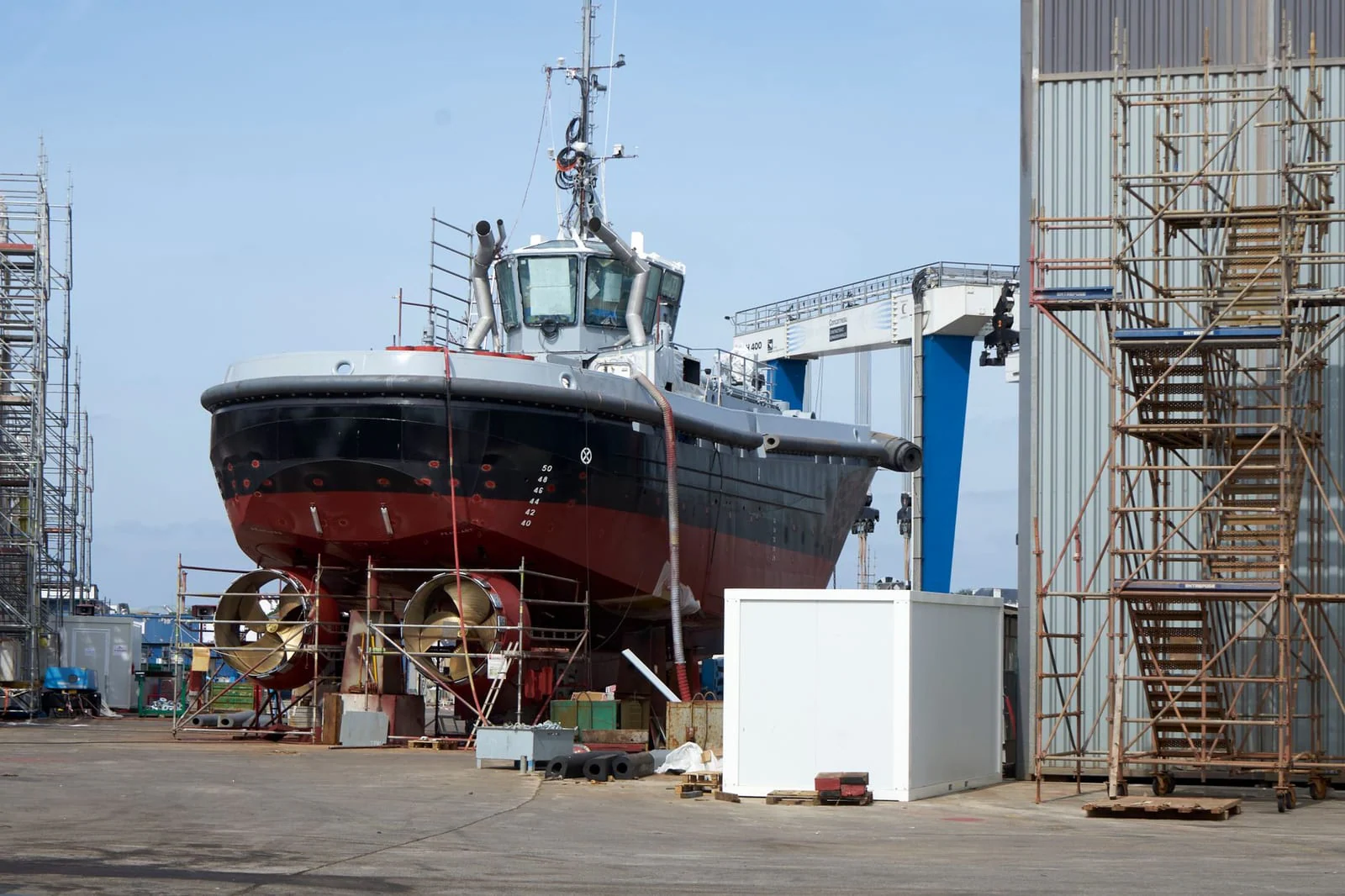
Hulls, decks, superstructures, and bulkheads of ships, fast ferries, and patrol craft. 5083 plate is welded into large structures that must survive decades of seawater exposure with full joint strength and minimal corrosion maintenance — the application that defines the grade.[4]
Cryogenic LNG Tanks and Pressure Vessels
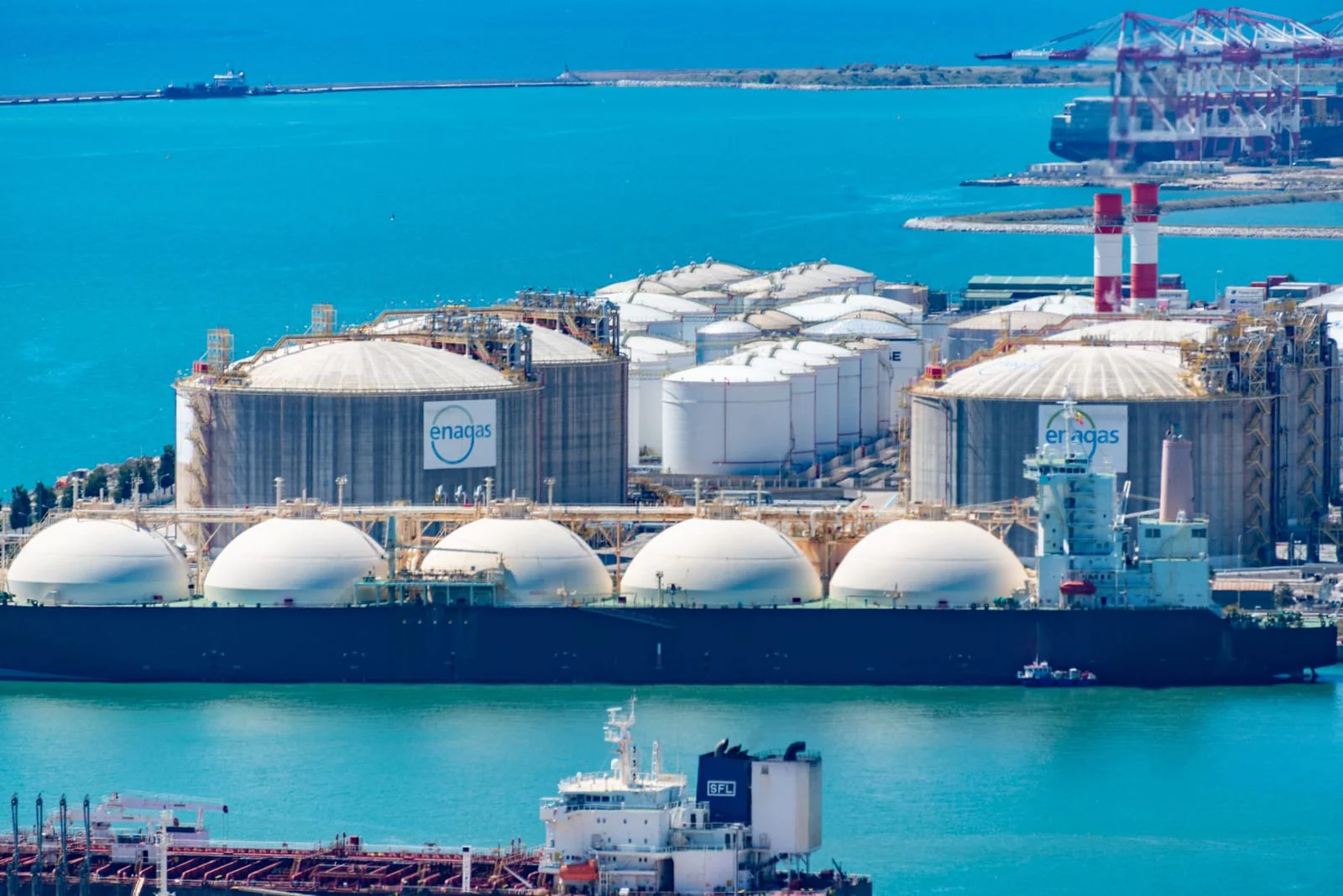
Liquefied natural gas storage and transport at −196 °C. The absence of a ductile-to-brittle transition in FCC aluminium, combined with full as-welded strength, makes 5083 a standard for cryogenic tankage and low-temperature pressure vessels.
Offshore Platforms and Marine Equipment
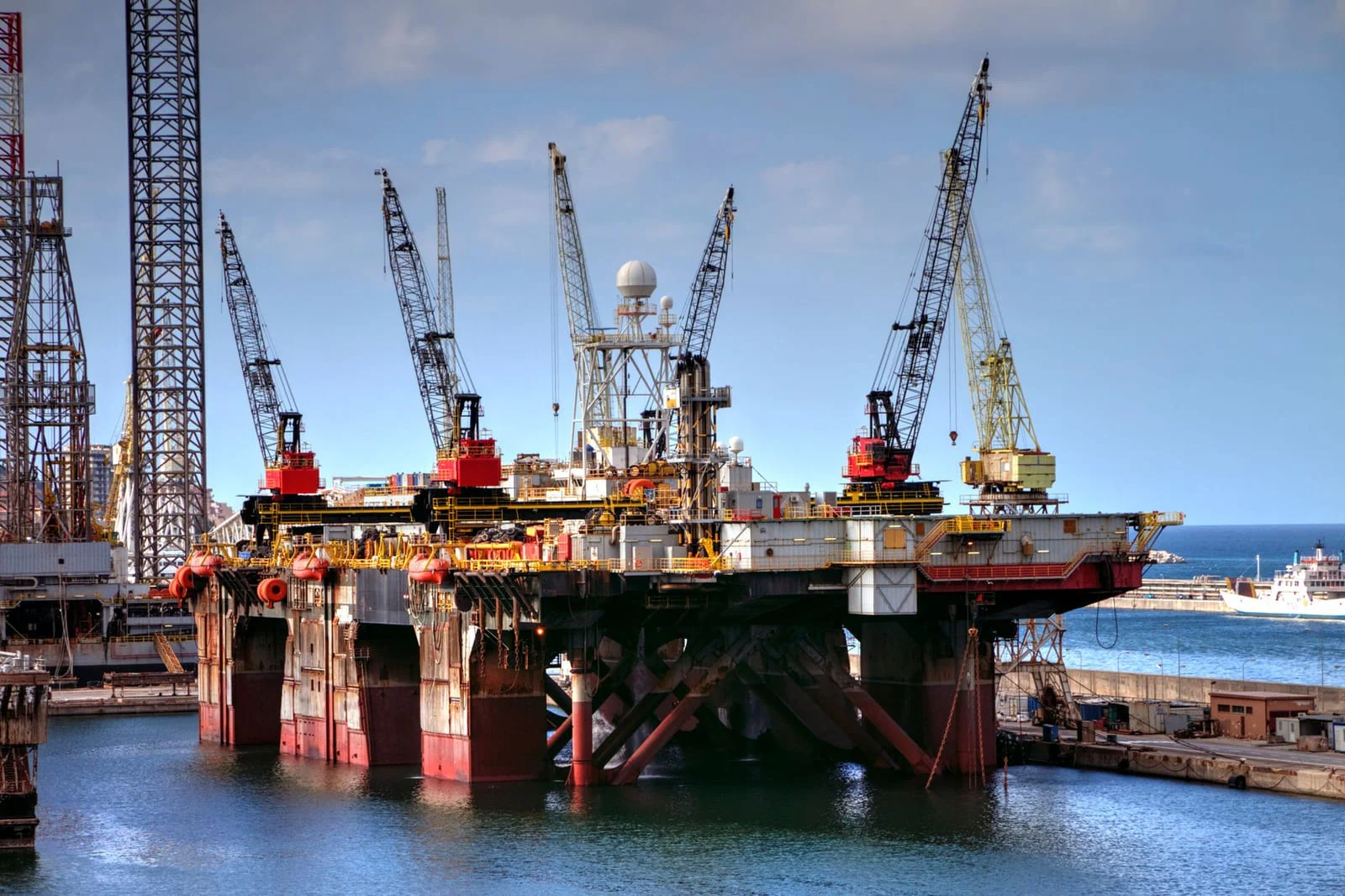
Helidecks, walkways, and equipment modules on offshore platforms, where the weight savings of aluminium and 5083's salt-spray durability both pay off.
Rail and Heavy Transport
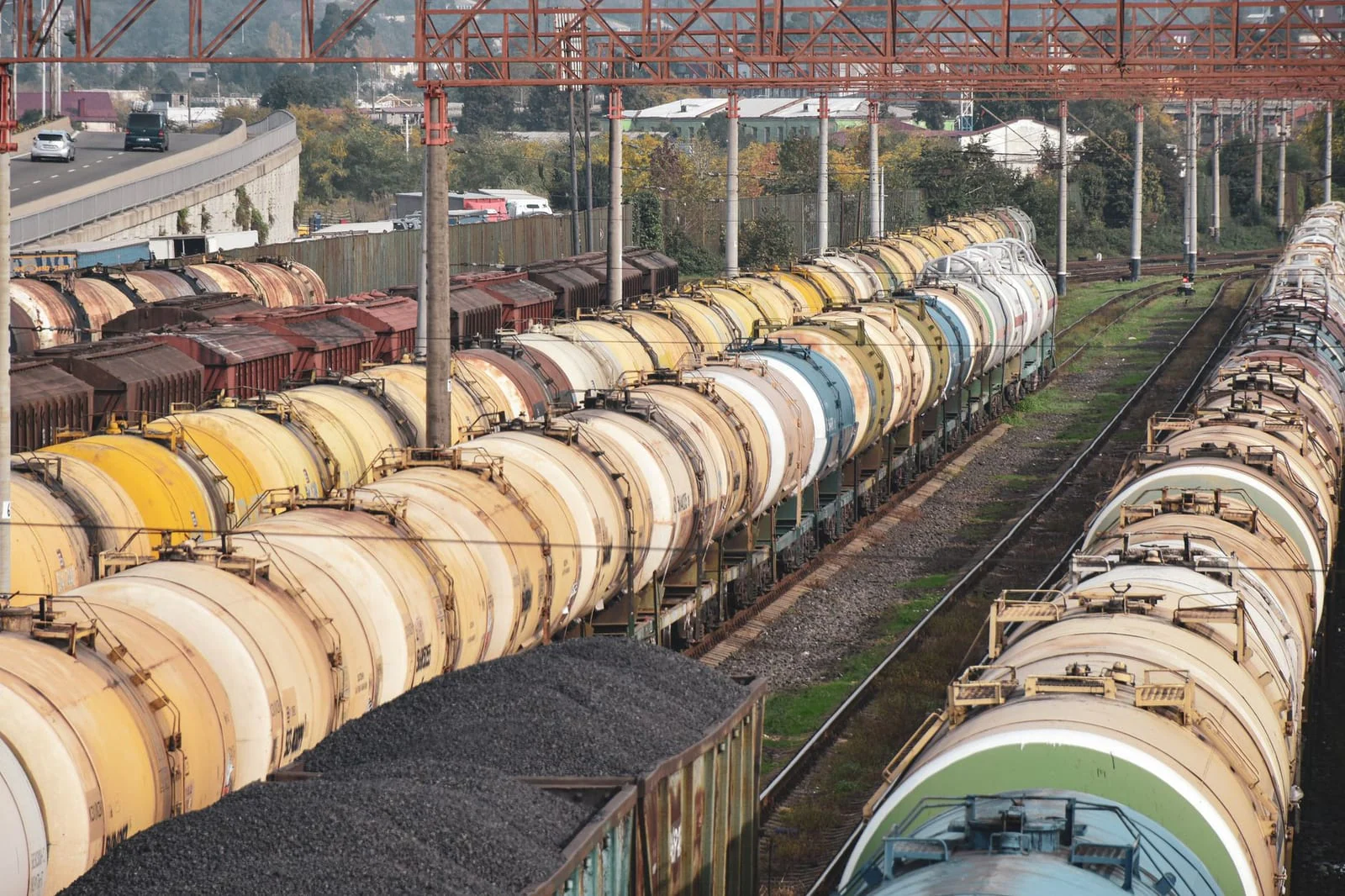
Panels and structural members for rail cars, road tankers, and heavy vehicles, where the high strength-to-weight ratio and good weldability of 5083 reduce mass without sacrificing structural integrity.[4]
Forms & Finishes
Common product forms:PlateSheetCoilBar
Surface finishes:MillAnodizedBrushed
5083 is supplied mainly as plate and sheet in the H116 / H321 marine tempers. For architectural or decorative use the surface can be anodized — thickening the natural Al₂O₃ film into a tougher, sealable, and colourable layer — or brushed for appearance.[3]
References
- A review of the electrochemical and galvanic corrosion behavior of important intermetallic compounds in the context of aluminum alloys. RSC Advances 14, 2024. — Al₂O₃ passive film, chloride breakdown, intermetallic-driven pitting. pmc.ncbi.nlm.nih.gov/articles/PMC11462131/
- Corrosion and Corrosion Protection of Additively Manufactured Aluminium Alloys — A Critical Review. Materials (MDPI) 13, 2020. — native oxide film, passivity, pitting potential. pmc.ncbi.nlm.nih.gov/articles/PMC7663725/
- Influence of Anodizing Parameters on Surface Morphology and Surface-Free Energy of Al₂O₃ Layers Produced on EN AW-5251 Alloy. Materials (MDPI) 12, 2019. — anodizing barrier/porous Al₂O₃ layer, pore size vs current/temperature. pmc.ncbi.nlm.nih.gov/articles/PMC6427806/
- Analyzing the Influence of Titanium Content in 5087 Aluminum Filler Wires on Metal Inert Gas Welding Joints of AA5083 Alloy. Materials (MDPI) 17, 2024. — AA5083 MIG welding with 5xxx filler, grain refinement. pmc.ncbi.nlm.nih.gov/articles/PMC11509792/