In short: 95Cr18 (old designation 9Cr18) is China's high-carbon, high-chromium martensitic stainless steel — a 17–19% chromium alloy with 0.90–1.00% carbon that quench-hardens to ≥55 HRC. It is also classified by GB/T 3086 as a high-carbon chromium stainless bearing steel, which is its defining role. Its crystal structure after quenching is BCT martensite (α′); it is permanently magnetic and derives all its hardness from the austenitize → quench → temper cycle. The high carbon forms hard chromium carbides that deliver excellent wear resistance, while the high chromium gives better corrosion resistance than the Cr13 grades (420 / 40Cr13). On cross-standard mapping there is a real split: by composition (C 0.90–1.00%, no required molybdenum) it sits at AISI 440B level, but EN/UNS databases commonly list it as X105CrMo17 / 1.4125 / UNS S44004 / SUS440C — the 440C system. Both are noted below; the relation is a cross-reference, not an exact equivalence. For the closest AISI grade in role, see 440C.
What 95Cr18 (9Cr18) Stainless Steel Is
95Cr18 — the modern GB/T 20878 designation for the steel long known as 9Cr18 — is the high-carbon, high-chromium member of China's martensitic stainless family. The naming convention is literal: the leading number ×10 is the carbon content (≈0.95% C) and the trailing number is the chromium content (≈18% Cr). It contains 17–19% chromium and 0.90–1.00% carbon in an iron base with near-zero nickel, with molybdenum present only as a residual allowance (≤ 0.75%), not as a deliberate addition.[1]
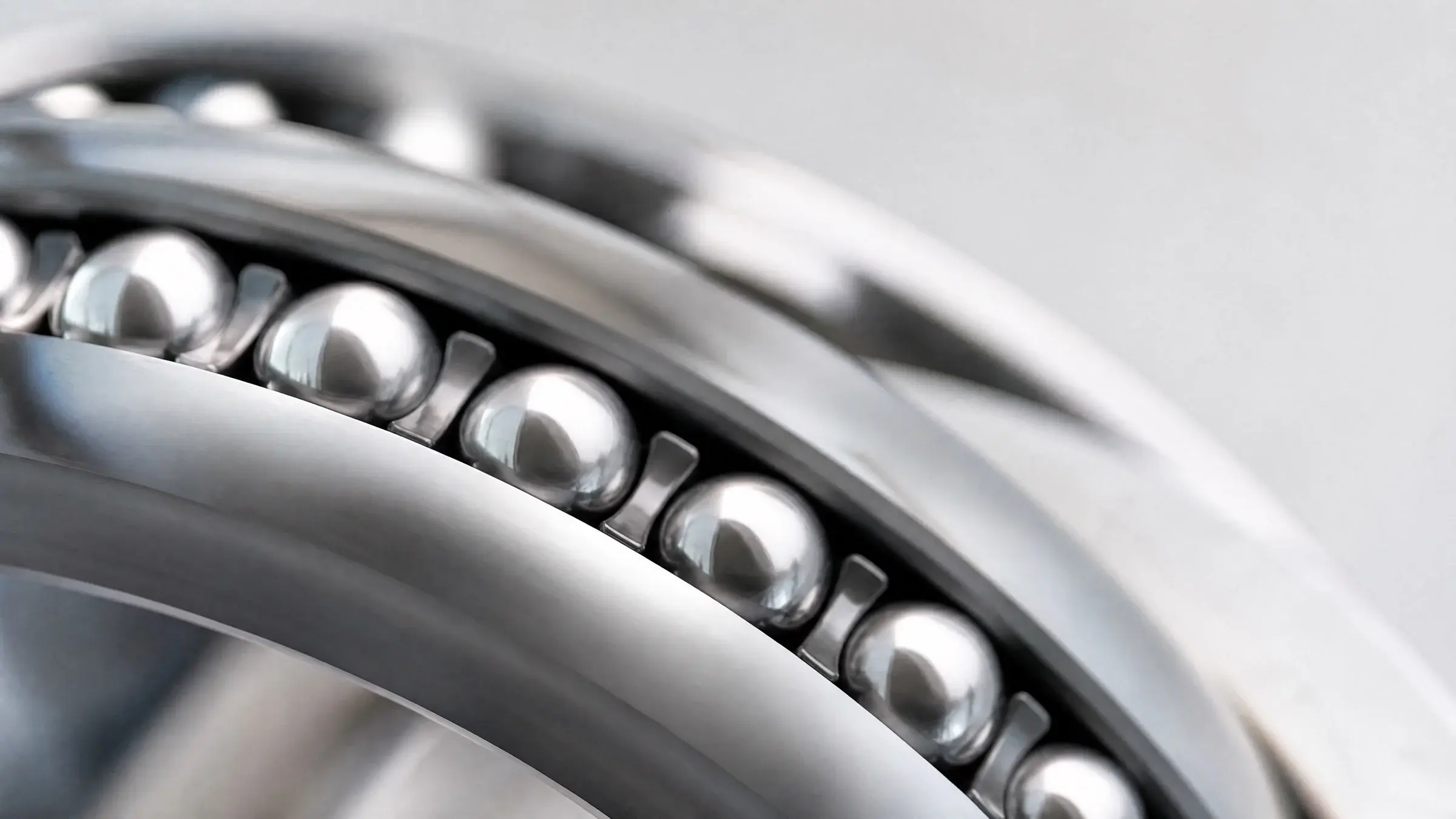
Its defining role is set by a second standard: GB/T 3086 classifies 95Cr18 as a high-carbon chromium stainless bearing steel. That is the key to understanding the grade — it is engineered for rolling-contact service where corrosion resistance and high hardness must coexist, alongside its use in premium knives, gauge blocks, moulds, and wear parts. Composition for bar is governed by GB/T 1220 (with GB/T 20878 fixing the designation).[1]
On cross-standard mapping, 95Cr18 sits in the AISI 440 family — but the exact counterpart is genuinely disputed. By chemical composition (carbon 0.90–1.00%, no required molybdenum), it aligns most closely with AISI 440B (C 0.75–0.95%, no required Mo). However, European and UNS databases habitually list it as X105CrMo17 / 1.4125 / UNS S44004 / SUS 440C — i.e. the 440C system. The honest position, followed throughout this guide, is to give readers both: by composition it is a 440B-level steel; by common database mapping it is filed under 440C/1.4125/S44004. The relation is a cross-reference, not an exact equivalence — 440C proper (GB 102Cr17Mo) runs higher carbon and mandates molybdenum.[1]
Chemical Composition
Composition limits for 95Cr18 per GB/T 1220 / GB/T 20878 (cross-checked against the GB data table and a GB-sourced datasheet). The combination of high carbon and high chromium is the signature: carbon drives the hardness and forms hard chromium carbides for wear resistance, while the elevated chromium maintains a corrosion-resistant matrix even after carbide formation.[1]
| Element | Symbol | Content (wt%) | Role |
|---|---|---|---|
| Carbon | C | 0.9–1 | High (0.90–1.00%) — the key hardening element; increases BCT tetragonality for ≥55 HRC and forms hard Cr carbides for wear resistance |
| Chromium | Cr | 17–19 | High (17–19%) — forms the passive film and the wear-bearing carbides; the larger Cr reservoir gives better corrosion resistance than the Cr13 grades |
| Silicon | Si | ≤ 0.8 | Deoxidiser; aids oxidation resistance |
| Manganese | Mn | ≤ 0.8 | Deoxidiser; MnS inclusions form pit-initiation sites |
| Nickel | Ni | ≤ 0.6 | Trace only — no austenite-stabilising role |
| Molybdenum | Mo | ≤ 0.75 | Residual allowance only (≤0.75%), not deliberately added — unlike 440C/102Cr17Mo where Mo is required |
| Phosphorus | P | ≤ 0.035 | Residual impurity, held low |
| Sulfur | S | ≤ 0.03 | Residual; forms MnS inclusions (pit-initiation sites) |
| Iron | Fe | Balance | Base metal |
Per GB/T 1220 / GB/T 20878 95Cr18 (and GB/T 3086 for the stainless bearing-steel classification).[1]
Crystal Structure: High-Carbon BCT Martensite
Stainless steel is an alloy — a solid solution of elements in iron — so it has no molecular formula. The correct description is by its crystal structure.
95Cr18 hardens through the same martensitic transformation as every 400-series martensitic grade, but its high carbon content (0.90–1.00%) produces a large body-centred tetragonal distortion. On austenitising and quenching, the austenite transforms displacively into BCT martensite (α′) — a body-centred lattice elongated along one axis by the high concentration of trapped interstitial carbon atoms. More carbon → greater tetragonality → harder martensite. This is why 95Cr18 reaches ≥55 HRC, far above the Cr13 grades.[2]
The carbon content is so high that, even at full austenitising temperatures, not all primary chromium carbides dissolve — some undissolved Cr₂₃C₆/Cr₇C₃ carbides remain in the matrix alongside the martensite. Research on high-carbon martensitic stainless steel of this class confirms an as-hardened microstructure of martensite, retained austenite, and both dissolved and undissolved carbide phases; the behaviour of these phases under service loading directly governs wear and fatigue performance — exactly what matters in a bearing steel.[3] Tempering relieves quench stresses and adjusts carbide size and distribution while preserving high hardness. The BCT lattice is ferromagnetic in all heat-treatment states.[2]
Corrosion Resistance: Better Than Cr13, Limited by High Carbon
95Cr18 is corrosion resistant in fresh water, mild acids, and foods when hardened and polished. Thanks to its high chromium (17–19%) it outperforms the Cr13 martensitic grades (410, 420, 40Cr13) — but its very high carbon imposes a ceiling through the same carbide mechanism that limits every high-carbon martensitic stainless.
The mechanism — carbide precipitation and Cr depletion. During tempering, chromium-rich carbides (Cr₂₃C₆, Cr₇C₃) precipitate and remove chromium from the solid-solution matrix available for passive-film formation. Research on tempered high-chromium martensitic stainless steel shows that as tempering proceeds the matrix chromium concentration adjacent to carbides falls, and localised corrosion initiates at these carbide-adjacent Cr-depletion zones, producing pitting.[4] In the high-carbon 95Cr18 the carbide volume fraction is large, so this effect is pronounced.
Why it still beats Cr13. The high base chromium (17–19%, versus ~12–14% in the Cr13 grades) provides a far larger reservoir, so even after carbides consume some chromium the matrix retains more of it than a Cr13 steel would. This is why 95Cr18 maintains acceptable corrosion resistance in mild environments while delivering bearing-grade hardness — the combination that defines the grade.
MnS inclusions from residual sulfur provide additional pit-initiation sites across all stainless grades.[5]
Best corrosion performance is achieved in the hardened, polished, and passivated condition — keeping chromium in solid solution and maximising passive-film integrity. 95Cr18 is not suitable for seawater, marine atmospheres, or strong chloride processes.
Mechanical & Physical Properties
95Cr18 offers two distinct property profiles depending on heat treatment — the defining advantage of hardenable martensitic grades. In the annealed condition it is soft enough to machine; quenched and tempered, hardness in HRC becomes the primary metric.[1]
| Hardness | ≤255 HBW |
| Magnetic response | Magnetic |
| Hardness | ≥55 HRC |
| Density (g/cm³) | 7.70 |
| Magnetic response | Magnetic |
| Temper / condition | High-carbon high-Cr martensitic; watch for carbide non-uniformity |
The quenched-and-tempered hardness of ≥55 HRC is the defining property of 95Cr18 — well above the Cr13 grades and at the bearing/tool level expected of the AISI 440 family. In the annealed (spheroidised) condition the steel sits at the soft end (low HBW) for machining and forming, then the austenitize → quench → temper cycle develops the service hardness.[1]
Because of the very high carbide content, carbide uniformity is the practical quality concern in 95Cr18: banded or coarse primary carbides reduce both fatigue life and corrosion resistance. Research on high-carbon martensitic stainless of this class confirms that the dispersion and size of the carbide phases, together with retained austenite that can transform under load, directly determine wear and rolling-contact-fatigue behaviour — which is why bearing-grade material demands tight carbide control.[3]
Key Characteristics
- Hardens to ≥55 HRC. High carbon (0.90–1.00%) and 18% Cr give bearing/tool-grade hardness after quench and temper — far above the Cr13 grades.
- A GB/T 3086 stainless bearing steel. Explicitly classified for rolling-contact service — the role that defines the grade.
- Excellent wear resistance. Hard chromium carbides dispersed in a hard martensitic matrix produce outstanding abrasion and rolling-contact wear resistance.
- Better corrosion resistance than Cr13 grades. The high chromium (17–19%) reservoir outperforms 410/420/40Cr13 in mild environments — though well below austenitic grades in chlorides.
- Permanently magnetic. The BCT lattice is ferromagnetic through all heat-treatment states.
- Poor weldability. High carbon makes the heat-affected zone hard and brittle; welding is strongly discouraged.
How 95Cr18 Is Made
Production begins with electric arc furnace (EAF) melting, followed by argon–oxygen decarburisation (AOD) — run carefully to preserve the high carbon target rather than reduce it, since carbon is essential to the grade. The steel is cast, hot- and cold-rolled, and spheroidise-annealed to make the carbides coarser and rounder for machinability, then pickled. For bearing-grade material, achieving a fine, uniform primary-carbide distribution is a key metallurgical objective. The hardening cycle is the critical final step before service.
Heat treatment route: austenitise high in the martensitic range → quench in oil (or air for thin sections) to form the BCT martensite → temper immediately at low temperature for maximum hardness, or higher to trade hardness back for toughness. Because of the high carbide content, austenitising temperature and time are set to dissolve enough carbide for hardness without coarsening the grain — the same balancing act seen across high-carbon martensitic stainless steels.[2][3]
95Cr18 vs 440C vs 40Cr13 — Where It Sits
All three are martensitic and hardenable. 95Cr18 sits above the Cr13 grades in carbon, chromium, hardness and wear resistance, and just below 440C proper — it carries slightly lower carbon and no required molybdenum than 440C (GB 102Cr17Mo), placing it nearer 440B by composition even though databases often map it to the 440C system. Against 40Cr13 it roughly doubles both carbon and chromium for far higher hardness, wear and corrosion resistance.
Applications by Industry
95Cr18's combination of ≥55 HRC hardness, hard-carbide wear resistance, and the corrosion resistance of an 18% Cr stainless makes it the GB grade of choice where wear and corrosion must be resisted together.[1]
Stainless Bearings
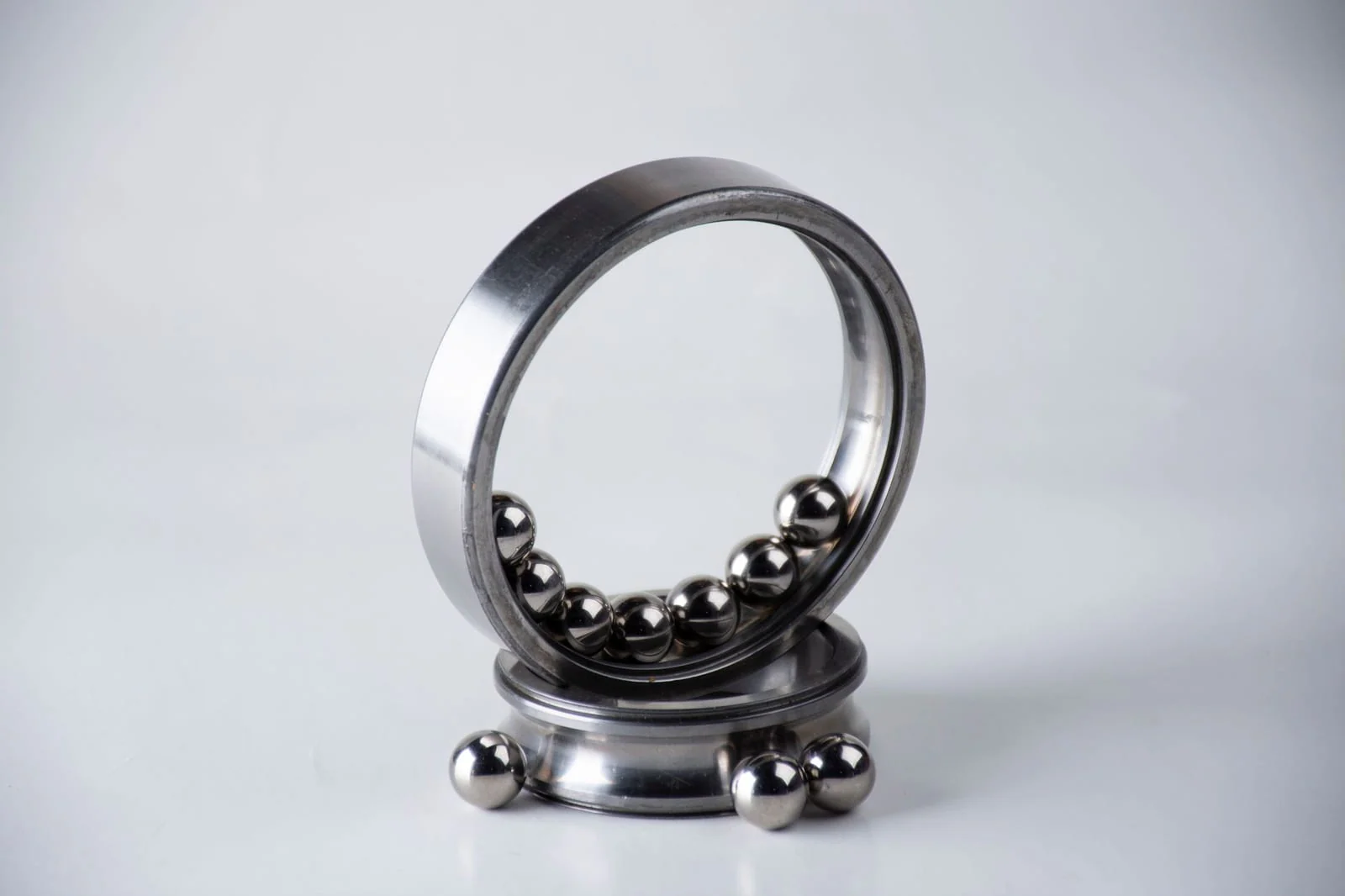
The defining application, and the reason GB/T 3086 classifies 95Cr18 as a stainless bearing steel. Ball and roller bearings and races for corrosive, humid, or food/medical environments where ordinary bearing steel would rust. The ≥55 HRC surface hardness delivers rolling-contact fatigue life that softer stainless grades cannot match, while the 18% Cr keeps the bearing corrosion-resistant.[1]
High-End Knife Blades and Cutlery
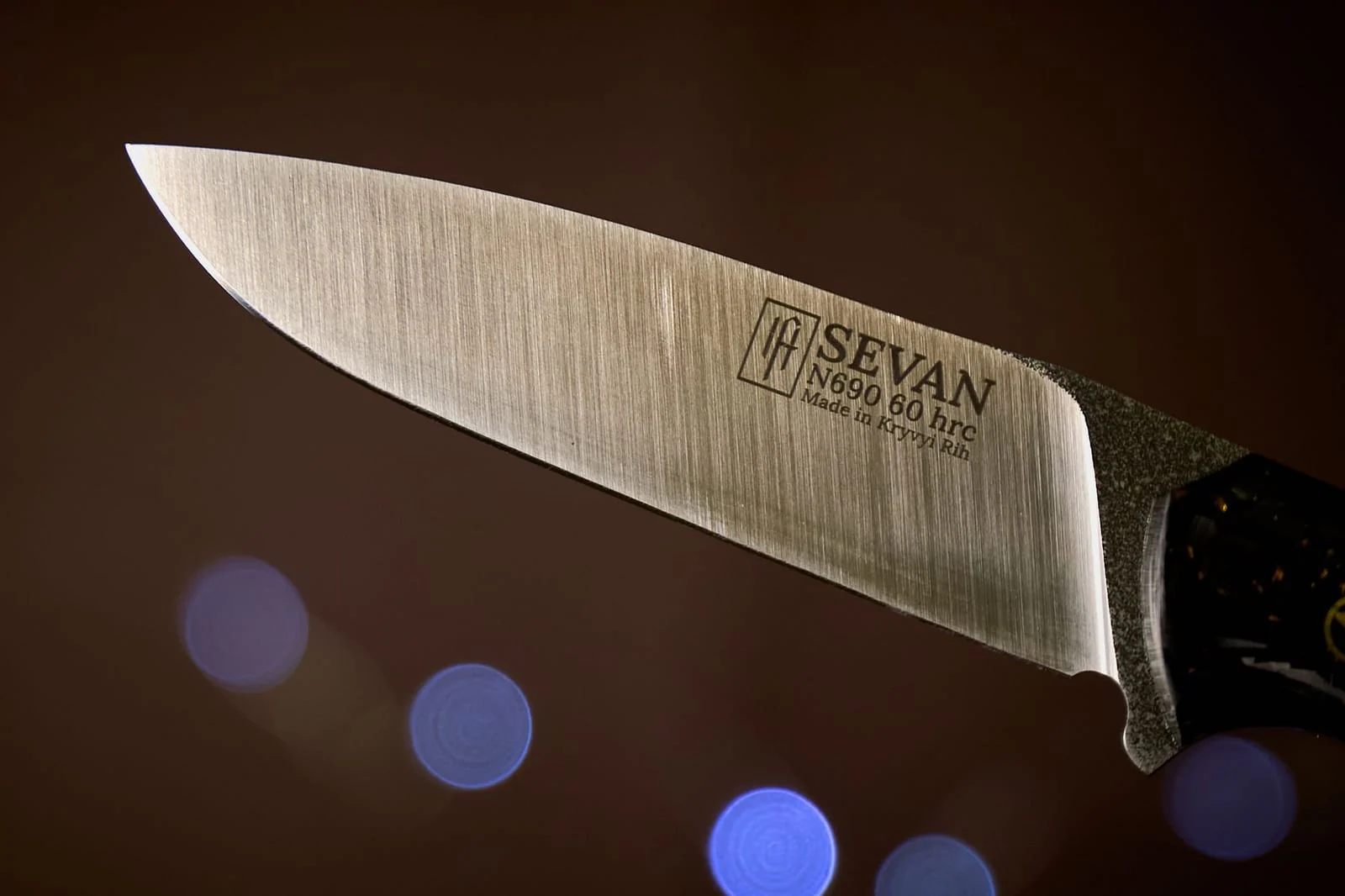
Premium kitchen, hunting, and tactical knives. The high carbon gives edge retention close to carbon tool steels, while the high chromium provides corrosion resistance superior to the Cr13 cutlery grades — the reason 9Cr18 is a well-known premium blade steel in the Chinese market.
Gauge Blocks, Moulds and Dies
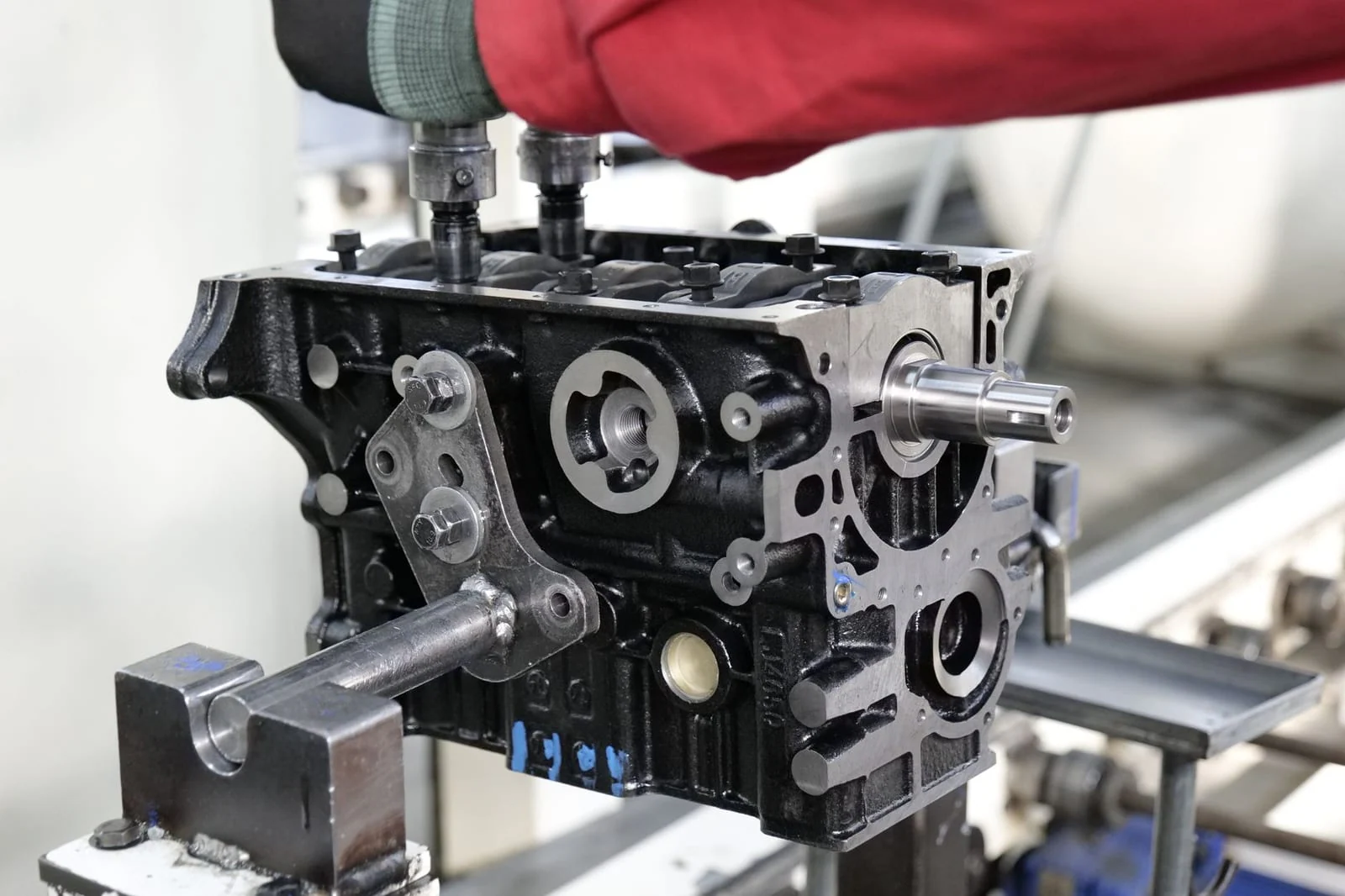
Gauge blocks, measuring instruments, and plastic moulds where dimensional stability under wear and a fine polish are both required. The hardness and wear resistance maintain precision tolerances through repeated use, while the corrosion resistance protects polished cavity and reference surfaces.
Valve Components, Nozzles and Wear Parts
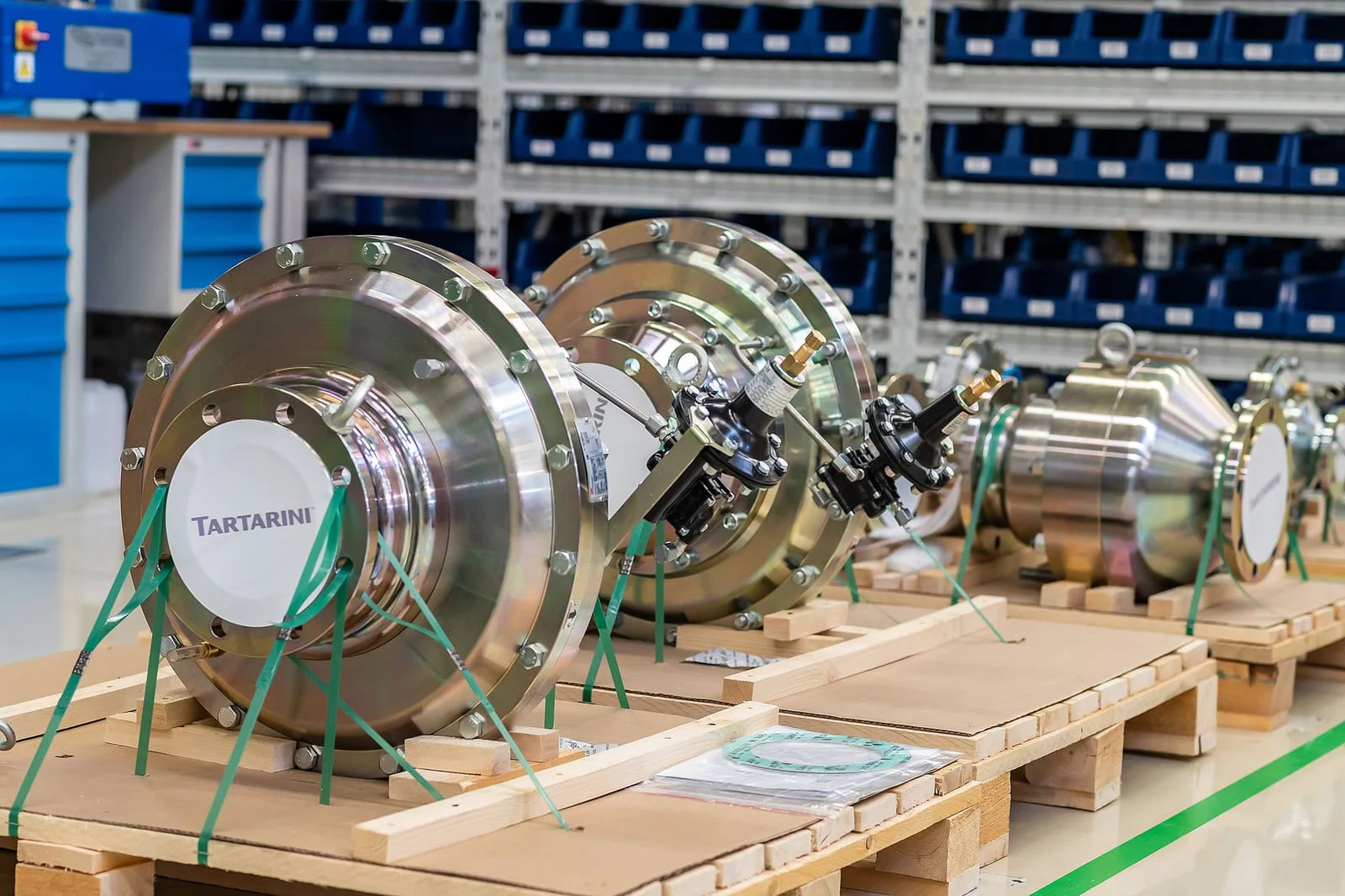
Valve seats and trim, nozzle orifices, bushings, and other wear parts in abrasive or moderately corrosive fluid-handling service — applications that need the combination of hardness and corrosion resistance no softer stainless grade provides.[1]
Forms & Finishes
Common product forms:Bar (round / flat)PlateSheetWireForging
Surface finishes:AnnealedPolishedHardened + groundMirror / superfinish
For bearing and gauge applications the functional surface characteristic is not raw hardness but surface finish smoothness — achieved by precision grinding and superfinishing after hardening and tempering. For knife and mould work, a fine polish applied to the hardened blank both improves wear behaviour and maximises corrosion resistance.
References
- 95Cr18 (9Cr18) Stainless Steel. TheWorldMaterial datasheet, sourced to GB/T 1220 (composition C 0.90–1.00 / Cr 17–19, hardness ≥55 HRC Q&T / ≤255 HBW annealed) with GB/T 3086 noting the high-carbon chromium stainless bearing-steel classification; cross-checked against the GB data table and steelnumber (X105CrMo17 / 1.4125 / UNS S44004). theworldmaterial.com/95cr18-9cr18-stainless-steel/
- Investigating the structural properties and wear resistance of martensitic stainless steels. (martensitic stainless heat treatment, microstructure, hardness and wear). Heliyon / PMC11575766, 2024. pmc.ncbi.nlm.nih.gov/articles/PMC11575766/
- Behavior of Retained Austenite and Carbide Phases in AISI 440C Martensitic Stainless Steel under Cavitation. (high-carbon martensitic stainless: martensite + retained austenite + dissolved/undissolved carbides governing wear and fatigue). Mitelea et al. Engineering (MDPI) 5(3), 105, 2024. doi.org/10.3390/eng5030105
- Accessing the full spectrum of corrosion behaviour of tempered type 420 stainless steel. (carbide precipitation, matrix Cr depletion and carbide-adjacent pitting in tempered martensitic stainless). Zhou & Engelberg. Materials and Corrosion, 2021. doi.org/10.1002/maco.202112442
- Pitting corrosion characteristics of sintered Type 316L stainless steel: pores and MnS. Saito et al. npj Materials Degradation 8, 2024. doi.org/10.1038/s41529-024-00482-6