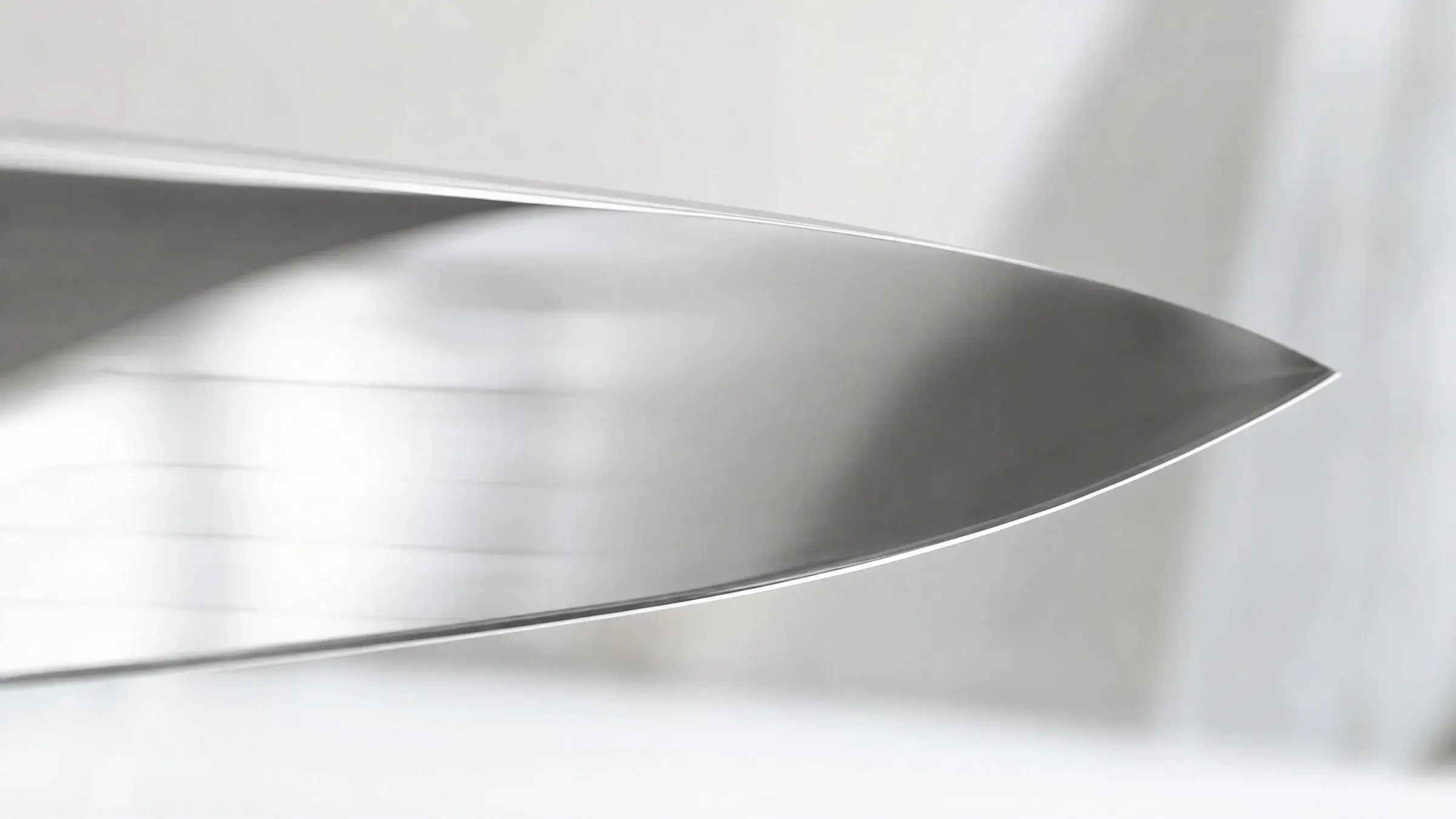
In short: Type 440C is the hardest standard stainless steel — a 16–18% chromium alloy with carbon 0.95–1.20% that quench-hardens to 58–60 HRC through the austenitize → quench → temper cycle. Its crystal structure is BCT martensite (α′), it is permanently magnetic, and its extreme carbon content drives both its record hardness and its principal limitation: intense chromium-carbide (Cr₂₃C₆) formation that partially depletes the matrix of chromium, reducing corrosion resistance below 420 despite a higher base chromium level. It is the definitive bearing steel and the choice for premium knife edges, precision gauges, and nozzle orifices. For cutlery-grade hardness with better corrosion resistance, step back to 420; for the foundational martensitic grade, see 410.
What 440C Stainless Steel Is
Type 440C is the peak-hardness member of the 400-series martensitic stainless steels — the culmination of a family that deliberately trades corrosion resistance for the ability to achieve extreme hardness through heat treatment. It contains 16–18% chromium and 0.95–1.20% carbon — the highest standard carbon content of any stainless grade — plus up to 0.75% molybdenum for improved hardenability and toughness, in an iron base with near-zero nickel.[1]
In the Unified Numbering System it is UNS S44004; in European EN it is 1.4125 (X105CrMo17); in Japanese practice SUS 440C; and in aerospace specifications AMS 5630 (bar) and AMS 5880 (sheet). ASTM A276 governs bar and shapes. The molybdenum addition, though small (≤ 0.75%), improves deep hardenability — critical for thick bearing rings that must harden uniformly through section — and contributes modestly to corrosion resistance.
The carbon jump from 420 (≥ 0.15%) to 440C (0.95–1.20%) is decisive: this near-tenfold increase in carbon drives extreme body-centred tetragonal (BCT) lattice distortion after quenching, producing the highest quench-hardness of any standard stainless steel — at the cost of the most intense chromium-carbide formation of the martensitic family.[2]
Chemical Composition
Composition limits for Type 440C (per ASTM A276 and AMS 5630). Note the extreme carbon and the elevated chromium — both required for maximum hardness and partial compensation for carbide-driven Cr depletion.[1]
| Element | Symbol | Content (wt%) | Role |
|---|---|---|---|
| Chromium | Cr | 16–18 | Forms the passive film; held higher than 420 to partially compensate for heavy carbide-driven Cr depletion |
| Carbon | C | 0.95–1.2 | Highest of any standard stainless — extreme BCT tetragonality drives the 58–60 HRC peak hardness |
| Molybdenum | Mo | ≤ 0.75 | Deep hardenability; improves toughness and wear resistance of the martensitic matrix |
| Manganese | Mn | ≤ 1 | Deoxidiser; MnS inclusions form pit-initiation sites |
| Silicon | Si | ≤ 1 | Deoxidiser; aids oxidation resistance |
| Iron | Fe | Balance | Base metal |
Per ASTM A276 and AMS 5630/5880 (aerospace specification).[1]
Crystal Structure: BCT Martensite at Maximum Tetragonality
Stainless steel is an alloy — a solid solution of elements in iron — so it has no molecular formula. The correct description is by its crystal structure.
440C achieves the greatest BCT tetragonality of any standard stainless steel. On austenitising (1010–1065 °C) and quenching, the FCC austenite transforms displacively into BCT martensite (α′) — a body-centred cubic lattice with one axis elongated by the very high concentration of trapped interstitial carbon atoms. The carbon content of 0.95–1.20% produces a c/a ratio significantly greater than that of 410 (≤ 0.15% C) or 420 (≥ 0.15% C), which is why the achievable hardness is dramatically higher.[1]
The extremely high carbon content means that even with austenitising temperatures of 1010–1065 °C, not all primary carbides dissolve completely — some undissolved Cr₂₃C₆ carbides remain in the matrix alongside the martensite. Research on AISI 440C confirms a microstructure in the as-hardened state of lath martensite, retained austenite, and both dissolved and undissolved carbide phases; the behaviour of these phases under service loading directly determines wear and fatigue performance.[2] The BCT lattice is ferromagnetic in all heat-treatment states.
Corrosion Resistance: The High-Carbon Trade-Off
440C is corrosion resistant in fresh water, mild acids, and foods — but has the lowest corrosion resistance of the standard martensitic stainless grades, because its extreme carbon drives the most intense chromium-carbide formation of any stainless steel.
The mechanism — Cr₂₃C₆ carbides precipitate at grain boundaries during tempering (and remain undissolved if austenitising temperature is insufficient), removing chromium from the solid-solution matrix available for passive film formation. Research on friction-stir-processed 440C confirms that the heterogeneous microstructure of martensite and carbide phases causes selective pitting attack at the carbide-matrix interfaces in 3.5 wt% NaCl solution: the matrix regions adjacent to carbides are Cr-depleted, producing local anodes that initiate corrosion.[4]
The higher chromium base (16–18%) partially compensates: it provides a larger Cr reservoir, so even after carbide depletion the matrix retains more chromium than in 420 (12–14% Cr). This is why 440C — despite its extreme carbon — can still maintain acceptable corrosion resistance in mild environments when properly hardened and passivated.
MnS inclusions from residual sulfur provide additional pit-initiation sites across all stainless grades.[3]
Best corrosion performance is achieved in the hardened, mirror-polished, and passivated condition. 440C is not suitable for seawater, marine atmospheres, or strong chloride processes.
Mechanical & Physical Properties
440C offers two very different property profiles depending on heat treatment — both are defined by the extreme carbon content. The values below are the specified/typical values per the AMS datasheet for the annealed condition.[1]
| Tensile strength (MPa) | ≈760 |
| Hardness | ≤269 HB |
| Magnetic response | Magnetic |
| Hardness | ≈58–60 HRC |
| Density (g/cm³) | 7.70 |
| Elastic modulus (GPa) | 200 |
| Magnetic response | Magnetic |
In the quenched and tempered (hardened) condition, HRC is the primary metric. A low temper at 150–370 °C leaves the standard bearing/tool hardness of 58–60 HRC — the defining 440C property; a medium temper at 400–500 °C trades some hardness for toughness (~54–57 HRC), and a high temper near 732–760 °C returns the steel to a near-annealed, machinable ~28 HRC.[1]
The 58–60 HRC at low tempering temperatures is 440C's defining property — the highest hardness of any standard stainless steel, comparable to through-hardened tool steels, achieved while retaining the corrosion resistance unique to stainless. Research on 440C microstructure under cavitation loading confirms that retained austenite present after quenching undergoes strain-induced martensitic transformation under service loads, contributing to the dynamic hardening behaviour observed in bearing applications.[2]
Key Characteristics
- Highest hardness of any stainless (58–60 HRC). Unmatched by any other standard stainless grade after quench and temper — this is why 440C is the default bearing steel.
- Extreme wear resistance. The combination of high matrix hardness and dispersed carbides produces outstanding abrasion and fatigue resistance in rolling-contact applications.
- Mirror-polishable. The fine martensitic structure takes a high-lustre mirror polish — important for bearing race smoothness and corrosion resistance.
- Permanently magnetic. The BCT lattice is ferromagnetic through all heat-treatment states.
- Moderate (not low) corrosion resistance. Adequate for fresh water, foods, and mild chemicals when hardened and passivated — well below austenitic grades in any chloride environment.
- Poor weldability. Air-hardens in the heat-affected zone, causing hard brittle cracking; welding is strongly discouraged.
How 440C Is Made
Production begins with electric arc furnace (EAF) melting of scrap and ferroalloys, followed by argon–oxygen decarburisation (AOD) — unusually, run to preserve the high carbon target rather than reduce it. The steel is cast, hot- and cold-rolled, spheroidise-annealed (to make the carbides coarser and rounder for machinability), and pickled. For service in bearings or precision tools, the hardening cycle is the critical final step.
Heat treatment sequence: Preheat at 760–800 °C → austenitize at 1010–1065 °C → quench in air (thin sections) or oil (heavy sections) → temper immediately at 150–370 °C for maximum hardness (58–60 HRC). For very thick bearing rings, oil quench ensures full hardening through section — the molybdenum addition contributes to this hardenability.[1]
440C vs 420 — Maximum Hardness vs. Practical Hardness
Both are martensitic and hardenable. 440C wins on hardness and wear resistance; 420 wins on corrosion resistance and cost.
Applications by Industry
440C's unmatched hardness (58–60 HRC) and stainless nature make it the default for applications where corrosion resistance and extreme wear resistance must coexist.[1]
Bearings and Ball Races
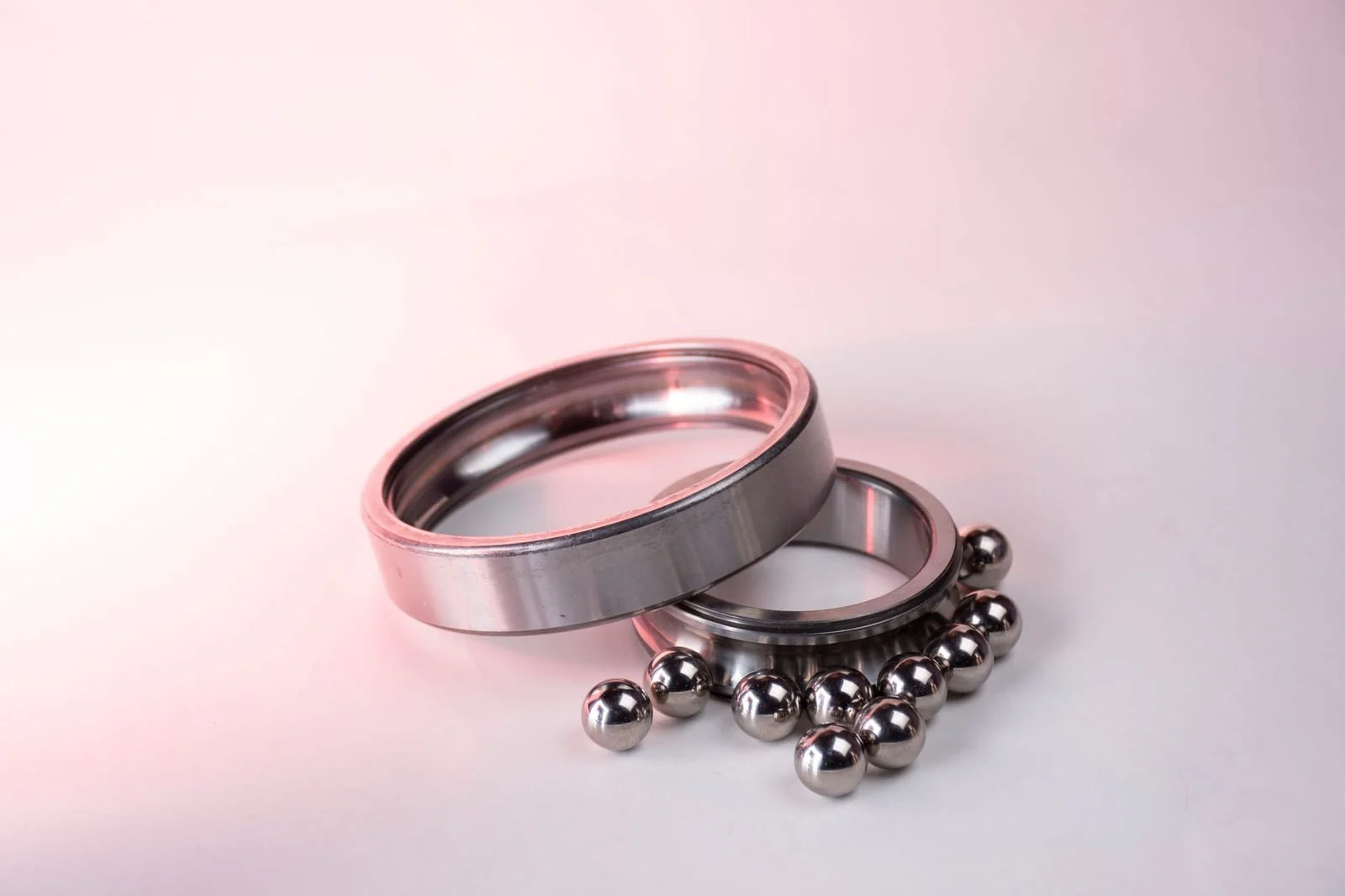
The premier 440C application. Ball bearings and roller bearing races in corrosive or vacuum environments — including aerospace turbopumps, liquid-oxygen handling equipment, dental handpieces, and food-processing equipment — where 58–60 HRC surface hardness delivers the rolling-contact fatigue life that is impossible with softer stainless grades.[1] Studies on 440C bearing microstructure under cavitation confirm that retained austenite transforms progressively to martensite under loading, contributing to dynamic surface hardening in service.[2]
High-End Knife and Blade Edges
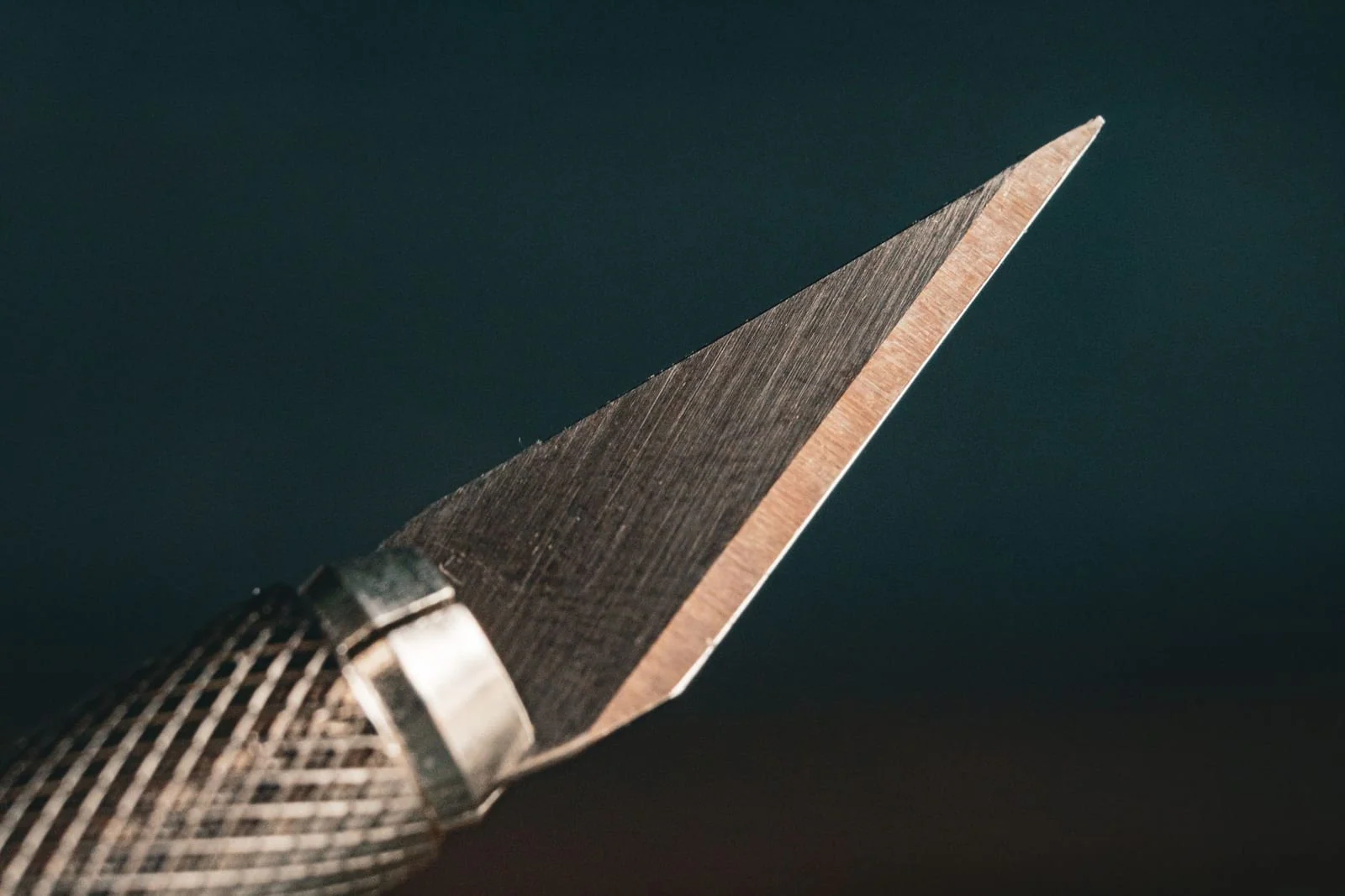
Premium kitchen knives, hunting knives, and tactical fixed-blade knives where maximum edge retention justifies the higher alloy cost over 420. The 58–60 HRC hardness means edges stay sharper longer — though the trade-off is greater brittleness and more difficult sharpening compared to softer stainless grades.
Precision Gauges and Instruments
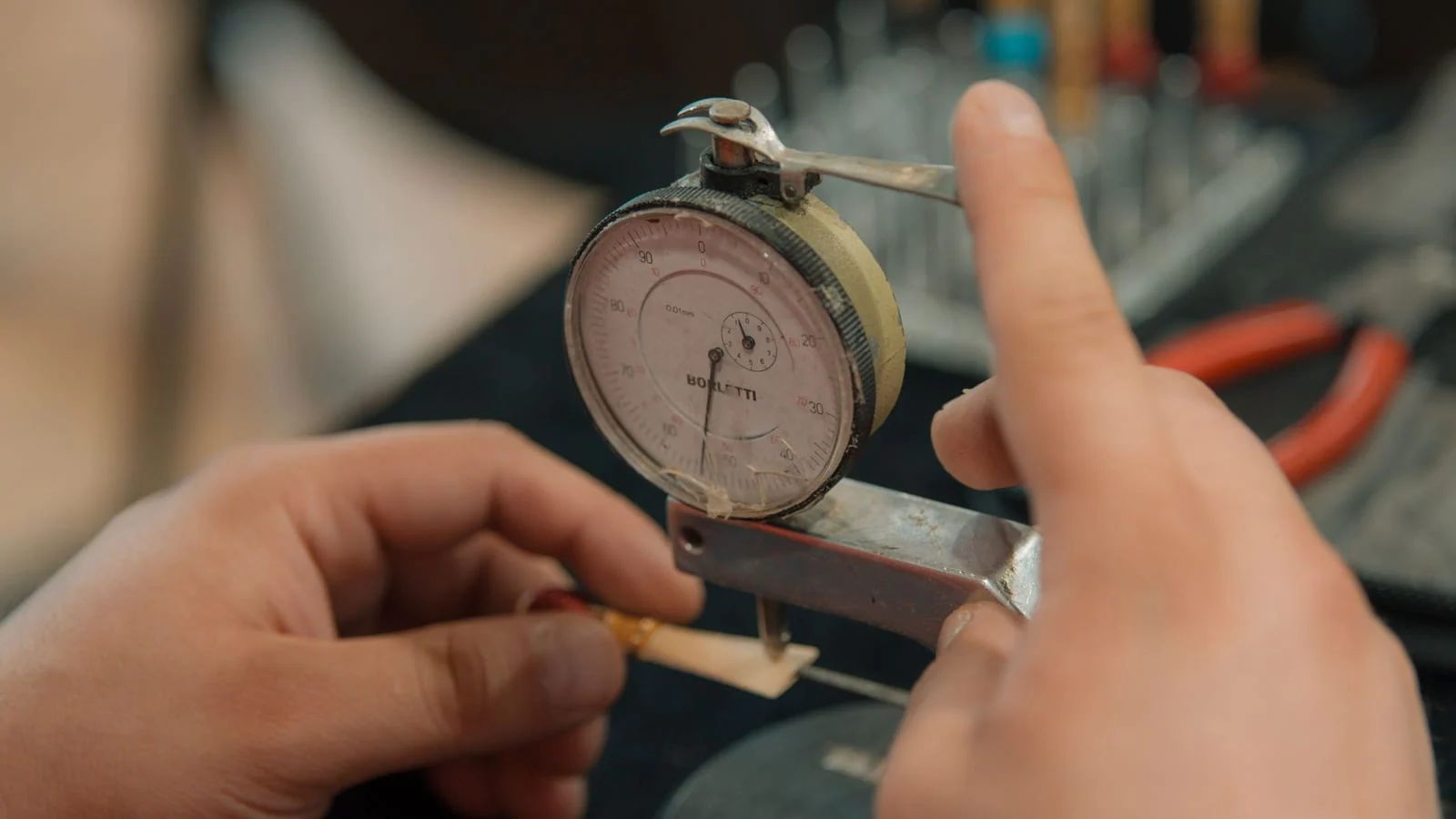
Gauge blocks, measuring instruments, and gauge rods where dimensional stability under wear is critical. The hardness and wear resistance of 440C maintain precision tolerances through thousands of measurement cycles in workshop environments.
Nozzles, Valve Seats, and Pump Parts
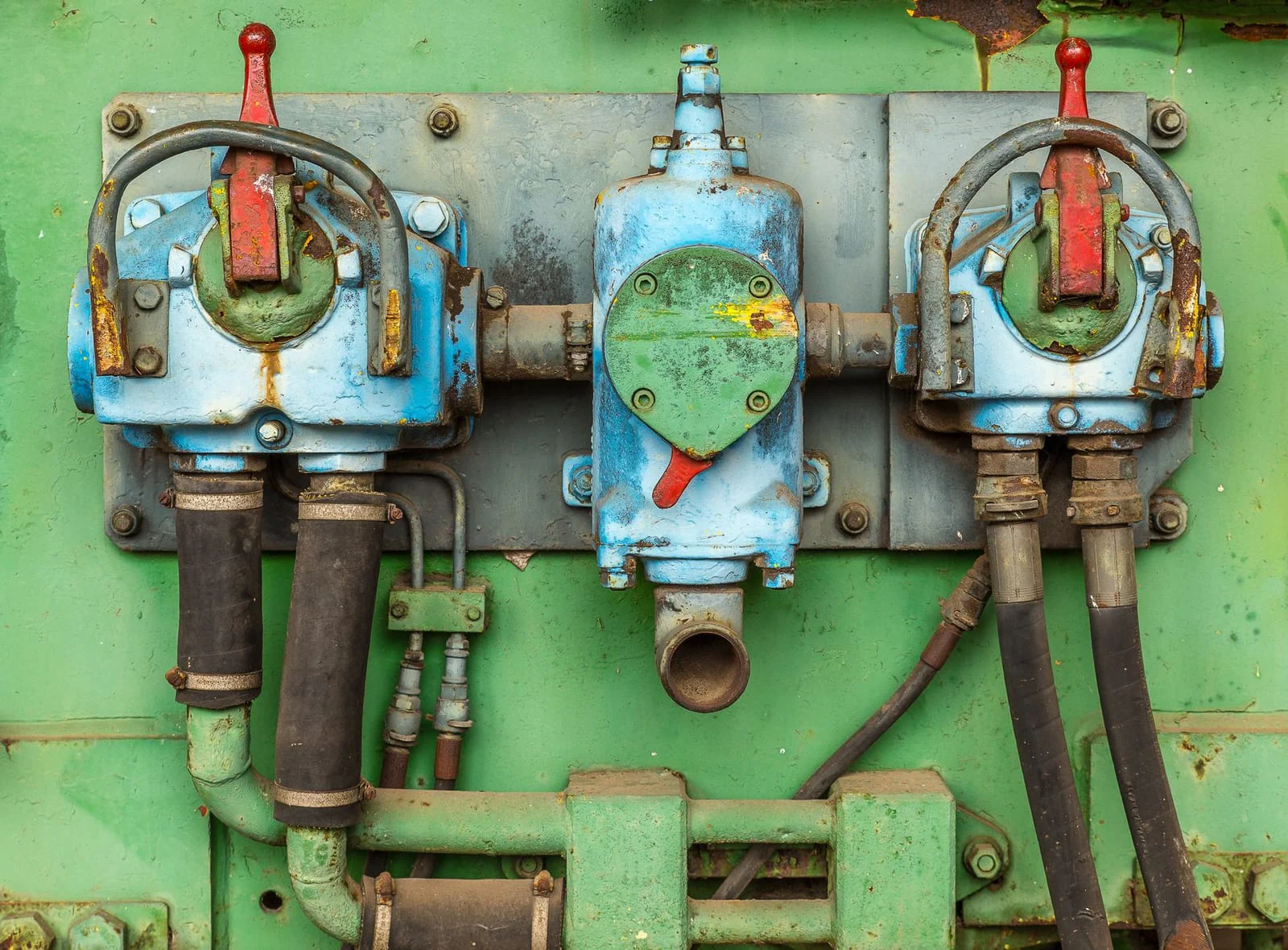
Needle valves, ball check valves, valve seats, nozzle orifices, ball studs, and bushings in high-velocity, abrasive, or moderately corrosive fluid-handling service. The combination of hardness and corrosion resistance that no softer grade can match.[1]
Forms & Finishes
Common product forms:Bar (round / flat)PlateSheetForging blanks
Surface finishes:Annealed + groundHardened + precision groundMirror / superfinish
For bearing applications, the key surface characteristic is not raw hardness but surface finish smoothness — typically Ra ≤ 0.1 µm for bearing races — achieved by precision centerless grinding and superfinishing after hardening and tempering.
References
- Stainless Steel – Grade 440C (UNS S44004). AZoM (materials datasheet based on ASTM/AISI grade system). azom.com/article.aspx?ArticleID=6846
- Behavior of Retained Austenite and Carbide Phases in AISI 440C Martensitic Stainless Steel under Cavitation. Mitelea et al. Engineering (MDPI) 5(3), 105, 2024. doi.org/10.3390/eng5030105
- Pitting corrosion characteristics of sintered Type 316L stainless steel: pores and MnS. Saito et al. npj Materials Degradation 8, 2024. doi.org/10.1038/s41529-024-00482-6
- Friction-stir processing of AISI 440C high-carbon martensitic stainless steel for improving hardness and corrosion resistance. Azizieh et al. Journal of Materials Processing Technology 277, 116441, 2020. doi.org/10.1016/j.jmatprotec.2019.116441