In short: 40Cr13 (old designation 4Cr13) is the highest-carbon grade of the GB Cr13 martensitic family — a 12–14% chromium alloy with carbon at 0.36–0.45%, more than 30Cr13 and sitting at the high-carbon end of AISI 420. In European EN it is 1.4031 (X39Cr13); it also maps to BS 420S45. Its crystal structure after quenching is BCT martensite (α′); it is permanently magnetic and derives all its strength from the austenitize → quench → temper cycle. The extra carbon quench-hardens it to ≥50 HRC (≤52 HRC after a low stress-relief temper) — harder than 30Cr13, but with lower toughness, because the carbon that raises hardness also raises brittleness. Best where a fine, hard, polishable edge matters; step down to 30Cr13 for more toughness, or up to 440C/9Cr18 for maximum hardness and wear resistance.
What 40Cr13 Stainless Steel Is
40Cr13 — written 4Cr13 under the old GB designation — is the highest-carbon grade of the GB Cr13 martensitic stainless family. It is a direct high-carbon evolution of 30Cr13: the same 12–14% chromium base, but with carbon raised to 0.36–0.45% for a harder, finer cutting edge. The naming follows GB/T 20878, where the leading number ×10 gives the carbon content — so "40" means ~0.40% C and "13" means ~13% Cr.[1]
In cross-standard terms, 40Cr13 maps most closely to EN 1.4031 (X39Cr13), and to AISI 420 at its high-carbon end — the mill datasheets for 1.4031 explicitly list the equivalences EN 1.4031 = AISI 420 = BS 420S45. It also carries the alias 1.4031 / X39Cr13. For Chinese buyers cross-referencing Western specs, this is the GB grade that lines up with the hardest, highest-carbon variants of the 420 family.[1]
The essential difference from 30Cr13: more carbon → harder martensite → better edge retention — at the cost of lower toughness and more chromium-carbide formation. Research comparing heat-treated AISI 410 and 420 (the lower- and higher-carbon ends of this same 13Cr martensitic system) confirms the relationship: the higher-carbon grade develops a more complex microstructure of martensite plus Cr-rich carbide precipitates, translating directly into higher peak hardness. 40Cr13 sits at the top of that carbon ladder.[2]
Chemical Composition
Composition limits for 40Cr13 per GB/T 1220 and GB/T 20878 (cross-checked against the EN 1.4031 mill datasheet). Carbon — the highest of the GB Cr13 martensitic series — is the key hardening element: it raises the tetragonality of the hardened martensite and the peak hardness achievable.[1]
| Element | Symbol | Content (wt%) | Role |
|---|---|---|---|
| Carbon | C | 0.36–0.45 | Highest in the GB Cr13 family — the key hardening element; increases BCT tetragonality and peak hardness |
| Chromium | Cr | 12–14 | Forms the passive film; minimum for stainlessness — partially consumed by carbides |
| Silicon | Si | ≤ 0.6 | Deoxidiser; assists oxidation resistance |
| Manganese | Mn | ≤ 0.8 | Deoxidiser; forms MnS inclusions (pit-initiation sites) |
| Nickel | Ni | ≤ 0.6 | Trace only |
| Phosphorus | P | ≤ 0.035 | Residual impurity, held low |
| Sulfur | S | ≤ 0.03 | Residual; MnS inclusions are pit-initiation sites |
| Iron | Fe | Balance | Base metal |
Per GB/T 1220 / GB/T 20878 40Cr13; carbon range cross-checked against EN 1.4031 (X39Cr13) mill datasheet.[1]
Crystal Structure: BCT Martensite at Maximum Tetragonality
Stainless steel is an alloy — a solid solution of elements in iron — so it has no molecular formula. The correct description is by crystal structure.
40Cr13 shares the same martensitic transformation pathway as 30Cr13 and 420, but its higher carbon content produces the greatest BCT tetragonality of the GB Cr13 family and therefore the greatest hardness. On austenitising (~1000–1100 °C) and quenching in oil or air, the austenite transforms displacively into BCT martensite (α′) — a body-centred lattice distorted along one axis by trapped interstitial carbon atoms. More carbon → more distortion → harder martensite.[1]
The as-quenched 40Cr13 is very hard but brittle, with retained austenite alongside the martensite. Tempering — typically a low stress-relief around 200 °C — converts retained austenite and relieves stresses, maintaining high hardness while reducing brittleness. The 400–600 °C temper range is avoided. The BCT lattice is ferromagnetic throughout all heat-treatment states. Studies on AISI 420 (this same 13Cr system, high-carbon end) confirm that austenitizing followed by oil quenching yields a martensite + retained austenite + chromium carbide microstructure, with tempering adjusting carbide size and distribution.[2]
Corrosion Resistance: Moderate, Best When Hardened and Polished
40Cr13 is moderately corrosion resistant in mild atmospheres, fresh water, and chloride-free media when in the hardened and polished condition. Its resistance is lower than 30Cr13 and substantially lower than austenitic 304 or 316, because its high carbon intensifies two degradation mechanisms.[3]
Vulnerability 1 — Carbide precipitation and Cr depletion. Research on tempered type 420 stainless steel — directly applicable to 40Cr13 as the high-carbon end of the same 13Cr martensitic system — shows that chromium-rich carbides (Cr₂₃C₆, Cr₇C₃) precipitate during tempering. The matrix chromium concentration falls: at 550 °C tempering, the Cr in the matrix drops below the threshold for a continuous passive film, causing intergranular corrosion; at 700 °C tempering, localised corrosion occurs at carbide-adjacent Cr-depletion zones, initiating pitting. 40Cr13, carrying more carbon, forms more carbide and is the most susceptible of the GB Cr13 grades.[3]
Vulnerability 2 — Highest carbon in the family. Even sharing the 12–14% Cr range with 30Cr13, the effective chromium available for passivation is reduced more in 40Cr13 because its carbon level is higher, binding more chromium into carbides. This is the direct trade for the extra hardness.
Best corrosion performance from 40Cr13 is achieved in the hardened (low stress-relief temper ~200 °C), polished, and passivated condition — this keeps chromium in solid solution and maximises passive film integrity. The grade is generally not welded, which avoids heat-affected-zone sensitisation entirely.[3]
MnS inclusions from residual sulfur act as pit-initiation sites, documented across stainless grades.[4]
Mechanical & Physical Properties
40Cr13 offers two distinct property profiles depending on heat treatment — the defining advantage of hardenable martensitic grades. In the annealed condition it is soft and machinable; quenched and tempered, hardness in HRC becomes the primary metric.[1]
| Tensile strength (MPa) | ≤800 |
| Hardness | ≤235 HBW (GB) / ≤245 HB (EN 1.4031) |
| Magnetic response | Magnetic |
| Hardness | ≥50 HRC (≤52 HRC after 200 °C stress relief) |
| Density (g/cm³) | 7.75 |
| Magnetic response | Magnetic |
| Temper / condition | Hardened 1000–1100 °C, oil/air quench; avoid 400–600 °C temper |
The quenched-and-tempered hardness — the defining property of 40Cr13 in cutlery, fine tooling, and measuring instruments — exceeds that of 30Cr13 thanks to the higher carbon. GB/T 1220 sets the floor for the hardened-and-tempered condition, while the EN 1.4031 mill datasheet records that a low stress-relief temper around 200 °C leaves the steel at the top of that range. The annealed condition is held soft for machining and forming.[1]
Studies comparing AISI 410 and 420 confirm that the higher-carbon end of this 13Cr system shows a more complex martensitic matrix with chromium carbide precipitates that strongly affect both hardness stability and localised corrosion susceptibility after tempering — the metallurgy 40Cr13 sits at the extreme of.[2]
Key Characteristics
- Highest carbon of the GB Cr13 family. More carbon than 30Cr13 means a harder, finer-holding edge after quench and temper — at the cost of toughness.
- Excellent polishability. The fine martensitic structure takes a high-lustre mirror finish, valued for moulds, surgical and dental instruments.
- Permanently magnetic. The BCT lattice is ferromagnetic through all heat-treatment states.
- Moderate corrosion resistance. Adequate for mild atmospheres, fresh water, and chloride-free media when hardened and polished — inferior to austenitic grades in chloride environments.
- Generally not welded. High carbon makes the heat-affected zone very hard and brittle; mill practice for 1.4031 is to avoid welding.
How 40Cr13 Is Made
Production follows the standard stainless route — EAF melting, AOD decarburisation, hot and cold rolling, annealing, pickling — but the high target carbon (0.36–0.45%) demands tight AOD control to land precisely in the 40Cr13 window without overshooting toward the 9Cr18/440 bearing grades. For service as a cutting, mould, or measuring part, the critical step is the hardening cycle.
Heat treatment sequence: Austenitize at ~1000–1100 °C → quench in oil or air → temper immediately at a low stress-relief temperature (~200 °C) for maximum hardness. The 400–600 °C temper range is avoided, as it both reduces toughness and drives the chromium-carbide precipitation that depletes the matrix of chromium.[1][3]
40Cr13 vs 30Cr13 vs 420 — Where It Sits
All three are martensitic and hardenable members of the 13Cr system; the choice is a carbon ladder. 30Cr13 keeps carbon lower for more toughness and slightly better corrosion resistance; 40Cr13 raises it for a harder, finer edge; AISI 420 is the Western family that 40Cr13 maps to at its high-carbon end.
For applications needing far higher hardness and wear resistance — bearings, premium knives — step up to 440C or its GB counterpart 9Cr18, which carry roughly 1% carbon (plus Mo in 440C) for a different hardness class entirely.
Applications by Industry
40Cr13's combination of the highest hardness in the GB Cr13 family with fine polishability makes it the standard for sharp-edge, mould, and precision-tool components where a stainless steel is required.[1]
Kitchen Knives and Cutlery
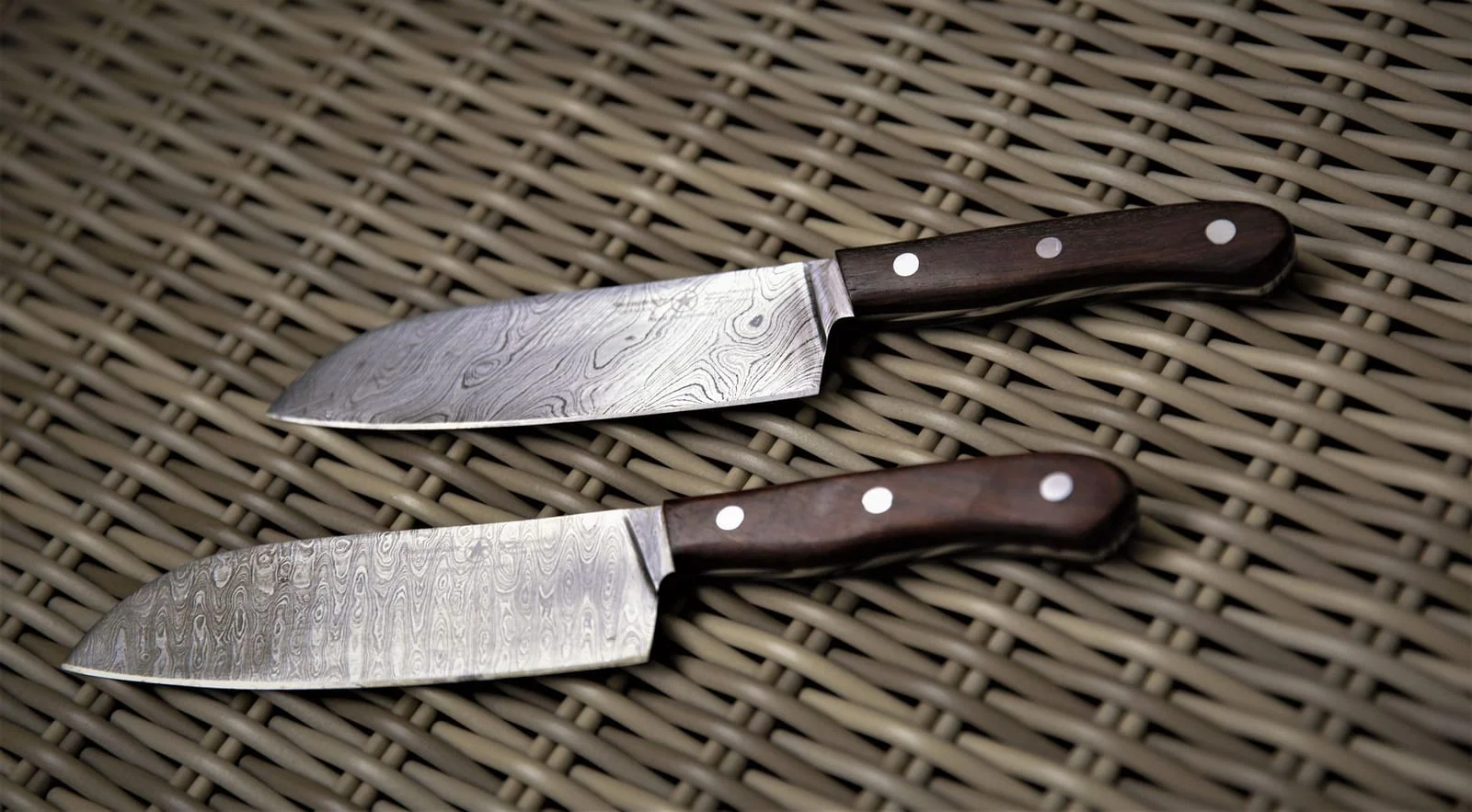
Kitchen knives, cutlery, and blades where the extra carbon over 30Cr13 buys a harder, finer-holding edge. The quench-and-temper hardness provides the edge retention of carbon steel with the corrosion resistance stainless demands.[1]
Plastic Moulds and Mould Inserts
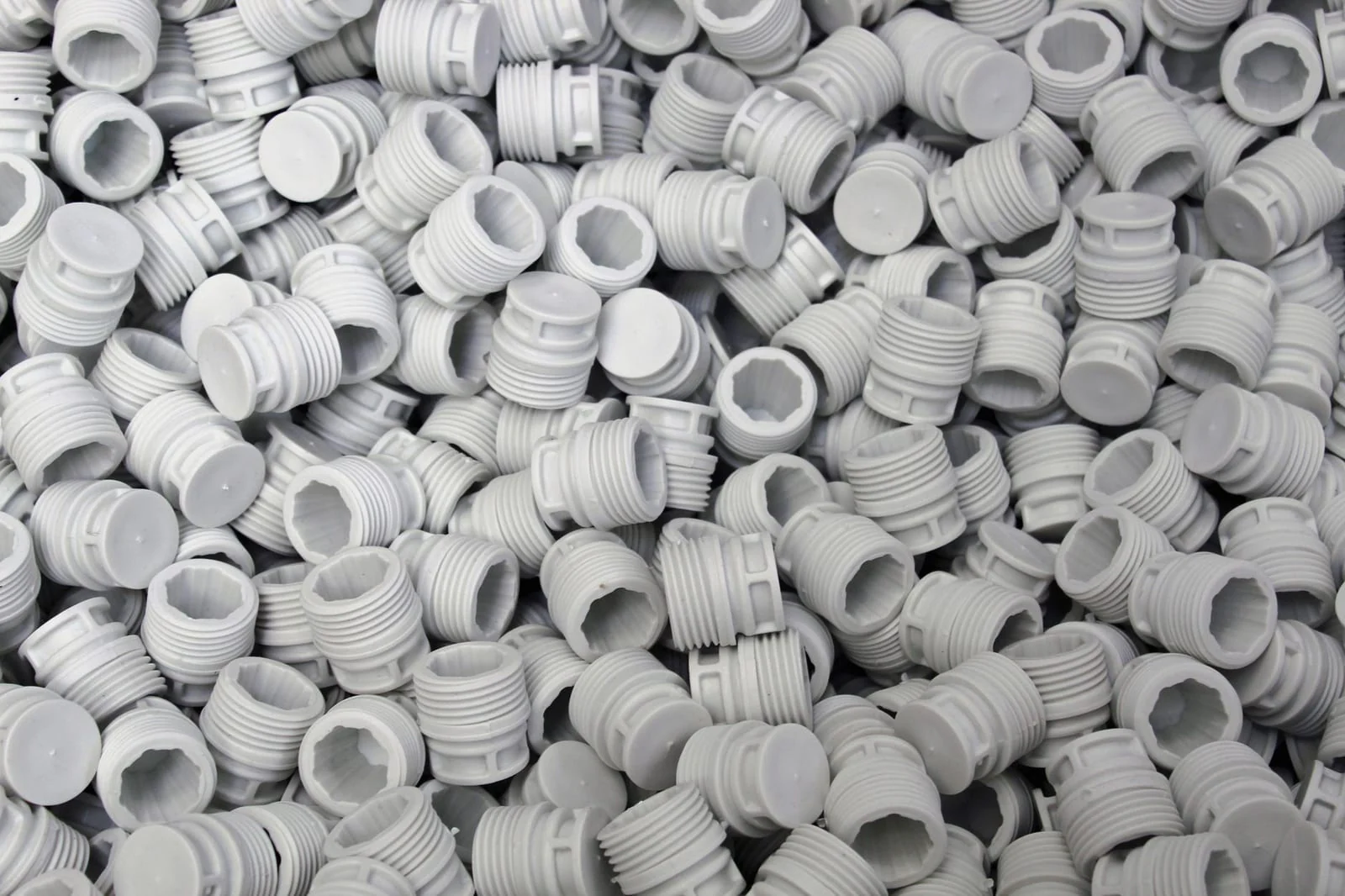
Plastic injection moulds and mould inserts where high surface hardness and a mirror-polishable cavity surface are both required. 40Cr13 provides the combination of polishability and wear resistance needed in mould tooling.[1]
Surgical and Medical Instruments
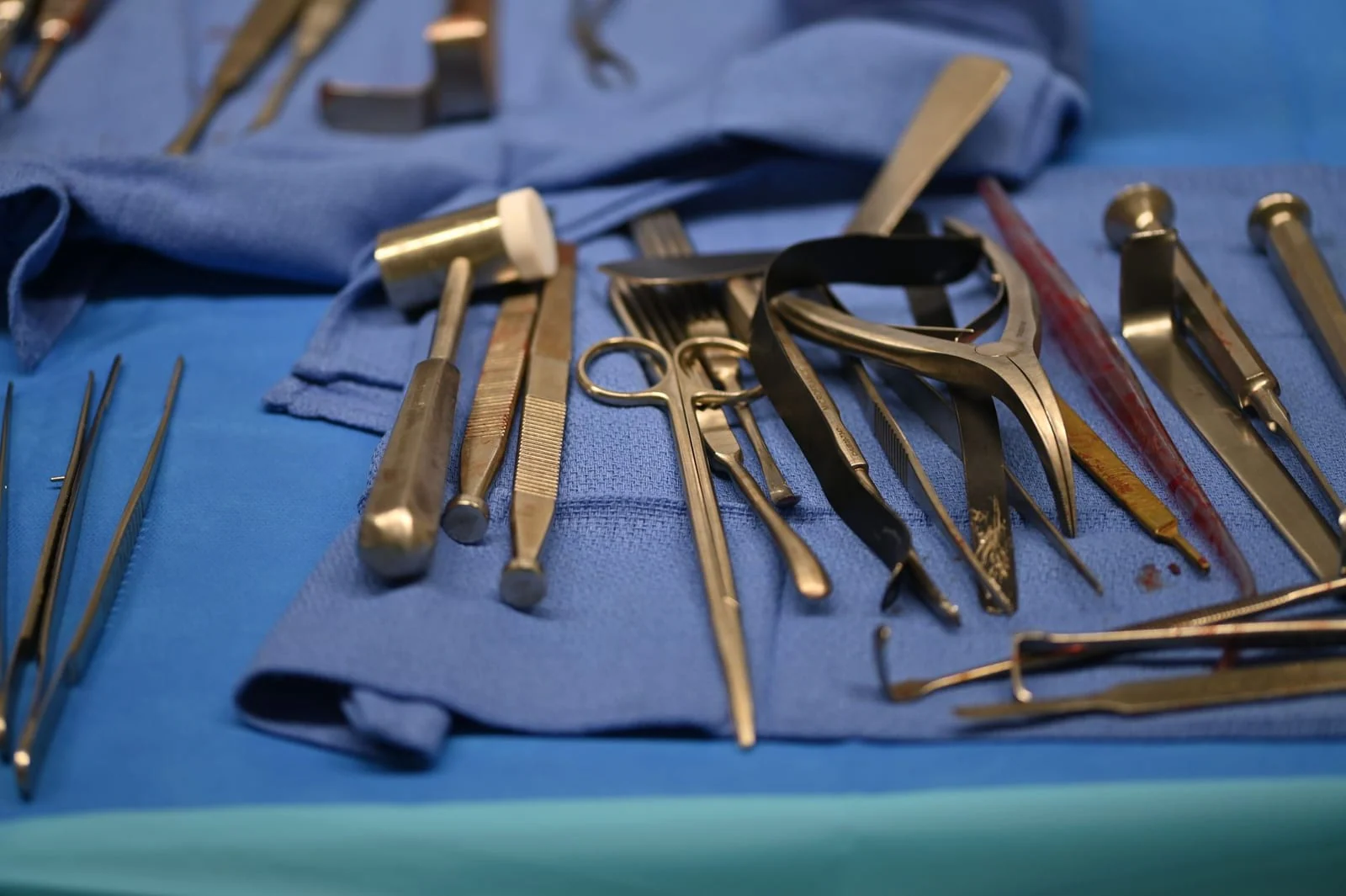
Scalpels and medical equipment. 40Cr13 hardens sharply and holds a fine edge through repeated sterilisation; the mirror-polish capability is critical for instruments used in sterile environments.[1]
Measuring Tools, Valve Seats and Springs
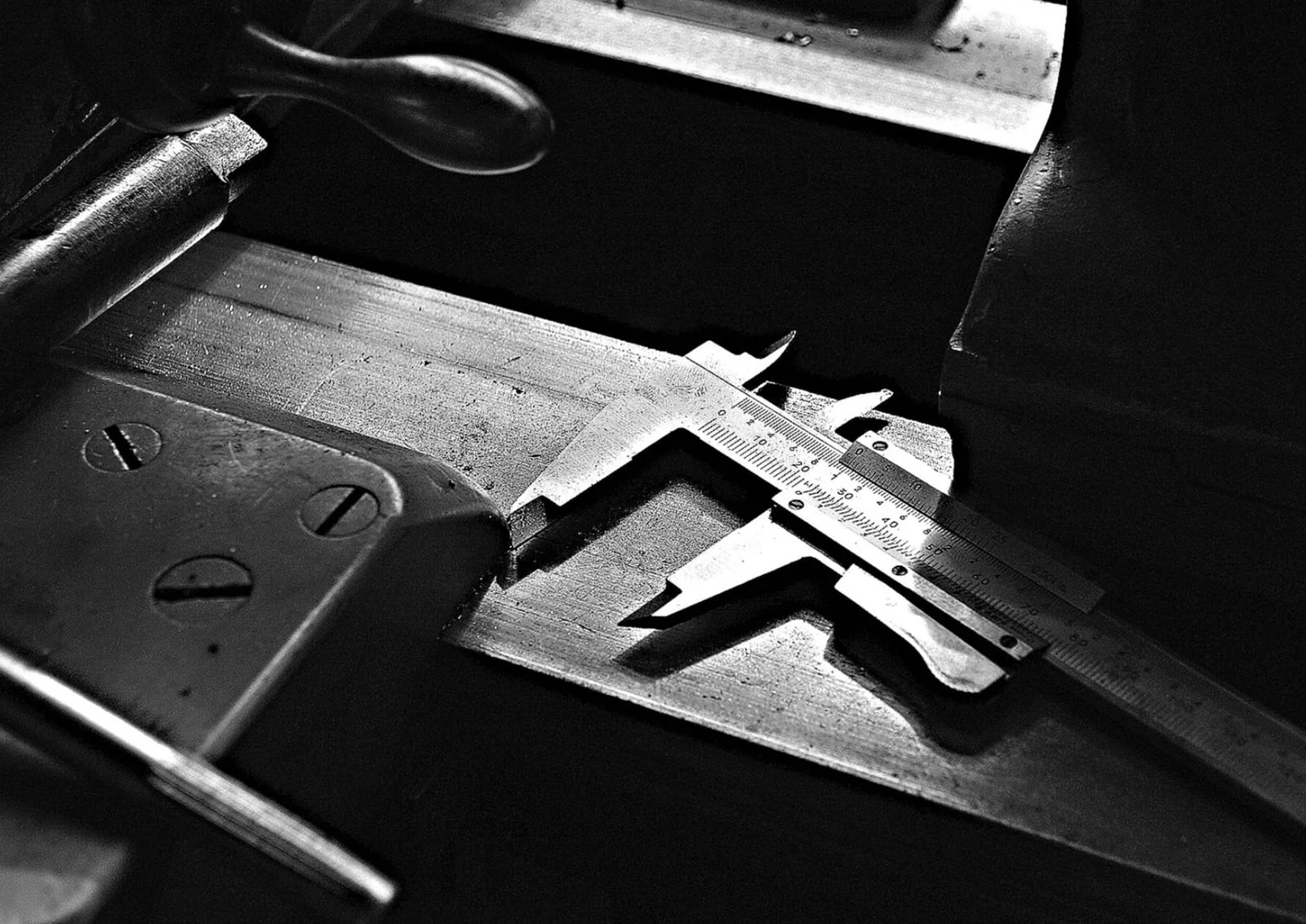
Measuring tools, valve seats, nozzles, and springs subjected to wear or abrasive flow, where the high hardened hardness meaningfully extends service life over lower-carbon Cr13 grades.[1]
Forms & Finishes
Common product forms:Bar (round / flat)PlateSheetWire
Surface finishes:AnnealedPolishedMirrorHardened + ground
For hardened cutlery, mould, and instrument applications, a fine mirror polish applied before or after hardening is the functional surface — improving both edge quality and corrosion resistance by maximising passive film integrity.
References
- 40Cr13 (4Cr13) Stainless Steel — GB/T 1220 / EN 1.4031 (X39Cr13). Composition and hardened-and-tempered hardness per GB/T 1220 / GB/T 20878 (theworldmaterial datasheet citing GB sources), with carbon range and AISI 420 / BS 420S45 equivalence confirmed by the EN 1.4031 (X39Cr13) mill datasheet (Deutsche Edelstahlwerke / Swiss Steel Group). swisssteel-group.com · 1.4031 (X39Cr13) data sheet
- Investigating the structural properties and wear resistance of martensitic stainless steels. (AISI 410 & AISI 420 heat treatment, hardness, microstructure — the low- and high-carbon ends of the 13Cr martensitic system that 40Cr13 belongs to). Heliyon / PMC11575766, 2024. pmc.ncbi.nlm.nih.gov/articles/PMC11575766/
- Accessing the full spectrum of corrosion behaviour of tempered type 420 stainless steel. (Zhou & Engelberg — directly applicable to 40Cr13 as the high-carbon end of the same 13Cr martensitic system). Materials and Corrosion, 2021. doi.org/10.1002/maco.202112442
- Pitting corrosion characteristics of sintered Type 316L stainless steel: pores and MnS. (Saito et al.). npj Materials Degradation 8, 2024. doi.org/10.1038/s41529-024-00482-6