In short: Grade 444 is the high-performance molybdenum-bearing ferritic stainless steel — an 18% Cr – 2% Mo alloy with dual titanium and niobium stabilisation and a body-centred cubic (BCC) crystal structure. Its pitting resistance equivalent number (PREN) of approximately 24–28 equals or exceeds Grade 316's ~22–25, while its ferritic BCC structure confers essentially complete immunity to chloride stress corrosion cracking (Cl-SCC) — a catastrophic failure mode that 316 cannot escape in hot, chloride-bearing service. With near-zero nickel, 444 removes nickel-market cost volatility entirely. The trade-offs are lower acid resistance than 316, moderate formability, and susceptibility to 475 °C embrittlement above 300 °C sustained service.
What 444 Stainless Steel Is
Grade 444 is the premium member of the ferritic stainless steel family — a molybdenum-bearing iron–chromium alloy that achieves pitting corrosion resistance matching Grade 316 without the ~10% nickel that defines 316's composition and drives its cost. With 17.5–19.5% chromium, 1.75–2.5% molybdenum, and dual titanium-plus-niobium stabilisation, 444 is specifically engineered for demanding wet-corrosion environments where the austenitic 316 would normally be specified.[1]
Its multiple international designations reflect global adoption: UNS S44400, the European EN 1.4521 (X2CrMoTi18-2), and JIS SUS444. In trade it is most often called "18Cr-2Mo ferritic" or simply "444." Like all ferritic grades, it is permanently magnetic and cannot be hardened by heat treatment — characteristics that follow directly from its BCC crystal structure.
The key argument for specifying 444 over 316 is twofold: comparable or better pitting resistance at significantly lower cost (no nickel), and immunity to chloride stress corrosion cracking — a failure mode that makes 316 unreliable in hot-water systems, solar collectors, and coastal structures operating above 60 °C.
The Metallurgy: Mo + Ti/Nb — Two Stabilisation Strategies
Grade 444 addresses two distinct metallurgical challenges that plain ferritic grades like 430 cannot solve simultaneously.
Strategy 1 — Pitting resistance via molybdenum. Grade 430 (17% Cr, no Mo) has a PREN of approximately 17, making it vulnerable to chloride pitting. Molybdenum additions profoundly stabilise the passive film. Atom-probe studies confirm that molybdenum co-enriches with chromium in the outermost nanometres of the passive film, where Mo(VI) species fill vacancy-like defect sites and block chloride ion penetration far more effectively than chromium alone.[3] With 1.75–2.5% Mo added to 17.5–19.5% Cr, 444's PREN reaches approximately 24–28 — at least matching and often exceeding 316's ~22–25.
Strategy 2 — Weldability via dual Ti+Nb stabilisation. Very low carbon (≤ 0.025%) and nitrogen (≤ 0.035%) are needed to prevent sensitisation, but even trace C and N can precipitate as chromium carbides and nitrides at grain boundaries during welding — locally depleting the already finite chromium margin. Titanium and niobium both form their own carbides and nitrides (TiC, TiN, NbC, Nb(C,N)) at significantly higher temperatures than chromium carbides, scavenging all available carbon and nitrogen before any Cr₂₃C₆ can nucleate. The dual-stabilisation formula — Ti + Nb ≥ 0.20 + 4 × (C + N) — ensures an adequate excess of both elements to protect the grain boundaries through the heat-affected zone of welds, making 444 weldable without mandatory post-weld heat treatment.
Chemical Composition
Standard composition limits for Grade 444 per ASTM A240, in weight percent.[1] The molybdenum segment is the defining difference from 430; the near-zero nickel is what separates 444 from 316.
| Element | Symbol | Content (wt%) | Role |
|---|---|---|---|
| Chromium | Cr | 17.5–19.5 | Passive film; stabilises BCC ferrite; primary PREN contributor |
| Molybdenum | Mo | 1.75–2.5 | Critical: co-enriches in passive film, blocks Cl⁻ penetration; raises PREN by ~6–8 pts |
| Ti+Nb | Ti+Nb | Dual-stabilised | Dual stabilisation: scavenge C and N before Cr carbides can form at grain boundaries |
| Carbon | C | ≤ 0.025 | Very low; excess scavenged by Ti and Nb to prevent sensitisation |
| Nitrogen | N | ≤ 0.035 | Very low; also scavenged by Ti and Nb |
| Iron | Fe | Balance | Base metal |
Composition per ASTM A240 Grade 444 (UNS S44400).[1]
Crystal Structure: BCC Ferrite (α)
Stainless steel is an alloy — a solid solution of elements in iron — so it has no molecular formula. The correct description is its crystal structure: Grade 444, like all ferritic stainless steels, is a body-centred cubic (BCC) ferrite (α) at all normal operating temperatures. The unit cell has atoms at each of the eight corners and one atom at the geometric centre — the "body centre." Molybdenum, titanium, and niobium dissolve into or precipitate within this BCC lattice without changing the fundamental crystal geometry.[1]
Grade 444 shares the BCC ferritic crystal structure with 430 and 409. Unlike austenitic 316 — where nickel stabilises a ductile FCC austenite — the iron–18Cr–2Mo system in 444 is naturally stable as BCC ferrite. This means 444 is permanently magnetic at all service temperatures, with no austenite-to-martensite transformation, no TRIP effect, and no change in magnetism with cold working. The BCC lattice has fewer independent slip systems than FCC, explaining 444's lower elongation (~22%) versus austenitic 316's (~40% annealed).[1]
475 °C embrittlement warning. Prolonged service in the 400–550 °C range causes BCC ferrite to spinodally decompose: the original α phase separates into an iron-rich α and a chromium-enriched α′ phase. The α′ precipitate — detectable only by atom-probe tomography — sharply reduces impact toughness while raising hardness, a well-documented failure mechanism in high-Cr ferritic grades.[5] For 444 with elevated Mo content (which can accelerate α′ kinetics at higher-Cr equivalents), continuous structural service should be restricted to below approximately 300 °C. Short-term excursions above this are acceptable, but sustained elevated-temperature structural loading is not.
Corrosion Resistance: Mo + Cr Synergy for Aggressive Wet Service
The passive film on 444 benefits from the combined effect of chromium and molybdenum. Chromium enrichment in the film — the same baseline mechanism as in all stainless steels — provides the foundation of protection: surface analysis confirms that chromium concentration in the passive film directly governs corrosion resistance.[2] Molybdenum adds a second layer of defence: it co-enriches in the outermost nanometres of the passive film alongside chromium, where Mo(VI) species dissolve defect sites in the oxide network and block chloride ion penetration with far greater effectiveness than chromium alone.[3]
The result: in standardised hot-water pitting tests at 80 °C using natural tap water (with both low and high chloride concentrations), appropriately passivated Grade 444 achieves pitting potentials that match or exceed those of Grade 316L — confirming the validity of the PREN calculation in real service conditions.[4]
What 444 Handles Well
- Hot water cylinders and storage tanks. The original and largest application — domestic and commercial hot water storage where chloride pitting and Cl-SCC resistance are both required.
- Solar thermal collectors and heat exchangers in aggressive water chemistry — warm chloride-bearing water plus thermal cycling.
- Brewing, dairy, and food processing — hot CIP (clean-in-place) circuits using chlorinated rinse solutions.
- Coastal and marine architectural cladding — marine-atmosphere roofing and façade panels where 430 would pit but 316 is cost-prohibitive.
- Fresh water and potable water systems with moderate chloride content.
Key Advantage over 316 — Cl-SCC Immunity
Grade 316, despite its molybdenum content, remains an austenitic FCC alloy with approximately 10–14% nickel. That combination renders it highly susceptible to chloride stress corrosion cracking (Cl-SCC) above approximately 60 °C — a well-documented failure mode in hot-water systems, heat exchangers, and coastal structures. Grade 444 and all ferritic grades are essentially immune to Cl-SCC: the BCC structure, near-zero nickel content, and lower thermal expansion coefficient collectively prevent the crack propagation mechanism that drives Cl-SCC in nickel-bearing austenitic grades.[6] In hot-water and solar applications where thermal cycling introduces tensile stresses, this immunity is a decisive engineering advantage.
Limitation — Acids
444's resistance to reducing acids (hydrochloric, dilute sulfuric) is generally inferior to 316. Nickel, abundant in 316, provides significant acid resistance; 444's near-zero Ni means it should not be specified for acid-handling duties. For such applications, 316 or duplex grades should be used instead.
Mechanical & Physical Properties
Values below are ASTM A240 specified minimums and typical physical data for annealed Grade 444.[1]
| Tensile strength (MPa) | ≥415 |
| Yield strength (MPa) | ≥275 |
| Elongation (%) | ≥20 |
| Hardness | ≤217 HB |
| Density (g/cm³) | 7.75 |
| Elastic modulus (GPa) | 205 |
| Magnetic response | Magnetic |
Cannot be hardened by heat treatment. Grade 444 has no martensitic transformation — the BCC ferrite is stable throughout the working temperature range. Annealing at 760–830 °C restores the soft, ductile condition after cold work. There is no TRIP effect and no strain-induced martensite in any ferritic grade — this mechanism is exclusive to metastable austenitic grades like 304.
The higher thermal conductivity relative to 316 is particularly significant for hot-water tanks and solar flat-plate collectors: a material that transfers heat approximately 67% more efficiently reduces temperature gradients, improves collector efficiency, and reduces the thermal stress that drives fatigue crack initiation.
Key Characteristics
- PREN ≈ 24–28 — matches or exceeds 316. The combination of 17.5–19.5% Cr and 1.75–2.5% Mo delivers a pitting resistance equivalent number equal to or greater than Grade 316's ~22–25, confirmed by electrochemical testing in natural hot water.[4]
- Cl-SCC immune. Unlike 316, 444 is essentially immune to chloride stress corrosion cracking — the most common and costly failure mode in hot-water and coastal applications for austenitic grades.[6]
- Dual-stabilised for weldability. Ti+Nb scavenging of carbon and nitrogen makes 444 weldable without mandatory post-weld heat treatment in most applications — a key advantage over unstabilised high-Cr ferritic grades.
- Nickel-lean — cost stability. Near-zero Ni means material cost tracks chromium and molybdenum prices, not the highly volatile nickel market. In nickel price spikes, 444 can be substantially cheaper than 316.
- Permanently magnetic. BCC ferrite means 444 is magnetic in all conditions — enabling magnetic-mount, sorting, and quality-verification applications not possible with austenitic 316.
- Higher thermal conductivity, lower thermal expansion than 316. Better heat transfer (~26.8 vs ~16 W/m·K) and reduced thermal-cycling fatigue — particularly valuable in solar collectors and hot-water storage tanks.
How 444 Is Made
Production follows the premium ferritic route: scrap and alloying additions (ferrochromium, ferromolybdenum, ferrotitanium, ferroniobium) are melted in an electric arc furnace (EAF), then refined in an argon–oxygen decarburisation (AOD) vessel to reach the very low carbon (≤ 0.025%) and nitrogen (≤ 0.035%) targets that make dual stabilisation effective. Achieving these ultra-low interstitial levels is the primary production challenge for 444 — it requires precise atmosphere control throughout AOD and sometimes vacuum treatment. Titanium and niobium additions follow after decarbonisation. The melt is cast, hot-rolled, then annealed at 760–830 °C to recrystallise the ferritic grains and restore ductility. Pickling removes oxide scale and re-establishes the passive film. Cold rolling and bright annealing produce the precision gauges and surface finishes demanded by water-cylinder and architectural markets.
444 vs 316
The central purchasing decision in the molybdenum-ferritic space is 444 versus 316. Both grades target corrosion-resistant wet service — but from opposite ends of the alloy strategy: 316 uses nickel to achieve FCC austenite and adds Mo for pitting resistance; 444 achieves comparable Mo-based pitting resistance while keeping BCC ferrite and eliminating nickel.
Choose 444 when the application involves hot chloride-bearing water (hot water tanks, solar, brewing), coastal or marine-atmosphere exposure, or any environment above 60 °C where Cl-SCC risk is present. The lower cost (no nickel) and higher thermal conductivity reinforce this choice for heat-transfer applications.
Choose 316 when the service involves reducing acids, pharmaceutical or medical applications requiring austenitic biocompatibility, or when deep drawing and complex forming demand the higher ductility of FCC austenite.
Variants & Related Grades
Grade 444 sits at the top of the standard ferritic grade hierarchy:
- [430](/en/materials/stainless-steel/430) — The standard ferritic workhorse: 17% Cr, no Mo, no stabilisers. Lower cost but no molybdenum for chloride environments.
- [409](/en/materials/stainless-steel/409) — Entry-level ferritic: 11% Cr, Ti-stabilised; automotive exhaust specialist. Significantly lower corrosion resistance than 444.
- 439 (1.4510) — Ti-stabilised 430 for improved weldability; 17% Cr, no Mo. Intermediate between 430 and 444.
- 441 (1.4509) — Dual Ti+Nb stabilised; 17–18% Cr, no Mo; automotive exhaust at temperatures above 409's range.
- [316](/en/materials/stainless-steel/316) (UNS S31600) — austenitic Mo-bearing grade; better acid resistance and deep-draw formability, but susceptible to Cl-SCC and nickel-price-exposed.
Applications by Industry
Grade 444 serves wherever pitting resistance equivalent to 316 is required, but Cl-SCC immunity or cost reduction versus 316 provides the decisive margin.
Hot Water Cylinders & Storage Tanks
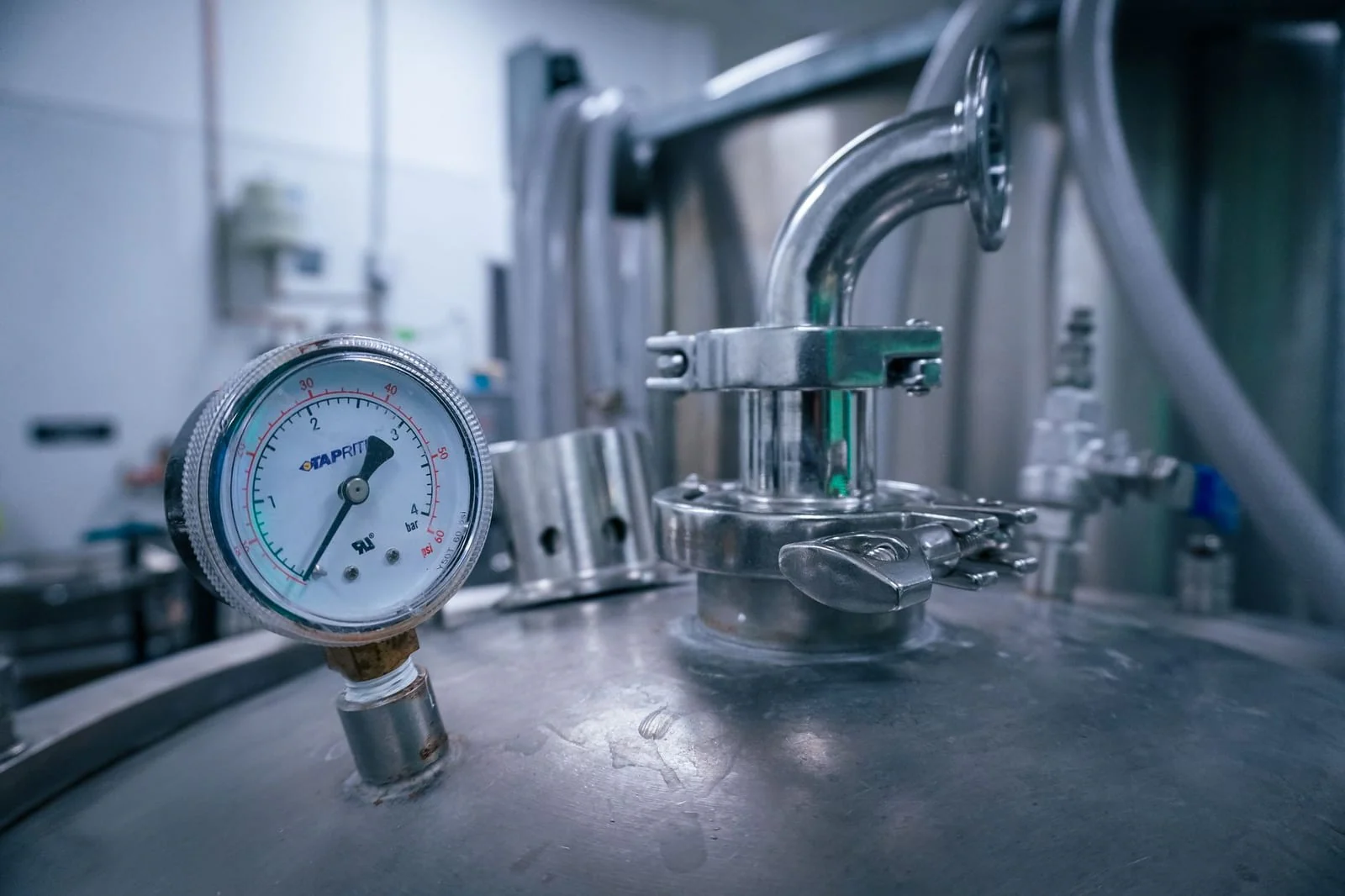
Domestic and commercial hot water storage cylinders, instantaneous water heaters, and pressure vessels for potable water are the largest single application. The combination of pitting resistance matching 316L and complete immunity to Cl-SCC makes 444 the preferred ferritic alternative — validated by electrochemical tests at 80 °C in real tap water with both low and high chloride concentrations.[4]
Solar Thermal Collectors & Heat Exchangers
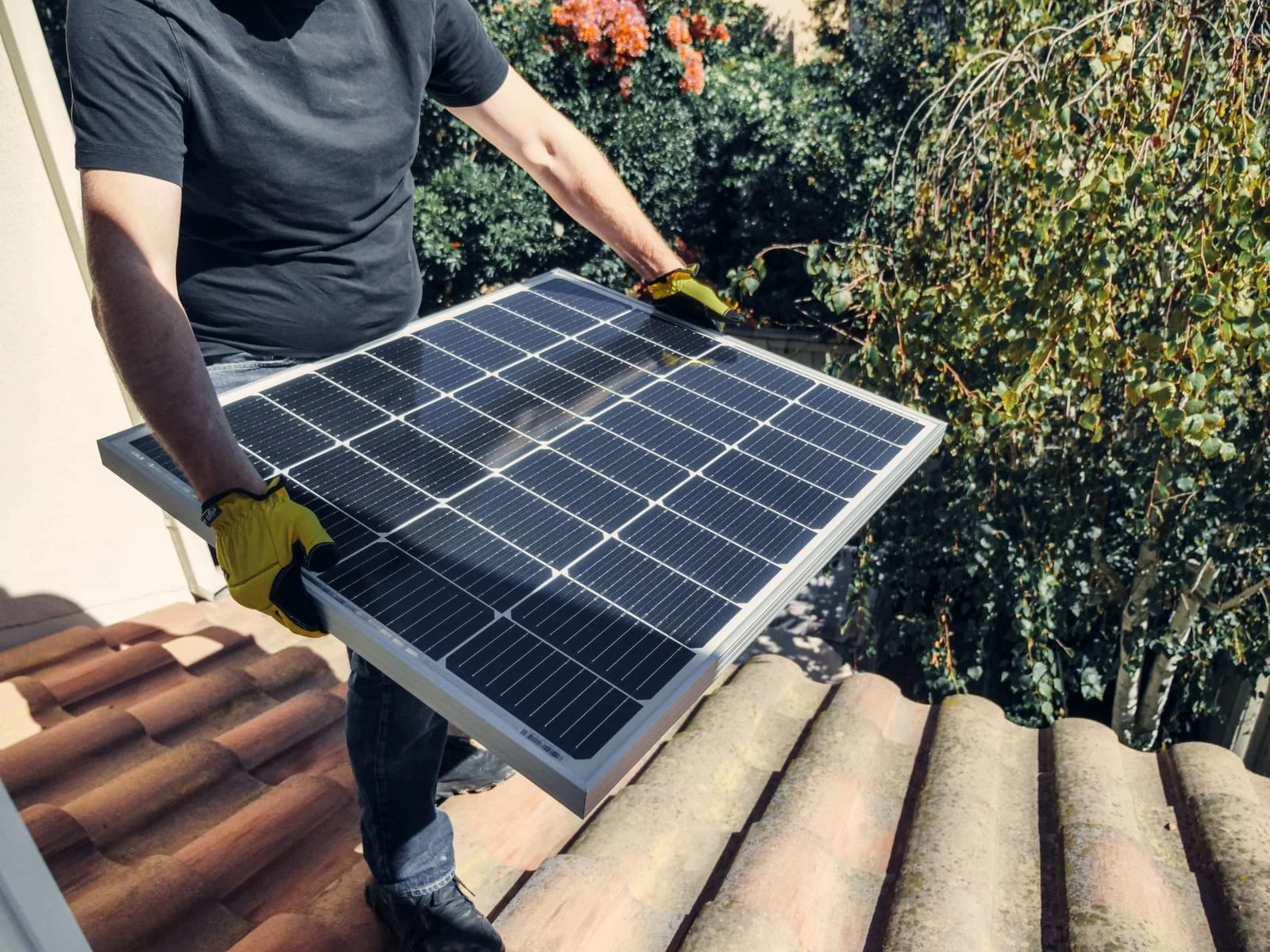
Solar flat-plate and evacuated-tube collector absorber plates, manifolds, and heat exchange tubes operate in warm chloride-bearing water subject to repeated thermal cycling. Grade 444's thermal conductivity of ~26.8 W/m·K is approximately 67% higher than 316's ~16 W/m·K — a direct improvement in collector efficiency and a reduction in thermal-gradient stresses that would otherwise initiate fatigue cracks in 316.
Brewing, Dairy & Food Processing
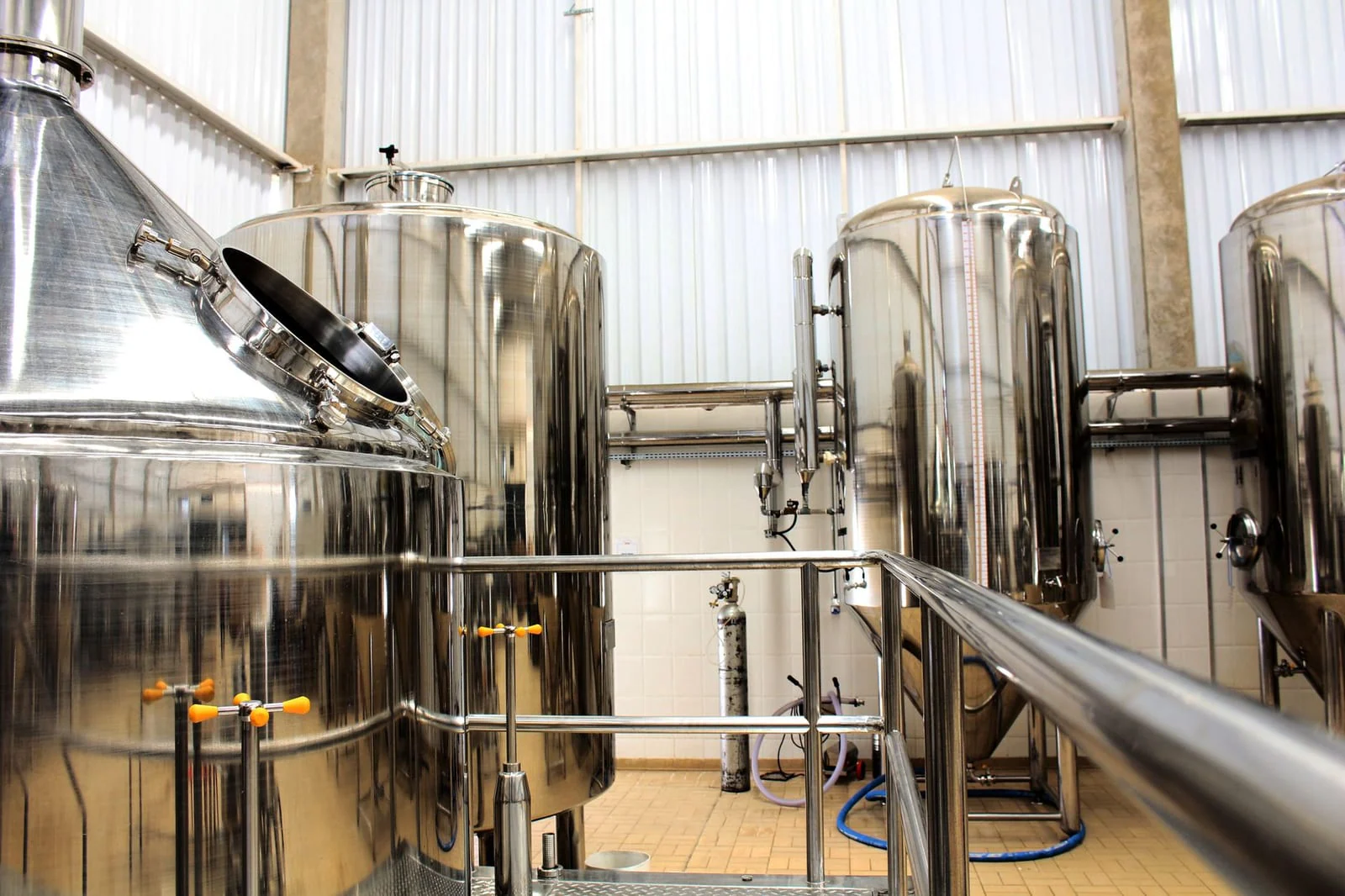
Fermentation vessels, CIP (clean-in-place) piping, heat exchangers in breweries, wineries, and dairy plants where hot chlorinated sanitising solutions must not pit the contact surface. The magnetic response also enables magnetic-drive mixing without seal penetration — an advantage in hygienic processing.
Coastal Architecture & Cladding
Marine-atmosphere roofing, wall panels, and façade elements in coastal locations where chloride-laden air would aggressively pit 430 or 439 but the cost of 316 is prohibitive. Grade 444's PREN of 24–28 positions it as the standard ferritic grade for marine architectural service, providing reliable outdoor corrosion performance without the premium cost of nickel-bearing austenitic grades.
Forms & Surface Finishes
STEELHUI supplies Grade 444 in standard mill forms:
Forms:CoilSheetStripTube
Surface finishes:2BBANo.4HLMirror
For hot water cylinder and heat exchanger tube production, the 2B and BA finishes are standard. For coastal architectural panels, No.4 and HL finishes provide a premium aesthetic while maintaining the grade's corrosion protection.
References
- Stainless Steel — Grade 444 (UNS S44400). Multiple manufacturer datasheets cross-confirmed against ASTM A240: Atlas Steels Grade 444 Data Sheet (atlassteels.com.au); AK Steel Type 444 Data Sheet (spacematdb.com); Ulbrich Alloys S44400 (ulbrich.com); askzn.co.za Grade 444 Technical Data. Composition and mechanical properties verified across all four sources against ASTM A240 grade limits. atlassteels.com.au — Grade 444 Data Sheet
- Characterization of Passive Films Formed on As-received and Sensitized AISI 304 Stainless Steel. Zhang Yubo et al. Chinese Journal of Mechanical Engineering, vol. 32 (2019). doi.org/10.1186/s10033-019-0336-8
- Molybdenum effects on the stability of passive films on stainless steels. Maurice V., Marcus P. npj Materials Degradation, vol. 7 (2023). doi.org/10.1038/s41529-023-00418-6
- Improvement of pitting corrosion resistance of AISI 444 stainless steel to make it a possible substitute for AISI 304L and 316L in hot natural waters. Bellezze T., Roventi G., Quaranta A., Fratesi R. Materials and Corrosion, vol. 59(9), 727–731 (2008). doi.org/10.1002/maco.200804112
- Effect of alpha prime due to 475 °C aging on fracture behavior and corrosion resistance of DIN 1.4575 and MA 956 high performance ferritic stainless steels. Terada M., Hupalo M.F., Costa I., Padilha A.F. Journal of Materials Science, vol. 43, 425–433 (2008). doi.org/10.1007/s10853-007-1929-7
- Analysis, Assessment, and Mitigation of Stress Corrosion Cracking in Austenitic Stainless Steels in the Oil and Gas Sector: A Review. Vakili M., Koutník P., Kohout J., Gholami Z. Surfaces (MDPI), vol. 7(3), 589–642 (2024). doi.org/10.3390/surfaces7030040