In short: Grade 409 is the lowest-cost ferritic stainless steel and the dominant material for automotive exhaust systems. With only 10.5–11.75% chromium — just enough to form a passive film — it is titanium-stabilised to resist sensitisation and intergranular corrosion after welding. Its body-centred cubic (BCC) ferritic structure is permanently magnetic, immune to chloride stress corrosion cracking, and well-suited to the thermal cycling environment of exhaust pipes. Its corrosion resistance is below that of 430 or 304 in standing water, but adequate for condensate-exposed and continuously hot exhaust gas service.
What 409 Stainless Steel Is
Grade 409 is the entry-level member of the ferritic stainless steel family — a titanium-stabilised iron–chromium alloy with only about 11% chromium. That chromium level is barely above the ~10.5% threshold at which the protective passive film forms, making 409 the "minimum viable stainless steel" from a cost and composition standpoint.[1]
Its international designations reflect its global dominance in a single market segment: UNS S40900, the European EN 1.4512 (X2CrTi12), Japanese JIS SUS409, and the informal designation "409L." In automotive engineering circles it is simply called "409" or "the exhaust grade." Variants S40910, S40920, and S40930 (with refined Ti or Ti+Nb stabilisation levels) share the same market position.
What makes 409 indispensable for exhaust systems is the combination of three properties: thermal cycling resistance (lower thermal expansion coefficient than austenitic grades, so oxide layers spall less), resistance to condensate corrosion in exhaust gas atmospheres, and titanium stabilisation that preserves weldability and prevents the grain-boundary chromium depletion that would otherwise undermine an already borderline passive film.[1][2]
The Metallurgy: Titanium Stabilisation — Why It Matters
Grade 409 faces a unique challenge: its chromium content (10.5–11.75%) is so low that any loss of chromium from the grain-boundary region — a phenomenon called sensitisation — would eliminate the already thin margin of protection entirely.
Sensitisation occurs when carbon precipitates as chromium carbides (Cr₂₃C₆) at grain boundaries during cooling through the 450–850 °C range, locally depleting the surrounding matrix of chromium. For a high-Cr grade like 304 (18% Cr), some boundary depletion is tolerable; for 409 with only ~11% Cr, it is catastrophic.
Titanium solves this by scavenging carbon. Titanium has a higher affinity for carbon than chromium does: it preferentially forms TiC and Ti(C,N) precipitates throughout the matrix rather than allowing chromium carbides to form at boundaries. With all carbon locked away by titanium, the chromium level at grain boundaries stays equal to the bulk composition, and the passive film remains intact through the heat-affected zones of welds.[1]
The design rule for stabilisation is: Ti content ≥ 6 × (C + N), where C and N are the bulk weight fractions. This ensures an adequate excess of titanium to scavenge all available carbon and nitrogen before any chromium carbide can form.
Chemical Composition
Standard composition limits for Grade 409 per ASTM A240, in weight percent. The chart below shows the balance by weight; the chromium sits right at the minimum viable level for a stainless designation, with titanium present only as a carbon-scavenging stabiliser.[1]
| Element | Symbol | Content (wt%) | Role |
|---|---|---|---|
| Chromium | Cr | 10.5–11.7 | Passive film formation (minimum viable level for stainless designation) |
| Titanium | Ti | 6×C – 0.75 | Stabiliser — scavenges C+N, prevents intergranular corrosion at welds |
| Carbon | C | ≤ 0.08 | Kept very low; must be scavenged by Ti to prevent sensitisation |
| Manganese | Mn | ≤ 1 | Deoxidiser during steelmaking |
| Silicon | Si | ≤ 1 | Deoxidiser; assists oxidation resistance at high temperature |
| Iron | Fe | Balance | Base metal |
Composition limits per ASTM A240 Grade 409 (S40900). Design rule for stabilisation: Ti ≥ 6×(C+N).[1]
Crystal Structure: BCC Ferrite (α)
Stainless steel is an alloy — a solid solution of elements in iron — so it has no molecular formula. The correct description is its crystal structure: Grade 409 is a body-centred cubic (BCC) ferrite (α) at all normal operating temperatures. The unit cell has atoms at each of the eight corners and a single atom at the geometric centre of the cube — the "body centre." A chromium content of 10.5–11.75% is sufficient to stabilise this structure at room temperature, with no austenite present.[1]
The BCC structure is the defining feature that separates ferritic grades from austenitic ones. There is no nickel addition, no FCC austenite phase, no martensitic transformation available, and no TRIP effect. Grade 409 is permanently magnetic in all conditions — an intrinsic property of BCC ferrite, not affected by cold work or heat treatment. The BCC lattice also gives 409 a significantly lower thermal expansion coefficient (~11 µm/m·°C) than austenitic grades (~17 µm/m·°C), which is the single most important physical property for exhaust system design.[2]
Corrosion Resistance: Exhaust Gas Versus Liquid Environments
Grade 409's corrosion behaviour is application-specific and must be understood in terms of two very different environments: hot exhaust gas (where 409 excels) and standing liquid water (where 409 is marginal).
The passive film forms normally at the 10.5–11.75% Cr level. Surface analysis confirms that chromium enrichment in this oxide film directly governs corrosion resistance — the same mechanism at work in all stainless steels.[5] More importantly, the titanium stabilisation ensures that welds — the most vulnerable points in an exhaust system — remain resistant to intergranular attack. The lower thermal expansion coefficient allows oxide films to adhere better during thermal cycling than on austenitic grades, and Ti/Nb stabilisation significantly influences oxidation behaviour at temperatures relevant to mufflers and catalytic converters.[2]
Grade 409 offers scaling resistance at temperatures up to 675 °C (continuous) and 815 °C (intermittent), covering the range encountered in front-section exhaust pipes.
In standing condensate or liquid service, 409's 11% Cr provides only minimal protection in chloride-contaminated water. MnS inclusions act as pit-initiation sites when liquid chloride contacts the surface.[3] For automotive underbody applications where standing water and chloride road-salt exposure is significant, the higher-Cr grades 430, 439, or 441 are preferred for outer surfaces.
Cl-SCC immunity (shared by all ferritic grades): Like 430 and 444, Grade 409 is essentially immune to chloride stress corrosion cracking. The BCC crystal structure, near-zero nickel, and lower thermal expansion coefficient collectively prevent the Cl-SCC mechanism that causes failures in austenitic 304 and 316 components above 60 °C.[4]
Mechanical & Physical Properties
Typical properties for Grade 409 in the annealed condition per ASTM A268 (tubing) and manufacturer datasheets.[1]
| Tensile strength (MPa) | ≥380 |
| Yield strength (MPa) | ≥205 |
| Elongation (%) | ≥20 |
| Hardness | ≤179 HB |
| Density (g/cm³) | 7.75 |
| Elastic modulus (GPa) | 200 |
| Magnetic response | Magnetic |
Cannot be hardened by heat treatment. BCC ferrite is thermodynamically stable across the working temperature range; there is no martensitic transformation. Annealing at 790–900 °C followed by air cooling restores full soft ductility. There is no TRIP effect and no strain-induced martensite in ferritic grades — these mechanisms are exclusive to metastable austenitic grades like 304.
The low thermal expansion coefficient (~11 µm/m·°C vs. 304's ~17 µm/m·°C) is the dominant reason for 409's success in exhaust systems: the mismatch strain between the oxide scale grown at high temperature and the substrate during cooling is far smaller than for austenitic grades, giving the scale much better adhesion and the part much longer service life under thermal cycling.[2]
Key Characteristics
- Exhaust-system optimised. Thermal expansion, oxidation resistance, weldability, and Ti-stabilisation are all calibrated for cyclic high-temperature gas service.
- Lowest cost ferritic. Minimal alloying (11% Cr, small Ti addition only): the cheapest grade that qualifies as stainless steel.
- Permanently magnetic. Intrinsic BCC ferrite property — not changed by heat treatment or cold work.
- Good weldability. Titanium stabilisation prevents sensitisation in heat-affected zones; welds without post-weld heat treatment for most applications.
- Adequate, not exceptional, liquid corrosion resistance. Suitable for exhaust condensate but not for chloride-rich liquid environments.
- Cl-SCC immune. Shared ferritic advantage over austenitic 304/316 in warm chloride environments.[4]
- No TRIP effect, no strain-induced martensite. Ferritic grade: no phase transformation under deformation.
How 409 Is Made
Scrap and ferrochromium are melted in an electric arc furnace (EAF) and refined in an argon–oxygen decarburisation (AOD) vessel, keeping carbon low (≤ 0.08%) to limit the carbide load that titanium must scavenge. Titanium is added in the ladle to achieve the Ti ≥ 6(C+N) target. The steel is then cast, hot-rolled, annealed at 790–900 °C, and pickled to restore the passive film. Tube and pipe products are cold-drawn or cold-rolled to final gauge and re-annealed.
409 vs 430 — Which One Do You Need?
The key question in the low-cost ferritic space is 409 versus 430. Both are BCC ferrite, both are magnetic and immune to Cl-SCC — the difference is chromium level and application target.
Choose 409 when the application is primarily high-temperature cycling with exhaust gases and the budget is the primary constraint — mufflers, catalytic converter shells, exhaust pipes. The Ti stabilisation is essential for maintaining weld integrity at the borderline chromium level.
Choose 430 when the application sees liquid water exposure (kitchen, architectural) where the higher chromium level of 430 provides a meaningful margin of liquid-corrosion resistance that 409 cannot match.
Variants & Related Grades
- S40910 / S40920 / S40930 — refined chemistry variants with tighter Ti or Ti+Nb control for improved weldability and formability in demanding exhaust applications.
- EN 1.4512 — European equivalent to S40900, with slightly adjusted composition limits.
- 441 (EN 1.4509) — dual Ti+Nb stabilised at ~18% Cr for higher-Cr exhaust and hot-end components where 409's corrosion resistance is insufficient.
- [430](/en/materials/stainless-steel/430) — higher Cr (16–18%), better liquid-corrosion resistance, indoor decorative/appliance uses.
- [304](/en/materials/stainless-steel/304) — austenitic, better liquid corrosion, higher ductility; used in exhaust tip trims where appearance matters more than thermal performance.
Applications by Industry
Automotive Exhaust Systems — The Flagship Application
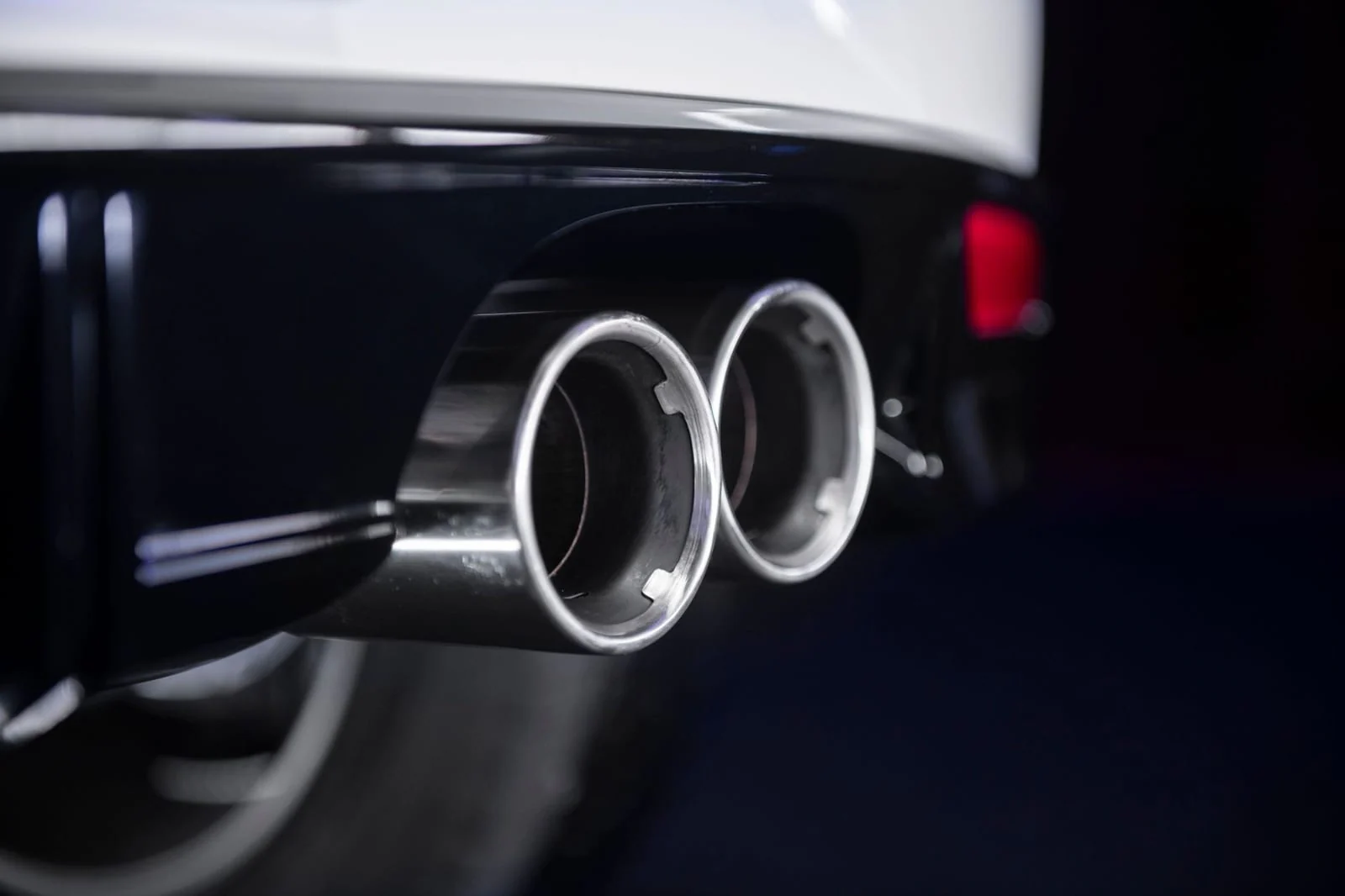
Mufflers, resonators, exhaust pipes, tail pipes, and catalytic converter shells. Grade 409 handles the thermal cycling (ambient to 600–700 °C and back) with oxide spalling resistance that austenitic grades cannot match at the same price point. The titanium stabilisation ensures that the many welds in a fabricated exhaust system remain corrosion-resistant without requiring post-weld heat treatment.[2]
Catalytic Converter Housings
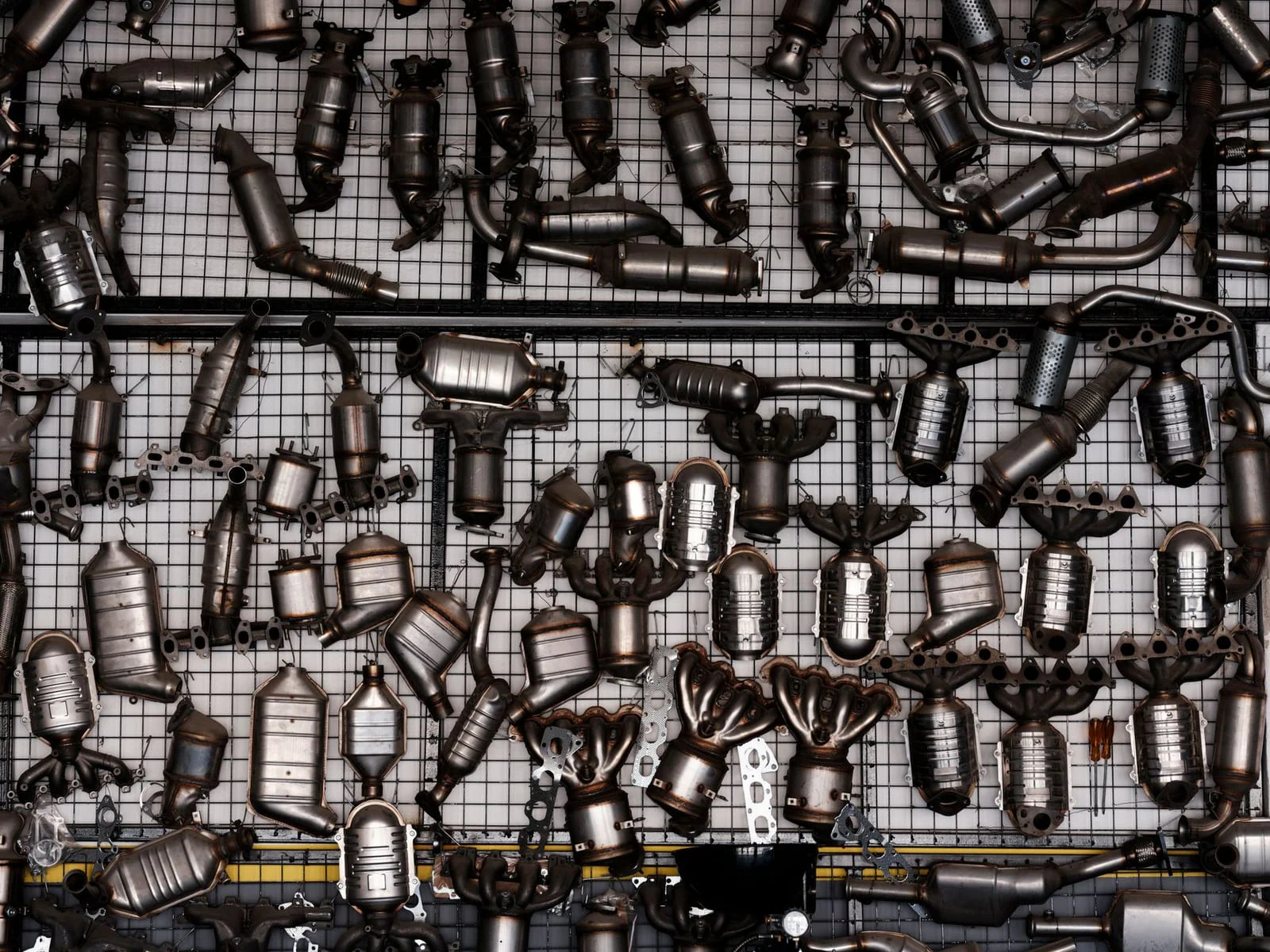
The metal housing around ceramic or metallic catalyst substrates sees 700–900 °C in operation and must survive hundreds of thermal cycles over the vehicle's service life. Grade 409's low thermal expansion minimises oxide spallation and fatigue cracking at weld joints.
Shipping Containers & Agricultural Equipment
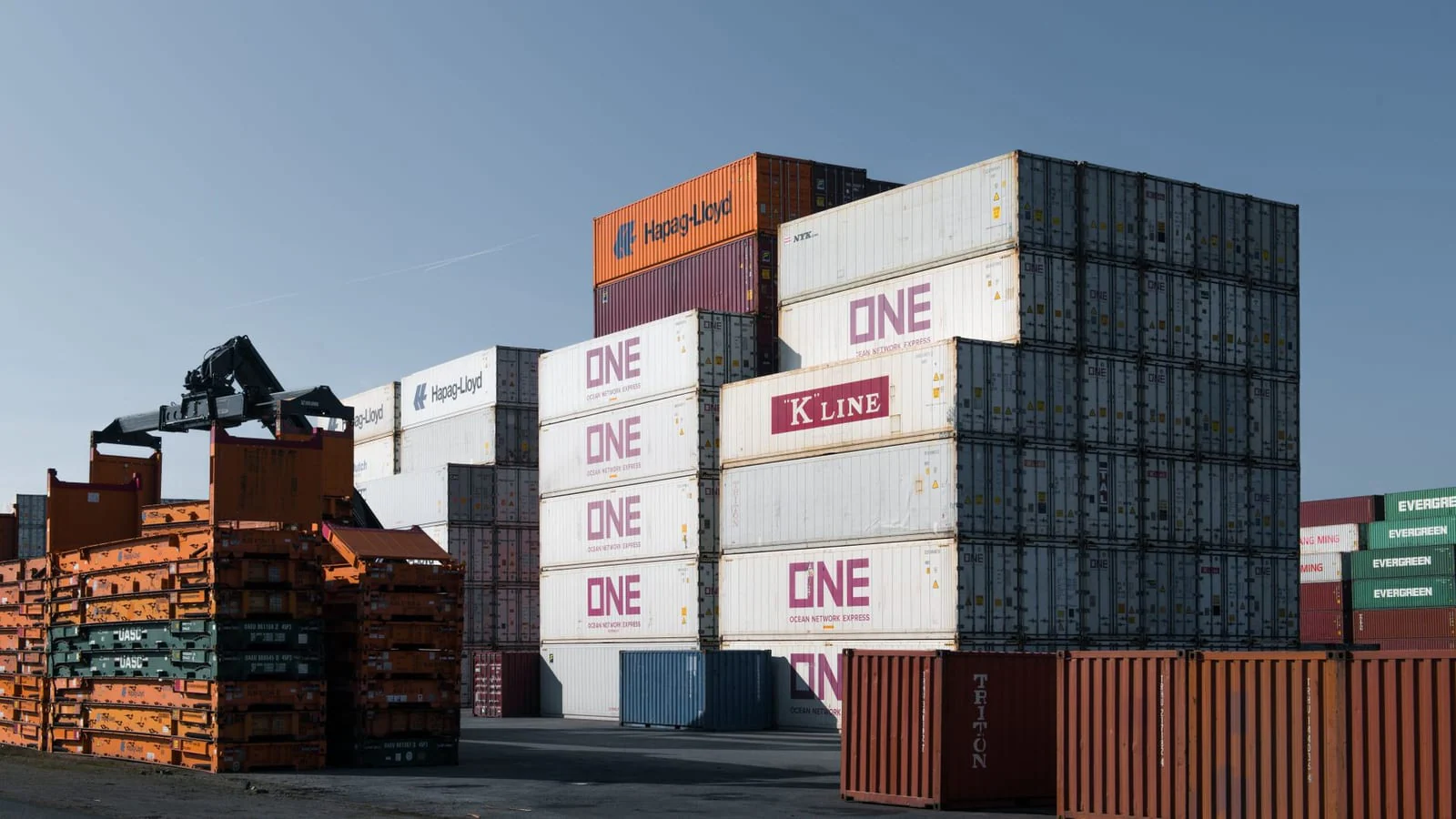
The combination of moderate corrosion resistance, good formability, and low cost makes 409 suitable for container panels, agricultural machinery covers, and transport equipment where painted carbon steel would be too prone to rust and 304 would be over-specified.
Railway & Bus Exhaust Components
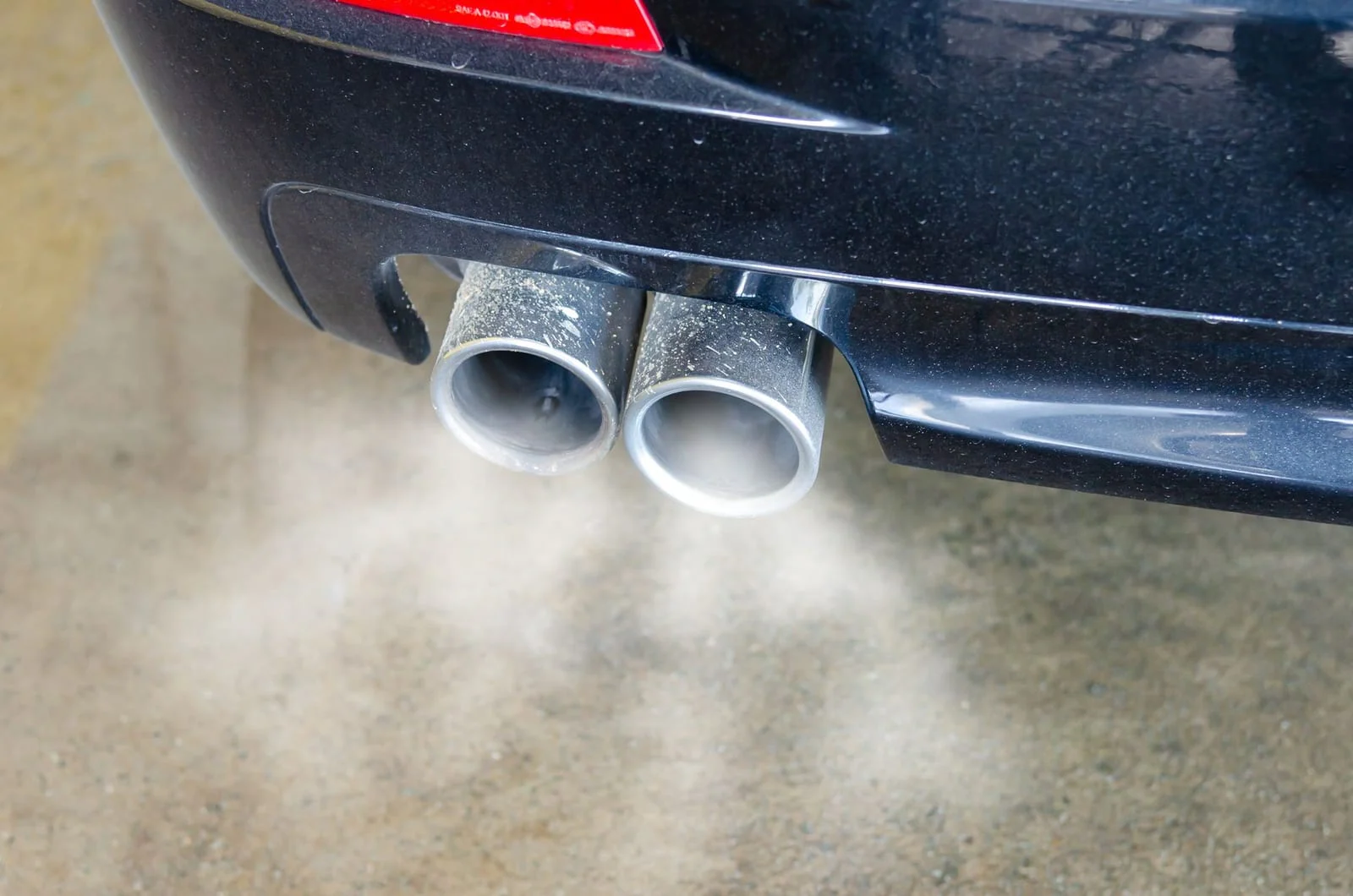
The same thermal-cycling performance that makes 409 ideal for car exhausts extends to larger diesel engine exhaust systems on buses, trucks, and rail vehicles.
Forms & Surface Finishes
STEELHUI supplies Grade 409 in standard mill forms for exhaust system fabrication:
Forms:CoilSheetTube (welded)Pipe
Surface finishes:No.12B2D
Grade 409 is predominantly supplied in coil and tube form for exhaust system fabrication; mirror or hairline finishes are not typical for this functional grade.
References
- Stainless Steel — Grade 409 (UNS S40900). AZoM ArticleID=969; Atlas Steels Grade 409 Data Sheet (atlassteels.com.au). Cross-confirmed with Thyssenkrupp 409/1.4512 datasheet and LangHe Metal 409 properties. Composition per ASTM A240. azom.com/article.aspx?ArticleID=969
- Cyclic oxidation behaviour of stainless steels. Application to the automotive exhaust lines. Antoni, L.; Baroux, B. Metallurgical Research & Technology 99(2), 177–188, 2002. 10.1051/metal:2002191
- Pitting corrosion characteristics of sintered Type 316L SS: pores and MnS. Saito, M. et al. npj Materials Degradation 8, 2024. 10.1038/s41529-024-00482-6
- Analysis, Assessment, and Mitigation of Stress Corrosion Cracking in Austenitic Stainless Steels in the Oil and Gas Sector: A Review. Vakili, M.; Koutník, P.; Kohout, J.; Gholami, Z. Surfaces (MDPI) 7(3), 589–642, 2024. 10.3390/surfaces7030040
- Characterization of Passive Films on As-received and Sensitized AISI 304 SS. Zhang Yubo et al. Chinese Journal of Mechanical Engineering 32, 2019. 10.1186/s10033-019-0336-8