In short: Type 2304 is the lean duplex stainless steel — a low-molybdenum, low-nickel duplex grade whose microstructure is a balanced ~50/50 mixture of austenite (γ, FCC) and ferrite (α, BCC).[1] That two-phase structure is the whole point: the ferrite contributes strength and resistance to chloride stress-corrosion cracking, while the austenite contributes toughness and ductility.[2] The result is roughly double the yield strength of austenitic 304 and 316 at a lower alloy cost. With a PREN around 25 it offers moderate pitting resistance — better chloride SCC resistance than 304/316, but lower pitting resistance than the Mo-bearing standard duplex 2205. Best where the strength-to-cost ratio and SCC resistance of a duplex are wanted without paying for molybdenum; step up to 2205 or 2507 when the chloride environment turns aggressive.
What 2304 Stainless Steel Is
Type 2304 is the lean duplex stainless steel — "duplex" because its microstructure is two phases in roughly equal proportion, and "lean" because it achieves that duplex behaviour with minimal molybdenum and a modest nickel content, keeping it economical. Like all duplex grades it is a Fe-Cr-Ni-N alloy in which solution annealing produces a balanced structure of austenite (γ) and ferrite (α) rather than a single phase.[1]
In the Unified Numbering System it is UNS S32304; in European EN it is 1.4362 (X2CrNiN23-4). The "2304" designation itself encodes the recipe: roughly 23% chromium and 4% nickel — markedly leaner in nickel than an austenitic grade, and leaner in molybdenum than standard duplex 2205.
The defining idea of 2304 is balance, not substitution. It is not an austenitic steel with extra strength, nor a ferritic steel with extra toughness — it is a deliberate ~50/50 blend that takes the strength and stress-corrosion-cracking resistance of the ferrite phase and the ductility and toughness of the austenite phase.[2] Duplex grades were developed precisely to associate high mechanical properties with good corrosion resistance in a single alloy.[1]
Its commercial positioning is as an economical alternative to 316: comparable general corrosion resistance and superior strength, at lower nickel and molybdenum content and therefore lower, more stable cost. Where 316 would be specified mainly for its strength margin or chloride SCC concerns rather than for severe pitting service, 2304 is the leaner-alloy candidate.
Chemical Composition
Composition limits for Type 2304 (per the UNS S32304 / EN 1.4362 grade definition). The chromium and nitrogen do the corrosion and strengthening work, the controlled nickel balances the austenite fraction, and the deliberately low molybdenum is what makes 2304 a *lean* duplex rather than a standard one.[1]
| Element | Symbol | Content (wt%) | Role |
|---|---|---|---|
| Chromium | Cr | 21.5–24.5 | Primary passive-film former and ferrite stabiliser; the main contributor to PREN |
| Nickel | Ni | 3–5.5 | Austenite stabiliser — kept lean (≈4%) to balance the ~50/50 phase ratio at low cost |
| Molybdenum | Mo | ≤ 0.6 | Held very low — the "lean" in lean duplex; little PREN/pitting boost vs 2205 |
| Nitrogen | N | 0.05–0.2 | Austenite stabiliser and interstitial strengthener; also raises PREN (16·N term) |
| Carbon | C | ≤ 0.03 | Held low (≤0.03%) to limit carbide sensitisation |
| Iron | Fe | Balance | Base metal |
Per the UNS S32304 / EN 1.4362 grade definition. The 50/50 phase balance is set by the combined austenite-forming (Ni, N) and ferrite-forming (Cr, Mo) elements together with the solution-anneal cycle.[1]
Crystal Structure: A Balanced Two-Phase Microstructure
Stainless steel is an alloy — a solid solution of elements in iron — so it has no molecular formula. The correct description is by crystal structure. For a duplex grade that means describing *two* crystal structures coexisting, not one.
After solution annealing (typically ~1000–1100 °C followed by rapid cooling), 2304 settles into a microstructure of roughly equal amounts of ferrite (α) and austenite (γ).[2] The ferrite is body-centred cubic (BCC) — the same lattice family as ferritic and martensitic steels — and the austenite is face-centred cubic (FCC), the lattice of the 300-series austenitics. The combined BCC + FCC arrangement is what gives duplex its characteristic blend of properties.[2]
The two phases divide the labour. The ferrite (BCC) supplies the high yield strength and the resistance to chloride stress-corrosion cracking; the austenite (FCC) supplies the toughness and ductility.[2] Because roughly half the volume is BCC ferrite — intrinsically stronger than FCC austenite — and the structure is fine-grained with extensive phase boundaries, duplex grades reach far higher strength than a fully austenitic steel of similar corrosion class.[2] The presence of ferrite also makes 2304 magnetic, unlike the non-magnetic austenitics.
The corollary is that 2304 must be kept *in* this balanced two-phase state. The phase ratio and the corrosion/strength properties depend on a healthy solution-annealed structure; departures from it — driven by improper heat treatment — degrade the very properties the duplex design exists to provide (covered under heat treatment and corrosion below).[1]
Corrosion Resistance: SCC-Resistant, Moderate Pitting
Corrosion resistance is where 2304's lean-duplex trade-off is clearest. Its strength is resistance to chloride stress-corrosion cracking; its limit is pitting resistance, which is moderate because of the low molybdenum.
Pitting resistance across stainless grades is ranked by the Pitting Resistance Equivalent Number, PREN = %Cr + 3.3·%Mo + 16·%N — a composition-derived index of chloride pitting resistance.[4] With its lean molybdenum, 2304 sits around the PREN ≈ 25 mark: above austenitic 304, but well below standard duplex 2205 (~35) and far below super duplex 2507 (≥40). That ranking is the essence of "lean" — comparable general corrosion to 316 without the molybdenum that would buy higher pitting resistance.
Where 2304 wins — chloride SCC. The 300-series austenitics (304/316, with ~8–10% nickel) are notably susceptible to chloride stress-corrosion cracking. The duplex structure resists it far better: the ferrite phase is itself resistant to chloride SCC, and the two-phase boundaries interrupt the continuous crack path that a single-phase austenitic matrix would offer.[2][3] This combined BCC + FCC structure is documented to give duplex grades excellent resistance to stress-corrosion cracking,[2] and duplex alloys are described as combining the immunity to stress corrosion of the ferrite with the ductility and toughness of the austenite.[3]
Where 2304 is limited — pitting. The low molybdenum keeps the PREN moderate, so in warm, concentrated chloride or acidic-chloride service 2304 will pit before a Mo-bearing grade does. This is the deliberate cost-driven compromise of a lean duplex; when the chloride environment is aggressive the answer is to step up to the higher-Mo 2205 or 2507, not to push 2304 past its PREN.
As with any duplex grade, the corrosion ranking assumes a healthy, properly solution-annealed two-phase structure. The precipitation of secondary phases (discussed next) can make an otherwise sound duplex susceptible to intergranular, pitting and stress-corrosion attack, so corrosion performance and correct heat treatment are inseparable.[1]
Mechanical & Physical Properties
The headline mechanical property of 2304 is its strength. As a duplex grade it offers roughly twice the yield strength of austenitic 304 and 316 in the solution-annealed condition, while retaining good ductility from the austenite phase.[2]
| Tensile strength (MPa) | ≥600 |
| Yield strength (MPa) | ≥400 |
| Elongation (%) | ≥25 |
| Hardness | ≤290 HB |
| Density (g/cm³) | 7.80 |
| Elastic modulus (GPa) | 200 |
| Magnetic response | Magnetic |
The high strength comes from the two-phase structure: the ~50% volume of intrinsically strong BCC ferrite, the interstitial strengthening from nitrogen, and the fine-grained, phase-boundary-rich microstructure together lift yield strength well above that of a fully austenitic steel.[2] Studies on duplex steels report yield and tensile strengths several times higher than commercial austenitic grades such as 304L and 316L, attributing the strength to the combined BCC + FCC structure.[2]
This strength advantage is what enables down-gauging — thinner sections carrying the same load — which is a large part of 2304's economic case in tanks and structural work: less material weight, lower cost, while keeping duplex corrosion behaviour.
Key Characteristics
- Balanced ~50/50 two-phase structure. Roughly equal austenite (γ, FCC) and ferrite (α, BCC); the ferrite gives strength and SCC resistance, the austenite gives toughness and ductility.[2]
- Roughly twice the yield strength of 304/316. High strength from the BCC ferrite fraction, nitrogen strengthening, and fine two-phase grain structure — enabling down-gauging.[2]
- Good chloride SCC resistance. The duplex structure resists chloride stress-corrosion cracking far better than the 300-series austenitics.[2][3]
- Moderate pitting (PREN ≈ 25). Lean molybdenum means lower pitting resistance than 2205/2507 — the deliberate cost trade-off of a lean duplex.[4]
- Lean and economical. Low nickel and molybdenum give cost stability and position 2304 as an economical alternative to 316.
- Magnetic. The ferrite phase makes 2304 magnetic, unlike the austenitic grades.
- Embrittlement temperature windows must be avoided. Like all duplex grades, prolonged exposure to sigma-phase and 475 °C embrittlement ranges degrades toughness and corrosion resistance (see below).[1]
How 2304 Is Made — and the Embrittlement Windows to Avoid
Production follows the standard stainless route — EAF melting, AOD/VOD refining to hit the controlled Cr–Ni–N balance, hot and cold rolling, then solution annealing and rapid cooling to dissolve any intermetallics and restore the ~50/50 phase balance.[1] For a duplex grade the heat treatment is not optional polish; it *defines* the microstructure on which every property depends.
Duplex grades have two embrittlement windows that hot working and welding must move through quickly and that the final solution anneal exists to undo:[1]
Sigma-phase embrittlement (~700–900 °C). Holding a duplex steel in this range precipitates Cr-rich intermetallic sigma (σ) phase at the α/γ phase boundaries.[1][5] Even a small fraction is damaging — across duplex grades, a few percent of sigma can sharply reduce both impact toughness and pitting resistance.[5] This is why duplex sections are quenched rapidly through this band rather than cooled slowly.
475 °C embrittlement (~350–550 °C). In this lower band the ferrite undergoes spinodal decomposition, splitting into iron-rich and chromium-rich (α′) nanoscale regions; the effect is most pronounced near 475 °C, which gives the phenomenon its name.[1] It embrittles the ferrite and reduces corrosion resistance, so prolonged service or processing in this range is avoided. Over-aggressive or improper annealing can also precipitate chromium nitride (Cr₂N), another reason the solution-anneal-and-quench cycle is controlled tightly.[5]
For a *lean* duplex the practical message is the same as for any duplex: keep the steel in its balanced, solution-annealed two-phase state, and treat the 350–550 °C and 700–900 °C ranges as processing hazards rather than service temperatures.[1]
2304 vs 304 vs 2205 — Lean Duplex in Context
Three grades, three positions. 304 is the austenitic baseline — corrosion-first, lower strength, susceptible to chloride SCC. 2304 is the lean duplex — roughly double the strength, better SCC resistance, moderate pitting, low cost. 2205 is the standard duplex — adds molybdenum for higher pitting resistance in more aggressive chloride service.
The line between 2304 and 2205 is molybdenum. Both are genuine ~50/50 duplex steels with the strength and SCC advantages that follow; 2205 simply buys more pitting resistance with ~3% Mo. Choose 2304 when the service is mildly aggressive and cost matters; choose 2205 or 2507 when the chlorides get serious.
Applications by Industry
2304's combination of high strength, good chloride SCC resistance, and low alloy cost suits it to structural and storage applications in mildly corrosive service where a leaner duplex can replace a heavier or more expensive austenitic section.
Water Treatment & Municipal Piping
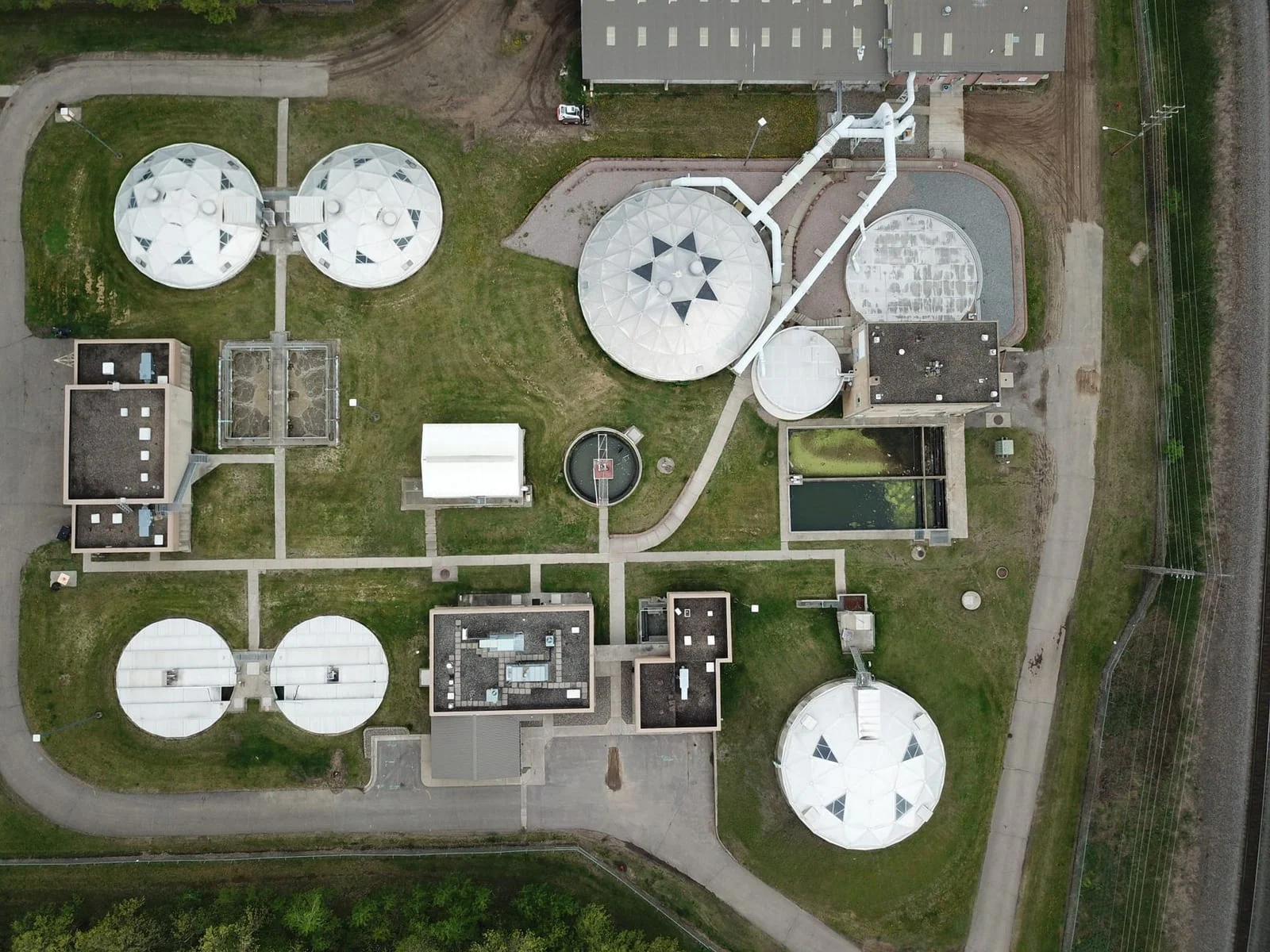
Water-treatment plant and municipal piping systems, where chloride SCC resistance and strength matter but the environment is not severely aggressive — a natural fit for a lean duplex over 304/316.
Storage Tanks & Vessels
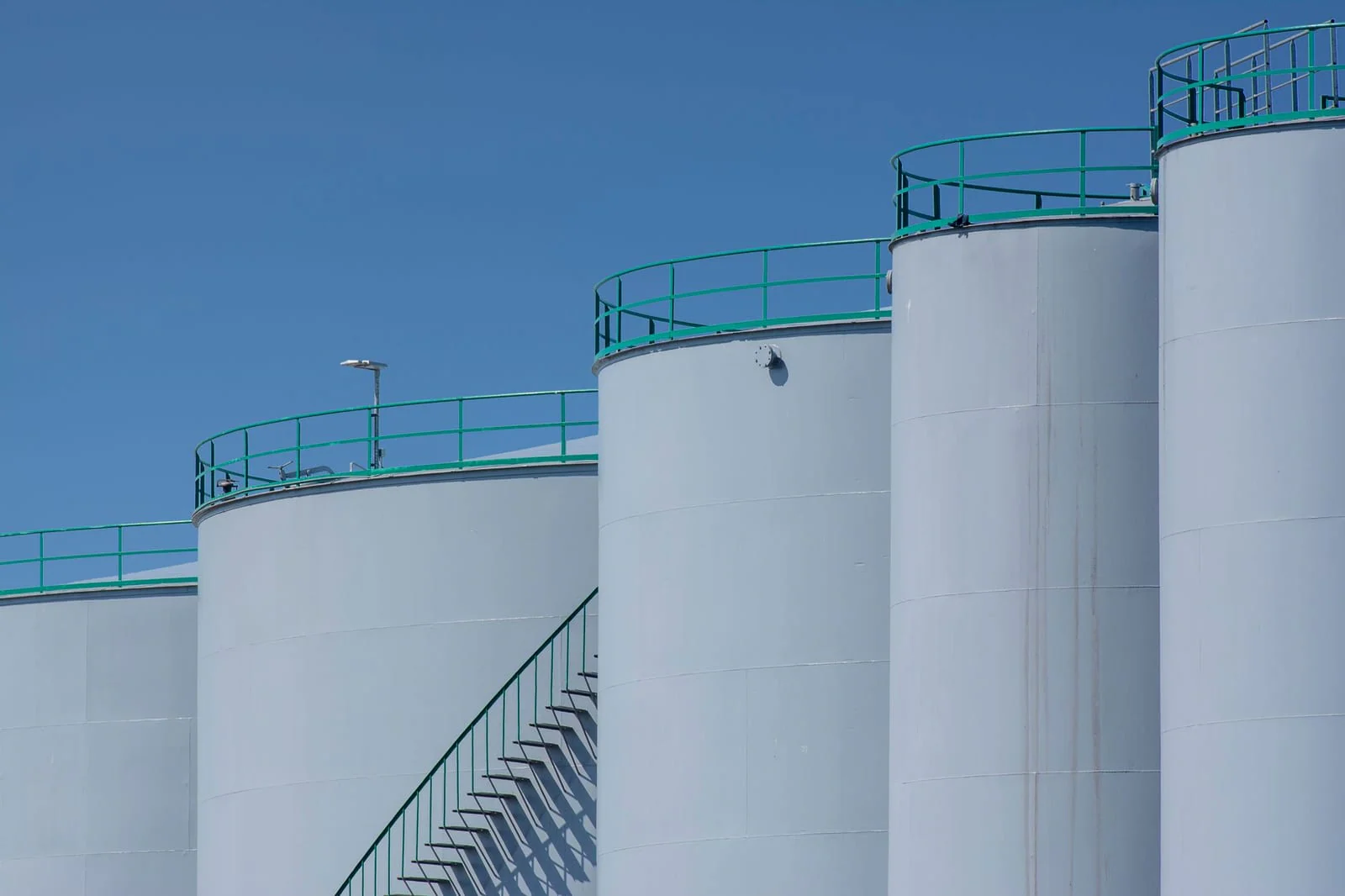
Tanks and vessels handling mildly corrosive media. The roughly doubled yield strength allows thinner walls for the same duty, reducing material weight and cost while keeping duplex corrosion behaviour.
Structural & Architectural
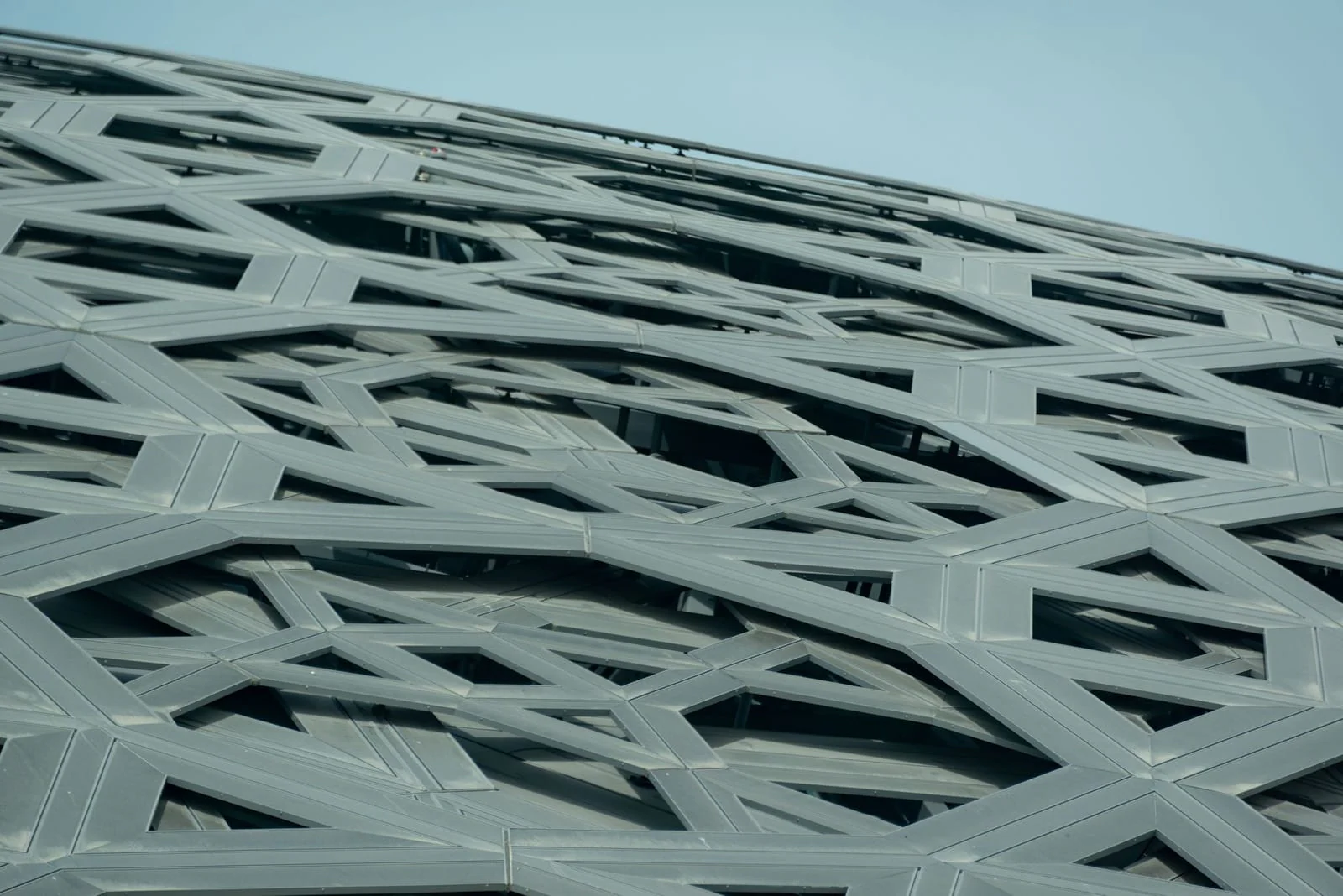
Structural and architectural elements where the strength-to-weight and strength-to-cost ratio of a duplex translates directly into material savings — a key part of the economic case for lean duplex.
Heat Exchangers (Non-Aggressive Service)
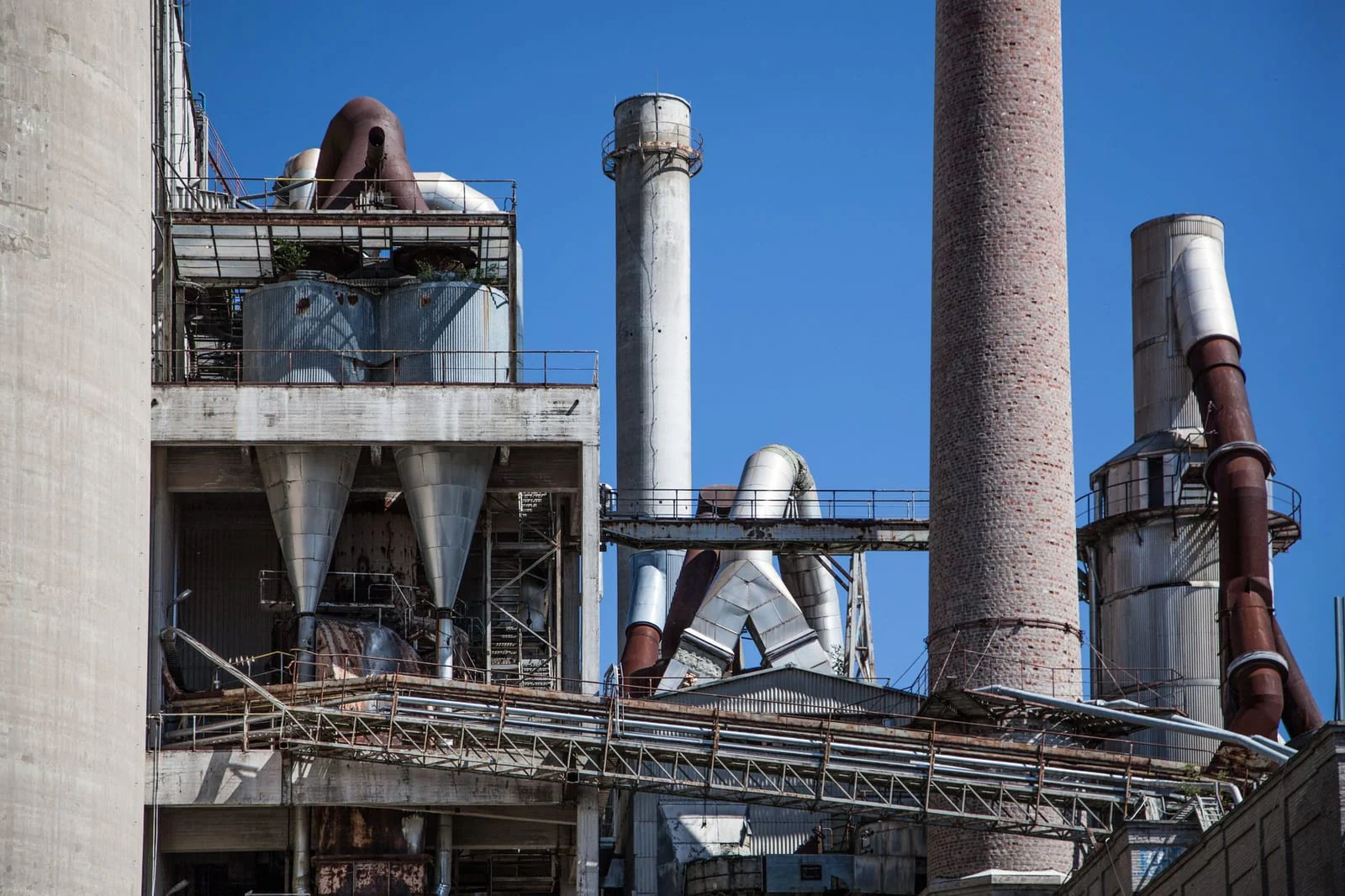
Heat exchangers in non-aggressive service, where the SCC resistance of a duplex is valued but the moderate PREN is sufficient for the duty.
Forms & Finishes
Common product forms:CoilSheetPlateTubeBar
Surface finishes:1D2BNo.1
Hot-rolled plate and tube for tanks, vessels, and structural duty are the typical heavy forms; cold-rolled coil and sheet (2B) serve lighter fabricated work. Whatever the form, the functional condition is the solution-annealed state that sets the ~50/50 phase balance.
References
- Effect of Secondary Phase Precipitation on the Corrosion Behavior of Duplex Stainless Steels. Chan & Tjong. Materials (MDPI) 7, 2014. — austenite + ferrite phases; sigma/chi at 700–900 °C; spinodal 475 °C embrittlement at 350–550 °C. pmc.ncbi.nlm.nih.gov/articles/PMC5455814/
- Weldability, machinability and surfacing of commercial duplex stainless steel AISI2205 for marine applications — A recent review. Journal of Advanced Research (Elsevier) 8, 2017. — equal ferrite (α) + austenite (γ); BCC + FCC → greater strength & SCC resistance; YS/UTS 2–3× of 304L/316L. pmc.ncbi.nlm.nih.gov/articles/PMC5292657/
- Corrosion Study on Duplex Stainless Steel UNS S31803 Subjected to Solutions Containing Chloride Ions. Materials (MDPI) 17, 2024. — two-phase ferrite + austenite; immunity to stress corrosion combined with ductility and toughness. pmc.ncbi.nlm.nih.gov/articles/PMC11084689/
- Effect of Sigma Phase Morphology on the Degradation of Properties in a Super Duplex Stainless Steel. Materials (MDPI) 11, 2018. — PREN = %Cr + 3.3·%Mo + 16·%N; pitting-resistance ranking of duplex grades. pmc.ncbi.nlm.nih.gov/articles/PMC6025556/
- Effect of Secondary-Phase Precipitation on Mechanical Properties and Corrosion Resistance of 00Cr27Ni7Mo5N Hyper-Duplex Stainless Steel during Solution Treatment. Materials (MDPI) 15, 2022. — sigma phase at the α/γ interface; PREN grading across duplex classes; Cr₂N on over-annealing. pmc.ncbi.nlm.nih.gov/articles/PMC9658262/