In short: T2 is electrolytic tough-pitch (ETP) pure copper — copper of at least 99.90% purity carrying a trace of dissolved oxygen, which is what "tough-pitch" means. Because it is essentially unalloyed copper, T2 is a single-phase face-centred-cubic (FCC) metal and is non-magnetic. Its defining property is the highest electrical and thermal conductivity in the copper family — pure annealed copper is literally the reference standard against which all conductivity is measured (the IACS benchmark).[1] Every alloying element you add — zinc to make H62 brass, nickel to make B10 cupronickel — scatters conduction electrons and drops conductivity,[2] so nothing beats pure copper for carrying current and heat. The trade-off: T2 is soft, and in fast-moving seawater it is out-classed by B10. Choose T2 when conductivity, ductility, and solderability are paramount.
What T2 Pure Copper Is
T2 is industrial pure copper — specifically electrolytic tough-pitch (ETP) copper, refined to at least 99.90% copper. The "tough-pitch" descriptor refers to a small, controlled amount of dissolved oxygen carried in the metal as cuprous oxide: it is the classic, most widely produced grade of conductive copper and the form most people mean when they say simply "copper".
In the Chinese GB system it is T2 (GB/T 5231) — the "T" denotes *tong* (铜, copper). It corresponds closely to UNS C11000 internationally and to the designations C1100 and ETP copper. Buyers searching *T2*, *紫铜*, *电解铜*, or *tough-pitch copper* are looking for this grade.
T2 sits at the root of the copper family — pure copper, distinct from the brasses (Cu-Zn), the bronzes, and the cupronickels. Where H62 / H65 brasses trade conductivity for low-cost strength and formability, and B10 cupronickel trades it for seawater durability, pure copper keeps the conductivity — it is the conductivity benchmark the whole family is measured against.
The residual oxygen is the defining feature of the tough-pitch grade. It is functional — it scavenges dissolved hydrogen and other impurities during refining, helping deliver consistently high conductivity in a low-cost product — but it sets the one boundary of the grade: T2 should not be brazed or annealed in hydrogen-rich atmospheres, where the oxygen can lead to embrittlement. For those uses the oxygen-free coppers (T1 / TU series) are chosen instead.
Chemical Composition
Composition limits for T2 per GB/T 5231. There is no alloying element by design — the specification is about purity: a guaranteed minimum copper content with tightly capped impurities, plus the small, deliberate oxygen content that defines the tough-pitch grade.
| Element | Symbol | Content (wt%) | Role |
|---|---|---|---|
| Copper | Cu | ≥ 99.9 | Base metal and the entire point of the grade — supplies the FCC lattice and the highest conductivity in the copper family |
| O | O | ≤ 0.06 | Tough-pitch oxygen (as cuprous oxide) — scavenges hydrogen and impurities in refining to lock in high conductivity, but rules out hydrogen-atmosphere brazing |
| Bi | Bi | ≤ 0.001 | Capped impurity — controlled to very low levels to protect hot ductility |
| Pb | Pb | ≤ 0.005 | Capped impurity — kept low to preserve hot-working behaviour |
| Total impurities | Total impurities | ≤ 0.1 | Held within a tight ceiling so conductivity stays at the IACS benchmark |
Per GB/T 5231 (T2 / tough-pitch copper), ≈ UNS C11000 (ETP).
Crystal Structure: A Single FCC Pure-Copper Lattice
T2 is essentially unalloyed copper, so it has no molecular formula and no alloy phases to describe. The correct description is by crystal structure — and it is the simplest in the family.
Copper is face-centred cubic (FCC), and because T2 is pure copper it is a single-phase FCC metal with essentially no second phase — just copper atoms on a regular FCC lattice, undisturbed by foreign substitutional atoms. That clean, uniform lattice is exactly why pure copper conducts so well: there are no alloying atoms to scatter the conduction electrons. The metal is non-magnetic and stays so in every condition.
Pure copper is exceptionally ductile precisely because it is a single-phase FCC metal: FCC lattices offer many close-packed slip systems, so copper deforms freely without a brittle second phase to crack against — it can be drawn into fine wire and rolled into thin foil. With no alloying element and no second phase, T2 cannot be precipitation-hardened or quench-hardened the way alloy steels are: its only routes to strength are cold working (drawing or rolling, which work-hardens the metal and raises strength while modestly lowering conductivity) and the reverse, annealing, which recrystallises the cold-worked grains and returns the copper to its soft, maximally conductive state. There is no martensite and no chromium passive film here — none of the stainless-steel mechanisms apply to copper at all.
Electrical & Thermal Conductivity: Why T2 Is the Benchmark
Conductivity is the soul of T2. Pure annealed copper is not merely *a* good conductor — it is the reference standard for conductive metals: the International Annealed Copper Standard (IACS) defines 100% conductivity as that of pure annealed copper, and every other metal is quoted as a percentage of it.[1] Among engineering metals only silver does better, so pure copper is the practical ceiling for carrying electricity and heat.
The chart shows why alloying always costs conductivity. Any element dissolved into the copper lattice — zinc in the H62 brasses, nickel in B10 cupronickel — sits as a foreign atom that scatters conduction electrons, dropping %IACS the more you add.[2] The same effect appears within copper alloys themselves: solution-treated alloys, with their alloying elements forced into solid solution, sit at their lowest conductivity, and only recover %IACS once ageing pulls those atoms out of the lattice as precipitates.[3] Pure copper has nothing in the lattice to scatter against, which is exactly why it sits at the 100% IACS benchmark — and why, when conductivity is the priority, T2 is the answer.
Heavy cold work raises strength but trades a little conductivity, as the dislocations introduced by drawing or rolling become additional scattering sites; even so, hard-drawn T2 stays close to the benchmark, so it carries high current as busbar or conductor without giving up meaningful conductivity for the strength it gains.
Corrosion Resistance: Copper’s Own Oxide and the Patina
T2 has good resistance to the atmosphere and to fresh water, and that resistance comes from copper itself — not from any chromium passive film. Copper has no chromium; its protection is the metal’s own oxide layer, a thin, adherent film of copper oxides that forms naturally on a clean surface and slows further attack.
The patina — copper’s signature protection. On long outdoor exposure copper does not simply keep oxidising away: it develops the familiar protective patina (the green coating seen on copper roofs and statues), a stable layer of copper compounds that builds up over years and shields the metal beneath. This is why copper roofing and architectural cladding last for generations — the very weathering that would consume a less noble metal instead seals copper under its own protective skin.
Boundaries, honestly stated. Copper’s atmospheric and freshwater resistance is excellent, but T2 is not a seawater alloy. In fast-flowing or turbulent seawater pure copper is vulnerable to impingement and erosion-corrosion, and it is here that the alloyed coppers pull ahead: B10 cupronickel, with its iron and manganese additions, tolerates far higher seawater velocities and resists biofouling in a way pure copper does not. For marine condensers and seawater piping the choice is B10, not T2 — T2 is for conductivity, not the sea.
Mechanical & Physical Properties
T2 is soft and extremely ductile in the annealed condition — that softness is the price of purity, and the source of copper’s superb formability. Strength is gained, when needed, entirely through cold work; the metal hardens predictably as it is drawn or rolled.
| Tensile strength (MPa) | ≥195 |
| Yield strength (MPa) | ≈60–70 |
| Elongation (%) | ≥30 |
| Hardness | ≈40–65 HV |
| Density (g/cm³) | 8.90 |
| Elastic modulus (GPa) | ≈110–128 |
| Magnetic response | Non-magnetic |
| Tensile strength (MPa) | ≥250 |
| Yield strength (MPa) | ≈200–220 |
| Elongation (%) | ≥4 |
| Hardness | ≈90–120 HV |
| Density (g/cm³) | 8.90 |
| Elastic modulus (GPa) | ≈110–128 |
| Magnetic response | Non-magnetic |
| Temper / condition | Conductivity trades slightly (~98–100% IACS) as cold work increases strength |
Because T2 is pure single-phase copper with no hardening transformation and no precipitate, its only strengthening mechanism is cold work, and its only softening route is annealing. There is no quench-and-temper cycle as in steels: the mechanical condition of a T2 product is set purely by how heavily it has been cold-worked and whether it has been annealed afterwards — soft (O temper) for maximum formability and conductivity, hard (H temper) for strength.
Key Characteristics
- Highest conductivity in the family. Pure annealed copper *is* the IACS benchmark — the reference standard for electrical and thermal conductivity that every alloy is measured against.[1]
- Excellent thermal conductivity. Moves heat almost as well as it moves current, the basis for its use in heat exchangers, radiator strip, and cooling fins.
- Outstanding ductility and formability. Single-phase FCC copper draws into fine wire and rolls into thin foil; work-hardens predictably with cold work.
- Superior solderability and weldability. Bonds reliably with soft solder, silver braze, and TIG/MIG — a core reason for its dominance in electrical assembly.
- Good atmospheric and freshwater corrosion resistance. Protected by copper’s own oxide layer and, outdoors, by a stable protective patina over years of exposure.
- Non-magnetic, single-phase FCC. Pure copper with no second phase and no transformation — magnetically inert in all conditions.
How T2 Is Made
T2 begins as electrolytically refined copper, melted and cast to the high-purity tough-pitch composition, then hot- and cold-worked into product form. For its primary uses — wire, busbar, sheet, and tube — the decisive steps are the cold reduction that sets strength and the final anneal that restores ductility and the clean, fully conductive recrystallised structure.
Control of purity and of the tough-pitch oxygen content during melting is what guarantees the conductivity that defines the grade; the cold-work and anneal schedule downstream then sets the final temper — soft for forming, hard for load-bearing conductors.
T2 vs H62 vs B10 — Picking the Right Copper
All three are copper-base FCC materials, but each is optimised for a different job. The choice comes down to whether the priority is electrical/thermal conductivity, low-cost strength, or seawater durability.
Applications by Industry
T2’s pairing of benchmark conductivity with superb formability and solderability makes it the default material wherever metal must carry current or heat efficiently and be easy to fabricate and join.
Electrical Conductors & Busbar
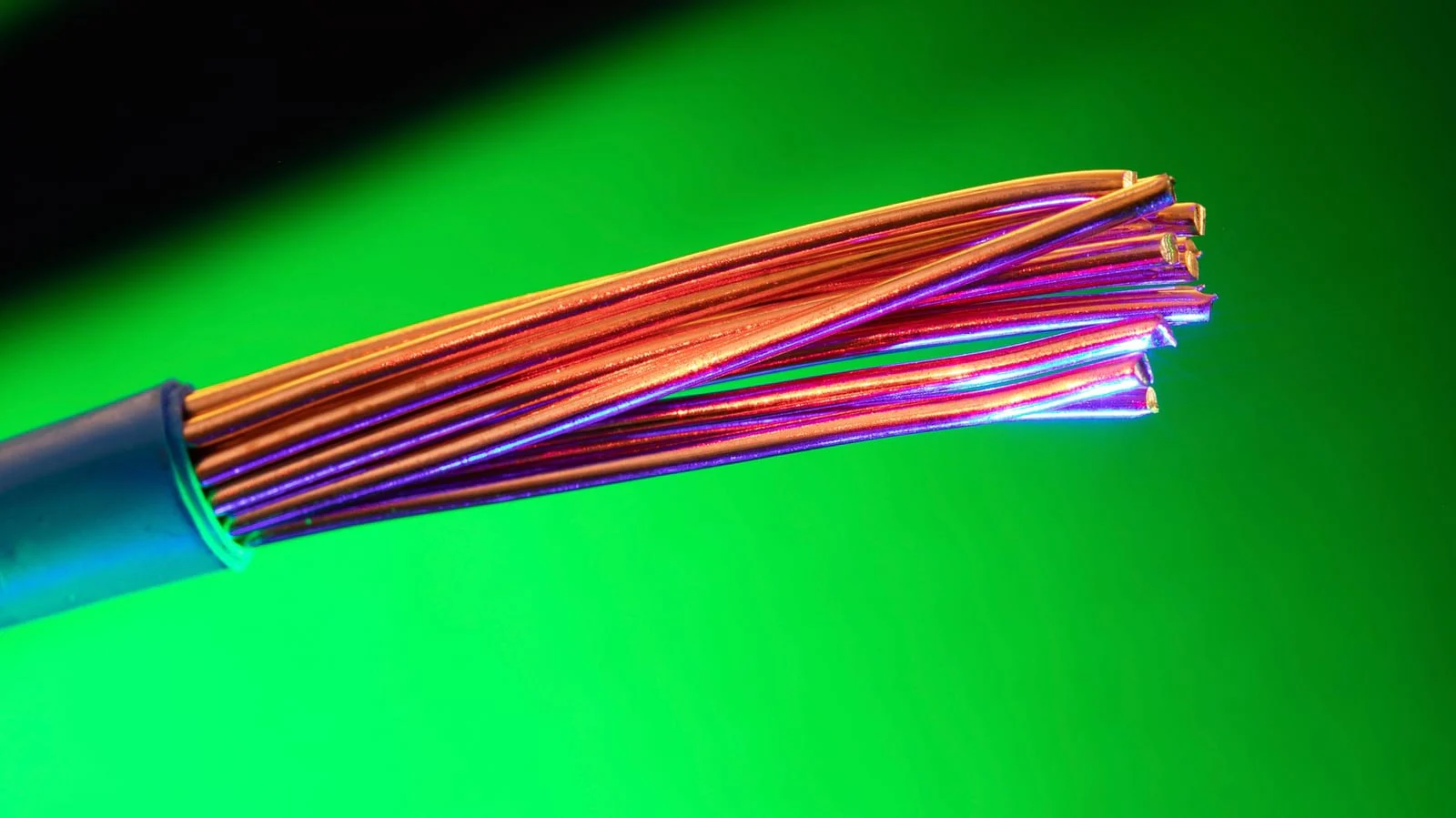
Bus bars, bus ducts, and high-current conductors — the primary application. Here the 100% IACS conductivity directly sets how much copper is needed to carry a given current, and T2’s easy solderability and weldability make assembly straightforward.[1]
Wire, Cable & Magnet Wire
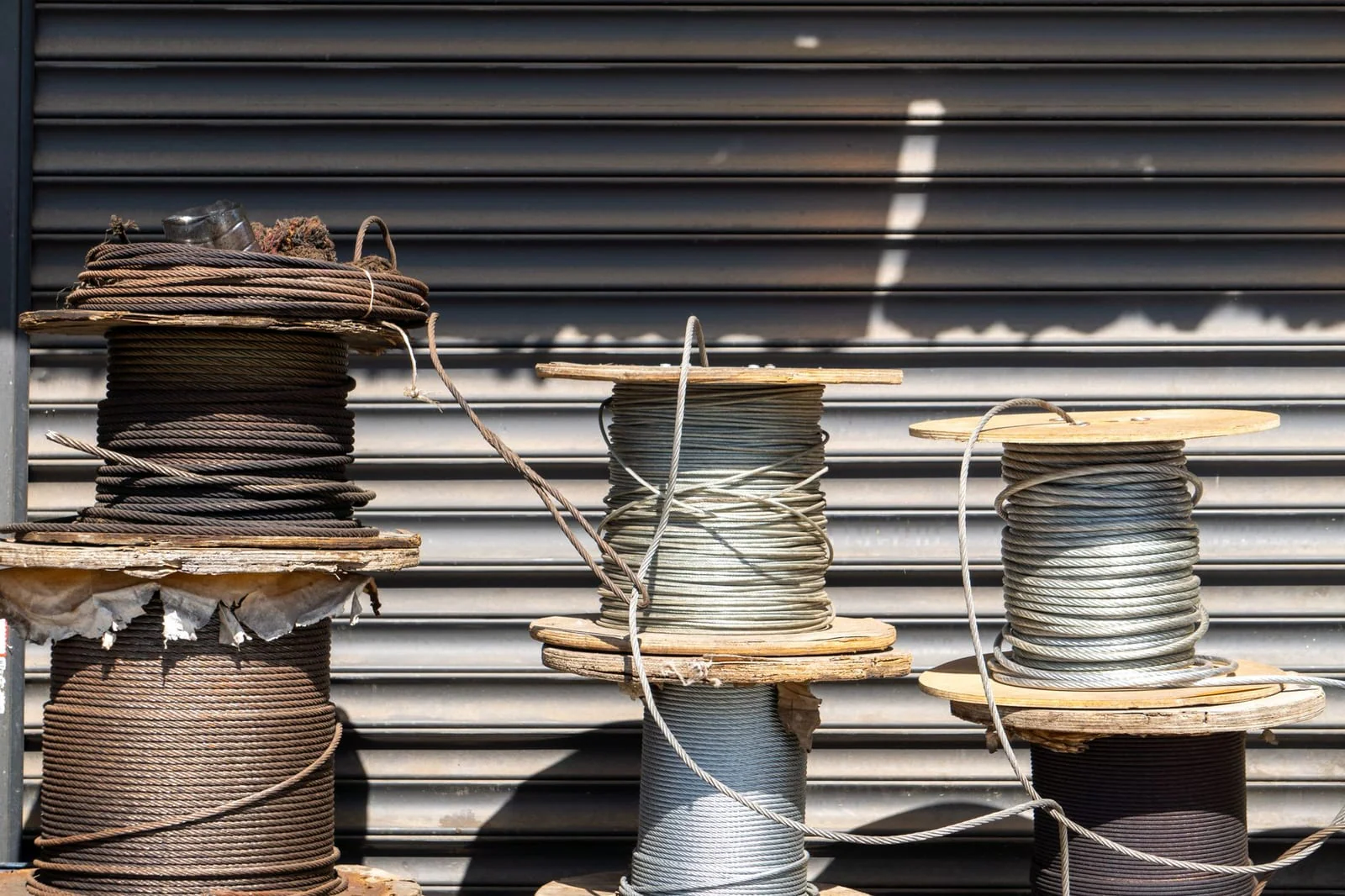
Magnet wire, power cable, and flexible electrical leads, drawn from soft, highly ductile T2. The combination of maximum conductivity and the ability to draw down to fine wire is exactly what pure copper offers and the alloys cannot match.[2]
Heat Exchangers & Cooling
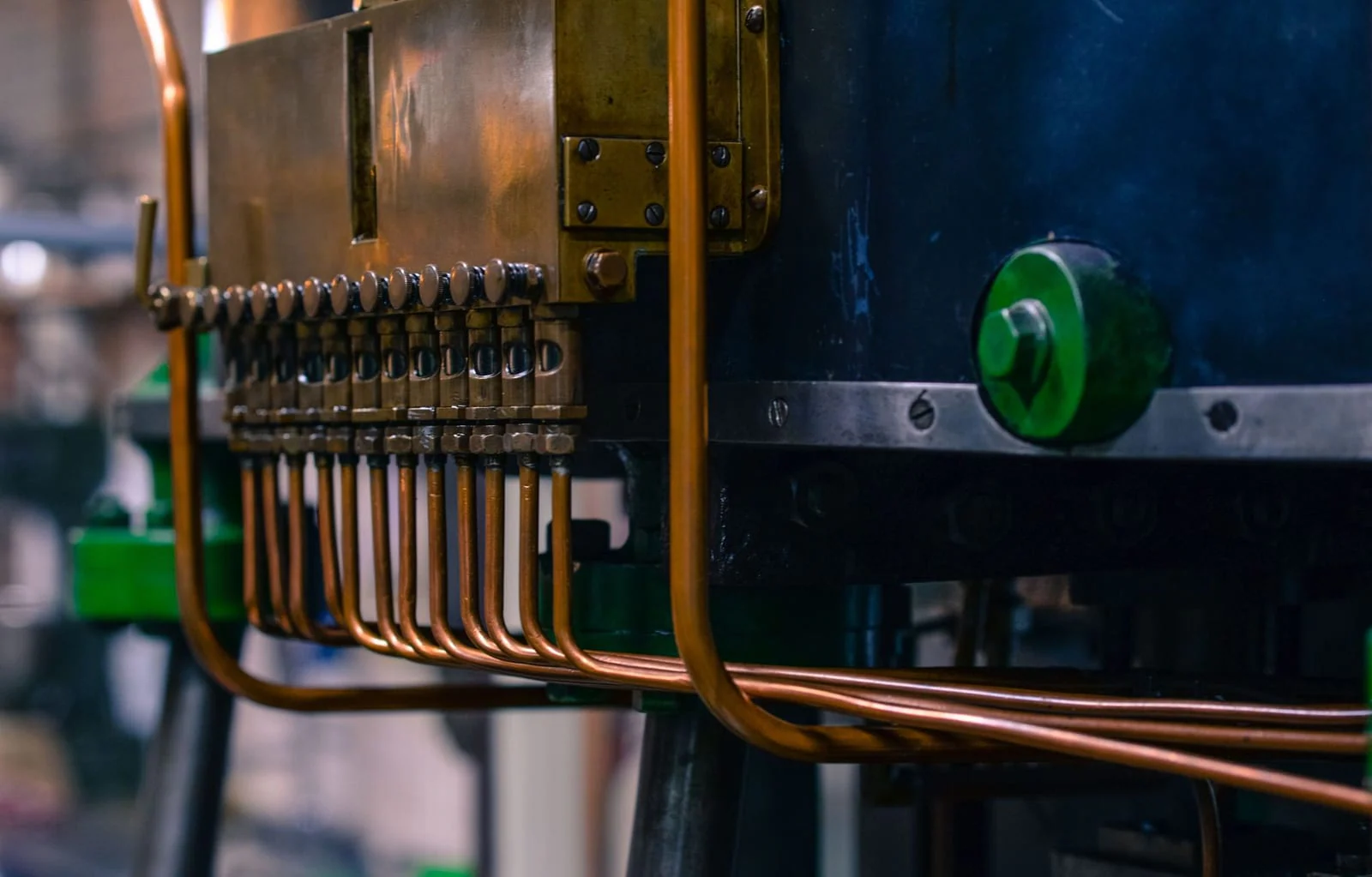
Heat exchangers, radiator strip, and cooling fins, where copper’s thermal conductivity moves heat efficiently and its formability allows thin, finned geometries to be rolled and brazed.
Plumbing, Roofing & Architecture
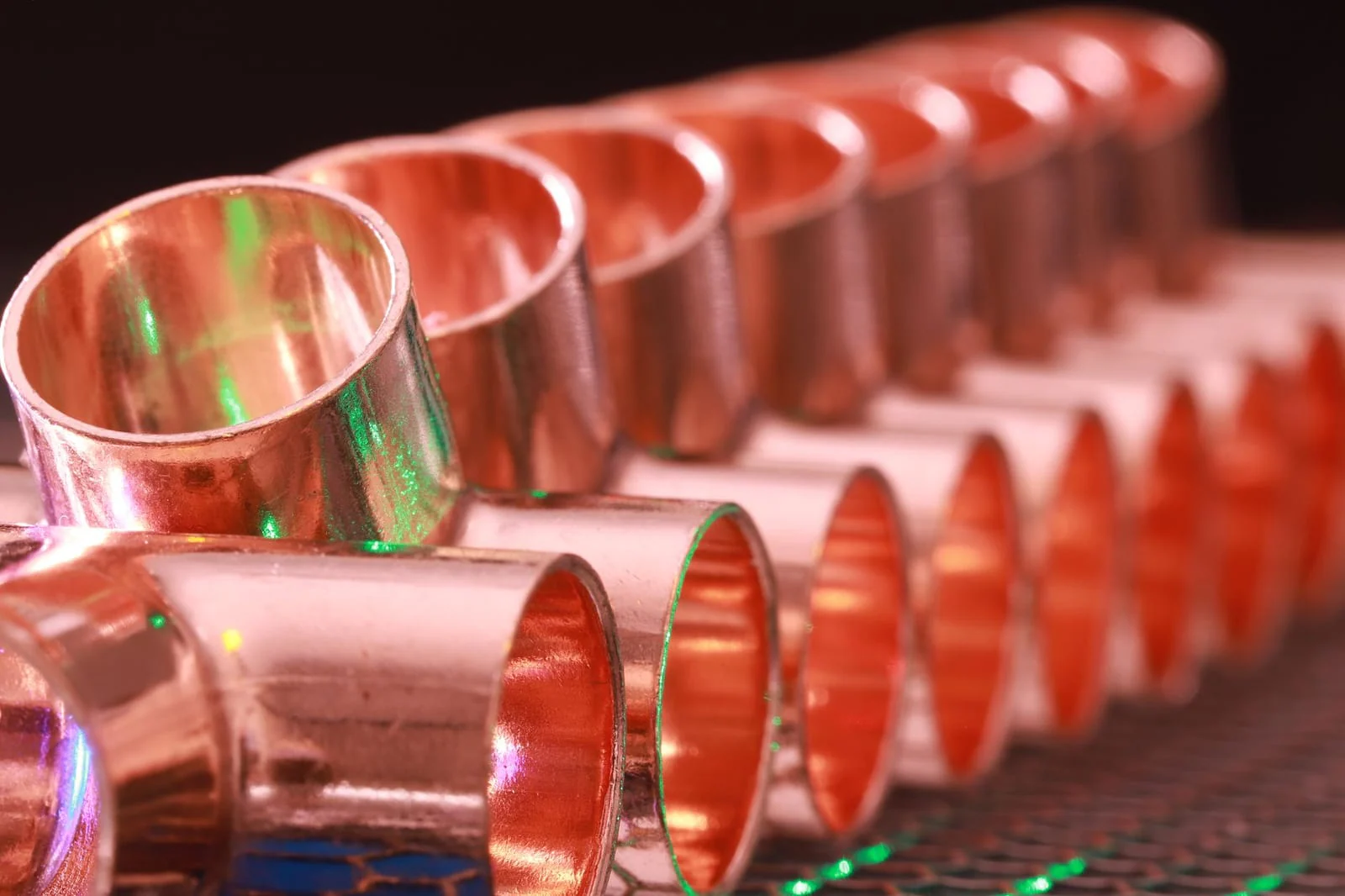
Plumbing tube, roofing sheet, and architectural cladding, where freshwater and atmospheric corrosion resistance — and the long-lived protective patina that develops outdoors — give copper a service life measured in generations.
Forms & Finishes
Common product forms:SheetStripCoilTubeBarRodWireFoil
Surface finishes:MillBright-annealedPolishedTinned
Wire, strip, and busbar are the workhorse forms for T2 in electrical service, while tube and sheet serve plumbing, heat-exchange, and roofing. Tinned finishes protect solderability and contact surfaces; bright-annealed and polished finishes serve where appearance or a clean surface matters.
References
- Copper Facts — Electrical Conductivity. Copper Development Association (CDA). Pure copper defines the 100% IACS benchmark; its conductivity is second only to silver. copper.org/education/c-facts
- Effect of Cr on the Microstructure and Mechanical Properties of Cu-Ni-Si Alloys. Materials (MDPI), 2026. Conductivity expressed in %IACS; demonstrates the effect of solute/precipitate elements on copper-alloy conductivity. pmc.ncbi.nlm.nih.gov/articles/PMC13075149
- Evolutions in Microstructure and Properties of Cu-Ni-Si-Mg-Mn Multi-Element High-Solute Alloy During Solid Solution, Aging, and Cold-Rolling. Materials (MDPI), 2026. Conductivity is lowest in the solid-solution state and recovers after ageing precipitation — solute elements lower %IACS. pmc.ncbi.nlm.nih.gov/articles/PMC13117174