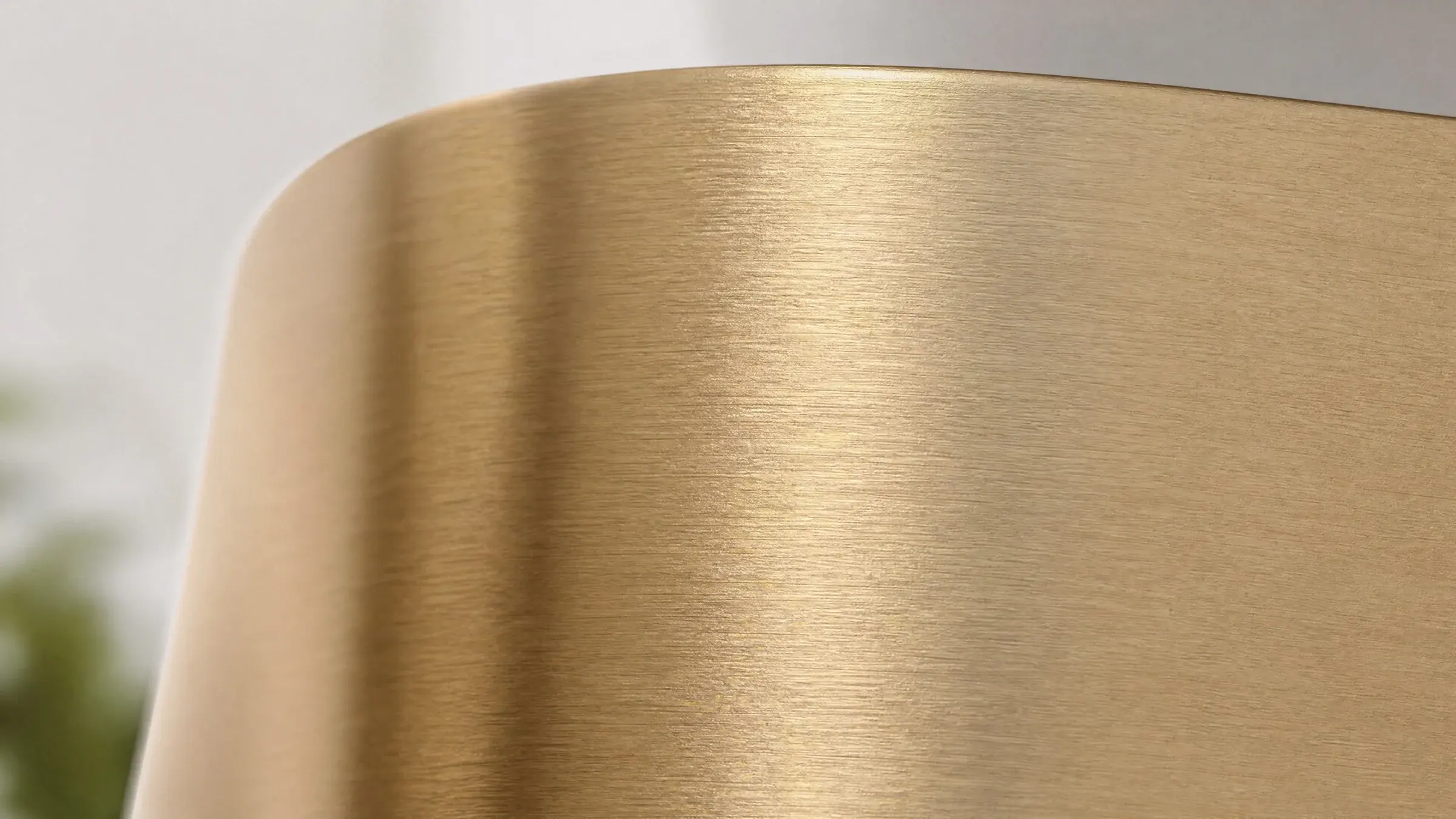
In short: H62 is the 62%-copper brass — a copper-zinc alloy in which zinc dissolves into copper's face-centred-cubic lattice to form α-brass, a single-phase solid solution that is non-magnetic. Zinc is far cheaper than copper and strengthens the alloy in solution, so H62 hits a deliberate sweet spot: more strength and lower cost than high-copper brasses, while staying easy to cold-stamp, machine and form. It conducts noticeably better than nickel-bearing copper alloys but well below pure copper — the price of alloying. Its two defining weaknesses are corrosion-driven: [dezincification](#corrosion) (selective loss of zinc that leaves a weak porous copper sponge) and [stress-corrosion / season cracking](#corrosion) in ammonia-bearing environments. For maximum conductivity choose T2 copper; for deeper drawing step up to H65; for seawater service neither H62 nor any plain brass competes with B10 cupronickel.
What H62 Brass Is
H62 is a common copper-zinc brass with a copper content near 62%, the balance being zinc plus tightly limited iron and lead. It is one of the most widely used industrial brasses precisely because it sits at the practical balance point of the Cu-Zn system — high enough in zinc to be strong and economical, low enough that it still cold-works and machines readily.
In the Chinese GB system it is H62 (GB/T 5231) — the "H" denotes *huangtong* (黄铜, brass) and the number the nominal copper percentage. It corresponds closely to CuZn37 and to UNS C27400 internationally. Buyers searching *H62*, *黄铜 H62*, *CuZn37*, or *C27400* are looking for this alloy.
H62 sits in the brass branch of the copper family — the copper-zinc alloys — distinct from pure copper, the bronzes (Cu-Sn and others), and the cupronickels (Cu-Ni). Where pure T2 copper is chosen for conductivity and B10 cupronickel for seawater service, the brasses trade some conductivity for a strong, formable, inexpensive metal with a handsome yellow colour.
The zinc is doing real work: it is both the cost lever (zinc is far cheaper than copper) and a strengthener (zinc dissolved in the copper lattice raises strength and hardness). That combination — cheaper *and* stronger than near-pure copper, while staying workable — is why H62 is the default brass for general hardware.
Chemical Composition
Composition limits for H62 per GB/T 5231. Copper sets the colour, conductivity and corrosion behaviour; zinc — the balance — supplies the cost saving and solid-solution strengthening; iron and lead are held to low limits to control structure and machinability.
| Element | Symbol | Content (wt%) | Role |
|---|---|---|---|
| Copper | Cu | 60.5–63.5 | Base metal — sets the yellow colour, the conductivity and the corrosion resistance; the matrix into which zinc dissolves |
| Zn | Zn | Balance | Principal alloying element (balance) — far cheaper than copper and a solid-solution strengthener; high zinc is also what makes brass vulnerable to dezincification |
| Iron | Fe | ≤ 0.15 | Held low — small amounts refine grain, but excess forms hard particles that impair cold formability |
| Pb | Pb | ≤ 0.08 | Held low here — lead improves machinability in free-cutting brasses, but in H62 it is restricted to keep the alloy ductile for stamping and forming |
Per GB/T 5231 (H62), ≈ CuZn37 / UNS C27400.
Crystal Structure: An α-Brass FCC Solid Solution
H62 is an alloy — a solid solution of zinc in copper — so it has no molecular formula. The correct description is by crystal structure and phase.
Copper is face-centred cubic (FCC), and zinc atoms substitute for copper atoms on that same FCC lattice. Up to its solubility limit the result is α-brass: a single-phase FCC solid solution. At ~62% copper, H62 lies close to the α / (α+β) boundary, so depending on exact composition and processing it is predominantly α-brass and may contain a small amount of the harder β phase — but the matrix and defining behaviour are those of an FCC α-brass. The alloy is non-magnetic in all conditions.
In α-brass, zinc dissolves substitutionally into copper's face-centred-cubic lattice, distorting it and impeding dislocation motion — this solid-solution strengthening is why H62 is stronger and harder than pure copper while staying ductile and cold-formable.[2] There is no chromium and no passive film here: a brass is not a stainless steel, and none of the Cr₂O₃-passivation, sensitisation or martensite-quench concepts apply. The FCC α-brass has no hardening phase transformation, so H62 is strengthened by zinc in solution and by cold work, and softened by annealing — not by quench-and-temper. The same scattering of conduction electrons by zinc that raises strength also lowers conductivity well below that of pure copper.
Corrosion: Dezincification & Stress-Corrosion (Season) Cracking
H62 is a capable general-purpose metal in air and ordinary indoor service, but it has two corrosion failure modes that are specific to high-zinc brasses and that every designer using it must respect. Both are well documented and both are avoidable with the right precautions.
Dezincification — Selective Loss of Zinc
Dezincification is the signature corrosion failure of brass. In aggressive waters the alloy corrodes selectively: copper and zinc dissolve together, then copper redeposits in place as a weak, porous, spongy mass while the zinc is carried away.[3] The part keeps its original shape and looks intact, but the affected region has turned into a porous copper sponge that has lost its strength and can perforate or crumble — a particularly insidious failure because it can be invisible from outside.
The classic mitigation is a tiny arsenic addition. Arsenic inhibits dezincification of α-brass by suppressing the re-deposition of the dissolved copper, so the porous sponge cannot build up; crucially, however, arsenic does not protect the β phase, only α.[3] This is why dezincification-resistant (DZR) brasses are not made by arsenic alone but by controlling composition and heat treatment to obtain a single-phase α structure, then inhibiting that α with arsenic.[2] H62 sitting near the α/β boundary is exactly the kind of brass where this matters — a β-bearing structure undermines arsenic's protection.
Stress-Corrosion Cracking — "Season Cracking"
The second failure mode is stress-corrosion cracking (SCC), known historically in brass as "season cracking" — cracks that appear, seemingly spontaneously, in stressed brass exposed to certain environments. The brass-ammonia system is the textbook case: residual or applied tensile stress combined with traces of ammonia or amines drives cracking, and in α-brass the cracks are predominantly intergranular.[4]
The accepted mechanism is film-rupture / active-path: a surface film (a cuprous-oxide, Cu₂O, layer) forms, the tensile strain ruptures it locally, and corrosion advances along the freshly exposed path before the film can re-form. Whether the crack runs intergranular or transgranular is governed by the competition between film-formation rate and crack-tip strain rate.[4] More recent work shows the corrosion-product film itself induces stress that *facilitates* cracking — the Cu₂O film is not a passive bystander but an active contributor to crack initiation in the brass-ammonia couple.[5]
The practical lessons follow directly: relieve residual stresses (a stress-relief anneal after heavy cold work or stamping is the standard defence), keep H62 parts away from ammonia / amine atmospheres (cleaning agents, fertilisers, some refrigerants), and choose a dezincification-resistant grade or a different alloy where the water chemistry is aggressive. Used inside its envelope, H62 is reliable; pushed outside it, these two mechanisms are the things that bite.
Electrical & Thermal Conductivity: Better Than Cupronickel, Below Pure Copper
Zinc dissolved in the copper lattice scatters conduction electrons, so brass conducts less electricity and heat than pure copper — but, with no nickel to scatter electrons as heavily, H62 conducts far better than the cupronickels. The chart shows where it falls in the copper family: down from near-pure T2 copper at the IACS benchmark, well above B10 cupronickel.
At roughly the level shown, H62 keeps enough conductivity to serve as electrical terminals, connectors and radiator components, while the alloying buys the strength, formability and cost advantage that pure copper cannot match. Expressing conductivity in %IACS — the standard yardstick for copper alloys — makes the trade-off plain: every soluble alloying element that strengthens copper also costs conductivity, and the engineering task is choosing the alloy whose balance fits the job.[1]
Mechanical & Physical Properties
H62 offers a genuinely useful balance in the annealed (soft) condition: stronger and harder than pure copper thanks to zinc in solid solution, yet ductile enough to be deep-stamped, bent and cold-formed without cracking. Cold work then raises strength further, and a recovery or full anneal restores ductility for the next forming step.
| Tensile strength (MPa) | ≈330 |
| Elongation (%) | ≈40 |
| Hardness | ≈56 HV |
| Density (g/cm³) | 8.43 |
| Elastic modulus (GPa) | 100 |
| Magnetic response | Non-magnetic |
Because it is an FCC α-brass solid solution with no hardening transformation, H62 cannot be quench-hardened the way martensitic steels are. Its mechanical condition is set entirely by the degree of cold work and the annealing schedule — soft and ductile for forming, harder and springier after cold reduction.
Key Characteristics
- Strength-and-cost sweet spot. More strength than high-copper brasses at lower cost — zinc is both the cheap filler and a solid-solution strengthener.
- Excellent cold workability. Stamps, draws, bends and machines readily in the soft condition; the everyday choice for high-volume formed hardware.
- Respectable conductivity. Conducts electricity and heat well below pure copper but far above the nickel-bearing copper alloys — usable for terminals and radiators.
- Attractive yellow finish. The classic warm yellow brass colour, polishable and platable, valued for decorative and architectural parts.
- Non-magnetic FCC α-brass. A copper-zinc solid solution with no phase-change hardening — magnetically inert in all conditions.
- Two corrosion cautions. Vulnerable to dezincification in aggressive waters and to ammonia-driven stress-corrosion (season) cracking under residual tensile stress — both manageable with the right grade choice and a stress-relief anneal.
How H62 Is Made
H62 is melted and cast to the controlled Cu-Zn composition, then hot- and cold-worked into product form. For the sheet, strip and tube that feed stamping and machining lines, the critical steps are cold rolling or drawing to size and an anneal that sets the right temper — soft for deep forming, harder for spring or wear duty.
A final stress-relief anneal is more than a formality for H62: by removing the residual tensile stresses left by heavy cold forming, it directly defends formed parts against ammonia-driven stress-corrosion (season) cracking in service. Where the water chemistry is aggressive, the composition and heat treatment are instead steered toward a single-phase α structure for dezincification resistance.
H62 vs H65 vs T2 — Picking the Right Copper Alloy
All three are copper-base FCC alloys, but each is optimised for a different job. The choice comes down to whether the priority is low-cost formable strength, deeper drawability, or maximum conductivity.
Higher-copper H65 is comfortably single-phase α and draws deeper, which is why it is favoured for severe deep-drawn shells; H62's slightly higher zinc gives a little more strength and a lower material cost, at the price of being nearer the α/β boundary. For pure conductivity nothing in the brass family competes with T2 copper.
Applications by Industry
H62's blend of strength, easy forming, decent conductivity, low cost and a yellow finish makes it the default brass wherever parts must be made in volume and worked hard without paying for high-copper or specialty alloys.
Hardware, Fasteners & Fittings
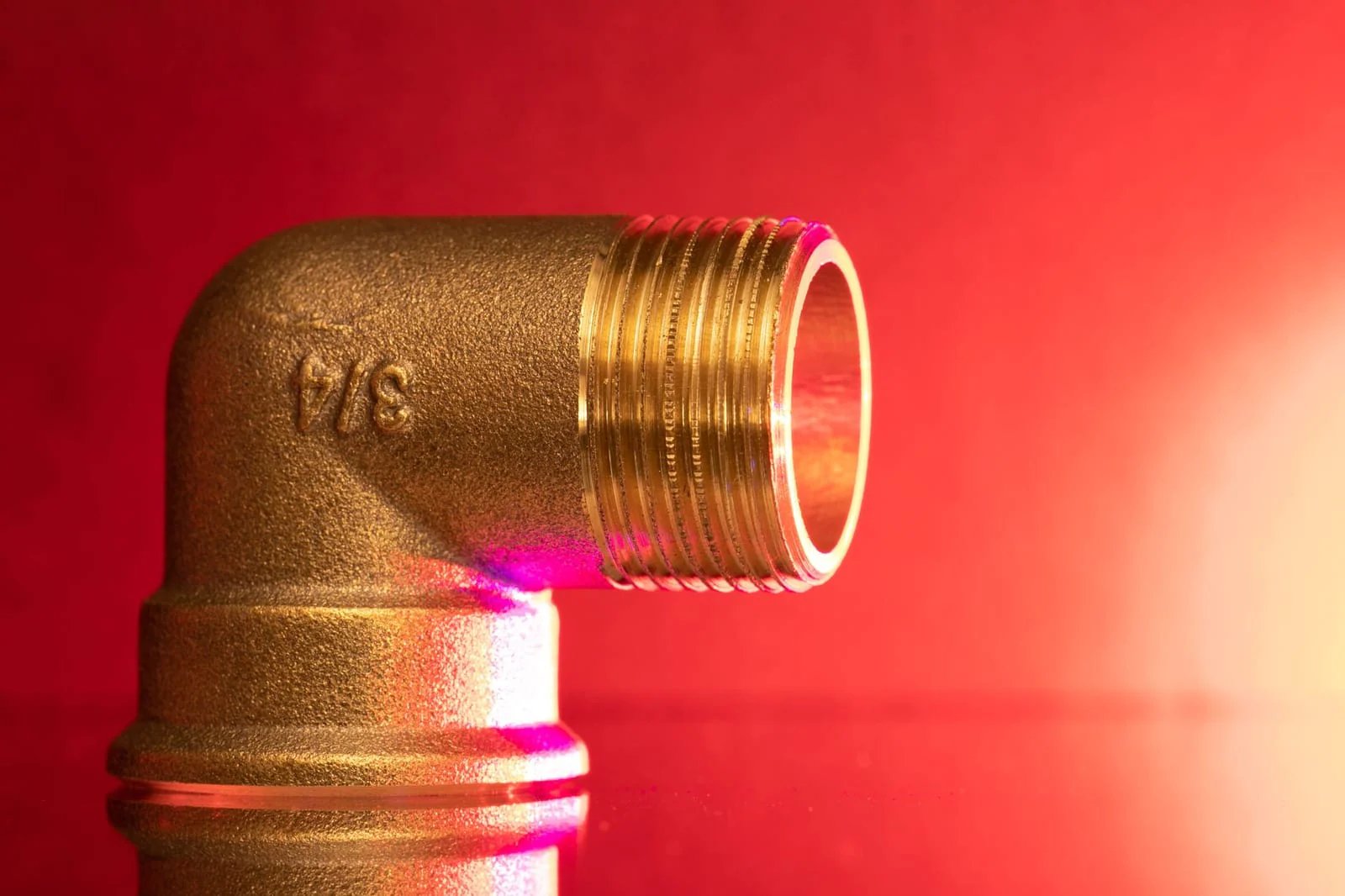
General hardware, fasteners and mechanical fittings — the bread-and-butter application. H62 stamps and machines economically and takes a clean finish, so it dominates high-volume formed brass parts where service is dry or mild.
Radiator & Heat-Exchanger Components

Radiator and heat-exchanger parts that need formability and moderate thermal conductivity at low cost. Where the working fluid is aggressive water, designers either move to a dezincification-resistant grade or accept controlled service conditions.
Electrical Terminals & Connectors
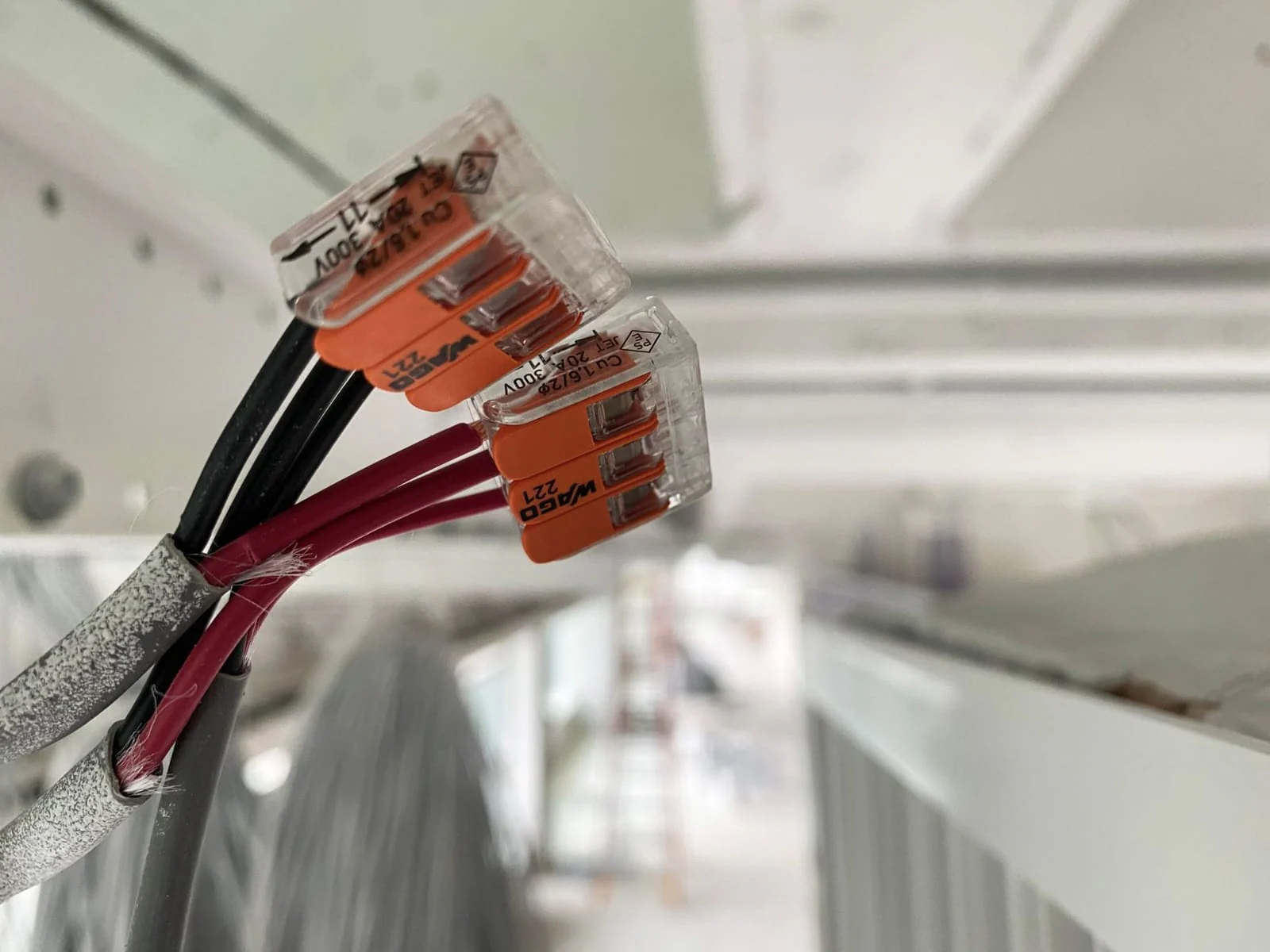
Terminals, connectors and contact parts that need a workable, springy metal with usable conductivity. H62 carries enough current for low-power connections while being far cheaper and stronger than pure copper.
Decorative & Architectural Parts
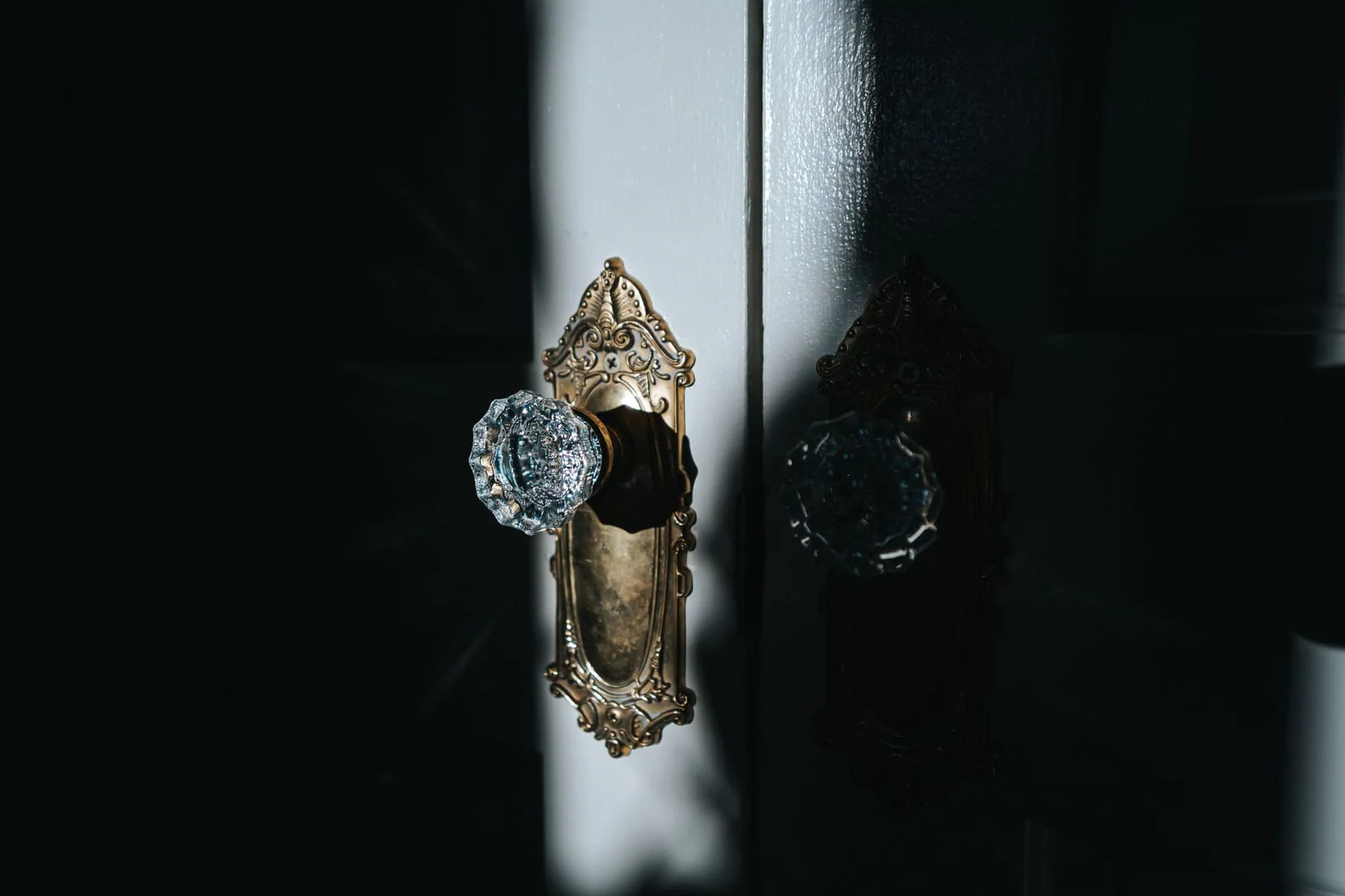
Trim, fittings and architectural hardware that trade on the warm yellow brass colour. H62 polishes and plates well, making it a staple for decorative metalwork.
Forms & Finishes
Common product forms:SheetStripTubeBarWire
Surface finishes:MillPolishedPlated
Sheet and strip are the workhorse forms for H62, feeding the stamping and forming lines that make hardware and connectors; tube, bar and wire serve fittings, machined parts and drawn components. Polished and plated finishes support its decorative use.
References
- Effect of Cr on the Microstructure and Mechanical Properties of Cu-Ni-Si Alloys. Materials (MDPI), 2026. Conductivity expressed in %IACS; the effect of solid-solution elements on copper-alloy conductivity. pmc.ncbi.nlm.nih.gov/articles/PMC13075149
- Innovations: Introduction to Brasses (Part II). Copper Development Association (CDA). α-brass is FCC, β-brass BCC; at 38–42% Zn the alloy is two-phase α+β; DZR dezincification resistance is achieved by composition control plus heat treatment to a single-phase α structure. copper.org/.../innovations/2000/01/brasses02
- The Mechanism of Dezincification and the Effect of Arsenic. I.. Lucey, British Corrosion Journal 1(1), 1965. Simultaneous Cu/Zn dissolution leads to porous Cu re-deposition; As suppresses cuprous re-deposition but does not protect the β phase. doi.org/10.1179/000705965798328254
- The mechanism of stress-corrosion cracking in the brass–ammonia system. Hoar & Booker, Corrosion Science 8(8), 1968. Film-rupture / active-path mechanism; the ratio of film-formation rate to crack-tip strain rate determines intergranular vs transgranular cracking. doi.org/10.1016/s0010-938x(68)80073-3
- Corrosion Product Film-Induced Stress Facilitates Stress Corrosion Cracking. Scientific Reports 5, 2015. Copper and brass in ammonia solutions are classic SCC systems; stress induced by the Cu₂O oxide film promotes cracking. pmc.ncbi.nlm.nih.gov/articles/PMC4464253