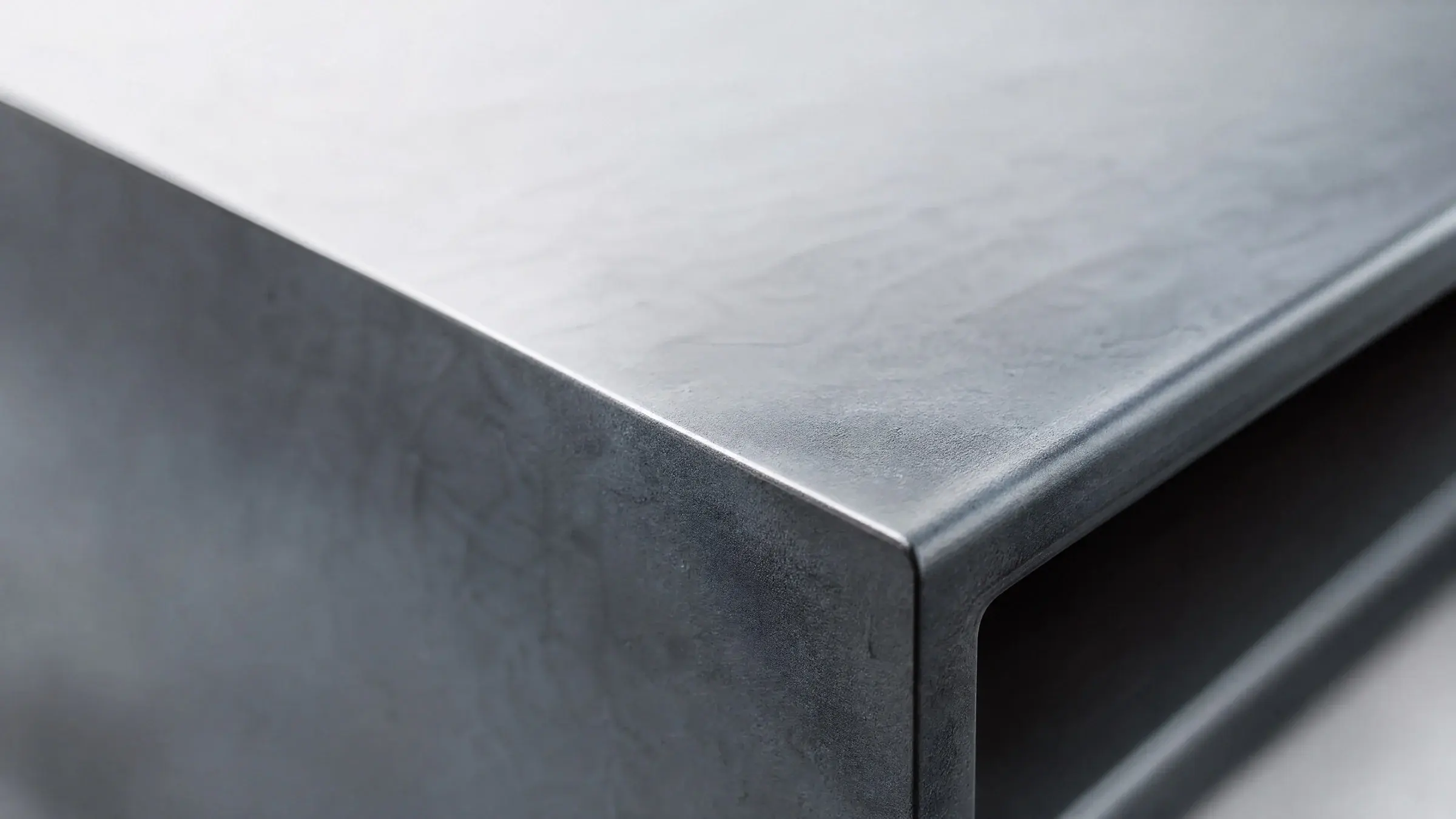
In short: Q345 is China's low-alloy high-strength structural steel (HSLA) — a low-carbon steel that reaches roughly 345 MPa yield not by adding much carbon, but by three combined mechanisms: a modest manganese addition for solid-solution strengthening, micro-alloyed V/Nb/Ti that precipitate nanoscale carbonitrides, and the grain refinement those same micro-alloys produce, which strengthens *and* toughens the steel via the Hall-Petch relationship. It is still a ferrite (BCC) + pearlite steel and is magnetic — there is no chromium, no passive film, and it rusts unless protected by paint, galvanising or another coating. The pay-off is ~100 MPa more yield than Q235 at a low carbon equivalent that keeps it weldable, letting designers build lighter bridges and taller frames. In the current GB/T 1591-2018 standard the grade was renamed Q355, but legacy Q345 designations remain in everyday use.
What Q345 Steel Is
Q345 is a low-alloy high-strength structural steel — the class engineers call HSLA (high-strength low-alloy). It starts from an ordinary low-carbon structural steel and, with only small deliberate alloy additions, raises the specified minimum yield strength to about 345 MPa — roughly 100 MPa more than plain-carbon Q235, without the brittleness that simply adding carbon would bring.[6]
In the Chinese GB system the designation is read directly: Q for *qufu* (屈服, yield) and 345 for the nominal yield strength in MPa. It is specified under GB/T 1591, the standard for low-alloy high-strength structural steel. Internationally it lines up closely with EN S355 and ASTM A572 Gr.50. Buyers searching *Q345*, *低合金高强度钢*, or *HSLA plate* are looking for this material.
A naming note that matters. In the current GB/T 1591-2018 revision the grade was renamed Q355 — a minor revision to composition limits and quality classes, with properties closely aligned. The older Q345 name remains prevalent in mills, drawings and stockists, so the two are encountered side by side; this guide uses Q345 throughout and treats Q355 as its current-standard equivalent.
Q345 sits in the carbon-steel family alongside the plain structural and machine steels — distinct from the stainless grades. It is not a corrosion-resistant steel: it contains no chromium, forms no passive film, and will rust in service unless coated. What sets it apart from plain Q235 is not corrosion behaviour but strength-to-weight, bought cheaply through micro-alloying rather than through expensive bulk alloying.
Chemical Composition
Composition limits for Q345 per GB/T 1591. Carbon is held low (to keep the steel weldable and tough); the strength comes instead from a manganese addition and from micro-alloy elements — vanadium, niobium and titanium — added in only tenths of a percent.
| Element | Symbol | Content (wt%) | Role |
|---|---|---|---|
| Carbon | C | ≤ 0.2 | Held low (≤0.20%) — keeps the carbon equivalent down for good weldability and toughness; strength is *not* sourced from carbon here |
| Manganese | Mn | 1–1.6 | Principal alloy addition — solid-solution strengthens the ferrite and lowers the transformation temperature, refining the structure |
| Silicon | Si | ≤ 0.5 | Deoxidiser; provides modest solid-solution strengthening of the ferrite |
| Phosphorus | P | ≤ 0.035 | |
| Sulfur | S | ≤ 0.035 | |
| Vanadium | V | micro-alloy, ≤0.15 | Micro-alloy — forms nanoscale V carbonitrides that precipitation-strengthen and pin grain boundaries to refine grain size |
| Niobium | Nb | micro-alloy, ≤0.07 | Micro-alloy — the most potent grain refiner; Nb(C,N) retards recrystallisation during controlled rolling for a very fine ferrite grain |
| Titanium | Ti | micro-alloy, ≤0.20 | Micro-alloy — TiN pins austenite grains at high temperature, protecting weld-HAZ toughness; also fixes nitrogen |
| Iron | Fe | Balance | Base metal — the BCC iron matrix (ferrite + pearlite) |
Per GB/T 1591 (Q345; current standard Q355). V/Nb/Ti are micro-alloy additions, each typically well under ~0.2%.
Crystal Structure & Microstructure: Fine Ferrite (BCC) + Pearlite
Q345 is a low-carbon steel, so at room temperature its matrix is ferrite — body-centred cubic (BCC) α-iron — interspersed with islands of pearlite, the lamellar ferrite/cementite (Fe₃C) constituent. This is the same family of constituents as plain Q235 and 20 steel; what differs in Q345 is how fine the grains are. The steel is magnetic, as all ferritic carbon steels are.
Because the carbon content is low, only a small fraction of the structure is pearlite — most of it is soft, tough ferrite. The micro-alloys do not change *which* phases form; they change the scale of the structure, holding the ferrite grains very fine. That fine grain is the whole point of HSLA, and it is set during controlled rolling rather than by any later heat treatment.[7]
How Q345 Gets Its Strength: Three Mechanisms Working Together
The reason Q345 can be ~100 MPa stronger than plain Q235 while staying weldable is that its strength comes from alloy design, not carbon. Three mechanisms stack on top of the base ferrite-pearlite structure.[6]
1 · Manganese Solid-Solution Strengthening
Manganese atoms dissolve substitutionally in the BCC ferrite lattice. Being a slightly different size from iron, each dissolved atom strains the surrounding lattice and impedes the motion of dislocations — the carriers of plastic flow — so the steel yields at a higher stress. This solid-solution strengthening is modest per unit but cheap, and the manganese does double duty: it also lowers the transformation temperature, which helps produce a finer structure on cooling.[6]
2 · Micro-Alloy Precipitation Strengthening (V/Nb/Ti carbonitrides)
Vanadium, niobium and titanium have a strong affinity for carbon and nitrogen and precipitate as nanoscale carbonitrides — V(C,N), Nb(C,N), TiN — dispersed through the matrix. These tiny, hard particles act as obstacles that dislocations must bow around or cut through, raising the yield strength further. Because the particles are only nanometres across and present in tenths of a percent of alloy, the effect is large for a very small alloy cost.[7]
3 · Grain Refinement — the Hall-Petch Mechanism
The same carbonitride particles pin grain boundaries during hot rolling, holding the ferrite grain size very fine. Grain boundaries obstruct dislocation movement, so finer grains mean more boundary per unit volume and a higher yield strength. The relationship is the Hall-Petch law, σy = σ₀ + k·d^(−1/2): yield strength rises as grain size *d* falls.[4]
Grain refinement is the special mechanism in HSLA steel because it is the only strengthening route that raises strength and toughness at the same time — every other mechanism trades toughness away for strength. Refining the ferrite grain both lifts the yield point and lowers the ductile-to-brittle transition temperature, which is exactly why fine-grained Q345 can carry more load and still resist brittle fracture in cold structural service.[7]
Weldability: Low Carbon Equivalent — and the HAZ Caveat
Weldability is a defining advantage of Q345 and a direct consequence of its design philosophy. Because strength comes from micro-alloying and grain refinement rather than from carbon, the carbon equivalent (CE) stays low. A low carbon equivalent means the heat-affected zone is less prone to forming hard, crack-sensitive martensite on cooling, so Q345 can be welded with conventional procedures and is the material of choice for large welded structures.[6]
The honest caveat — the CGHAZ. Welding still imposes a thermal cost. In the coarse-grained heat-affected zone (CGHAZ) — the band immediately beside the fusion line — peak temperatures are high enough to dissolve some carbonitrides and let austenite grains grow coarse, which can locally reduce the very toughness the fine base-metal grain provided. Titanium nitride (TiN) is added partly to pin austenite grains at those high temperatures and limit this coarsening. Sound results therefore depend on controlling heat input, and Q345 is best understood as readily weldable within a controlled procedure, not indifferent to it.[6]
Corrosion: Q345 Rusts — Protect It Actively
Q345 is a carbon steel, and like all carbon steels it has no inherent corrosion resistance. It contains no chromium and forms no passive film — so in moist air it simply rusts. The rust that forms is a loose, flaky, non-protective iron-oxyhydroxide layer that does not seal the surface the way a stainless steel's self-healing chromium-oxide film does; corrosion continues underneath it rather than stopping.[8]
This is the fundamental difference from stainless steel and must be designed around: corrosion resistance is added on, not built in. Q345 structures are protected by active measures — paint and protective coatings, hot-dip galvanising, blackening (bluing) or phosphating — chosen for the service environment.
Galvanising is the most common protection for structural Q345. The zinc coating does more than form a barrier: zinc is electrochemically less noble than iron, so it acts as a sacrificial anode — it corrodes preferentially and cathodically protects the steel even where the coating is scratched.[9]
Boundaries, honestly stated. Corrosion is far worse in marine and chloride-rich environments, where wet-dry cycling drives the formation of aggressive rust phases such as akaganeite (β-FeOOH) and attack accelerates. Coastal and offshore Q345 therefore needs heavier coating systems and maintenance — the protection scheme must match the exposure, not be assumed.[10]
Mechanical & Physical Properties
Q345 delivers a higher yield strength than plain-carbon structural steel while retaining good ductility and the same stiffness — the elastic modulus of steel is set by the iron lattice and is unchanged by micro-alloying, so a Q345 member is *stronger* but no *stiffer* than a Q235 one of equal section.
| Tensile strength (MPa) | 470–630 |
| Yield strength (MPa) | ≥345 |
| Elongation (%) | ≥20 |
| Density (g/cm³) | 7.85 |
| Elastic modulus (GPa) | 206 |
| Magnetic response | Magnetic |
Note that the specified yield is thickness-dependent: the headline ~345 MPa applies to thinner sections and reduces in heavier plate per GB/T 1591, because grain refinement and controlled cooling are harder to maintain through thick sections. There is no quench-and-temper step in normal Q345 supply — its properties come from composition plus controlled rolling, not from a hardening heat treatment.
Key Characteristics
- High strength-to-weight from micro-alloying. ~100 MPa more yield than plain Q235, achieved with only tenths of a percent of V/Nb/Ti — letting designers reduce section size and save steel.
- **Grain refinement strengthens *and* toughens.** The Hall-Petch mechanism is the HSLA signature: finer ferrite grains raise yield strength while lowering the brittle-fracture transition temperature.
- Good weldability. Low carbon equivalent keeps the heat-affected zone crack-resistant; weldable with conventional procedures within a controlled heat input.
- Ferritic, BCC, magnetic. Still a ferrite + pearlite carbon steel — magnetic in all conditions, with no chromium and no passive film.
- No inherent corrosion resistance. Rusts unless protected; relies on paint, galvanising, blackening or phosphating chosen for the environment.
- Thickness-dependent yield. Specified minimum yield falls in heavier sections per GB/T 1591 — design to the thickness, not just the grade.
How Q345 Is Made: Micro-Alloying + Controlled Rolling
The metallurgy of Q345 is realised on the rolling mill as much as in the ladle. After steelmaking and micro-alloying, the decisive step is thermomechanical controlled processing (TMCP) — controlled rolling and controlled cooling — which is what actually delivers the fine grain that the micro-alloys make possible.
During controlled rolling the niobium and titanium carbonitrides retard recrystallisation, so the austenite is progressively flattened and pancaked rather than coarsening — and on the subsequent controlled cool it transforms to a very fine ferrite grain. Vanadium then precipitates further carbonitrides at lower temperature for added precipitation strength. The grain size, and therefore most of the strength, is essentially built in by the rolling schedule.[7]
Q345 vs Q235 vs 45 — Picking the Right Carbon Steel
All three are ferritic carbon steels, but each is optimised for a different job. The choice comes down to whether the priority is high-strength weldable structure, plain low-cost structure, or a heat-treatable machine steel.
Applications by Industry
Q345's pairing of higher yield strength with good weldability makes it the default structural steel wherever extra strength lets a structure carry more load or weigh less than plain Q235 would allow.
Bridges & Heavy Structures

Bridge girders and major structural frameworks, where the higher yield strength permits longer spans and lighter sections, and the low carbon equivalent makes the large welded connections practical to fabricate.[6]
High-Rise Buildings

Columns and beams in high-rise steel frames, where reducing section size with a stronger steel saves both material and dead weight — compounding savings down through the structure to the foundations.
Heavy Machinery & Cranes
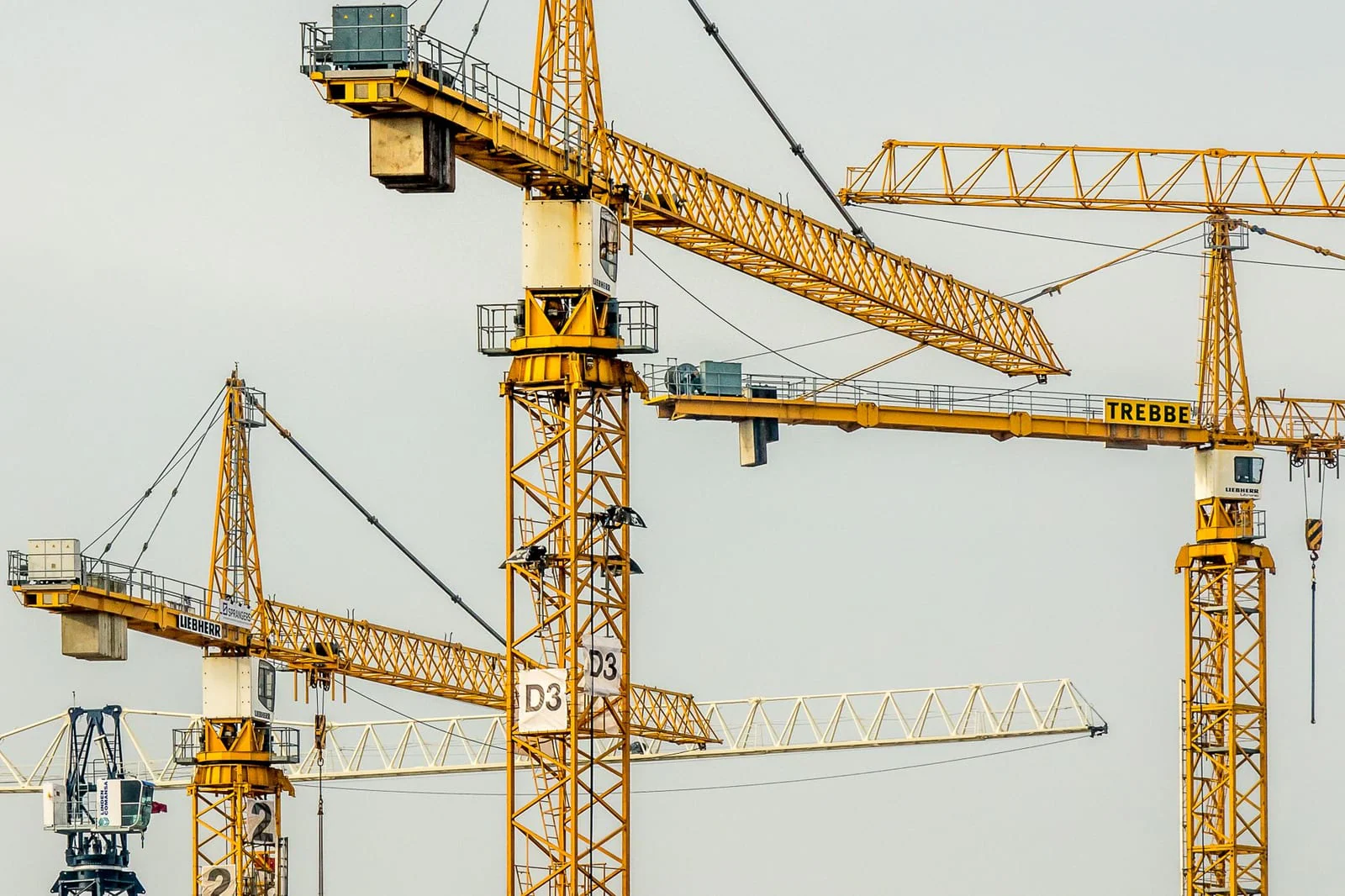
Crane structures, engineering machinery and load-bearing fabrications, where the strength-to-weight advantage improves capacity and the weldability suits heavily fabricated assemblies.
Pressure-Bearing Structures & Vessels
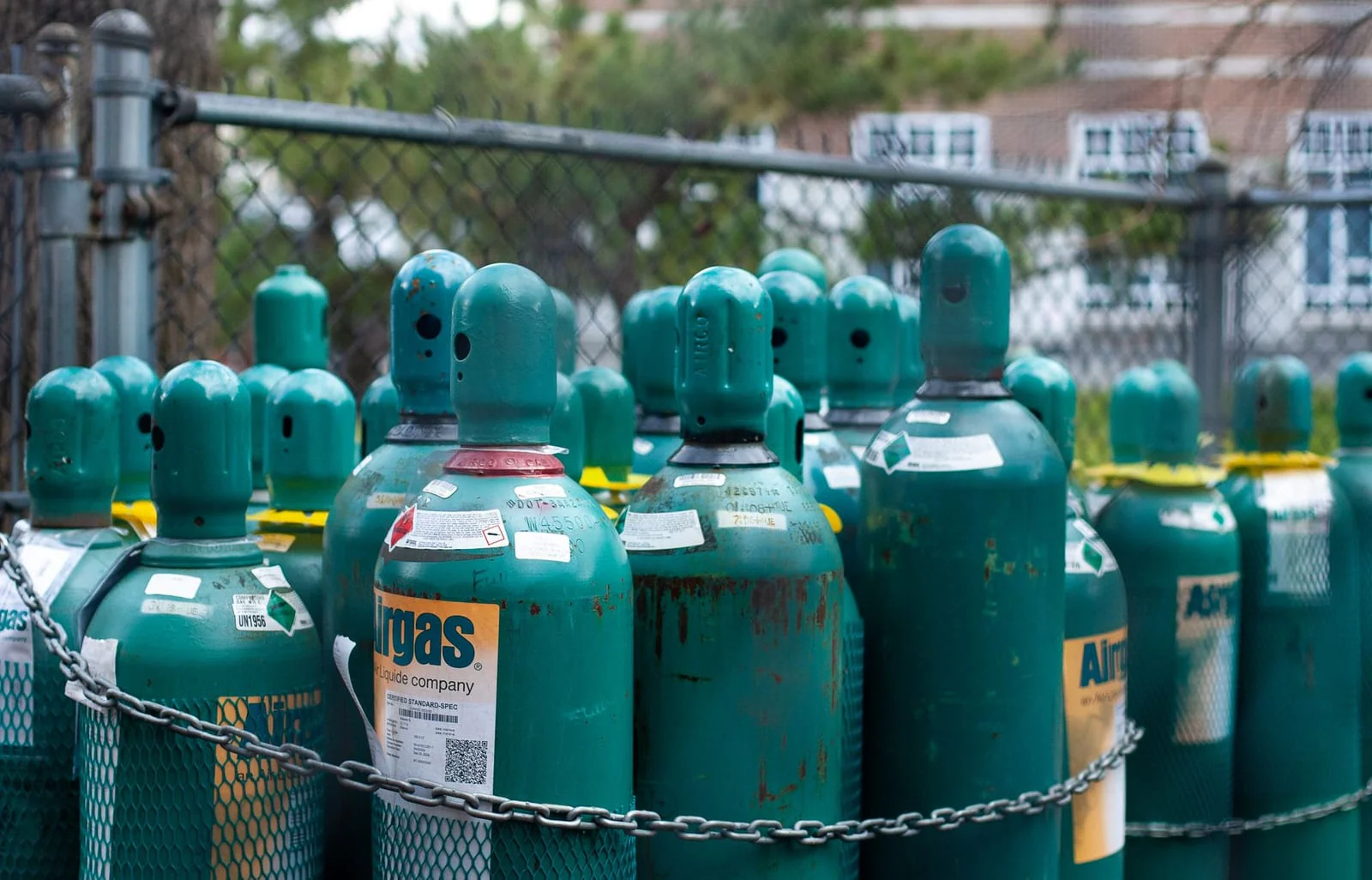
Pressure-bearing structures and storage vessels, where good toughness from the fine grain together with weldability supports safe fabrication of large pressure-retaining structures.
Forms & Finishes
Common product forms:PlateSheetCoilBarSectionPipe
Surface finishes:Hot-rolledPickledGalvanized
Heavy plate and structural sections are the workhorse forms for Q345, supplied for bridges, frames and machinery; galvanized finishes add the active corrosion protection a bare carbon steel needs in exposed service.
References
- Ferrite grain size and Hall-Petch in ferrite-pearlite steels. Frontiers in Materials, 2020. Tensile data for F+P microstructures + Hall-Petch; the finest ferrite grains (4.5 μm) give both high strength and toughness. frontiersin.org/.../fmats.2020.604792
- Microalloying effects on HSLA weld HAZ properties. PMC11901270. Effect of microalloying (Nb/V/Ti/N) on the weld HAZ of HSLA steel: grain refinement + precipitation strengthening + solid-solution strengthening; low carbon equivalent and CGHAZ toughness. pmc.ncbi.nlm.nih.gov/articles/PMC11901270
- Hall-Petch relationship and microalloy precipitation in low-alloy steel. PMC12565937. Explicit Hall–Petch relationship; Nb/Ti grain refinement and precipitation strengthening; Mo increases hardenability. pmc.ncbi.nlm.nih.gov/articles/PMC12565937
- Non-protective rust layer on carbon steel. PMC5506973. Carbon-steel rust is porous and non-protective, unlike stainless self-passivation — carbon steel rusts and has no passive film. pmc.ncbi.nlm.nih.gov/articles/PMC5506973
- Zinc coating as sacrificial anode for steel protection. Frontiers in Materials, 2020. Zinc acts as a sacrificial anode protecting the steel substrate — the cathodic-protection mechanism of galvanizing. frontiersin.org/.../fmats.2020.00074
- Akaganeite formation and marine wet-dry corrosion of steel. PMC5706209. Akaganeite (β-FeOOH) under marine wet–dry cycling — a boundary condition of more severe corrosion in chloride environments. pmc.ncbi.nlm.nih.gov/articles/PMC5706209