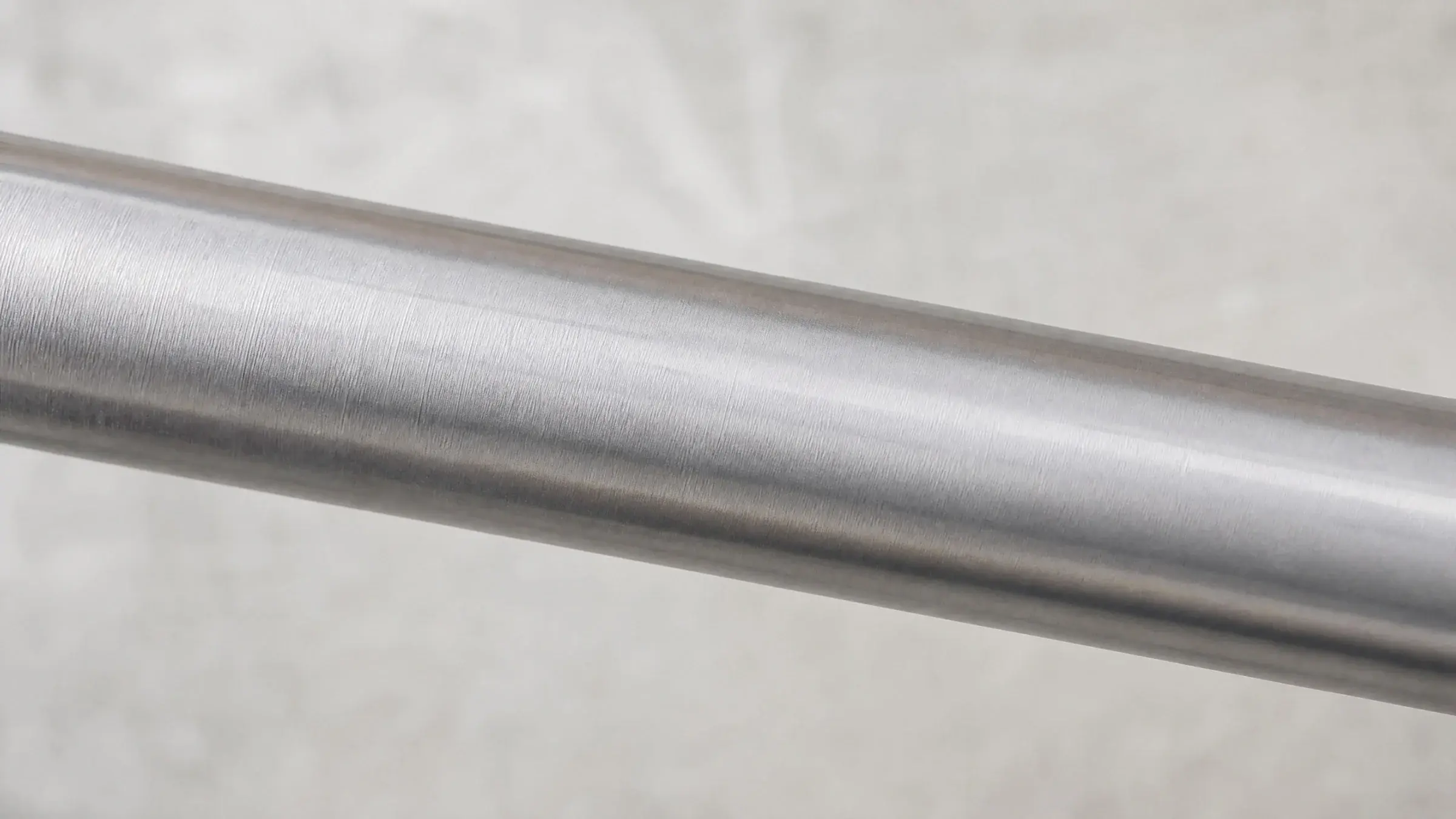
In short: 45# is a quality medium-carbon steel (GB/T 699, ≈ ASTM 1045 / C45 / S45C) carrying about 0.42–0.50% carbon. That carbon level is the whole point — it is high enough to give the steel real hardenability, so 45# is the classic quench-and-temper (调质) steel: harden it to brittle martensite, then high-temper it back to tempered sorbite, the microstructure that delivers the best blend of strength and toughness. As iron-base steel it is body-centred-cubic and magnetic, and in the normalised state its structure is ferrite plus a good deal of pearlite — more pearlite than a low-carbon steel like 20#. Being a plain carbon steel it has no chromium passive film and rusts readily, so it must be protected by coating, galvanizing, blackening, or phosphating. Where low-carbon 20# and structural Q235 lack the carbon to harden usefully, 45# is built for the heat-treated drive shaft, gear, and connecting rod.
What 45# Steel Is
45# (read "forty-five steel") is a quality medium-carbon steel to GB/T 699 — the Chinese standard for quality carbon structural steels. The number "45" is the nominal carbon content in hundredths of a percent, so 45# carries roughly 0.45% carbon, placing it squarely in the medium-carbon range. It corresponds closely to ASTM 1045, to C45 in the European EN system, and to S45C in the Japanese JIS system; buyers searching *45#*, *45 steel*, *1045*, or *S45C* are looking for the same material.[5]
The word "quality" (优质) is technical, not marketing: a quality carbon steel to GB/T 699 holds tighter limits on phosphorus and sulphur than ordinary structural grades, which is what makes 45# clean and consistent enough to respond predictably to heat treatment. That distinguishes it from a general structural steel such as Q235, which is specified for as-rolled use rather than for the controlled hardening that defines 45#.
Within the carbon-steel family, carbon content sets the personality. Low-carbon steels like 20# (~0.20% C) are soft, weldable, and made for forming and case-hardening; medium-carbon 45# trades some of that weldability and ductility for the carbon it needs to harden — and that single trade is what turns it from a structural metal into a heat-treatable machine steel.
That position on the iron–carbon diagram — well below the eutectoid but far richer in carbon than the low-carbon grades — is the technical reason 45# is the default *调质* (quench-and-temper) steel: enough carbon to form hard martensite on quenching, not so much that the steel becomes unmachinable or crack-prone.[1]
Chemical Composition
Composition limits for 45# per GB/T 699. Carbon is the governing element — it sets both the hardenability (how deep the steel hardens) and the hardenability ceiling (how hard the quenched surface can get). Manganese is the main alloying support, raising hardenability so the section hardens through; the small permissible chromium and nickel further aid it, while silicon is a residual from deoxidation.
| Element | Symbol | Content (wt%) | Role |
|---|---|---|---|
| Carbon | C | 0.42–0.5 | The defining element — ~0.42–0.50%. Provides the hardenability that lets 45# quench to hard martensite, and sets the strength after tempering; the reason this grade can be heat-treated where low-carbon steels cannot |
| Silicon | Si | 0.17–0.37 | Residual from steelmaking deoxidation; minor solid-solution strengthener |
| Manganese | Mn | 0.5–0.8 | Principal alloying support — increases hardenability so the section hardens through on quenching, and contributes solid-solution strength |
| Phosphorus | P | ≤ 0.035 | |
| Sulfur | S | ≤ 0.035 | |
| Chromium | Cr | ≤ 0.25 | Permitted in small amount — improves hardenability (depth of hardening) when present |
| Nickel | Ni | ≤ 0.3 | Permitted residual — slightly improves hardenability and toughness |
| Copper | Cu | ≤ 0.25 | |
| Iron | Fe | Balance | Base metal — the BCC iron matrix that hosts ferrite and the cementite of pearlite |
Per GB/T 699 (quality carbon structural steel, 45#), ≈ ASTM 1045 / C45 / S45C. Phosphorus and sulphur are held low (≤0.035% each) — the "quality" pedigree behind consistent heat-treatment response.
Crystal Structure: BCC Iron, Ferrite + Pearlite — Not Stainless
45# is a plain iron–carbon steel, not a single-element metal, so it has no molecular formula; it is described by the phases that iron and carbon form. Iron is body-centred cubic (BCC) at room temperature — the α-iron called ferrite — and 45# is magnetic in every heat-treatment state.
Ferrite dissolves almost no carbon, so the carbon in 45# is locked up as iron carbide, cementite (Fe₃C). In a slowly cooled or normalised 45#, ferrite and cementite arrange themselves into two constituents: free proeutectoid ferrite, and the layered ferrite/cementite constituent called pearlite. The higher carbon of a medium-carbon steel means more pearlite than in a low-carbon grade — which is exactly where 45# gets its extra strength.[3]
This is carbon steel, not stainless steel. 45# contains no meaningful chromium, so it has no chromium-rich passive film and none of the self-passivation, sensitisation, or austenitic behaviour of stainless steels. Its phases are BCC ferrite plus cementite; its strengthening comes from heat treatment (pearlite content, and above all the quench-and-temper cycle), not from any passive oxide. The corrosion story for 45# is therefore the opposite of stainless: it rusts, and is protected by coatings — covered below.
Heat Treatment: Quench-and-Temper Is the Soul of 45#
Everything that makes 45# valuable comes from heat treatment. It is the textbook 调质 (quench-and-temper) steel, and the reason is its carbon content: at ~0.45% C there is enough carbon to form hard martensite on quenching, yet little enough that the steel stays tough and crack-tolerant. Low-carbon steels like 20# and Q235 simply lack the carbon to harden usefully — quench them and they barely respond. 45# is where carbon-steel heat treatment comes alive.[5]
Step 1 — Quench: austenite to hard, brittle martensite
The steel is first austenitised — heated above ~840–860 °C until its structure becomes face-centred-cubic austenite, into which the carbon dissolves. It is then quenched (rapidly cooled, typically in water or oil). The carbon has no time to diffuse out and form pearlite; instead the lattice shears into martensite, a hard, highly strained, carbon-supersaturated structure. Quenched 45# is very hard but brittle — strong, but too prone to cracking to use as-quenched.[2]
Step 2 — High temper: martensite to tempered sorbite
The brittle martensite is then high-temperature tempered — reheated, for quench-and-temper service typically to around 500–650 °C, and held. Tempering lets the trapped carbon precipitate as fine, rounded cementite particles dispersed in a recovered ferrite matrix. This structure is tempered sorbite (回火索氏体), and it is the prize: it sheds the brittleness of as-quenched martensite while keeping most of the strength, delivering the best available combination of strength and toughness in a plain carbon steel.[2]
The payoff is mechanical: quench-and-tempered 45# reaches tensile strengths commonly in the 700–800 MPa band (rising as section size falls and temper temperature drops), with the toughness and fatigue resistance that as-quenched martensite cannot offer — the exact property set a drive shaft, gear, or connecting rod needs under reversing load. The precise numbers, normalised versus quenched-and-tempered, are tabulated under mechanical properties.
Why 45# and not 20#: quench-and-temper needs enough carbon to harden. At ~0.45% C, 45# forms a useful amount of hard martensite on quenching; low-carbon 20# / Q235 (~0.20% C) have too little carbon to develop meaningful as-quenched hardness, so they are normalised or case-hardened rather than through-hardened by Q+T.[5]
Microstructure: Ferrite + Pearlite (Normalised State)
In the as-supplied, normalised condition — before any quench-and-temper — 45# is a ferrite-plus-pearlite steel. Soft proeutectoid ferrite forms first as austenite cools, then the remaining carbon-rich austenite transforms to pearlite, the lamellar ferrite/cementite constituent. Because 45# carries more carbon than a low-carbon steel, pearlite occupies a much larger fraction of the structure — and that pearlite is the source of its higher normalised strength.[3]
The link is direct and well documented: in ferrite–pearlite steels, the higher the carbon, the greater the pearlite fraction, which raises strength while lowering ductility — and refining the ferrite grain raises strength and toughness together via the Hall–Petch relationship.[4] This normalised structure is the machinist's friend: it cuts and turns cleanly. The high-strength, high-toughness combination, though, comes only later, from the quench-and-temper cycle that replaces pearlite with tempered sorbite.
Corrosion: 45# Rusts — and Must Be Protected
45# is a plain carbon steel with no chromium, so — unlike stainless steel — it forms no protective passive film. In humid air or water it rusts, and the rust does not protect it: the oxide layer on carbon steel is porous and non-adherent, so corrosion keeps advancing into the metal beneath rather than sealing it off. This is the defining contrast with stainless steel, and it must be designed around.[8]
Because the steel cannot protect itself, 45# is always protected by an applied barrier or a sacrificial layer. Common routes are paint and organic coatings, galvanizing (a zinc layer that protects the steel both as a barrier and as a sacrificial anode — the zinc corrodes preferentially and keeps the steel cathodic), blackening / bluing (a controlled oxide film, often oil-sealed), and phosphating (a conversion coating that both resists rust and keys paint to the surface). Machined 45# parts are routinely oiled or coated immediately to hold off flash rust.[9]
Boundaries, honestly stated. Carbon steels corrode faster in aggressive service — chloride-rich, marine, or wet–dry cycling environments accelerate attack and can drive localised pitting, including the formation of akaganeite (β-FeOOH) in marine wetting–drying. For those duties 45# needs a robust, maintained protective system, or a corrosion-resistant material should be chosen instead. 45# is selected for its mechanical performance, with corrosion handled by protection — never for any inherent corrosion resistance.[10]
Mechanical & Physical Properties
45# is supplied and used in two distinct mechanical conditions, and the difference between them is the whole reason to choose it. Normalised, it offers solid medium-strength properties and easy machinability. Quenched-and-tempered, the same steel is transformed — its strength, toughness, and fatigue life all rise as the structure becomes tempered sorbite.
| Tensile strength (MPa) | ≥600 |
| Yield strength (MPa) | ≥355 |
| Elongation (%) | ≥16 |
| Hardness | ≤229 HB |
| Density (g/cm³) | 7.85 |
| Elastic modulus (GPa) | 206 |
| Magnetic response | Magnetic |
| Tensile strength (MPa) | ≥600 |
| Yield strength (MPa) | ≥355 |
| Elongation (%) | ≥16 |
| Hardness | ≈197–241 HB (typical after Q+T) |
| Density (g/cm³) | 7.85 |
| Elastic modulus (GPa) | 206 |
| Magnetic response | Magnetic |
| Temper / condition | Properties improve significantly with quench + temper; final tensile commonly reaches 700–800 MPa depending on section size and temper temperature. |
Read the two rows as a before/after of heat treatment. The normalised properties come from the ferrite-plus-pearlite structure; the quench-and-temper row reflects tempered sorbite, where tensile strength commonly climbs into the 700–800 MPa range depending on section size and temper temperature — together with the toughness that as-quenched martensite lacks. 45# is magnetic in all conditions, with the density (~7.85 g/cm³) and stiffness (E ≈ 206 GPa) typical of carbon steel.
Key Characteristics
- The default quench-and-temper steel. ~0.45% C gives the hardenability to quench to martensite and high-temper to tough, strong tempered sorbite — the classic *调质* machine steel.
- Strength and toughness in balance after Q+T. Tempered sorbite delivers the best strength/toughness combination available in a plain carbon steel, with good fatigue resistance for dynamic loads.
- More pearlite, more strength than low-carbon steel. Higher carbon means a larger pearlite fraction in the normalised state — stronger than 20# or Q235, at the cost of ductility and weldability.
- Readily machinable when normalised. Cuts and turns cleanly in the as-supplied state; heat treatment is applied around machining as the process demands.
- No corrosion resistance — it rusts. No chromium, no passive film; protected by coating, galvanizing, blackening, or phosphating, never by self-passivation.
- Magnetic in all states. A BCC ferritic iron base — magnetic whether normalised, quenched, or tempered.
How 45# Is Made
45# is produced as a quality carbon steel: melted and refined to the controlled ~0.45% C composition with low phosphorus and sulphur, continuously cast, then hot-rolled or forged into bar, rod, plate, or forgings. It is usually supplied normalised or annealed for a uniform, machinable ferrite-plus-pearlite structure; the defining quench-and-temper treatment is applied by the part maker, around or after machining, to develop the final tempered-sorbite properties.
Holding the carbon and the residual chromium and nickel within the specified band is what gives 45# its predictable hardenability — the property that makes the downstream quench-and-temper response repeatable from heat to heat, which is precisely what a machine-part maker relies on.
45# vs 20# vs Q235 — Picking the Right Carbon Steel
All three are plain carbon steels with a BCC iron base, but carbon content sends them to different jobs. The choice comes down to whether the part must be heat-treated and carry dynamic load (45#), case-hardened or cold-formed (20#), or welded and used as-rolled in structures (Q235).
Applications by Industry
45# is the workhorse machine steel: wherever a part must be strong and tough after heat treatment and carry dynamic or reversing load, quench-and-tempered 45# is the default first choice.
Transmission Shafts & Axles
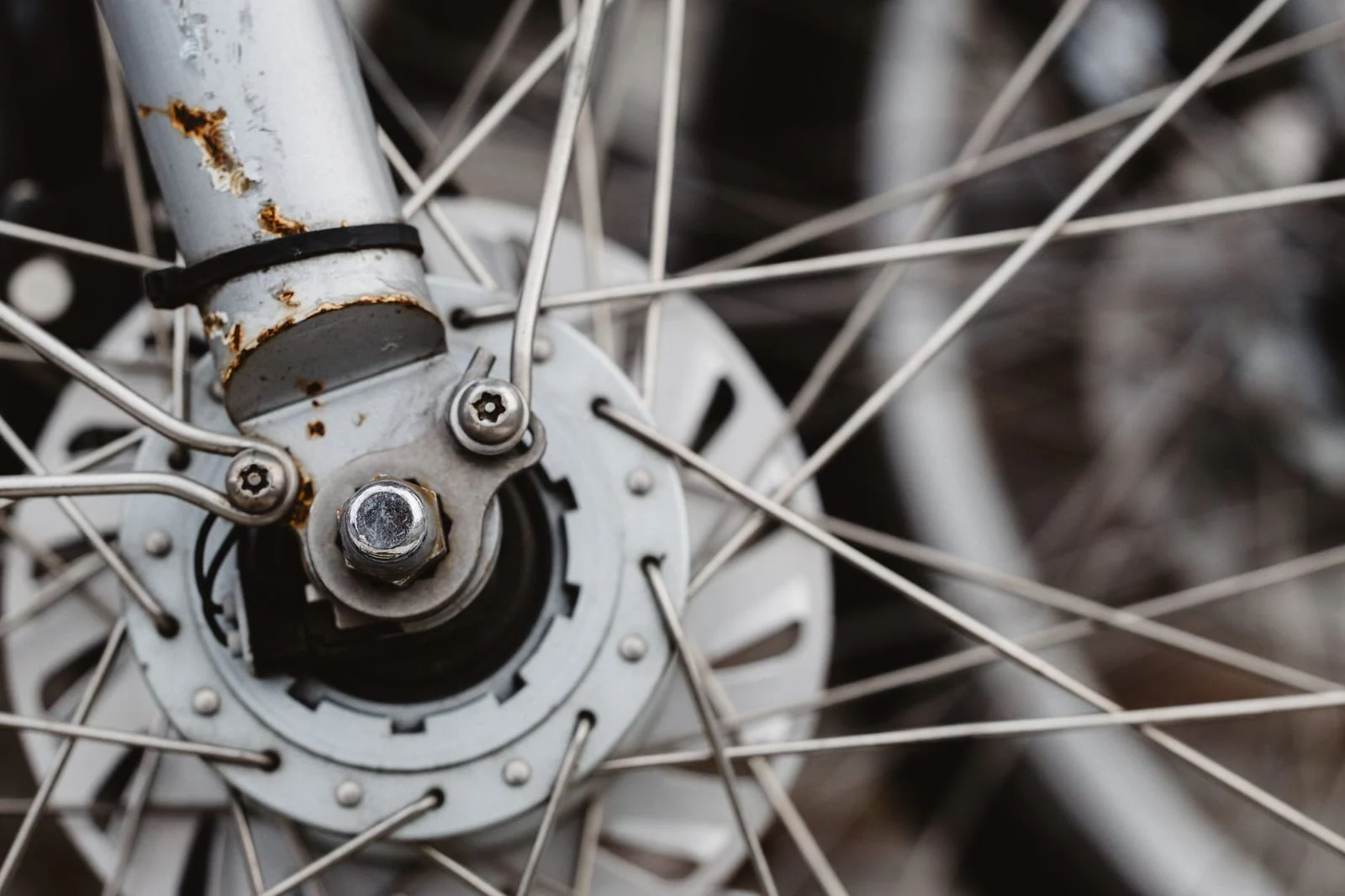
Drive shafts, axles, and spindles are the signature application. Quench-and-tempered to tempered sorbite, 45# carries torque and bending fatigue with the strength-plus-toughness balance these rotating parts demand — the property combination that as-quenched or merely normalised steel cannot match.[2]
Gears, Connecting Rods & Crankshafts
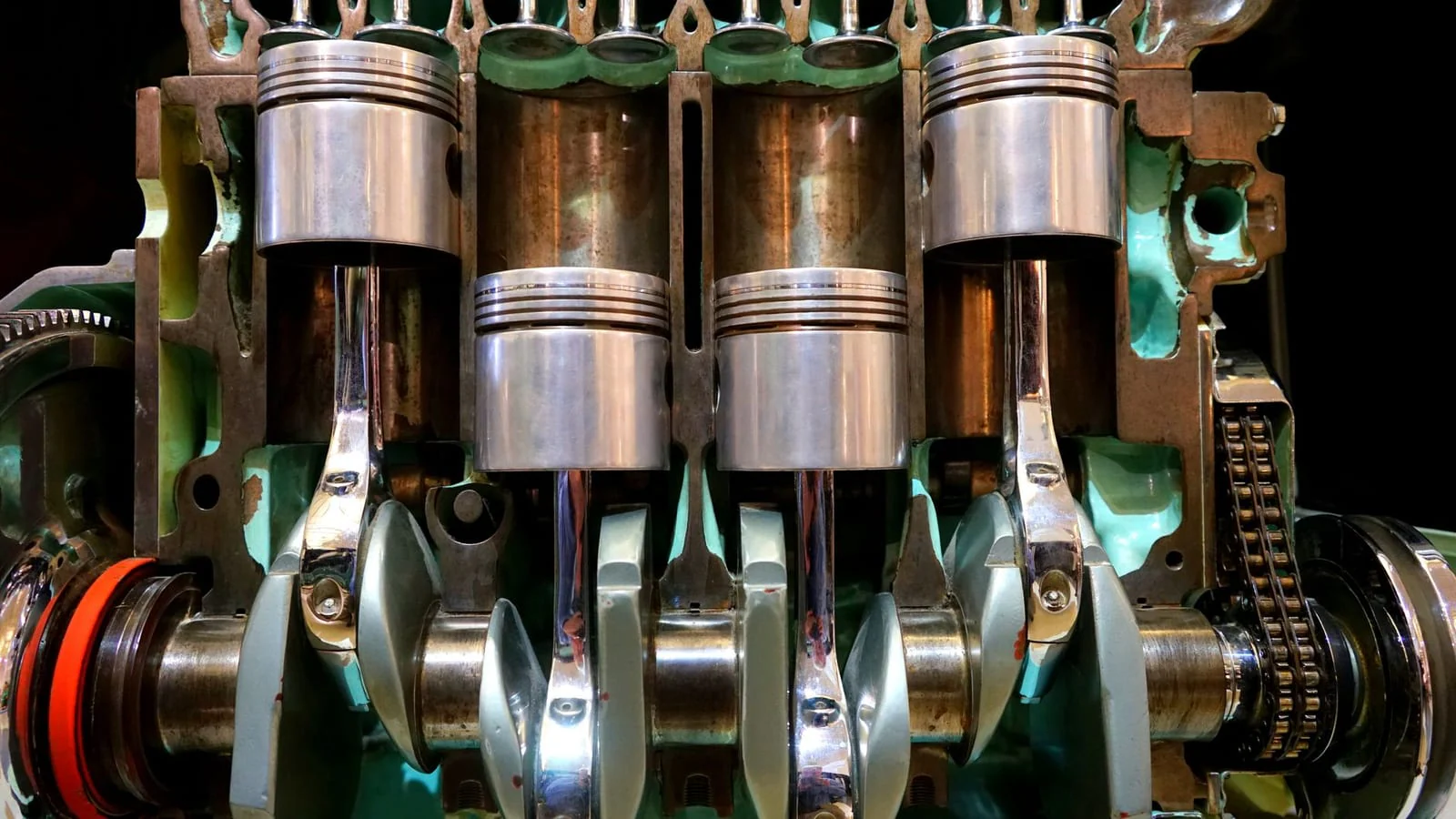
Gears, connecting rods, and crankshafts in general machinery and engines rely on 45# heat-treated for fatigue strength under cyclic load. The medium-carbon content gives the hardenability to develop a tough, strong core, with surfaces often hardened further where wear resistance is needed.[5]
Medium-High-Strength Fasteners
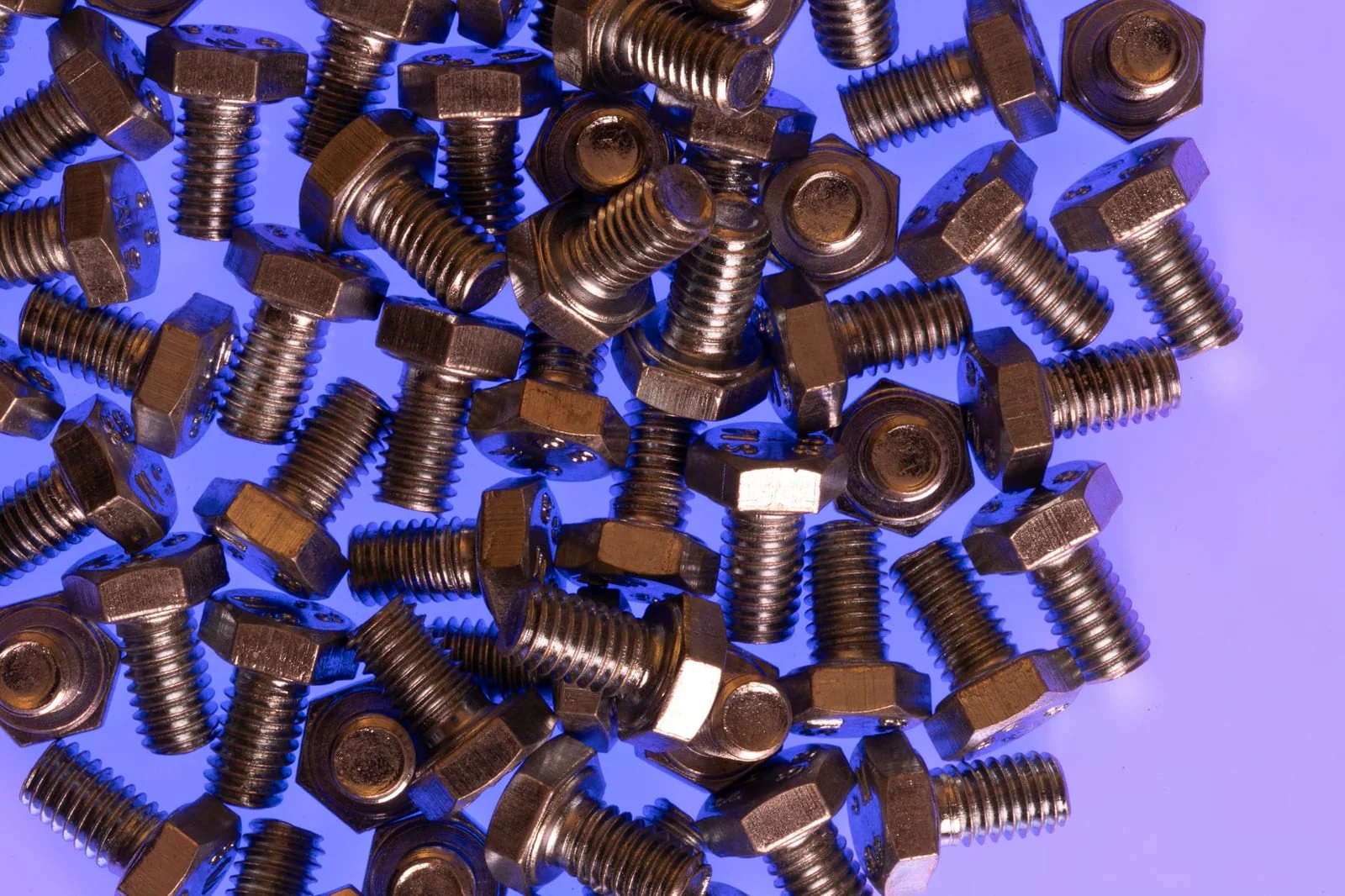
Bolts, studs, and fasteners that need medium-to-high strength are made from quench-and-tempered 45#, whose hardenability lets the strength be tuned by temper temperature to the required property class.
General Machine & Structural Parts
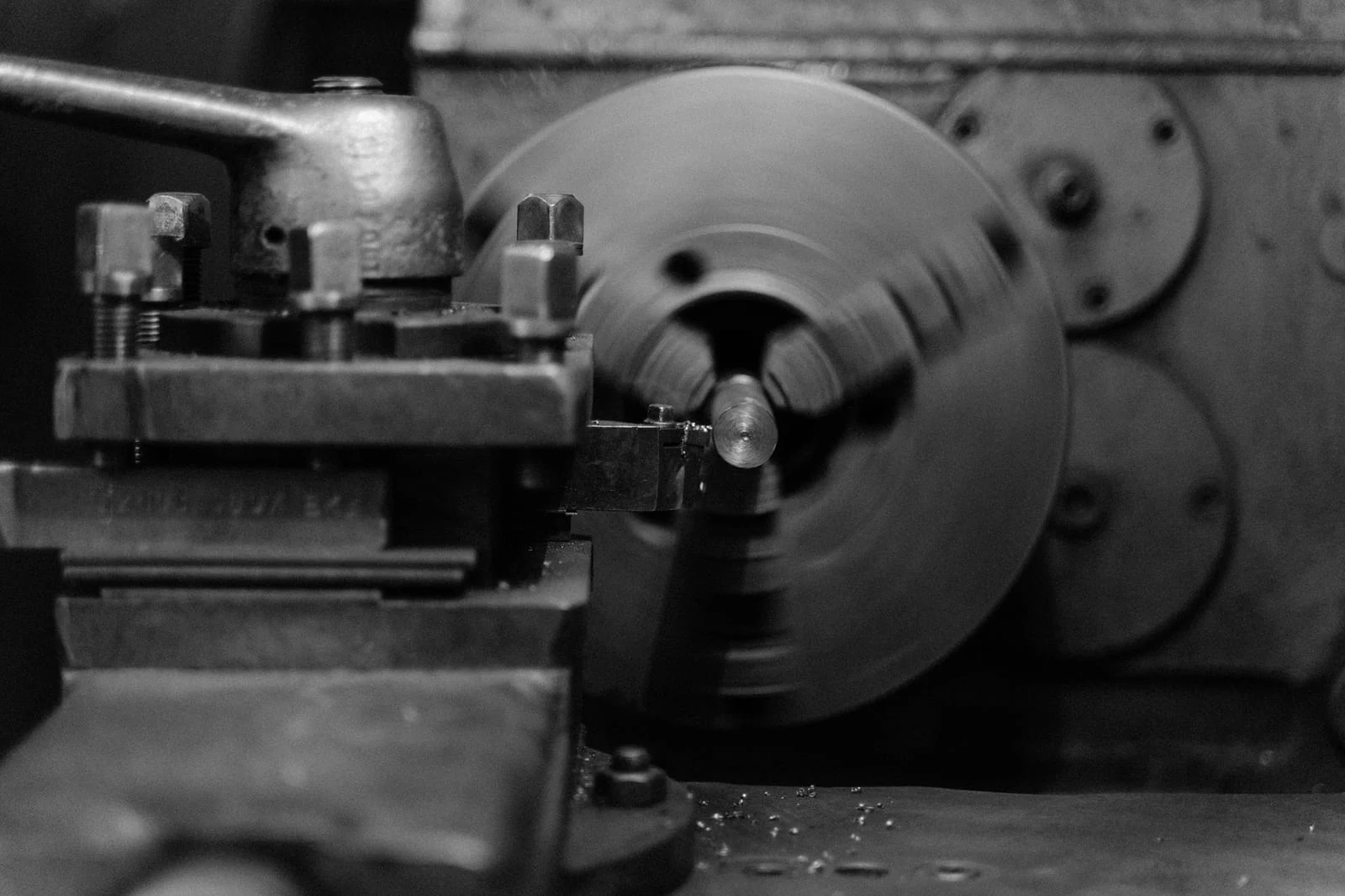
General machine parts and dynamically loaded components — levers, couplings, keys, machined structural members — use 45# normalised for machinability or quench-and-tempered where strength and toughness govern. Across all of these, the steel's rust susceptibility is handled by coating, plating, or blackening.
Forms & Finishes
Common product forms:BarRodPlateSheetForging
Surface finishes:Hot-rolledCold-drawnTurned & polishedBlack (as-forged)
Round bar and forgings are the workhorse forms for 45#, supplied for shafts, gears, and machined components; plate and sheet serve flat machined and structural parts. Whatever the form, 45# rusts in storage and service, so it is supplied oiled and finished with a protective coating, plating, or blackening for the duty ahead.
References
- Effect of Carbon Concentration in Austenite on Cementite Morphology in Pearlite. ISIJ International 61(1), 2021. Hypoeutectoid C-Mn steel: proeutectoid ferrite plus pearlite; cooperative ferrite/cementite growth controlled by carbon diffusion — the theoretical anchor for 45# sitting near the eutectoid on the Fe-C diagram. jstage.jst.go.jp/.../isijinternational/61/1
- Austenite-to-ferrite/pearlite transformation and tempered sorbite (CCT). PMC9267234. Continuous-cooling transformation of austenite → ferrite + pearlite, including a description of tempered sorbite — a primary anchor for 45#'s microstructure after quench-and-temper. pmc.ncbi.nlm.nih.gov/articles/PMC9267234
- Carbon content effect on pearlite fraction in ferrite-pearlite steels. PMC8838105. Pearlite fraction varies with carbon content — rising carbon raises the pearlite share, supporting why medium-carbon 45# has more pearlite and higher strength than low-carbon steels. pmc.ncbi.nlm.nih.gov/articles/PMC8838105
- Ferrite grain size and Hall-Petch in ferrite-pearlite steels. Frontiers in Materials, 2020. Tensile data for F+P microstructures + Hall-Petch (σy = σ0 + k·d^-1/2); refining ferrite grains raises both strength and toughness. frontiersin.org/.../fmats.2020.604792
- Quench and temper of 0.45%C medium-carbon steel. PMC8623996. Quench-and-temper behaviour of 0.45%C steel (45 steel / medium-carbon) — medium carbon can be quenched and tempered to tempered sorbite, while low-carbon steels lack the carbon for it. pmc.ncbi.nlm.nih.gov/articles/PMC8623996
- Non-protective rust layer on carbon steel. PMC5506973. Carbon-steel rust is porous and non-protective, unlike stainless self-passivation — carbon steel rusts and has no Cr passive film. pmc.ncbi.nlm.nih.gov/articles/PMC5506973
- Zinc coating as sacrificial anode for steel protection. Frontiers in Materials, 2020. The zinc layer acts as a sacrificial anode protecting the steel substrate — the cathodic-protection mechanism of galvanizing. frontiersin.org/.../fmats.2020.00074
- Akaganeite formation and marine wet-dry corrosion of steel. PMC5706209. Akaganeite (β-FeOOH) under marine wet–dry cycling — a boundary condition of more severe corrosion in chloride/marine environments. pmc.ncbi.nlm.nih.gov/articles/PMC5706209