In short: 20# (read "20 steel") is a quality low-carbon steel to GB/T 699 — roughly 0.20% carbon, internationally close to ASTM 1020 / C20 / S20C. With so little carbon its microstructure is ferrite (body-centred cubic α-iron) with only a small fraction of [pearlite](#microstructure), which is exactly what gives it excellent weldability and cold formability — it can be bent, drawn, and cold-headed with little fuss. Being a low-carbon steel it cannot be usefully through-hardened by quench-and-temper the way 45# steel is; instead it is commonly [carburized](#carburising) to grow a hard wear-resistant case over a tough ductile core. As a plain carbon steel it has no chromium and no passive film — it rusts in ambient air and must be protected by coating, galvanizing, blackening, phosphating, or the case itself. The "quality" prefix means tighter, controlled sulphur and phosphorus versus a structural grade like Q235, so 20# is the go-to for seamless boiler tube, cold-headed fasteners, and case-hardened gears.
What 20# Steel Is
20# steel is a quality low-carbon steel in the Chinese GB system — a plain iron-carbon steel with a nominal 0.20% carbon and tightly controlled residual elements. The "20" is the carbon designation: the number is one hundred times the mean carbon content, so 20# ≈ 0.20% C. It is written 20# (or "20 steel") to distinguish it from the bare number.
It is specified to GB/T 699, the standard for *quality carbon structural steels*, and corresponds closely to ASTM 1020, C20, and the Japanese S20C. Buyers searching *20#*, *20 钢*, *优质碳素结构钢*, or *S20C* are looking for this grade.
The word quality is the operative difference from an ordinary structural steel: a quality carbon steel like 20# is made to tighter, guaranteed limits on sulphur and phosphorus and comes with assured mechanical properties, where a structural-quality grade such as Q235 is optimised for low-cost general fabrication. Both are low-carbon, but 20# is the cleaner steel built for mechanical parts and pressure tube.
On the iron-carbon diagram 20# lies on the low-carbon, hypoeutectoid side, far to the left of the 0.77% eutectoid. That position is the whole story of the steel: little carbon means a mostly ferritic structure, which means high ductility, easy welding, and easy forming — but modest strength unless the surface is hardened by carburizing.
Chemical Composition
Composition limits for 20# per GB/T 699. Carbon is deliberately kept low to preserve ductility and weldability; manganese and silicon are present in small amounts for strength and deoxidation; sulphur and phosphorus are held to tight maxima — the hallmark of a *quality* carbon steel.
| Element | Symbol | Content (wt%) | Role |
|---|---|---|---|
| Carbon | C | 0.17–0.23 | Kept low (~0.20%) to keep the steel mostly ferritic — that is what gives the high ductility, weldability and cold formability; too much carbon would raise strength but hurt all three |
| Manganese | Mn | 0.35–0.65 | Modest addition for solid-solution strength and to combine with sulphur; aids deoxidation and hardenability without harming weldability |
| Silicon | Si | 0.17–0.37 | Deoxidiser carried over from steelmaking; gives a little solid-solution strengthening |
| Phosphorus | P | ≤ 0.035 | Held to a tight maximum — controlled low as a quality grade, because phosphorus promotes cold brittleness |
| Sulfur | S | ≤ 0.035 | Held to a tight maximum — controlled low as a quality grade, because sulphur harms ductility, toughness and weldability |
| Chromium | Cr | ≤ 0.25 | |
| Nickel | Ni | ≤ 0.25 | |
| Copper | Cu | ≤ 0.25 | |
| Iron | Fe | Balance |
Per GB/T 699 (20#), ≈ ASTM 1020 / C20 / S20C. Iron is the balance.
Crystal Structure: BCC Ferrite, Not Austenite
At room temperature 20# is built on ferrite — body-centred cubic (BCC) α-iron — with a small amount of pearlite dispersed through it. This is the structure of an ordinary low-carbon steel at ambient temperature, and it is magnetic.
It is worth being precise here, because the BCC ferrite of a carbon steel is a different animal from the face-centred-cubic austenite of a stainless steel. 20# is not austenitic and has no chromium: its room-temperature matrix is BCC iron carrying a little carbon in solution, plus pearlite. The austenite (FCC) phase only exists at high temperature — it is the phase you heat the steel into for carburizing or hardening — and on cooling it transforms back to ferrite and pearlite.[2]
Because 20# is a plain carbon steel, it has no chromium and no passive film — its strength comes from the iron-carbon structure itself, not from any protective oxide. Strengthening is by carbon content, by grain refinement, and by cold work; with only ~0.20% C there is too little carbon to harden the bulk usefully by quench-and-temper. The route to a hard 20# surface is instead diffusing more carbon into the skin (carburizing) and then quenching that carbon-rich case — see below.
Microstructure: Mostly Ferrite, Little Pearlite
When austenite cools through the transformation, a low-carbon steel like 20# rejects most of its iron as soft, ductile proeutectoid ferrite, and only the remaining carbon-rich pockets transform to pearlite — the fine lamellar stack of ferrite and cementite (Fe₃C).[1] Because there is so little carbon, the pearlite fraction is small and the ferrite dominates.
This ferrite-rich balance is exactly why higher-carbon steels are stronger but less forgiving: as carbon rises, the pearlite fraction climbs and strength goes up while ductility falls.[3] 20# sits at the soft, ductile end of that scale — far below 45# steel, whose roughly 0.45% C gives much more pearlite and a much harder, stronger but less weldable steel. The fine ferrite grain size in a well-processed 20# is what lets it be strong enough and tough at the same time, the Hall-Petch trade-off that governs ferrite-pearlite steels.[4]
Corrosion: 20# Rusts — and How It Is Protected
This is the honest part. 20#, like every plain carbon steel, rusts. It contains no chromium and forms no protective passive film — the rust that grows on it is a loose, porous, non-protective layer of iron oxides and oxyhydroxides that does not seal the surface, so corrosion continues underneath rather than stopping.[5] This is the fundamental difference from a stainless steel, whose chromium builds a self-healing passive film; carbon steel has nothing of the kind and must be actively protected.
In practice that protection is added by one of several well-established routes, chosen to suit the part:
- Galvanizing (zinc coating). A zinc layer acts as a sacrificial anode: it corrodes preferentially and cathodically protects the steel beneath, so even a scratched coating keeps protecting the exposed steel.[6]
- Paint and organic coatings. A barrier film keeps moisture and oxygen off the steel — the everyday route for structural and fabricated parts.
- Blackening / black oxide and phosphating. Conversion finishes that give a thin protective layer and a good base for oil retention on fasteners and machine parts.
- The carburized case itself, plus oiling, protects the surface of case-hardened components in service.
The corrosion gets worse in marine and chloride-rich environments, where wet-dry cycling drives more aggressive rusting and forms chloride-bearing products such as akaganeite (β-FeOOH).[7] None of this is a flaw unique to 20# — it is the price of being a plain carbon steel — but it means corrosion protection must be designed in from the start, not assumed.
Mechanical & Physical Properties
20# offers modest strength with high ductility in the normalized condition — the natural consequence of a mostly-ferritic, low-carbon structure. It is not a high-strength steel; its value is in forming, welding, and toughness, with hardness added locally by carburizing where wear matters.
| Tensile strength (MPa) | ≥410 |
| Yield strength (MPa) | ≥245 |
| Elongation (%) | ≥25 |
| Hardness | ≤156 HB (annealed) |
| Density (g/cm³) | 7.85 |
| Elastic modulus (GPa) | 206 |
| Magnetic response | Magnetic |
The numbers are those of a soft, formable steel: high elongation, low hardness, moderate tensile and yield strength. Strength can be raised by cold work and by grain refinement, but with only ~0.20% C there is too little carbon for a useful bulk quench-and-temper response — the dividing line between low-carbon grades like 20# and the medium-carbon, through-hardening 45# steel.
Carburizing: A Hard Case Over a Tough Core
The signature heat treatment for 20# is carburizing (case hardening). The low carbon that makes the steel soft and weldable also makes it the ideal substrate for diffusing carbon into the surface: the part is heated into the austenite range in a carbon-rich atmosphere, carbon diffuses into the skin to raise the surface carbon to a high level, and the part is then quenched.
The result is the best of both worlds — a hard, wear-resistant, high-carbon case that can take contact and abrasion, over a tough, ductile, low-carbon core that resists shock and bending. The unmodified low-carbon core stays unhardened by the quench precisely because it is still ~0.20% C, so it keeps the toughness that the case lacks. This is why 20# is a default choice for gears, pins, sprockets and cams: the working surfaces are hard, the body is tough.
Carburizing adds carbon to the surface; it is not the bulk quench-and-temper used on medium-carbon steels like 45#, which already have enough carbon throughout to harden.
Key Characteristics
- Excellent weldability. Low carbon means a low carbon equivalent and little risk of hard, crack-prone weld zones — weldable by all common processes, usually without preheat.
- Good cold formability. Ductile and forgiving: bent, drawn, deep-formed and cold-headed with low springback.
- Carburizable. Takes a hard, wear-resistant case over a tough core — the route to surface hardness for a low-carbon steel.
- Tough, ductile core. High elongation and good impact toughness from the ferrite-rich structure.
- Magnetic, BCC ferrite. A plain low-carbon steel — ferritic and ferromagnetic, not austenitic.
- No inherent corrosion resistance. Rusts in ambient air; needs galvanizing, paint, blackening, phosphating, or a protected case.
How 20# Is Made
20# is steelmade to the controlled low-carbon, low-sulphur, low-phosphorus chemistry of a quality carbon steel, then hot-worked to bar, plate or tube. For its flagship use — seamless boiler and pressure tube — the steel is pierced and rolled into seamless hollow, and precision tube and shafting are then cold-drawn to size and finish. Carburizing, where required, is a separate downstream heat treatment on the finished part.
Tight control of sulphur and phosphorus during steelmaking is what makes 20# a quality grade rather than a structural one — it is this cleanliness that guarantees the weldability, formability and consistent mechanical properties the steel is bought for.
20# vs 45# vs Q235 — Picking the Right Carbon Steel
All three are plain carbon steels with a ferrite-pearlite structure, but they sit at different points on the carbon scale and serve different jobs. The choice comes down to whether the priority is formability and carburizing, through-hardened strength, or low-cost structure.
Applications by Industry
20# is chosen wherever a steel must be cleanly welded, easily formed, or carburized to a hard surface — and where its lack of inherent corrosion resistance can be managed by coating or by the operating environment.
Seamless Boiler & Pressure Tube
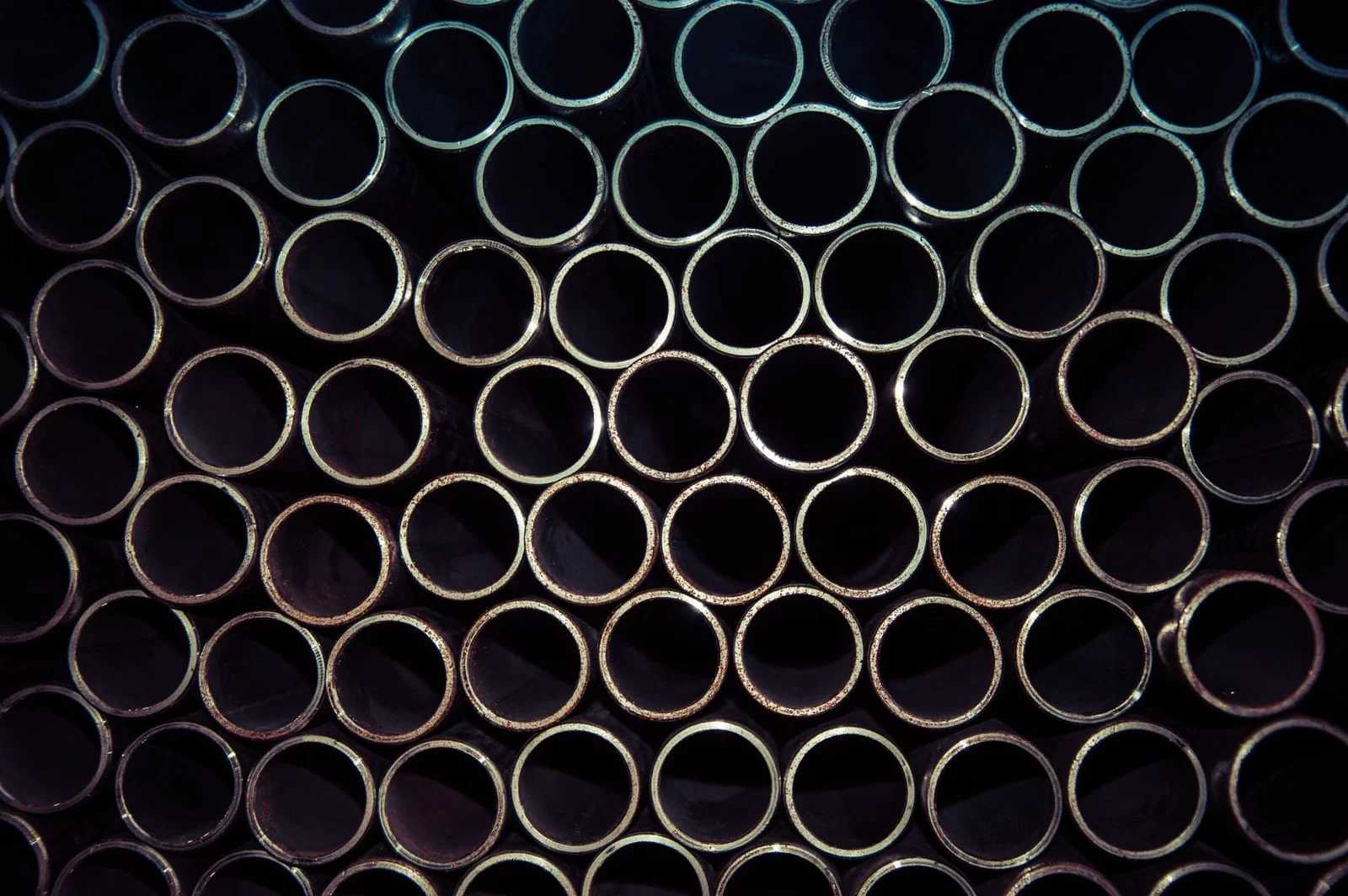
Seamless tube for boilers and pressure service (GB/T 8163, GB/T 3087) is a flagship use: the clean, weldable, ductile low-carbon steel handles the forming and welding of tube assemblies, with guaranteed mechanical properties for pressure-bearing duty.
Cold-Drawn Precision Tube & Shafting
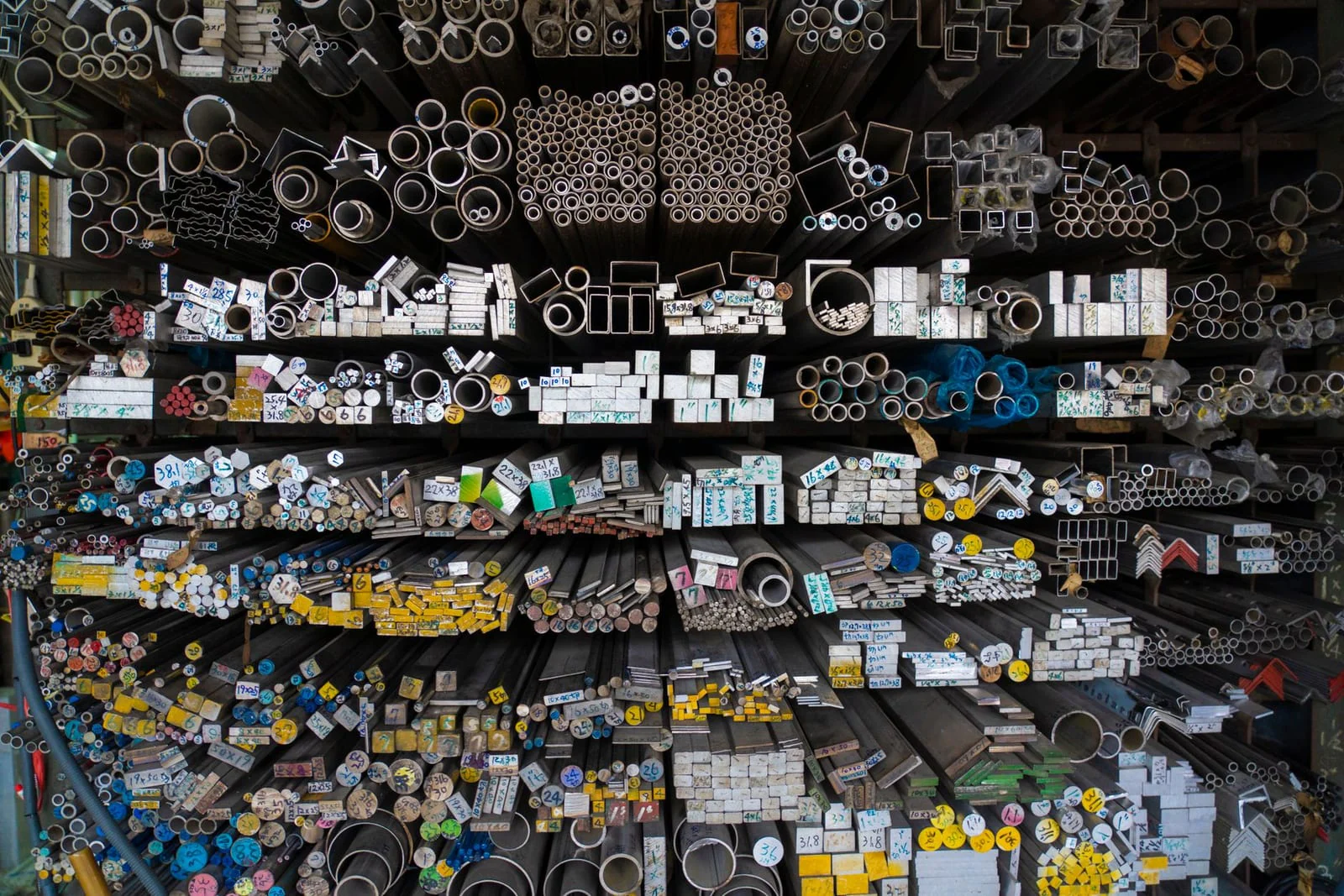
Cold-drawn or cold-rolled precision tube and shafting, where the good cold formability and close-tolerance finish of the drawn product are what the application needs.
Carburized Gears, Pins & Cams
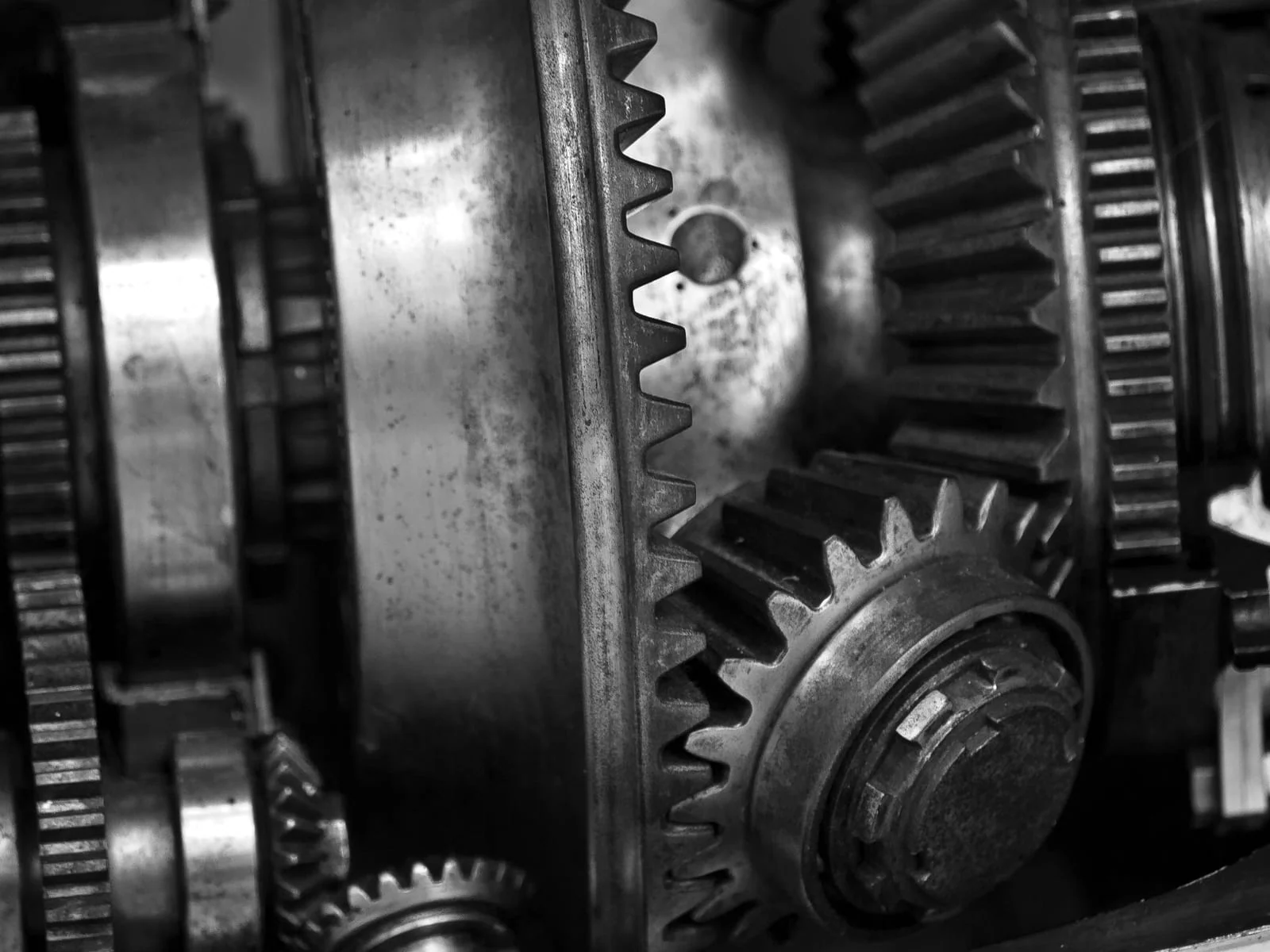
Case-hardened components — gears, pins, sprockets, and cams — where carburizing gives a hard wear-resistant surface over a tough, shock-tolerant core. This is the classic engineered use of a low-carbon steel.
Cold-Headed Fasteners & Formed Parts
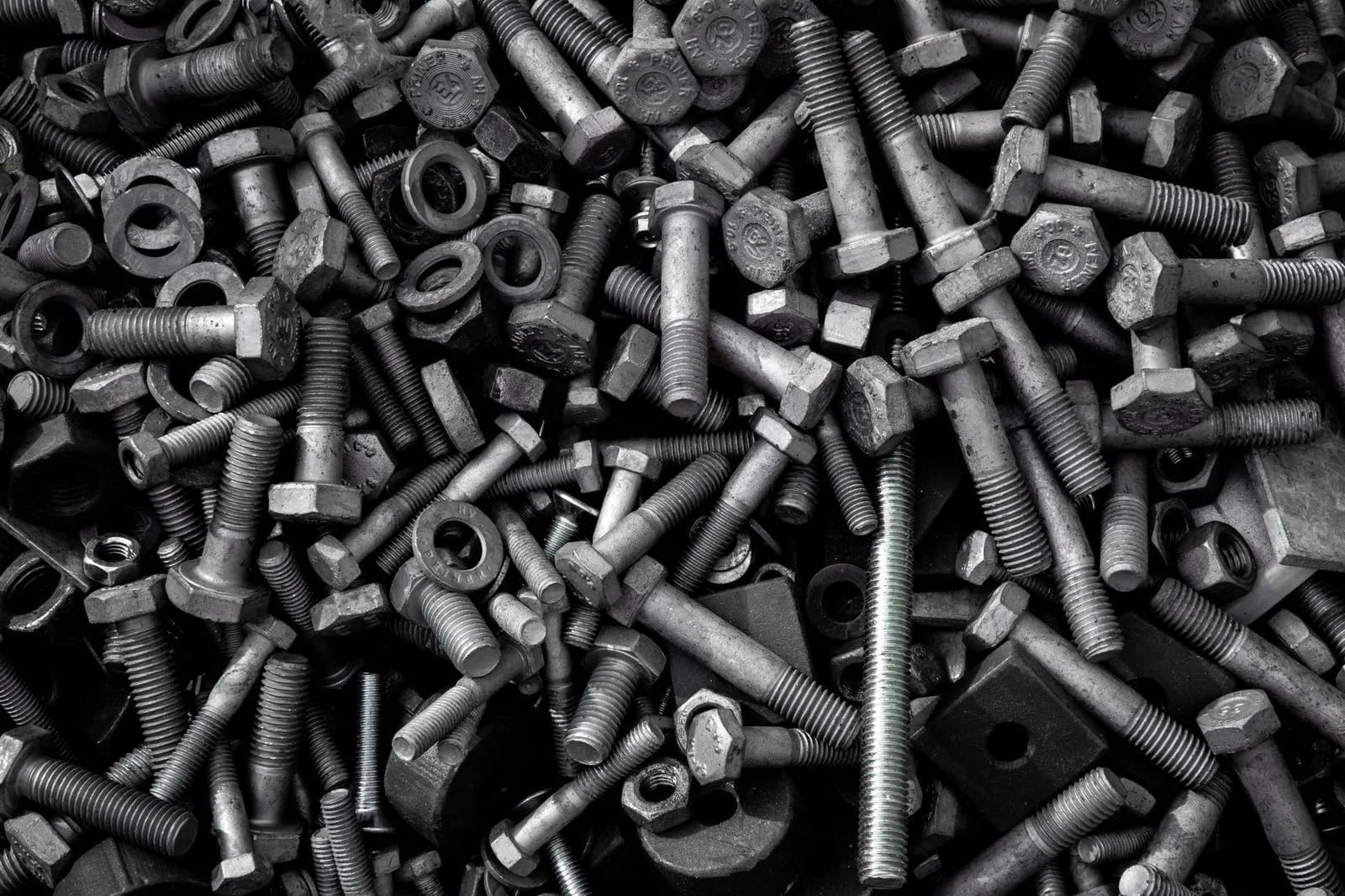
Bolts, studs and other cold-headed fasteners, plus general cold-stamped and bent parts where high strength is not required but easy forming and reliable welding are.
Forms & Finishes
Common product forms:BarRodTubePlateSheetCoilWire
Surface finishes:Hot-rolledCold-drawnNormalizedAnnealed
Seamless tube and cold-drawn bar / rod are the workhorse forms — tube for boiler and pressure service, bar and wire for shafting, cold-heading and carburized parts; plate, sheet and coil serve formed and welded fabrications.
References
- Effect of Carbon Concentration in Austenite on Cementite Morphology in Pearlite. ISIJ International 61(1), 2021. Hypoeutectoid C-Mn steel: proeutectoid ferrite plus pearlite; cooperative ferrite/cementite growth controlled by carbon diffusion. jstage.jst.go.jp/.../isijinternational/61/1
- Austenite to ferrite + pearlite transformation (CCT). PMC9267234. Continuous-cooling transformation of austenite → ferrite + pearlite (A→F+P): high-temperature austenite transforms back to ferrite and pearlite on cooling. pmc.ncbi.nlm.nih.gov/articles/PMC9267234
- Carbon content effect on pearlite fraction in ferrite-pearlite steels. PMC8838105. Pearlite fraction varies with carbon content — the lower the carbon, the lower the pearlite share; low-carbon 20# steel has little pearlite and much ferrite. pmc.ncbi.nlm.nih.gov/articles/PMC8838105
- Ferrite grain size and Hall-Petch in ferrite-pearlite steels. Frontiers in Materials, 2020. Tensile data for F+P microstructures + Hall-Petch (σy = σ0 + k·d^-1/2); the finest ferrite grains give both high strength and toughness. frontiersin.org/.../fmats.2020.604792
- Non-protective rust layer on carbon steel. PMC5506973. Carbon-steel rust layers are porous and non-protective, unlike stainless self-passivation — carbon steel rusts and has no passive film. pmc.ncbi.nlm.nih.gov/articles/PMC5506973
- Zinc coating as sacrificial anode for steel protection. Frontiers in Materials, 2020. The zinc layer acts as a sacrificial anode protecting the steel substrate — the cathodic-protection mechanism of galvanizing. frontiersin.org/.../fmats.2020.00074
- Akaganeite formation and marine wet-dry corrosion of steel. PMC5706209. Akaganeite (β-FeOOH) under alternating wet–dry marine exposure — a boundary condition of more severe corrosion in chloride environments. pmc.ncbi.nlm.nih.gov/articles/PMC5706209