In short: TC4 (Chinese GB designation) is Ti-6Al-4V, equivalent to ASTM Grade 5 — the most widely used titanium alloy in the world and the benchmark aerospace/medical grade. Unlike commercially pure titanium (TA1 / TA2), which is single-phase α, TC4 is a two-phase α+β alloy: aluminium (~6%) stabilises the HCP α phase, vanadium (~4%) stabilises the BCC β phase, and retaining both phases at room temperature makes the alloy heat-treatable by solution treating and aging.[1][4][5] The result is one of the best strength-to-weight ratios of any structural metal — tensile strength ≥895 MPa at a density of just 4.43 g/cm³, roughly half that of steel — combined with the excellent corrosion resistance of titanium's self-formed TiO₂ passive film.[1][3][5] For fracture-critical medical implants, the lower-interstitial variant Grade 23 (Ti-6Al-4V ELI) is preferred, and CP titanium (TA1/TA2) — which contains no aluminium or vanadium — is the safer choice where Al/V toxicity is a concern.[1]
What TC4 (Ti-6Al-4V) Is
TC4 is the Chinese GB/T 3620 designation for Ti-6Al-4V, the alpha-beta titanium alloy that dominates aerospace and medical engineering. Internationally it is ASTM Grade 5 (UNS R56400). It is by a wide margin the most-used titanium alloy, valued for combining high strength with low density, good corrosion resistance and biocompatibility.[5]
Its name encodes its chemistry: roughly 6% aluminium and 4% vanadium in a titanium base, with iron, oxygen, carbon and nitrogen held as controlled interstitials. These two principal alloying elements are not incidental — aluminium and vanadium are chosen precisely because they stabilise the two different crystal phases that give the alloy its name and its heat-treatability.[2]
The essential difference from commercially pure titanium (TA1 / TA2): CP grades are single-phase α and cannot be hardened by heat treatment, deriving their strength only from purity and grain size. TC4 retains both an α phase and a β phase at room temperature, which makes it a two-phase α+β alloy that can be strengthened by solution treating and aging — and far stronger as a result.[1][7]
In the standard titanium grade system, CP titanium comprises ASTM grades 1–4 (unalloyed), while grade 5 is the alloyed Ti-6Al-4V — i.e. TC4.[4] Chinese buyers searching *TC4*, *Ti-6Al-4V* or *钛合金 6Al4V* are looking for this alloy.
Chemical Composition
Composition for Ti-6Al-4V (TC4 / ASTM Grade 5). The two named alloying elements do specific metallurgical jobs: aluminium is an α-stabiliser and vanadium is a β-stabiliser, so together they produce the retained two-phase structure. Interstitials — oxygen, nitrogen, carbon, iron — are tightly controlled because they strengthen but also embrittle.[2]
| Element | Symbol | Content (wt%) | Role |
|---|---|---|---|
| Aluminium | Al | 5.5–6.75 | α-stabiliser — raises the β-transus and strengthens the HCP α phase by solid solution |
| Vanadium | V | 3.5–4.5 | β-stabiliser — lowers the β-transus and retains the BCC β phase at room temperature, enabling heat treatment |
| Iron | Fe | ≤ 0.4 | Residual β-stabiliser; held low (ELI variant Grade 23 caps it tighter) |
| O | O | ≤ 0.2 | Interstitial — strong α-stabiliser and strengthener; capped to preserve toughness |
| Carbon | C | ≤ 0.08 | Interstitial impurity, held low |
| Nitrogen | N | ≤ 0.05 | Interstitial impurity, held low |
| Titanium | Ti | Balance | Base metal |
Al raises and V lowers the β-transus temperature, classifying them as α- and β-stabilisers respectively.[2]
Crystal Structure: A Two-Phase α (HCP) + β (BCC) Alloy
Titanium alloy is a solid solution of elements in titanium — it has no molecular formula. The correct description is by crystal structure, and for titanium that means two distinct phases.
Pure titanium is allotropic: at room temperature it is α phase, with a hexagonal close-packed (HCP) lattice, and on heating it transforms to β phase, with a body-centred cubic (BCC) lattice. The transformation occurs at the β-transus, 882.5 °C for pure titanium.[1][2]
Alloying shifts this balance. Aluminium is an α-stabiliser — it raises the β-transus and expands the α (HCP) field. Vanadium is a β-stabiliser — it lowers the β-transus and stabilises the β (BCC) phase. Because TC4 contains both, a fraction of the BCC β phase survives down to room temperature alongside the HCP α phase. This is what makes TC4 a two-phase α+β alloy, and it is exactly this retained β that makes the alloy heat-treatable — unlike CP titanium, which has no stable residual β and therefore cannot be hardened.[1][2]
In the standard four-way classification of titanium alloys — α, near-α, α+β, and β — TC4 is the textbook α+β alloy, the class that offers a balance of strength, ductility and heat-treatability. It is repeatedly cited as the *representative* α+β titanium alloy.[3][7]
Corrosion Resistance: The Self-Formed TiO₂ Passive Film
Titanium owes its corrosion resistance to a mechanism entirely different from stainless steel. Where stainless relies on a chromium-based film, titanium spontaneously grows a thin, dense layer of titanium dioxide (TiO₂) on its surface. This passive oxide film protects the metal from further oxidation and gives titanium and its alloys outstanding corrosion resistance — including the low toxicity that makes the metal suitable for the body.[4]
The TiO₂ film is the root cause of titanium's corrosion behaviour: electrochemical studies confirm that the dense TiO₂ layer governs the alloy's resistance, and that suitably formed films remain highly resistant even in strongly acidic media such as hot hydrochloric and sulfuric acid.[5] This is why TC4 performs well in seawater, subsea hardware and many aggressive industrial and biological fluids.
The protection depends on the film staying intact. In simulated body fluid, the oxide film on titanium protects the underlying metal, but once that passive film is penetrated the corrosion rate accelerates — so surface integrity and the presence of oxygen to re-passivate the film matter in service.[6]
Mechanical & Physical Properties
TC4 offers two property profiles depending on heat treatment — the defining advantage of a two-phase α+β alloy. In the annealed condition it has a well-balanced strength-ductility profile; solution-treated and aged, it reaches noticeably higher strength as a second-phase precipitate forms.[7]
| Tensile strength (MPa) | ≥895 |
| Yield strength (MPa) | ≈830 |
| Elongation (%) | ≥10 |
| Density (g/cm³) | 4.43 |
| Elastic modulus (GPa) | ≈114 |
| Magnetic response | Non-magnetic |
The headline property is specific strength. Titanium has a density of around 4.4–4.5 g/cm³ — approximately half that of steel — so TC4's tensile strength of ≥895 MPa translates into one of the best strength-to-weight ratios of any structural metal. This combination of low density and high specific strength is precisely why TC4 dominates aerospace and high-performance applications.[1][3][7]
Heat treatment lifts strength further. In solution treating, the alloy is heated into the β-phase range to dissolve alloying elements into a homogeneous solid solution, then rapidly quenched to lock in a supersaturated structure; subsequent aging precipitates a dispersed second phase — in particular a finely distributed secondary α phase — which strengthens the alloy while toughness is recovered. CP titanium cannot do this: with no stable residual β, it can only be annealed.[1][7]
Key Characteristics
- Two-phase α+β, heat-treatable. Retained β (stabilised by vanadium) lets TC4 be strengthened by solution treating + aging — far stronger than single-phase CP titanium.
- Top-tier specific strength. ≥895 MPa tensile at a density of ~4.43 g/cm³ (about half that of steel) — one of the best strength-to-weight ratios of any structural alloy.
- Excellent corrosion resistance via TiO₂. A self-formed, self-repairing titanium-dioxide passive film protects the metal in seawater, body fluids and many aggressive media.
- Biocompatible and osseointegration-friendly. The stable, inert TiO₂ layer isolates the metal from biological tissue, allowing the bone to physically bond with implants.
- Non-magnetic. Unlike martensitic or ferritic stainless steels, TC4 is non-magnetic in all conditions.
How TC4 Is Made
TC4 is melted from titanium sponge and master alloy under vacuum or in a cold hearth, then thermomechanically processed and heat-treated. The reactivity of molten titanium with oxygen and nitrogen demands controlled-atmosphere melting; the final strength is set by the solution-and-age cycle rather than by working alone.[7]
Heat-treatment principle: solution treat by heating into the β-phase range to dissolve alloying elements and form a homogeneous solid solution, quench to retain a supersaturated structure, then age to precipitate a dispersed strengthening phase. Aging has a strong influence on the secondary α phase that controls the final strength.[1][7]
TC4 vs CP Titanium and Grade 23 ELI
The choice within the titanium family hinges on strength versus formability/purity. Commercially pure TA2 and TA1 are single-phase α — softer, easier to form and weld, and marginally purer for corrosion — while TC4 trades some of that for roughly 2–3× the tensile strength through Al+V solid solution and α+β heat treatment. Grade 23 is the lower-interstitial ELI variant of the same Ti-6Al-4V chemistry, reserved for fracture-critical implants.
Medical Use — An Honest Note on Al and V
TC4 is widely used for orthopedic and dental implants, and for good reason: the stable, inert TiO₂ oxide layer isolates the underlying metal from the surrounding biological environment, preventing corrosion and minimising adverse reactions, and titanium promotes osseointegration by physically bonding with the living bone at the implant site, without any additional adhesive.[1][4]
In the interest of accuracy, two qualifications belong here. First, TC4 (Grade 5) contains aluminium and vanadium, and the literature notes concerns about the potential cytotoxicity of these elements in long-term implantation.[1] We state this plainly rather than claiming perfect biocompatibility. Second, where this matters, the industry uses alternatives: the lower-interstitial Grade 23 (Ti-6Al-4V ELI) for fracture-critical devices, and commercially pure titanium (TA1 / TA2) — which contains no aluminium or vanadium at all — where avoiding those elements is the priority. CP titanium's use as an implant material, protected in body fluid by its own oxide film, is well documented.[6]
Applications by Industry
TC4's combination of high specific strength, corrosion resistance and biocompatibility makes it the default titanium alloy for weight- and strength-critical components.[7]
Aerospace

Airframe primary structures, fasteners and jet-engine compressor blades. The strength-to-weight advantage over steel is decisive where every kilogram of mass costs fuel and payload.[7]
Medical and Dental Implants
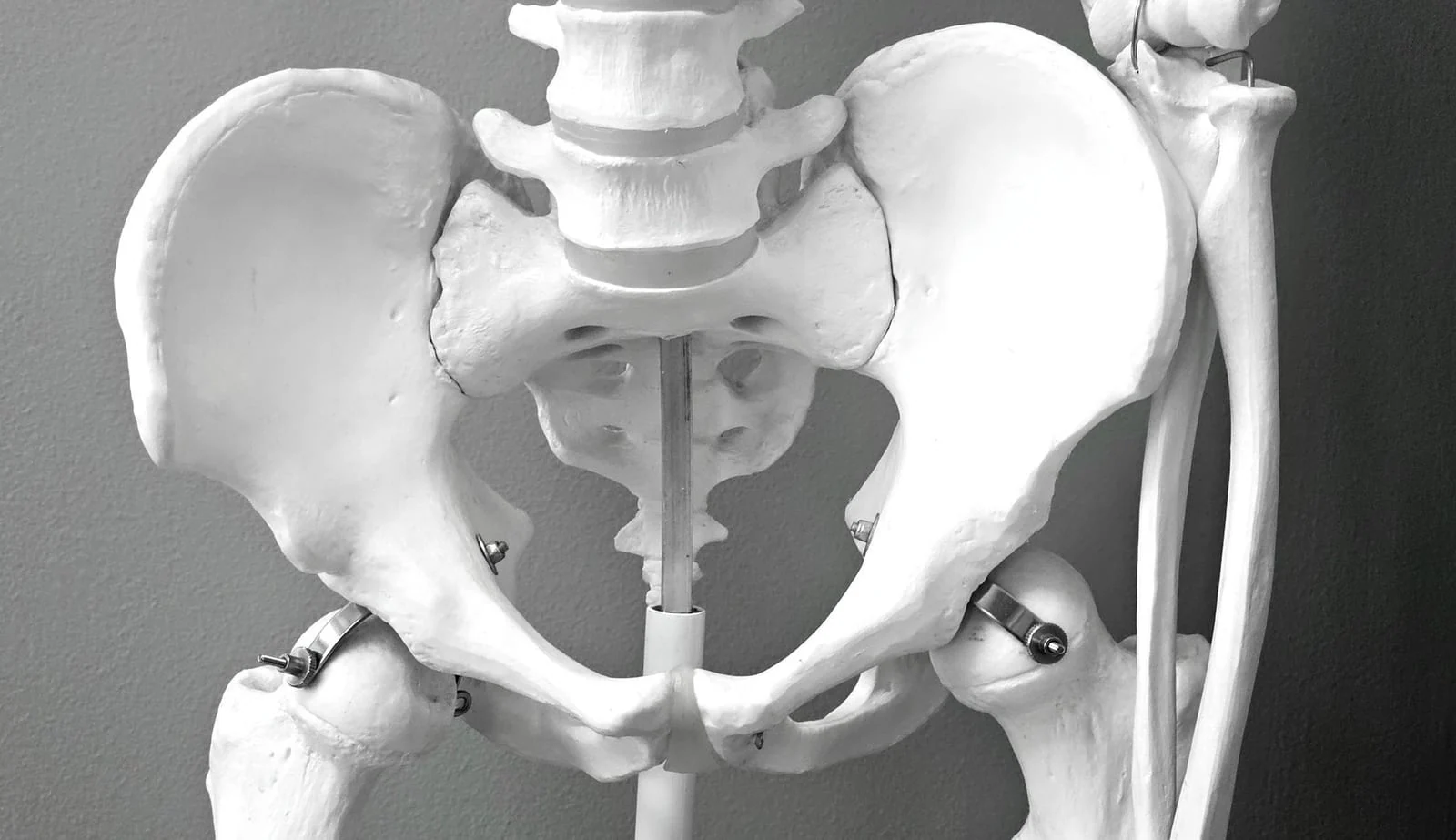
Orthopedic screws, hip and knee stems, and dental abutments — relying on the inert TiO₂ film and osseointegration. For fracture-critical devices, Grade 23 ELI is generally specified (see the honest note above).[1][4]
Marine and Subsea
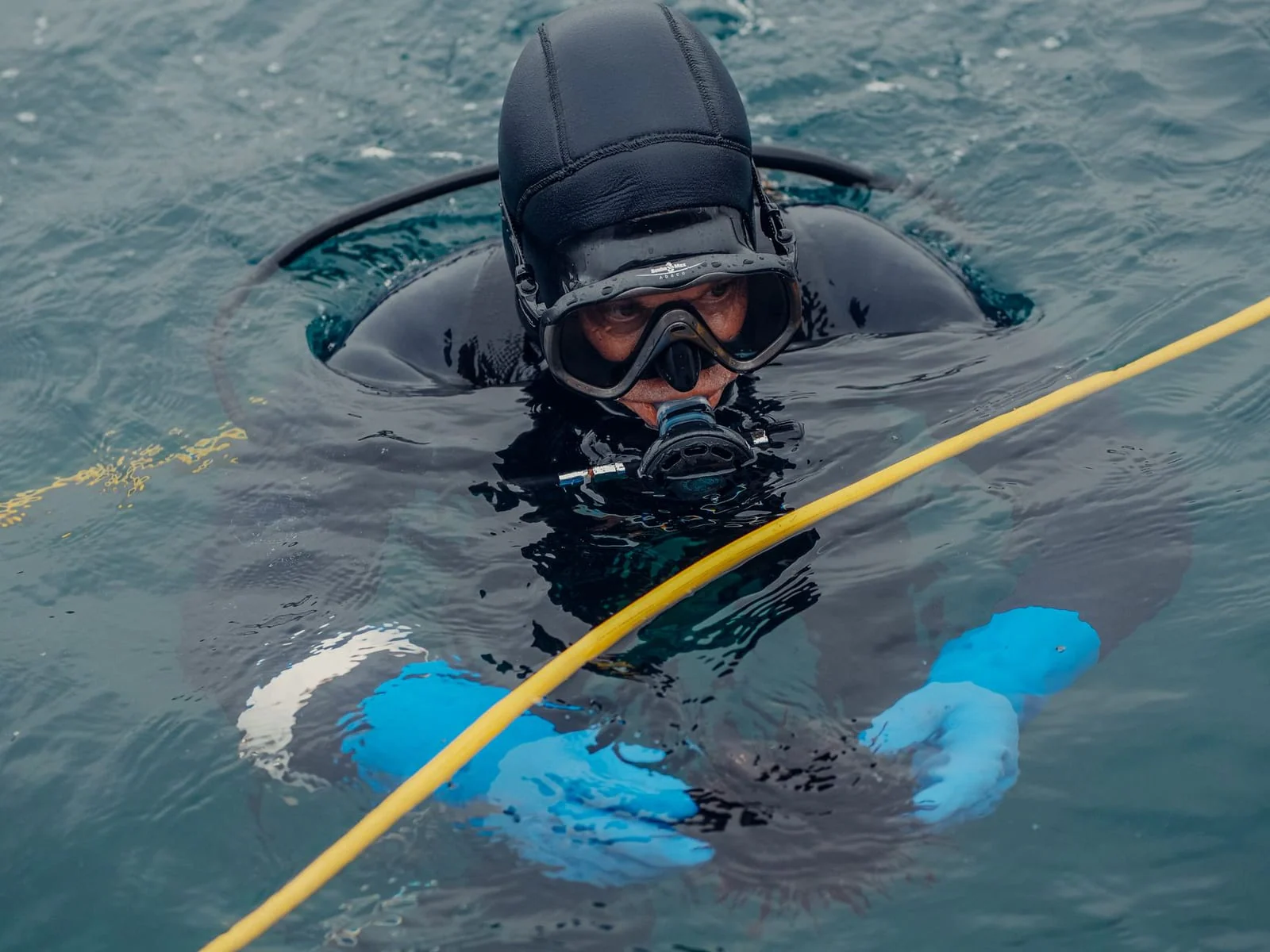
Subsea hardware and marine components that need high strength together with seawater corrosion resistance, where the TiO₂ film resists chloride attack that would degrade many steels.
High-Performance Industrial and Motorsport
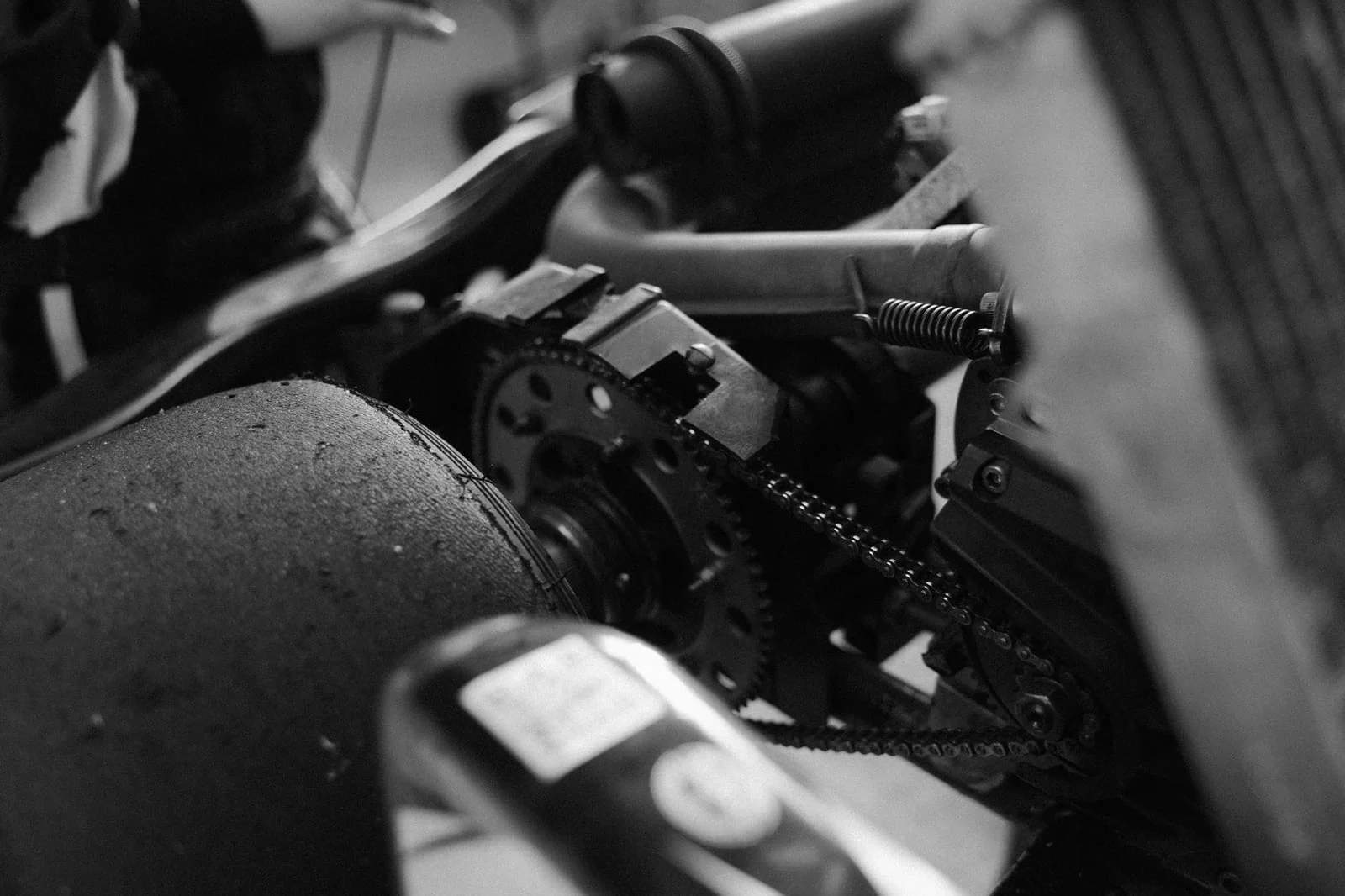
Motorsport and industrial parts where both low weight and high strength are required — connecting rods, valves and structural fittings.
Forms & Finishes
Common product forms:SheetPlateBarTubeWireForging
Surface finishes:MillPickledGroundPolished
For implant and aerospace service, ground or polished surfaces are preferred — a clean, smooth surface helps the TiO₂ passive film form uniformly and stay intact.
References
- Biomedical Applications of Titanium Alloys: A Comprehensive Review. Materials (MDPI) 17, 2023. — HCP α ↔ BCC β beta-transus; α/near-α/α+β classes; TiO2 film isolates metal; density ~4.5 g/cm³ ≈ half of steel; osseointegration; solution treating + aging; CP-Ti has no stable β; note on Grade 5 Al/V toxicity concern. pmc.ncbi.nlm.nih.gov/articles/PMC10780041/
- A Review—Additive Manufacturing of Intermetallic Alloys Based on Orthorhombic Titanium Aluminide Ti2AlNb. Materials (MDPI) 16, 2023. — α-Ti (HCP) → β-Ti (BCC) at 882.5 °C; α-stabilizers Al,O,N,C raise β-transus; β-stabilizers Mo,V,Nb,Ta lower it. pmc.ncbi.nlm.nih.gov/articles/PMC9919066/
- Recent Advances and Prospects in β-type Titanium Alloys for Dental Implants Applications. ACS Biomaterials Science & Engineering 10, 2024. — four classes α / near-α / (α+β) / β; Ti-6Al-4V is a biphasic α+β alloy; density 4.5 g/cm³ → excellent strength-to-weight. pmc.ncbi.nlm.nih.gov/articles/PMC11480944/
- A state-of-the-art review of the fabrication and characteristics of titanium and its alloys for biomedical applications. Bio-Design and Manufacturing (Springer) 4, 2021. — self-formed passive TiO2 film gives corrosion resistance; osseointegration by physically bonding with living bone; CP-Ti = grades 1–4, grade 5 = Ti-64. pmc.ncbi.nlm.nih.gov/articles/PMC8546395/
- Improvement of Corrosion Resistance of TiO2 Layers in Strong Acidic Solutions by Anodizing and Thermal Oxidation Treatment. Materials (MDPI) 14, 2021. — dense TiO2 layer governs corrosion resistance; high resistance in 4 M HCl / 4 M H2SO4 at 100 °C (potentiodynamic, EIS, Mott–Schottky). pmc.ncbi.nlm.nih.gov/articles/PMC7959320/
- Effect of Glucose Concentration on Electrochemical Corrosion Behavior of Pure Titanium TA2 in Hanks' Simulated Body Fluid. Materials (MDPI) 9, 2016. — oxidation film on pure titanium TA2 protects the implant; corrosion accelerates once the passive film is penetrated. pmc.ncbi.nlm.nih.gov/articles/PMC5457212/
- Effect of Aging Treatment on Microstructural Evolution and Mechanical Properties of the Electron Beam Cold Hearth Melting Ti-6Al-4V Alloy. Materials (MDPI) 15, 2022. — TC4 (Ti-6Al-4V) is a representative α+β alloy; low density, high specific strength, corrosion resistance, biocompatibility; solution treatment + aging strengthens via precipitation. pmc.ncbi.nlm.nih.gov/articles/PMC9608725/