In short: TA2 is commercially pure (CP) titanium — broadly equivalent to ASTM Grade 2 and the most widely used of all CP-Ti grades. It is a single-phase HCP α metal that cannot be strengthened by heat treatment; its strength comes from controlled interstitial content (O, Fe) and grain size, set during annealing. TA2 sits one rung above the softest, purest TA1: slightly higher strength while keeping excellent ductility, formability and weldability. Its corrosion resistance comes from a self-formed, dense TiO₂ passive film — not chromium passivation — giving it exceptional durability in seawater, chlorides, oxidising acids and the body's simulated fluids. At roughly 60% the density of steel it offers a high strength-to-weight ratio. Step up to the high-strength α+β alloy TC4 (Ti-6Al-4V) when strength matters more than formability and weldability.[1][3]
What TA2 Titanium Is
TA2 is commercially pure titanium (CP-Ti) — broadly equivalent to ASTM Grade 2, and in practice the default, most widely used CP-Ti grade across chemical, marine, and medical industry. It is titanium of ≥ 99% purity with only small, deliberately controlled amounts of interstitial elements (oxygen, iron, carbon, nitrogen); it contains no aluminium and no vanadium.[3]
In the ASTM grade system, the unalloyed CP titanium grades are Grades 1–4, while the alloyed Ti-6Al-4V is Grade 5. TA2 maps onto Grade 2, the middle of the CP range; the alloyed TC4 (Ti-6Al-4V) maps onto Grade 5.[3]
In the Chinese GB system, the CP titanium grades are designated TA1, TA2, TA3, TA4 in ascending order of interstitial (oxygen) content and therefore strength. TA2 (GB/T 3620) is the workhorse middle grade. Chinese buyers searching *TA2* or *工业纯钛* are looking for this alloy — the everyday industrial-grade pure titanium.
The essential character of TA2: it offers the best all-round balance in the CP-Ti family — more strength than the softest TA1, while keeping the ductility, deep-drawing formability, and weldability that pure titanium is prized for. Unlike the α+β alloy TC4, TA2 is a single-phase α metal that cannot be strengthened by heat treatment — its properties are set by interstitial content and grain size during annealing.[1]
Chemical Composition
TA2 is essentially pure titanium with tightly capped interstitials. There is no alloying for strength: oxygen and iron are the elements that lift TA2 above TA1 in strength, while carbon and nitrogen are held low for ductility and weldability. Note the complete absence of aluminium and vanadium — the elements that define the α+β alloy TC4.[3]
| Element | Symbol | Content (wt%) | Role |
|---|---|---|---|
| Titanium | Ti | ≥99 (balance) | Base metal — single-phase HCP α at room temperature |
| Iron | Fe | ≤ 0.3 | Interstitial/substitutional residual — raises strength over TA1; β-stabiliser kept very low |
| O | O | ≤ 0.25 | The key strengthening interstitial — controlled level sets TA2 above the softer TA1 |
| Carbon | C | ≤ 0.08 | Interstitial impurity, held low for ductility and weldability |
| Nitrogen | N | ≤ 0.03 | Interstitial impurity, held low — strong α-stabiliser, embrittles if excessive |
Per GB/T 3620; composition corresponds to ASTM Grade 2 CP titanium.[3]
Crystal Structure: Single-Phase HCP α Titanium
Titanium is a metal, not a compound, so it has no molecular formula. The correct description is by crystal structure — and here titanium differs fundamentally from steel.
At room temperature, titanium exists in the α-phase, which has a hexagonal close-packed (HCP) arrangement. On heating, it transforms allotropically: the α-Ti (HCP) modification transforms into the high-temperature β-Ti (BCC) modification at 882.5 °C (the β-transus). The transformation is reversible — so commercially pure grades such as TA2 do not retain any stable β-phase on cooling and remain essentially single-phase α at room temperature.[1][2]
Which phase is stable is governed by alloying. α-stabilising elements (Al, O, N, C) raise the β-transus, while β-stabilising elements (Mo, V, Nb, Ta) lower it. Because TA2 contains only α-stabilising interstitials and no β-stabilisers like vanadium, it stays firmly in the single-phase α field — this is precisely why it cannot be heat-treatment-strengthened, in contrast to the vanadium-bearing α+β alloy TC4.[2]
Because TA2 is single-phase α, it has no martensitic transformation, no precipitation hardening, and no quench-and-temper response. Strength is set by interstitial content (oxygen, iron) and grain size, fixed during annealing — not by heat treatment. The HCP lattice also gives titanium its characteristic combination of moderate strength with good ductility, and the metal is non-magnetic in all conditions.[1]
Where TA2 Sits: The Alpha Class
Titanium alloys are classified by their phase content into four main groups: α, near-α, (α + β), and β alloys. The group an alloy belongs to depends on the type and quantity of stabilising elements it contains.[3]
TA2 belongs to the α class, which comprises both unalloyed titanium and alloys containing α-stabilisers such as aluminium and tin. As an unalloyed CP titanium, TA2 is squarely an α alloy: it offers excellent formability, weldability, and corrosion resistance, but — unlike the (α + β) alloys — it cannot be heat-treated to higher strength. The (α + β) class, of which TC4 (Ti-6Al-4V) is the representative member, balances α- and β-phases to combine strength, ductility and heat-treatability.[1][2]
Corrosion Resistance: The Self-Formed TiO₂ Passive Film
Corrosion resistance is TA2's headline property, and its mechanism is distinct from stainless steel. Titanium exhibits excellent resistance to corrosion due to the self-formation of a passive titanium dioxide (TiO₂) film that protects the metal from further oxidation. This is a titanium-oxide film — not a chromium phenomenon — and it reforms spontaneously wherever the surface is exposed to oxygen or moisture.[3]
The dense TiO₂ layer is what governs titanium's corrosion behaviour. Electrochemical studies of TiO₂ surface films confirm high corrosion resistance even in strong acids — 4 M HCl and 4 M H₂SO₄ at ~100 °C — measured by potentiodynamic polarisation, EIS and Mott–Schottky analysis. The film's stability across such aggressive media is why TA2 is the standard choice for chemical-process and seawater service.[4]
TA2 has a particularly direct body of evidence for its behaviour in physiological media. A study of pure titanium TA2 in Hanks' simulated body fluid confirmed that the oxidation film on the surface of TA2 has a protective effect on the corrosion behaviour of the underlying material. The same work establishes the key boundary condition: once the passive film is penetrated, corrosion accelerates quickly — so film integrity, not bulk chemistry, is what protects the metal.[5]
This explains both TA2's strengths and its limits. In oxidising and neutral chloride environments — seawater, brines, oxidising acids, body fluid — the TiO₂ film stays intact and TA2 resists corrosion outstandingly. The practical engineering takeaway: protect the passive film (avoid crevices, severe abrasion, and strongly reducing acids that can break it down) and TA2 will outlast most metals in chloride and marine service.[4][5]
Mechanical & Physical Properties
TA2 is supplied in the annealed condition — there is no quench-and-temper option for a single-phase α metal. Its property profile is the defining balance of the CP-Ti family: moderate strength with high ductility, a low density of about 4.51 g/cm³, and a low elastic modulus.[1]
| Tensile strength (MPa) | ≥345 |
| Yield strength (MPa) | ≥275 |
| Elongation (%) | ≥20 |
| Density (g/cm³) | 4.51 |
| Elastic modulus (GPa) | 105 |
| Magnetic response | Non-magnetic |
The standout physical metric is strength-to-weight. Titanium has a relatively low density of around 4.5 g/cm³, approximately half the density of steel, which combined with useful structural strength gives an exceptional strength-to-weight ratio — the reason titanium is chosen for weight-critical service where steel would be unnecessarily heavy.[1][3]
Within the CP family, TA2 occupies the workhorse middle: stronger than the softest TA1 because of its slightly higher controlled oxygen and iron, yet far more formable and weldable than the high-strength α+β alloy TC4. It is non-magnetic in all conditions.
Key Characteristics
- Best all-round balance in CP-Ti. Strength, formability and corrosion resistance optimised together — the industry-default pure titanium, used more widely than any other CP grade.
- Self-passivating TiO₂ film. Outstanding corrosion resistance in seawater, chlorides, oxidising acids and body fluid — a titanium-oxide mechanism, not chromium passivation.
- Single-phase HCP α — not hardenable. Strength is set by interstitial content and grain size during annealing; there is no heat-treatment strengthening route.
- Excellent formability and weldability. Deep-drawable and readily fusion-welded under inert-gas shielding, unlike higher-strength titanium alloys.
- Light and biocompatible. About 60% the density of steel; with no aluminium or vanadium, it is well suited to medical and dental components.
- Non-magnetic in all conditions.
How TA2 Is Made
TA2 begins as titanium sponge (Kroll process), which is compacted and melted — typically by vacuum arc remelting — into ingot, then converted to mill product. Because the grade is single-phase α, there is no strengthening heat treatment: the critical control point is keeping interstitial oxygen and iron within the narrow Grade 2 window, since these set the final strength. Forming and welding take place in the annealed condition.
Welding is done under inert-gas shielding (argon) to keep oxygen and nitrogen out of the hot weld pool — titanium is highly reactive at temperature, and uncontrolled interstitial pickup during welding embrittles the joint. Annealing relieves working stresses and homogenises grain size; it does not, and cannot, raise strength the way a quench would in steel.
TA2 vs TA1 vs TC4 — Choosing Within Titanium
All three are titanium, but they answer different questions. TA1 is the softest, purest CP grade — maximum formability and weldability. TA2 is the all-round workhorse — the best balance of strength, formability and corrosion resistance. TC4 (Ti-6Al-4V) is the high-strength α+β alloy — far stronger and heat-treatable, but harder to form and weld.[1]
Applications by Industry
TA2's blend of corrosion resistance, formability, weldability and light weight makes it the default pure titanium for corrosion-critical industrial service — wherever stainless steel would be attacked by chlorides or acids.[3]
Chemical Process and Marine Heat Exchangers
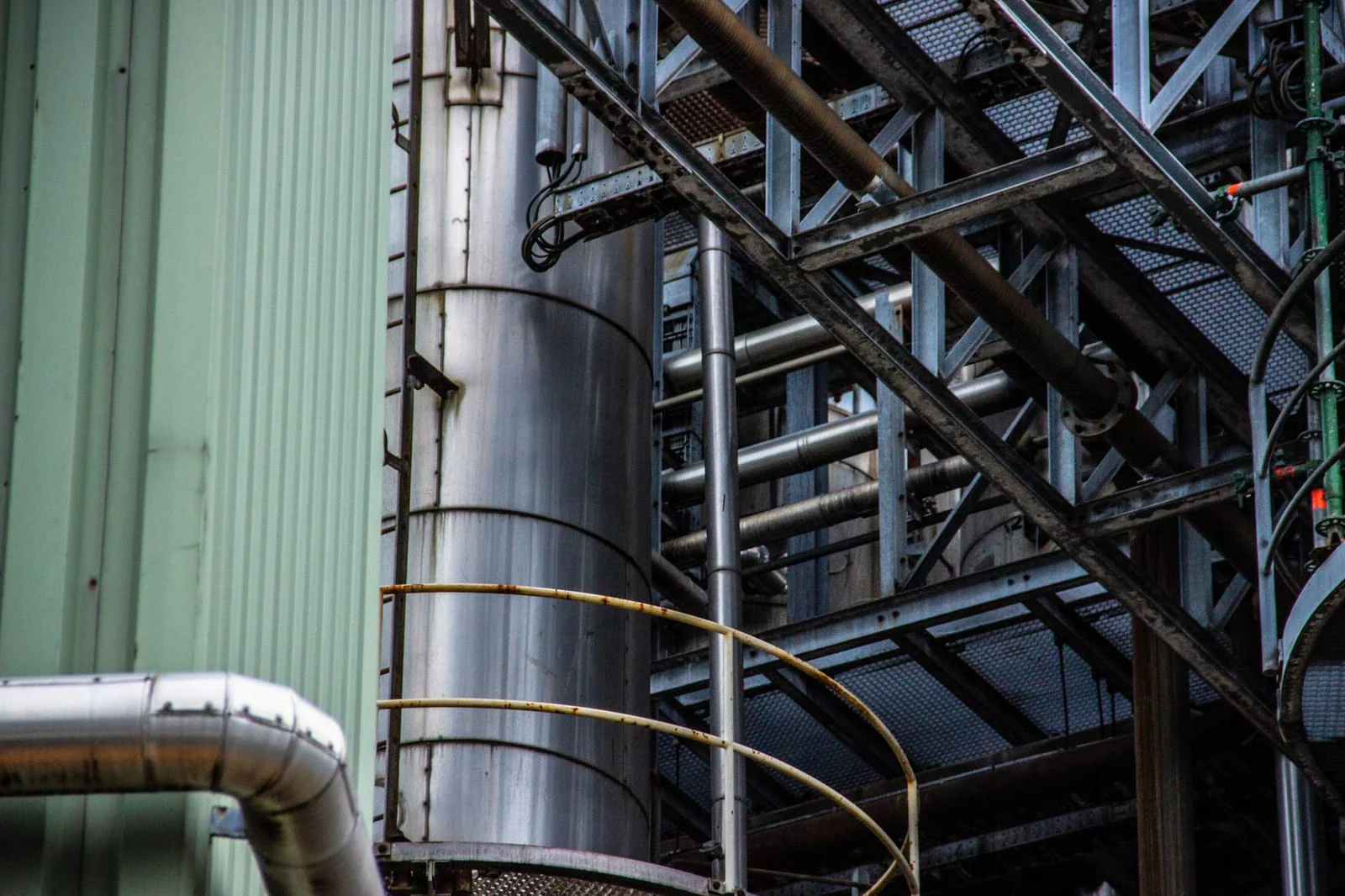
Heat exchanger tubing and plates, reaction vessels, and piping handling seawater, brines and oxidising acids. The stable TiO₂ film resists strong-acid service (HCl, H₂SO₄) where stainless steels fail, and the grade fabricates readily into thin-walled, welded assemblies.[4]
Desalination and Seawater Systems
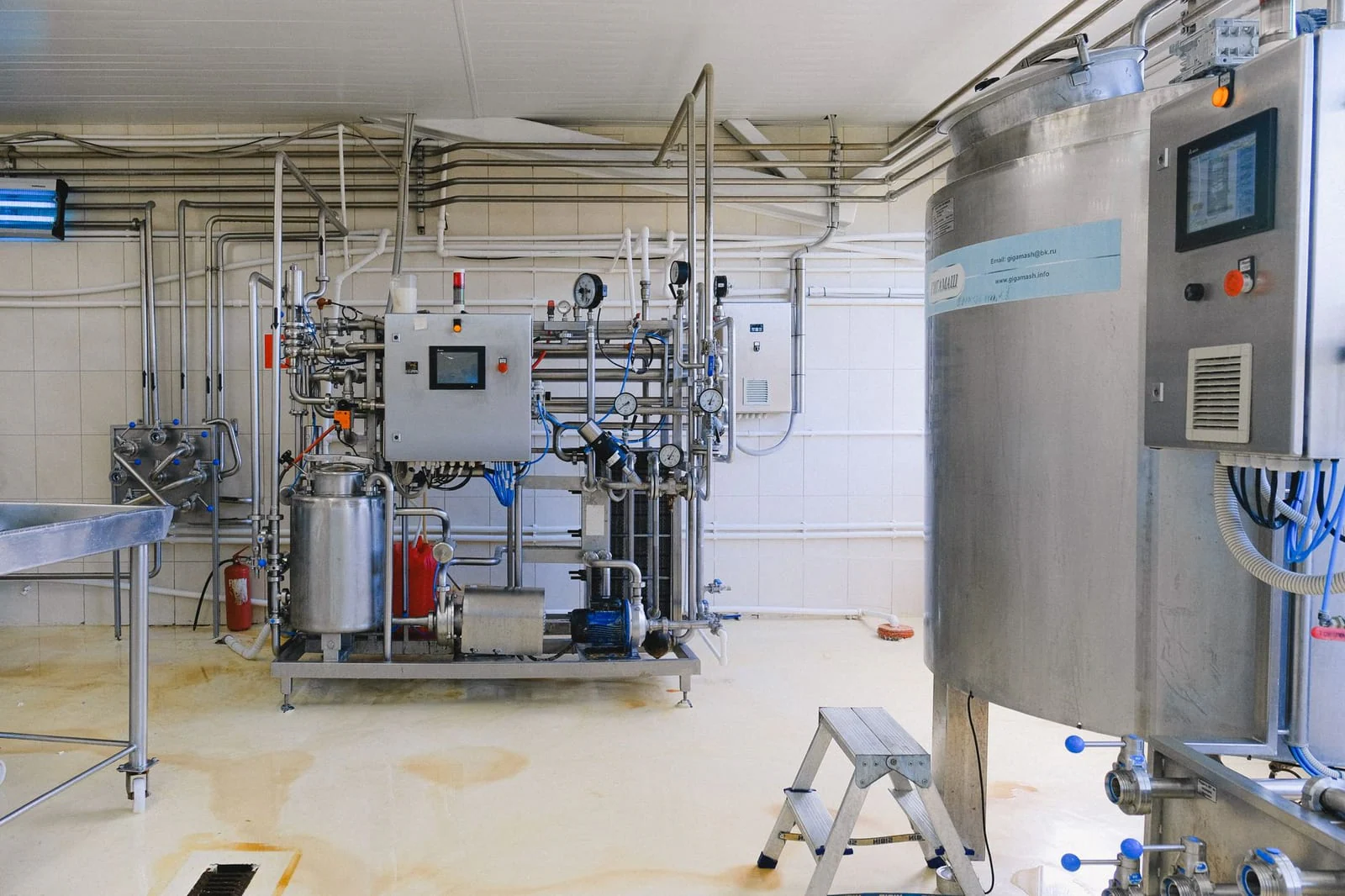
Desalination plant tubing, condensers, and seawater piping. Titanium is the benchmark material for hot seawater because the passive film is immune to the chloride pitting and crevice corrosion that limit stainless steels in marine duty.[3][4]
Medical and Dental Components
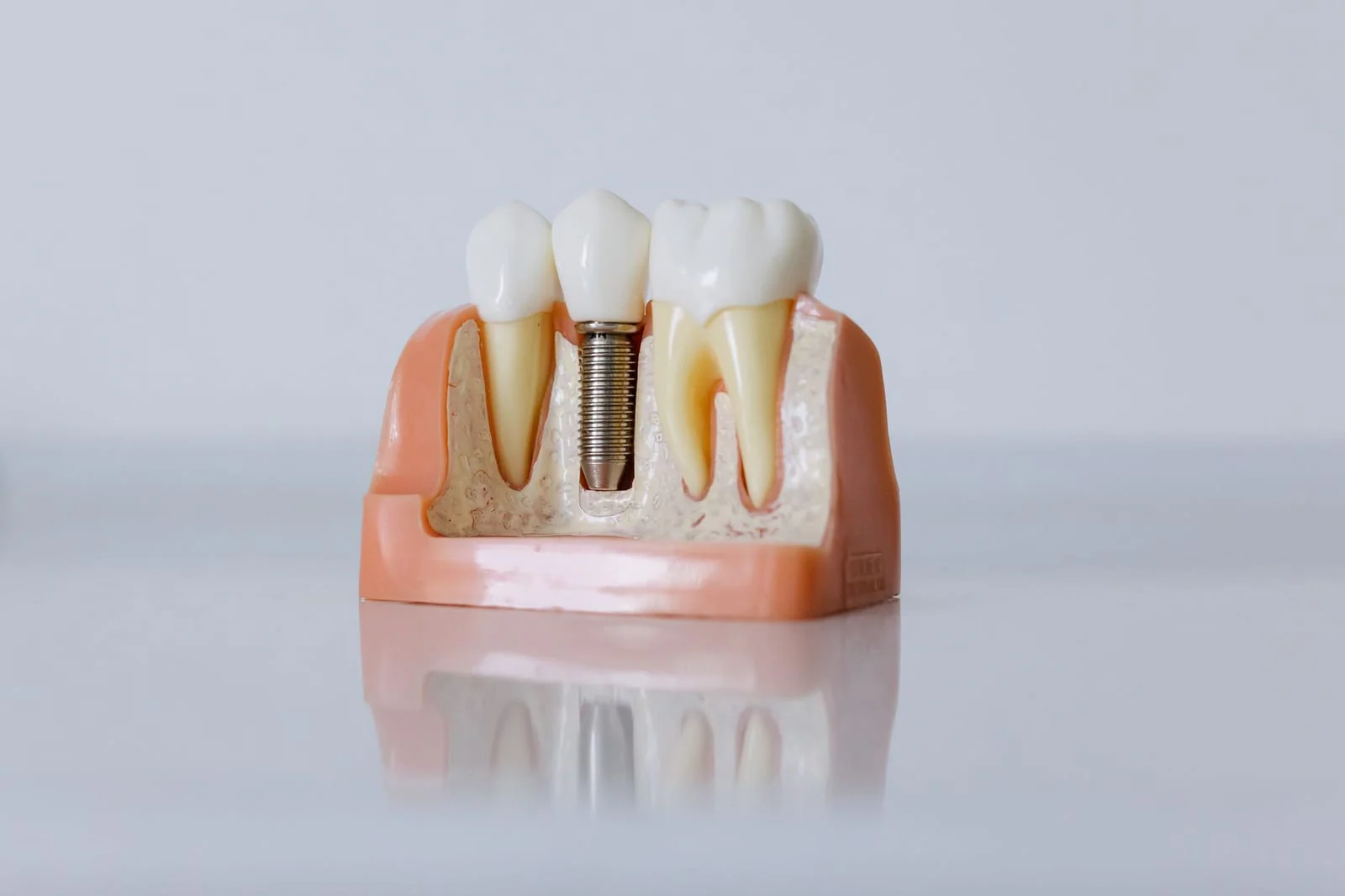
Implant components, surgical hardware and dental parts. CP titanium contains no aluminium or vanadium, and TA2 specifically has been shown to resist corrosion in Hanks' simulated body fluid through its protective surface oxide film — making it a well-characterised choice for body-contact components.[5]
Aerospace and High-Performance Parts
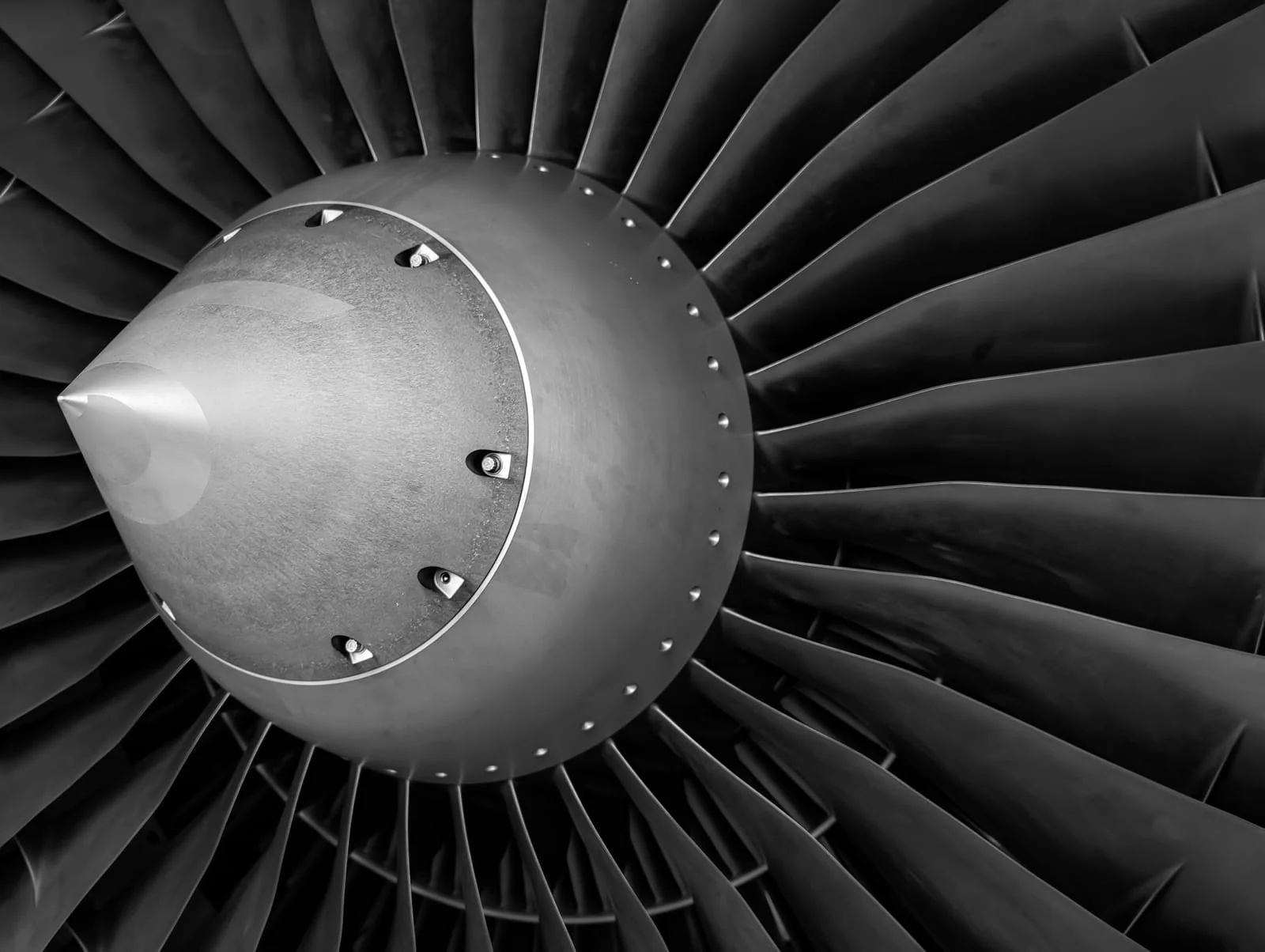
Non-structural airframe parts, ducting, and weight-critical hardware where corrosion resistance and the ~half-of-steel density matter more than the peak strength of an α+β alloy. For load-bearing structure, designers move up to TC4.
Forms & Finishes
Common product forms:SheetPlateTubeBarWire
Surface finishes:MillPickledPolished
TA2 is most often specified as sheet, plate and tube for fabricated corrosion-resistant equipment. A pickled or polished surface presents a clean, intact TiO₂ film — the functional surface on which all of titanium's corrosion performance depends.
References
- Biomedical Applications of Titanium Alloys: A Comprehensive Review. Materials (MDPI) 17, 2023. — Commercially pure titanium exists primarily in the HCP α-phase at room temperature and has no stable residual β-phase on cooling; α / near-α / α+β classification; density ~4.5 g/cm³ ≈ half of steel; exceptional strength-to-weight ratio. pmc.ncbi.nlm.nih.gov/articles/PMC10780041/
- A Review—Additive Manufacturing of Intermetallic Alloys Based on Orthorhombic Titanium Aluminide Ti2AlNb. Materials (MDPI) 16, 2023. — The α-Ti (HCP) modification transforms into β-Ti (BCC) at 882.5 °C; α-stabilising elements (Al, O, N, C) raise the β-transus, β-stabilising elements (Mo, V, Nb, Ta) lower it. pmc.ncbi.nlm.nih.gov/articles/PMC9919066/
- A state-of-the-art review of the fabrication and characteristics of titanium and its alloys for biomedical applications. Bio-Design and Manufacturing (Springer) 4, 2021. — Titanium resists corrosion through a self-formed passive titanium dioxide film; CP-Ti = ASTM grades 1–4, grade 5 = Ti-6Al-4V. pmc.ncbi.nlm.nih.gov/articles/PMC8546395/
- Improvement of Corrosion Resistance of TiO2 Layers in Strong Acidic Solutions by Anodizing and Thermal Oxidation Treatment. Materials (MDPI) 14, 2021. — The dense TiO2 layer governs corrosion resistance; high resistance in 4 M HCl / 4 M H2SO4 at ~100 °C (potentiodynamic polarisation, EIS, Mott–Schottky). pmc.ncbi.nlm.nih.gov/articles/PMC7959320/
- Effect of Glucose Concentration on Electrochemical Corrosion Behavior of Pure Titanium TA2 in Hanks' Simulated Body Fluid. Materials (MDPI) 9, 2016. — The oxidation film on the surface of pure titanium TA2 protects the underlying implant material; corrosion accelerates once the passive film is penetrated. pmc.ncbi.nlm.nih.gov/articles/PMC5457212/