In short: TA1 is the softest and purest commercially pure (CP) titanium — GB/T 3620 TA1, equivalent to ASTM Grade 1 / UNS R50250. It is single-phase HCP α titanium with the lowest interstitial content (oxygen, iron) of the CP grades, which is exactly why it offers the highest ductility and deep-draw formability in the family. It is not strengthened by heat treatment — as a single α phase it gains strength only through solid-solution interstitials and cold work, so it sits at the low-strength end of CP titanium. Like all titanium it self-passivates with a stable TiO₂ oxide film[3] that gives outstanding resistance in seawater, chlorides and oxidising acids,[4] and it is biocompatible.[3] At about 60% the density of steel,[1] TA1 delivers a strong strength-to-weight ratio. Step up to TA2 when you need more strength from CP titanium, or to the α+β alloy TC4 for roughly three times the yield strength.
What TA1 Titanium Is
TA1 is the softest and purest grade of commercially pure (CP) titanium — the entry point of the CP titanium family. In the Chinese GB/T 3620 system it is TA1; internationally it corresponds to ASTM Grade 1 (UNS R50250), also written Ti Gr.1 or CP-Ti Grade 1. CP titanium grades 1–4 are unalloyed titanium that differ chiefly in their permitted interstitial content (oxygen, iron, carbon, nitrogen, hydrogen).[3]
What distinguishes TA1 within the family is its low interstitial content — the tightest limits on oxygen and iron of the CP grades. Less interstitial oxygen and iron means lower strength but maximum ductility and formability: TA1 is the easiest CP grade to deep-draw and cold-form. It is the right choice when complex forming, deep drawing or tight bend radii matter more than raw strength.
Titanium is an unalloyed metal here rather than a multi-element alloy, so TA1 has no molecular formula — it is described by its crystal structure and purity. At room temperature TA1 is essentially single-phase α titanium, which has a hexagonal close-packed (HCP) lattice.[1] This single-phase nature is the source of both its excellent formability and its key limitation: it cannot be strengthened by heat treatment.
The essential trade within CP titanium: lower interstitial content → softer, more ductile, more formable. Chinese buyers searching *工业纯钛 TA1* or *CP titanium Grade 1* are looking for this grade. Step up to TA2 for the most common general-purpose CP grade with higher strength, or to the α+β alloy TC4 (Ti-6Al-4V) when high strength is the priority.
Chemical Composition
TA1 is unalloyed titanium — the balance is titanium, with only tightly capped residual interstitials. Among the CP grades, TA1 carries the lowest limits on oxygen and iron, the two elements that most strongly raise strength and lower ductility. Keeping them low is precisely what gives TA1 its maximum formability.
| Element | Symbol | Content (wt%) | Role |
|---|---|---|---|
| Titanium | Ti | balance | Base metal — single-phase HCP α at room temperature |
| Iron | Fe | ≤ 0.2 | Residual; lowest limit of the CP grades — a mild β-stabiliser, kept low to preserve ductility |
| O | O | ≤ 0.18 | Interstitial; the dominant strengthener in CP titanium — lowest limit here for maximum formability |
| Carbon | C | ≤ 0.08 | Residual interstitial, held low |
| Nitrogen | N | ≤ 0.03 | Interstitial; strong strengthener and embrittler, held very low |
| H | H | ≤ 0.015 | Residual; kept minimal to avoid hydrogen embrittlement |
Per GB/T 3620 TA1 and ASTM Grade 1 (UNS R50250) limits.
Crystal Structure: Single-Phase HCP α Titanium
Titanium is allotropic — it changes crystal structure with temperature. At room temperature, titanium exists in its α phase, which has a hexagonal close-packed (HCP) arrangement.[1] Commercially pure grades such as TA1 are essentially single-phase α (HCP) at room temperature.
On heating, titanium transforms from the low-temperature α-Ti (HCP) to the high-temperature β-Ti (BCC) at 882.5 °C — the β-transus.[2] This transformation is reversible, and because TA1 contains essentially no β-stabilising alloying additions, commercially pure titanium grades do not retain stable residual β phase on cooling — they return to single-phase α.[1] Alloying elements shift this balance: aluminium is an α-stabiliser (it raises the β-transus), while vanadium is a β-stabiliser (it lowers the β-transus).[2] TA1, being unalloyed, has neither, so it stays firmly α.
The single-phase α structure has two direct consequences. First, TA1 cannot be strengthened by heat treatment — with no β phase to manipulate, there is no quench-and-age route to higher strength. Strength comes only from interstitial solid solution (oxygen, iron) and from cold work / work hardening; the standard delivery condition is annealed. Second, the HCP α structure with low interstitials is highly ductile, giving TA1 its hallmark deep-draw and cold-forming ability. To raise strength, the route is a higher-interstitial CP grade (TA2) or an α+β alloy (TC4), not heat treatment.
Where TA1 Sits: The α Class of Titanium
Titanium alloys are classified by their room-temperature phase content into four groups: α, near-α, (α + β), and β alloys, governed by the type and quantity of alloying elements.[3] The α class comprises unalloyed titanium together with alloys containing α-stabilisers such as aluminium.[1] As unalloyed CP titanium, TA1 belongs to the α class — the simplest, most formable, single-phase end of the spectrum.
This classification explains TA1’s personality. α alloys (including CP titanium) offer excellent formability, weldability and corrosion resistance but cannot be strengthened by heat treatment; α+β alloys such as [TC4 (Ti-6Al-4V)](/en/materials/titanium/tc4) balance α and β phases for a combination of strength, ductility and heat-treatability.[1] TA1 trades the higher strength of the α+β grades for the maximum ductility and forming ease that only a clean single-phase α structure provides.
Corrosion Resistance: The Self-Forming TiO₂ Film
TA1’s outstanding corrosion resistance comes from titanium’s own oxide. Titanium exhibits excellent resistance to corrosion due to the self-formation of a passive titanium dioxide (TiO₂) film that protects the metal from further oxidation.[3] This film forms spontaneously and re-heals in the presence of oxygen — it is the entire basis of titanium corrosion behaviour, and it has nothing to do with the chromium-oxide passivation of stainless steels.
The TiO₂ film makes TA1 highly resistant across aggressive media. Studies of TiO₂ layers report high corrosion resistance even in 4 M HCl and 4 M H₂SO₄ at 100 °C, confirming that the dense titanium oxide governs corrosion behaviour and performs well in strongly oxidising and acidic environments.[4] In service this translates to excellent durability in seawater, chlorides and oxidising acids — the reason TA1 is favoured for chemical-process and marine equipment.
Because corrosion protection depends on the integrity of the TiO₂ film, performance is best where the film can form and remain intact. The film’s stability and inertness also underpin TA1’s biocompatibility — the same stable TiO₂ oxide isolates the underlying metal from its surroundings.[3] As the purest CP grade with no alloying additions, TA1 carries no concerns about alloying-element release.
Mechanical & Physical Properties
TA1 has the lowest strength but the highest ductility of the CP titanium grades — a direct result of its low interstitial content and single-phase α structure. It is supplied annealed; there is no heat-treatment route to raise its strength, so its mechanical profile is defined by composition and any subsequent cold work.
| Tensile strength (MPa) | ≥240 |
| Yield strength (MPa) | ≥170 |
| Elongation (%) | ≥24 |
| Density (g/cm³) | 4.51 |
| Elastic modulus (GPa) | ≈105 |
| Magnetic response | Non-magnetic |
The defining physical advantage is low density: titanium has a density of around 4.5 g/cm³, roughly half that of steel.[1] Combined with respectable strength, this gives TA1 a strong strength-to-weight ratio at about 60% the weight of an equivalent steel part. TA1 is also non-magnetic, and its low elastic modulus (well below steel’s) makes it comparatively springy.
Because strength can only be raised by cold work — not heat treatment — formed TA1 components that need higher strength rely on work hardening introduced during forming, while the annealed sheet that goes into the press is deliberately soft for maximum drawability. For applications that need more strength as-supplied, TA2 (higher interstitials) or TC4 (α+β, roughly 3× the yield strength) are the upgrades.
Key Characteristics
- Maximum formability and ductility. Lowest interstitial content of the CP grades makes TA1 the easiest titanium to deep-draw and cold-form.
- Single-phase HCP α — not heat-treatable. Strength comes only from interstitial solid solution and cold work; there is no quench-and-age route.
- Outstanding corrosion resistance. Self-forming TiO₂ film resists seawater, chlorides and oxidising acids.[3][4]
- Readily weldable. The clean single α phase welds well under inert-gas (argon) shielding.
- Light and non-magnetic. About half the density of steel,[1] with a strong strength-to-weight ratio; biocompatible thanks to the stable TiO₂ film.[3]
How TA1 Is Made
TA1 is produced from titanium sponge (Kroll process), melted into ingot, then worked to mill products. Because TA1 is the purest CP grade, the critical control is keeping interstitial pickup (oxygen, nitrogen, hydrogen) low throughout melting and hot working — small increases in interstitials would push the metal toward the strength and reduced ductility of TA2. Unlike heat-treatable grades, there is no strengthening heat-treatment step: the final condition is annealed, and any extra strength in a finished part comes from cold work during forming.
Annealing relieves cold-work stresses and restores ductility for further forming. Pickling removes any oxygen-enriched surface layer (alpha case) and scale, leaving a clean surface on which the protective TiO₂ film re-forms.
TA1 vs TA2 vs TC4 — Choosing the Right Titanium
All three are titanium, but they occupy different points on the strength-versus-formability map. TA1 and TA2 are both single-phase α CP titanium — TA1 is the softest and purest, TA2 the most common general-purpose CP grade. TC4 (Ti-6Al-4V) is a different beast: an α+β alloy that can be heat-treated to far higher strength.
The distinction matters because TC4 is an α+β alloy whose strength comes from heat treatment (solution treating plus aging) acting on its two-phase structure[1] — a route entirely unavailable to single-phase TA1. Choose TA1 when forming ease and ductility lead, TA2 for general CP service, and TC4 when high strength-to-weight is the priority.
Applications by Industry
TA1’s blend of maximum formability, easy welding and TiO₂-based corrosion resistance makes it the CP grade of choice wherever complex forming meets a corrosive environment.
Deep-Drawn and Formed Components
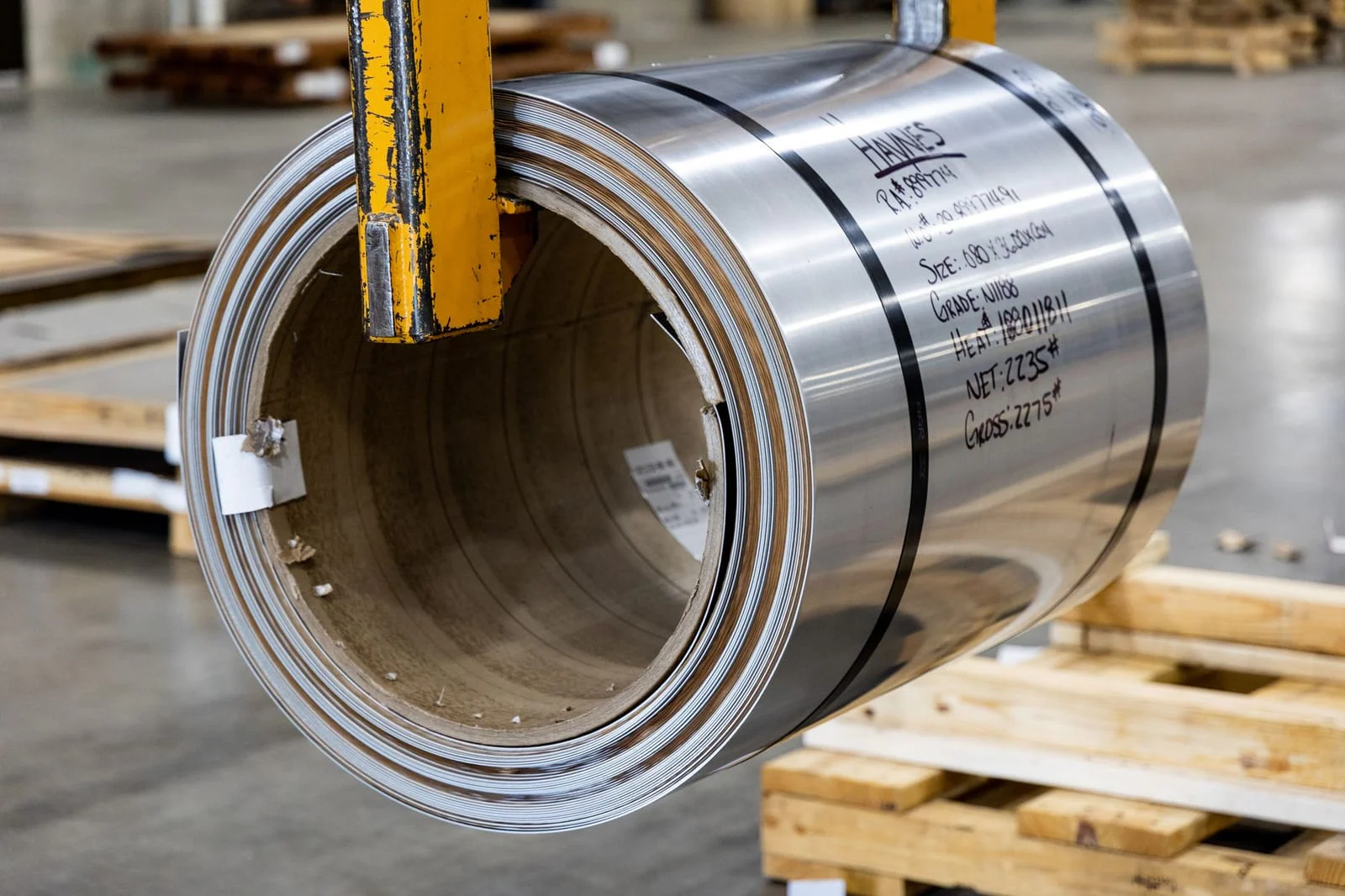
Vessel linings, bellows, expansion joints and heat-exchanger plates — parts that demand severe cold forming or deep drawing. TA1’s low interstitial content and high ductility let it take tight radii and deep draws that harder grades would crack on.
Chemical and Marine Equipment
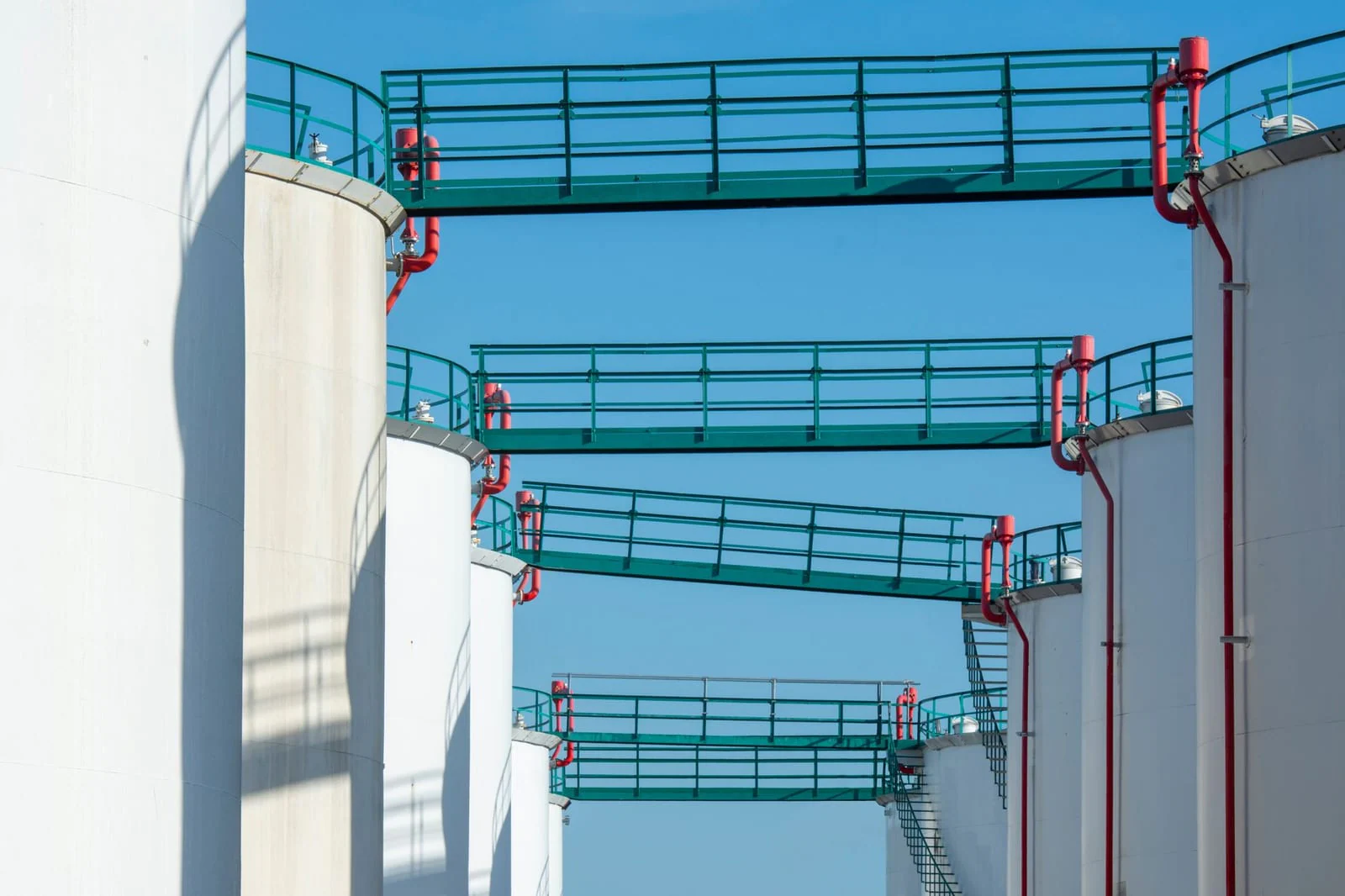
Reaction vessels, piping, pump and valve housings, and condensers handling seawater, brines and oxidising acids. The self-forming TiO₂ film gives long service life in media that would rapidly attack stainless steel.[3][4]
Electrochemical and Electrolysis Cells
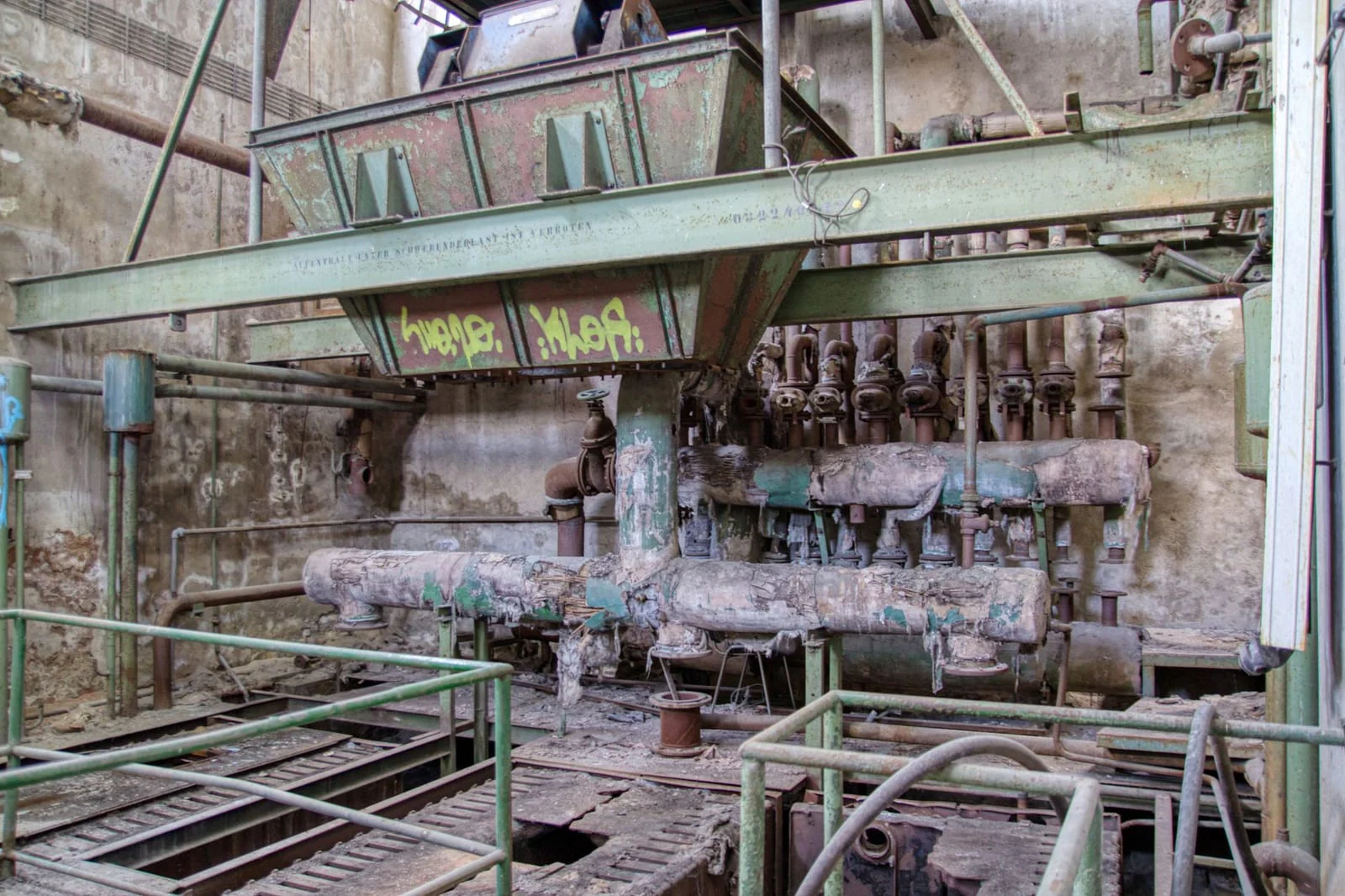
Anodes, electrode substrates and cell hardware for electrolysis. Titanium’s stable oxide film makes it a durable, formable substrate in electrochemical service.
Architectural and Decorative Sheet
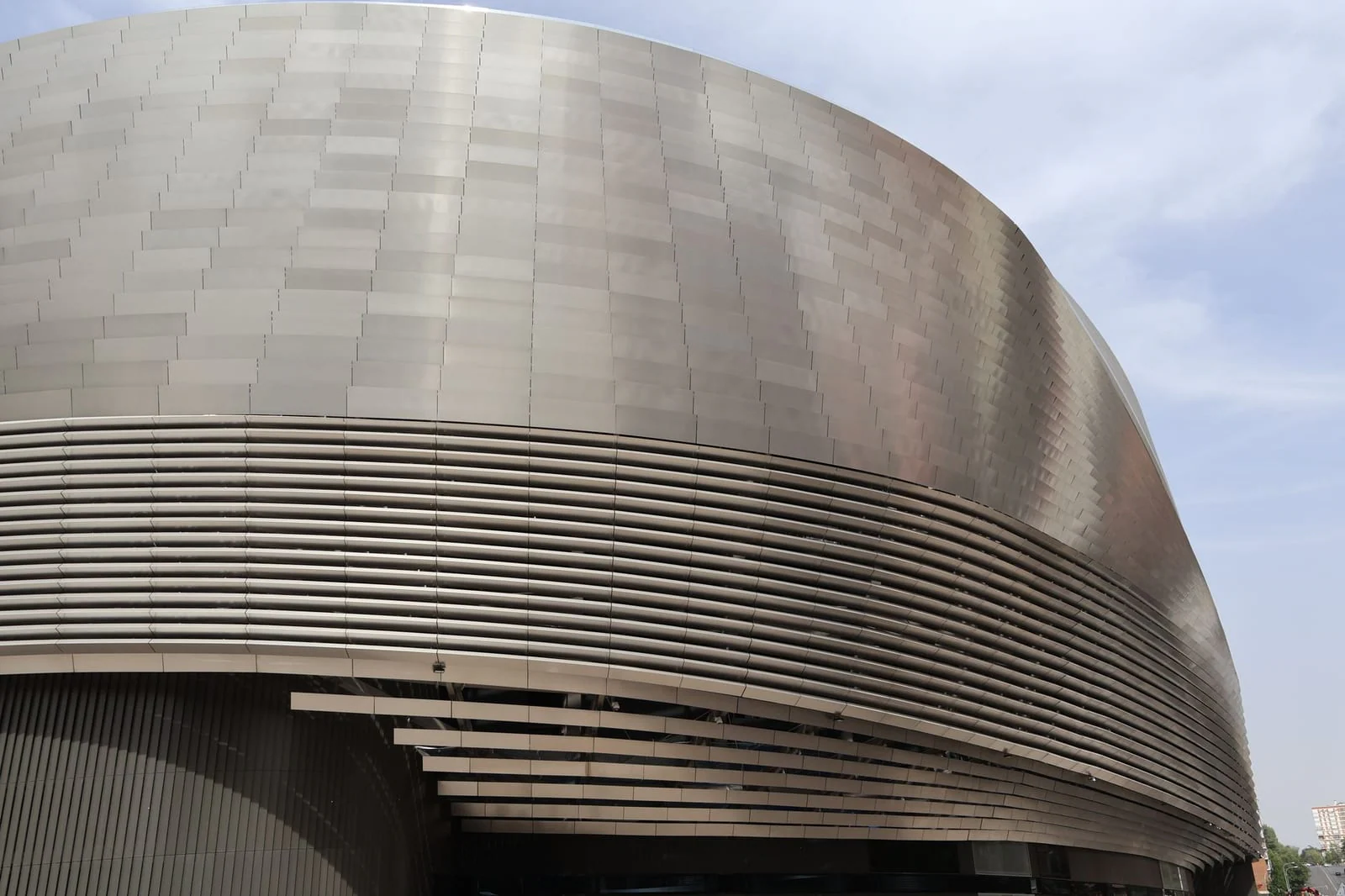
Roofing, cladding and decorative panels where complex shapes are pressed from thin sheet. TA1’s formability suits intricate panel geometry, and its corrosion resistance ensures decades of weathering without rust staining.
Forms & Finishes
Common product forms:SheetPlateFoilTubeBarWire
Surface finishes:MillPickledPolished
Thin sheet and foil are the workhorse forms for TA1’s deep-drawing and panel applications. A pickled finish removes scale and any alpha case, leaving a clean surface on which the protective TiO₂ film reforms; a polished finish suits decorative and hygienic uses.
References
- Biomedical Applications of Titanium Alloys: A Comprehensive Review. Materials (MDPI) 17, 2023. — HCP α ↔ BCC β transformation; α / near-α / α+β classes; unalloyed Ti is an α alloy; CP-Ti retains no stable β on cooling; density ~4.5 g/cm³ ≈ half of steel; solution treating + aging strengthens α+β alloys. pmc.ncbi.nlm.nih.gov/articles/PMC10780041/
- A Review—Additive Manufacturing of Intermetallic Alloys Based on Orthorhombic Titanium Aluminide Ti2AlNb. Materials (MDPI) 16, 2023. — α-Ti (HCP) transforms to β-Ti (BCC) at 882.5 °C; α-stabilisers (Al, O, N, C) raise the β-transus, β-stabilisers (Mo, V, Nb, Ta) lower it. pmc.ncbi.nlm.nih.gov/articles/PMC9919066/
- A state-of-the-art review of the fabrication and characteristics of titanium and its alloys for biomedical applications. Bio-Design and Manufacturing (Springer) 4, 2021. — self-formed passive TiO₂ film gives corrosion resistance and isolates the metal; biocompatibility; CP-Ti comprises grades 1–4, grade 5 is Ti-6Al-4V. pmc.ncbi.nlm.nih.gov/articles/PMC8546395/
- Improvement of Corrosion Resistance of TiO2 Layers in Strong Acidic Solutions by Anodizing and Thermal Oxidation Treatment. Materials (MDPI) 14, 2021. — the dense TiO₂ layer governs corrosion resistance; high resistance in 4 M HCl and 4 M H₂SO₄ at 100 °C (potentiodynamic, EIS, Mott–Schottky). pmc.ncbi.nlm.nih.gov/articles/PMC7959320/